Unknown's avatar

Only the Beginning!

“Only the Beginning!”

Mark 16:1-8 (16:7) – March 31, 2024

            Who here is on social media? Surfing the web, looking through my several accounts is a pleasant way to pass the time, but it is also a way to see some really humorous things. For example, just yesterday I saw a meme that said “In order to be truly Biblical, the only people invited to the sunrise Easter service will be women.” Because, at sunrise on that first Easter, that is all who were there – the women were the first witnesses to the Resurrection!

            We know more about what happened on that Easter Sunday from the other Gospel accounts. But, Mark? Not so much. Mark writes in his usual concise, blunt manner. Short on details and description, heavy on action. Let’s take a closer look at our Gospel reading.

            “After the Sabbath was over, Mary Magdalene, Mary the mother of James, and Salome bought spices to go and anoint the body of Jesus. Very early on Sunday morning, at sunrise, they went to the tomb.” 

I want to remind everyone that Jesus did not have only men disciples. There were many more than just the twelve men named in the Gospels. “In their accounts of Jesus’ last days, all four gospel writers mention “the women who had followed Jesus from Galilee”.  Taken together we find that eight women are named, with the most familiar being Mary Magdalene.” [1]

Some of these faithful women go to their Rabbi’s tomb early on Sunday. What did they encounter? What was it that really happened early that Sunday?

The big stone rolled over the entrance to the tomb must have been worrying the women. Mark even mentions it. I suspect they already were discussing how their combined strength was probably not enough to even budge the stone. But—what is this? The stone is already rolled away! It’s the first inkling that things at the tomb are not as these women first thought.          

“So they entered the tomb, where they saw a young man sitting at the right, wearing a white robe—and they were alarmed.“Don’t be alarmed,” he said. “I know you are looking for Jesus of Nazareth, who was crucified. He is not here—he has been raised!”

            Their Rabbi, whom they had just seen die three days ago in the most horrific way, is suddenly said to be miraculously alive – awake, aware, and raised from the dead!  

            Let’s continue with the angel’s words from Mark 16: “Look, there is the place they laid him. But go, tell his disciples and Peter that he is going ahead of you to Galilee; there you will see him, just as he told you.” So they went out and fled from the tomb, for terror and amazement had seized them; and they said nothing to anyone, for they were afraid.”

Frankly, the reaction of the women makes a great deal of sense. “Terror would be a natural response to the unexpected, especially where a dead loved one is concerned. Amazement would certainly be realistic when the terror of the moment gives way to a hint of hope. Could it really be true? Could the prophecies have been fulfilled?” [2]

            Of course, looking back with our historical perspective and the perspective of faith in our risen Lord Jesus Christ, it is next to impossible for us to imagine what it was like for the women disciples, encountering an empty tomb!

These words are the first ending of the gospel of Mark, right here. Yes, our Bibles have some additional verses that come after verse 8, that were added later on. But, right here is where we are left for now. The women frightened half to death, and no trace of the men disciples up to this point. What happens now? This is surely infinitely more agonizing a cliff-hanger than any radio serial or any two-part television episode!

The immediate response of the disciples isn’t really that far-fetched when you stop to think about it. We have already seen the betrayal of Judas, the denial of Peter, the desertion of his disciples, and “finally even the failure of these women, who up to this point had proved the most faithful of his disciples. They are afraid, too afraid to speak of the wonders they have heard. And so Mark ends here, right here, inviting us the reader to pick up where these women left off and share the good news announced by the messenger at the empty tomb.[3]

We know the men disciples scoffed at the women’s testimony, at first. I don’t know if I could have believed this right away, either. What would your response have been?

But wait, the blessed reality is that our God conquered death. We don’t just hope so, we don’t think it would just be a nice idea, Jesus Christ rose from the dead, and the angel told the women the blessed truth. It took some time for all the disciples to believe it and fully comprehend it, but that is a reality we can trust today, too.

We know now, from the other Gospel accounts, that this was just the beginning of the story, the beginning of that Good News, that Jesus has risen, indeed! Despite worry, anxiety, despair, loss, and cynicism today, we know the tomb is empty.

As commentator David Lose says, “The story of what God is doing in and through Jesus isn’t over at the empty tomb, you see. It’s only just getting started. Resurrection isn’t a conclusion, it’s an invitation. And Jesus’ triumph over death, sin, and hate isn’t what Mark’s Gospel is all about. Rather, Mark’s Gospel is all about setting us up to live resurrection lives and continue the story of God’s redemption of the world.”

            Our opening hymn “He Lives!” has the words “I serve a living Savior, He’s in the world today.” Our Lord Jesus wants each of us to go out and tell others that He lives! Easter Sunday is not a nice nursery story or a pretty fairy tale. It is saving truth. I know – we all know that our Redeemer lives!  Jesus came to redeem His people from their sins. The Resurrection is not the end of the story. It’s only the beginning!

And yes, we are invited to witness to Him, to go and tell everyone that Jesus Christ is risen today! Share this Good News, today! Alleluia, amen.

@chaplaineliza

(Suggestion: visit me at my other blogs: matterofprayer: A Year of Everyday Prayers. and  A Year of Being Kind . Thanks!


[1] https://juniaproject.com/did-jesus-spend-most-time-12-men/  (Matthew 27:55, Mark 15:40, Luke 23:49, John 19:25)

[2] https://www.stewardshipoflife.org/2012/04/a-story-for-uncertain-times/

[3] https://www.davidlose.net/2015/03/easter-b-only-the-beginning/

Unknown's avatar

Redeemed – Imperishable!

“Redeemed – Imperishable!”

1 Peter 1:17-23 – April 23, 2023

            Have you ever heard children or young people bicker? Argue back and forth? I can remember listening to my own children argue, getting mad at each other, and slamming the door or stomping out of the room. And, even sometimes being really mean to each other in front of their friends or other family members!

            In our Bible reading from 1 Peter today, the apostle tells us to “love each other from the heart.” This loving attitude from Peter is not what siblings or friends often show to each other. What a shocking or sad difference it makes when siblings, or friends – or when you or I – say mean things or act badly towards each other. I thought 1 Peter chapter 1 tells us to “love each other from the heart!” ALL the time! Except, it just doesn’t happen in the real world.

            I would like to remind us all about this epistle written to scattered believers throughout modern-day Turkey. This little letter at the end of the New Testament came several decades after the events of the Crucifixion and the Resurrection. Many of the people who were actual witnesses of the resurrected Lord Jesus had themselves died. These were actual eye-witnesses. They knew beyond a reasonable doubt, they understood with all of their hearts that they were indeed redeemed by the blood of the Lamb, as the apostle affirms here in our reading today.

As I said last week, the local governments and authorities were cracking down on anything that looked like rebellion or conflict against the accepted status quo. The situation throughout the whole region was, frankly, dangerous for these new believers! Yet, they kept on spreading the witness of the Resurrection, telling others that the Lord Jesus had redeemed them! And that you can be redeemed, too!

 But, what do you and I need to be redeemed from?

You, and I, and the rest of the world, all have a big problem – the sin problem.

We are not perfect, and we all make mistakes. We fall flat on our faces, sometimes, and we can say mean things to each other, act badly towards each other, and even hurt each other. Lots of people try really hard to make themselves pure, to strive as hard as they can to live right, to keep to the straight and narrow, to run as hard as they can or as fast as possible to get right with God. But, they trip up or fall behind, or miss the mark – again and again.

Can you relate? Do you know what I am talking about? Do you see people running on these endless, hopeless hamster wheels, spinning their wheels of striving? Trying to build a ladder to heaven to get to God? It just doesn’t work. We – on our own – cannot do it.        

What does 1 Peter 1 say about this huge problem? How can we solve it?  

Quick answer? We fallible, faulty humans never can make it to heaven on our own.

The apostle tells his readers they must be born again, just like the conversation with Jesus in John chapter 3. Like Nicodemus thought in John 3, we could talk about being born again, or think about being born from above. Except, I want to focus on verses 18 and 19 where the apostle says we “were redeemed from the empty way of life handed down to you from your ancestors” “with the precious blood of Christ, a lamb without blemish or defect.”

The apostle Peter was brought up in a Jewish home, and he – like the other disciples understood the system of sacrifice in the Temple. Everyone sinned, and everyone needed to make sacrifices in the Temple so that God would forgive their sins. Especially at Passover time, a lamb without blemish was slain as a sacrifice for the sins of each person or family. I don’t know if we all understand all this today, but the apostle tells us right here that our sins – yours and mine – are taken care of, once for all. Jesus, the perfect Lamb of God, the one without sin, died on the cross for our sins. All of our sins.

And, it is finished. Our debt of imperfection and sinfulness before God is cleared away.

 Some people understand redemption and salvation in different ways. Yes, Jesus Christ is the perfect Lamb of God who died on the cross for you and me. Yes, Jesus Christ rose from the dead, so that we believers in Him can rise, too! Yes, the blood of Jesus Christ redeems us, and “has redemptive power to liberate Christians from their pasts, making it possible for them to live a radically transformed existence. This transformation had already been inaugurated when they were born anew to a living hope through the resurrection of Jesus Christ from the dead.” [1]

We do not need to sacrifice endless animals over and over simply to be good enough, clean enough, able to approach God. No! Easter is so much more than just a single day at the end of Passion Week. Because of what Jesus Christ has done, “weeks [and months] after Easter Sunday, we are still talking about Jesus. We should still be talking about those events. It’s that important to our faith. This passage tells us that our faith and hope are in God.” [2]

             Which brings us back full circle to the command we started with: the apostle tells us to “love each other from the heart.”When we come to believe in Jesus, believe in salvation and redemption, we don’t believe with just our heads, or with just our intellect. We also believe in our hearts. 1 Peter chapter 1 says to “love each other from the heart.” Can you see how our minds, feelings and actions are all rolled into one? That’s all of what Jesus redeemed!

            So – we are to love one another with our hearts, minds and actions. That is what we are commanded to do here, by the apostle. This is truly a way to make the Resurrection part of your life and mine, today.

We can ask God to bring us opportunities this week to show God’s love – in all ways – to others we encounter. This is how we can have a true, Godly love for one another, loving each other with all our hearts, minds and actions. Are we ready?

Alleluia, amen.

@chaplaineliza

(Suggestion: visit me at my other blogs: matterofprayer: A Year of Everyday Prayers. #PursuePEACE – and  A Year of Being Kind . Thanks!


[1] https://www.workingpreacher.org/commentaries/revised-common-lectionary/third-sunday-of-easter/commentary-on-1-peter-117-23-5

[2] https://www.umcdiscipleship.org/worship-planning/a-living-hope/third-sunday-of-easter-year-a-lectionary-planning-notes/third-sunday-of-easter-year-a-childrens-message

Unknown's avatar

Not Seen, But Loved

“Not Seen, But Loved”

1 Peter 1:3-9 – April 16, 2023

            Christ is risen! He is risen, indeed! This is the ancient Easter affirmation and declaration that has come down to us today, in the 21st century. I am using this greeting because Easter is so much more than just a day at the end of the Passion Week. In fact, Easter is so much more than bunnies and brightly dyed eggs, so much more than Easter bonnets and fancy clothing, so much more than candy and Easter baskets. So, what is Easter all about?

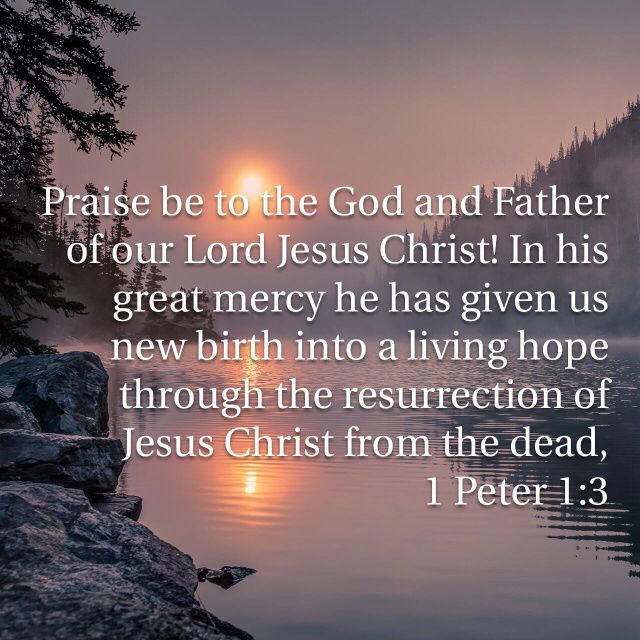
            As we look at our Scripture reading this morning from 1 Peter chapter 1, we see right up front: “Praise be to the God and Father of our Lord Jesus Christ! In his great mercy he has given us new birth into a living hope through the resurrection of Jesus Christ from the dead.” Right off the bat, the apostle states where we get our hope from, our living hope: through the resurrection of Jesus Christ from the dead!

            But, how can we have faith in Someone we have never seen? Someone who was raised from the dead, by verbal report? A long, long time ago, at that?

            This little letter at the end of the New Testament came several decades after the events of the Crucifixion and the Resurrection, and after a number of the people who were actual witnesses of the resurrected Lord Jesus had themselves died. The local governments and authorities were cracking down on anything that looked like rebellion or conflict against the accepted status quo. The situation throughout the whole region was, frankly, dangerous for these new believers! Yet, they kept on spreading the witness of the Resurrection, telling what Jesus had done in their lives.

But, that isn’t the case today! Is it? No one would be afraid to speak up for Jesus, to witness to the Resurrection today, would they? Well, actually, yes. In the region I just visited some days ago, the region of North Africa and the Middle East, wide areas have official papers that everyone must have filed with the regional or local governments. When a baby is born, each one has a religious designation given to them: often, it’s Muslim, Christian, or Jew. In Muslim-majority areas, it is often frowned upon for a Muslim to change their religious designation. Period. Even if an adult wishes to change their religious designation on their identity papers, it is forbidden, by the government as well as the religious leaders. And sometimes by families, too.

This modern-day attitude that is continuing through large areas around the world today gives me a whole new insight to the great difficulty the apostle was dealing with, right here in this letter to scattered new believers throughout the region surrounding Palestine! The year is probably the early 60’s, and this letter was either written by the apostle Peter, or perhaps dictated by Peter to a fellow church leader who wrote it out for him.

I wonder again: how can we – today – have faith in Someone we have never seen? Someone who was raised from the dead, by report?

Just like many believers today in North Africa and the Middle East, “This letter was written [during the first century] when the church was under constant threat; when the benediction was spoken in a whisper because everyone knew when they gathered again someone likely would be missing, caught up in the cleansing, deportations, and imprisonment. They were afraid of their neighbors. They were afraid people might discover that they practiced a minority religion, a suspect faith. They worried that neighbors might turn them in to the increasingly vigilant authorities who were out to make the nation safe.” [1]

I suspect that the Apostle Peter, the Apostle Paul, and the other disciples had absolutely no idea that centuries later Easter would turn into a fancy dress occasion, with Easter bonnets, best clothes, and lots of candy, chicks, bunnies and Easter baskets. No, Easter in the first century was a whole different occasion. A joyous one, certainly! Yet, not one that was safe, at all. Too many perilous situations, too many unexpected and dangerous people who might be listening!

“If the question ‘should we hide’ is the one being addressed, who better than Peter to answer it? Peter, who professed his loyalty to his Lord with moral conviction and then ran like a scared bunny when things got heated. Peter, who claimed his steadfastness with loud protests and then claimed to not know who they were talking about when someone asked him about this Jesus. Of course, Peter would answer this question. He’s been there.”  He knows. [2]

Thirty years after the Resurrection and Ascension in the first century, thousands had responded to the Good News, the witness of these who had actually seen the resurrected Christ. Countless thousands more had come to believe on the strength of the witness of those who had not seen and yet were committed to this Good News, blessed promise of Resurrection.

 “Can you have faith in someone you’ve never seen?” The 1 Peter passage calls us to thankfulness for what God does in our lives! This reading also encourages us to have continued faith even though we haven’t physically seen Jesus. The might and the power of the Lord Jesus Christ and this same Good News of the Resurrection are preached from countless pulpits today, and shared by countless people throughout the centuries.

Some questions that face each of us today, highlighted by this reading from 1 Peter? Is Jesus your Companion, your Friend? Has Jesus worked in your life? How has Jesus come alongside of you? And, most central, is the Resurrection part of your life today?

As the apostle said in verse 8, “Though you have not seen him, you love him; and even though you do not see him now, you believe in him and are filled with an inexpressible and glorious joy.” Do you and I truly know this inexpressible and glorious joy?

            We can have this living hope, no matter what! Peter says so, right here! Peter and the early, scattered church had it! Persecuted believers around the world, throughout the centuries have had it! And, we can have this hope, too. Living hope, and inexpressible and glorious joy.

Is this call-and-response just an ancient saying, repeated by rote? Or is it a true and heartfelt witness to the Resurrection? We can truly, joyfully say Christ is risen! He is risen, indeed! Alleluia, amen!

@chaplaineliza

(Suggestion: visit me at my other blogs: matterofprayer: A Year of Everyday Prayers. #PursuePEACE – and  A Year of Being Kind . Thanks!


[1] https://www.umcdiscipleship.org/worship-planning/a-living-hope/second-sunday-of-easter-year-a-lectionary-planning-notes/second-sunday-of-easter-year-a-preaching-notes

[2] https://www.umcdiscipleship.org/worship-planning/a-living-hope/second-sunday-of-easter-year-a-lectionary-planning-notes/second-sunday-of-easter-year-a-preaching-notes

Unknown's avatar

Recognizing Jesus

“Recognizing Jesus”

Luke 24 road-to-emmaus-rembrandt

Luke 24:13-35 (24:16, 26) – April 26, 2020

Have you ever run into a good friend you haven’t seen for a while, and not recognized him or her? That is, at first? Exactly that happened to my son earlier this week, at a store near our house as he picked up a few things. He wore a mask—as is appropriate. About six or eight feet down the aisle was another young man, wearing a mask, too. The other man bumped something off the shelf and said, “Oh, no!” My son recognized his friend’s voice! But, the masks they were wearing kept them from recognizing each other—at first.

Something similar happened after the Resurrection, to two disciples. The two even heard the witness brought to them by the women disciples, that their Rabbi Jesus’s body was gone from the tomb! But, these two disciples couldn’t quite accept the women’s witness. (Apparently, the other men disciples had a hard time believing the women, too.) We don’t know why they decided to leave Jerusalem a few days after the crucifixion, but they did.

Perhaps the two disciples were nervous, or anxious. Their leader had just been arrested by the authorities and condemned to death! What if the authorities started rounding up the friends and associates of this radical, rabble-rousing Rabbi? Why else might they have left? All of the disciples were grieving. The loss of such a wise, strong, loving person like the Rabbi Jesus must have been devastating! And, different people have different reactions to grief—reactions all over the board, from anger to depression to desperate tears.

I think everyone is grieving right now. Who is not missing things from their life before the lockdown? What about school? School children miss their classmates, teachers miss their students, and parents miss the structured, ordered classes. What about adults who cannot go to work? What about closed businesses, blocked services, rules against close proximity, and—most of all—the lost income? The economic impact? What about the desperate isolation and loneliness some people experience now, with the widespread lockdown? Not to mention the grief of having loved ones in hospital and care centers, much less dying from serious illness?

These are just some of the losses and griefs countless people are experiencing right now!

Wasting no time, the two disciples hit the road early in the day, and who did they happen to meet? We know, since our Gospel writer Dr. Luke tells us: the resurrected Jesus Christ. The risen Stranger begins to walk with them, and they fall into deep conversation on the way about all that had happened in the past week or so in Jerusalem.

What about us, today? How much would you give to have Jesus take a walk with you and tell you all about Himself? What would it be like to hear about the witness of Scripture from the author of all that is holy, the Living Word, Himself?

Dr. Luke tells us that the two disciples were kept from recognizing Jesus during that whole journey from Jerusalem to the nearby town of Emmaus, about nine miles down that dusty road. Their eyes may have been closed through fear and anxiety, which certainly can cause a great deal of upset and disturbance inside. Trauma, too, which we now see as a very serious thing, indeed. The disciples might have been confused and off kilter. Death of a dear friend or loved one can do that to you! I know. I’ve experienced it. I suspect you have, too.

What about us? Is there anything keeping us from recognizing Jesus? We have already talked about grief, which is a huge thing in some people’s lives—especially now in this time of pandemic. But, other strong emotions can keep us in a fog. Living in a constant state of fear can disturb our thoughts and even our brain function. People who study the effects of trauma tell us so. What about confusion and bewilderment? Anger and frustration? All very valid reactions, and all very human feelings, too.

Any one of these can keep us from recognizing Jesus, and if two or three are going on at once, our distress is that much greater. Our distancing grows, and some even start walking away from Jesus. Believe me, it happens much more often than we realize.

I see Jesus being gentle and straightforward as He walks and talks with these two disciples. He lays out all the truths from the Hebrew Scriptures for these two men. We don’t know for sure, but they might have been like Thomas; we looked at him last week. These two disciples may have needed to hear the Truth from the ultimate Source of Truth, Himself.

At the end of our narrative, Jesus is finally revealed to the two friends at dinner. When Jesus takes and breaks the bread, the disciples see, recognize, and realize that it is indeed their Rabbi come back from the dead, the risen Christ sitting with them at the table.

And then—Jesus disappears! The two friends look at one another, saying, “What just happened?” “Was that truly Him? Really and truly?” They finally recognize Jesus for what He was. The encounter changed their lives. I wonder—when we recognize Jesus, does that encounter change our lives, too?

When we recognize Jesus—I mean, truly realize what He means in our lives—it cannot be just a casual greeting, a mild how-do-you-do and then we merrily continue on our way, without a thought more about Jesus and His Resurrection. Jesus means much more! We need to recognize all that He is, all that He means, and all that He offers freely. Resurrection! Life everlasting! And, Himself as our brother and best friend.

Praise God, Jesus can walk by our sides even now, through trouble, grief, pain, fear and anger. He has promised never to leave us nor forsake us, wherever we may journey in life. And, that is a sure and faithful promise from our resurrected Lord and Savior. Amen! Alleluia.

@chaplaineliza

(Suggestion: visit me at my regular blog for 2020: matterofprayer: A Year of Everyday Prayers. #PursuePEACE – and my other blog,  A Year of Being Kind . Thanks!

Unknown's avatar

Saved—By Prayer

“Saved—By Prayer”

Dan 6 Daniel with lions

Daniel 6:22-23 – August 25, 2019

Have you ever prayed hard? I have heard from friends about people in their lives who prayed, and sincerely felt heard. Usually, it’s been someone’s grandma, or great-aunt, or perhaps their father. Or, perhaps you remember some respected person from a church where you attended as a child or young person. There was someone in that church who seemed to have a special connection to God; so much so that others in the church would notice and remark about it.

I suspect the prophet Daniel was just such a person. Daniel had a special connection to God, and he regularly prayed. Each and every day, several times a day.

Yes, Daniel was a prophet, in exile. A large number of young people—most probably from the nobility and well-to-do class—were taken captive to Babylon when the Babylonian army conquered Israel. He and his three friends were especially chosen to work in the king’s palace as civil servants. Long story short, all four were filled with integrity, honesty and an excellent work ethic. The king noticed their hard work, and promoted them.

This story about Daniel in the Lions’ Den is well-known, probably the best known among the stories of the Hebrew prophets. At this point, Daniel continues to be in great favor with the king for years, since he is always hard-working, honest and filled with integrity. Except—the homegrown Babylonian civil servants become so jealous and resentful that they hardly can see straight. We can just see them plotting and planning in their nefarious way.

Sometimes, that is the way it happens, when other people in your department or in your neighborhood see your integrity or honesty or hard work. These other vindictive people not only can grumble and engage in backbiting or smear campaigns against these honest, upright people, they may retaliate or even go one step further. Sometimes, bad things happen to good people.

We can find accounts of bad things happening to good people all over the place. Not only in the Bible, but throughout history. We see people of faith, people filled with integrity, prayerful people who are persecuted, maligned, abandoned, exiled, and even martyred. The story of Daniel in the Lions’ Den does not end that way. But, I’m getting ahead of myself.

We are told in Daniel 6 that the king was so pleased with Daniel that he was going to promote him to a position of great authority over the whole kingdom, like being vice-chancellor, second-in-command over all government affairs. Here is where the plotting and planning comes in. We read: “the administrators and the satraps tried to find grounds for charges against Daniel in his conduct of government affairs, but they were unable to do so. They could find no corruption in him, because he was trustworthy and neither corrupt nor negligent. Finally these men said, “We will never find any basis for charges against this man Daniel unless it has something to do with the law of his God.”

Yes, Daniel was a person of prayer, too. He had the daily habit of praying three times a day, in addition to being a man of integrity. It was this feature of prayer that the Babylonian administrators were going to attack. These bad guys from Babylon cook up a scheme to convince the king to pass a law that for thirty days would condemn anyone who had the audacity to pray and ask things of anyone except the king himself.

An aside here; an important aside. Kings in those days were absolute rulers, with the power of life and death over the people they ruled. Commentator John Walvoord thought “The probability is that Darius regarded this act as a pledge of loyalty to himself and a token of their desire to respect his authority to the utmost.” [1] This was a way of ensuring that the people of Babylon were completely subservient to the king and his authority. After the law was signed, Daniel continued to pray to the Lord God, creator of heaven and earth, three times a day. He knew he would be liable to die for his actions. He not only was a man of prayer, he was also a man of deep convictions.

I suspect we all are in awe of Daniel and his strength of purpose. I do not think I would have the strength to go out on a limb, in the same way our favorite prophet did. It is a hard thing, to stand up for your faith, stand apart from the crowd, be honest, filled with integrity and prayer. The bad Babylonian administrators were delighted to find that Daniel was steadfastly praying, just as he had done before. Can you see them scurrying to tell King Darius about Daniel?

Reading from the Message:  “The conspirators came and found Daniel praying, asking God for help. They went straight to the king and reminded him of the royal decree that he had signed. “Did you not,” they said, “sign a decree forbidding anyone to pray to any god or man except you for the next thirty days? And anyone caught doing it would be thrown into the lions’ den?” “Absolutely,” said the king. “Written in stone, like all the laws of the Medes and Persians.”

13 Then they said, “Daniel, one of the Jewish exiles, ignores you, O king, and defies your decree. Three times a day he prays.” 14 At this, the king was very upset and tried his best to get Daniel out of the fix he’d put him in. He worked at it the whole day long. 15 But then the conspirators were back: “Remember, O king, it’s the law of the Medes and Persians that the king’s decree can never be changed.”

We know that Daniel was thrown into the lions’ den overnight. The king was worried to death, and went back in the morning, afraid to peep into the enclosure. However, Daniel was sitting there unharmed. God had shut the lions’ mouths and kept Daniel safe. And the prophet was a mighty witness to God in that place and in that time. Even the king acknowledged God.

We can name countless others who were not saved from the lions’ den, who were hurt, maligned, tortured, and even killed for the faith they so stubbornly held. Yet, we also hear of occasional people for whom God did do a miracle. We do not know why some were saved, and others were not. I think we can leave that question to God. Something more to ask when we all get to heaven.

I would like to lift up Daniel as an example of faithful prayer. Jesus reminds us several times in the Gospels that prayer is like children coming to their parents. We know that children come with all kinds of things. Crazy requests as well as expressions of love that make our hearts melt. It is the same way with us and God. Just as Daniel did, we are encouraged to have regular, intimate, ongoing interaction with our Heavenly Parent.

Yes, things can be difficult in this life. Yes, life can have twists and turns, yet we can be encouraged by the witness and example of Daniel. Even though our journey through life can go through valleys, up hills, and down winding roads, we have a faithful Friend and loving Companion. We have the opportunity to have regular, intimate, ongoing interaction with our God. Just like Daniel.

Alleluia, amen.

[1] https://bible.org/seriespage/6-daniel-lions-den

https://walvoord.com/article/247  John F. Walvoord, Theologian, Educator, Author

@chaplaineliza

(Suggestion: visit me at my regular blog for 2019: matterofprayer: A Year of Everyday Prayers. #PursuePEACE – and my other blog,  A Year of Being Kind . Thanks!

Unknown's avatar

Who Are You, Lord?

“Who Are You, Lord?”

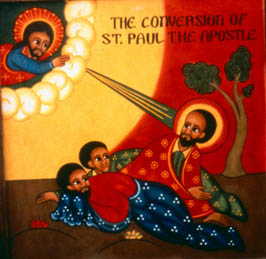
Acts 9 conversionofsaintpaul - ethiopian icon

Acts 9:1-20 – May 5, 2019

Once there was a recent college graduate named Martin. He had enrolled in a doctoral degree program at the University of Erfurt, but he went home for a few days before the class session started. On his way back, not far from the town of Erfurt, a huge thunderstorm broke over the countryside. Martin was trying his best to get to shelter when a sudden lightning bolt fell to earth. BOOM! It struck the ground immediately next to Martin—so close he could feel it singe his clothing! He was thrown to the earth with great force. Frightened almost to death—literally—Martin made the immediate, passionate vow that he would change course in his life, become a monk and devote his life to God. All this happened while Martin was traveling, on the road. A true “Road to Damascus” experience.

Has anyone here ever known someone who went through a radical transformation in an instant? Or, at least, in a relatively short time? That is what happened to Saul of Tarsus, on the road to Damascus.

But, that comes after the end of our narrative, today. What is the beginning of the story? How did Saul of Tarsus get to this point?

The wonderful commentator Bob Deffinbaugh sets a vivid scene for us. He says, “Imagine for a moment that this is the week of Saul’s arrival at Damascus. By this time Saul has gained a reputation as the ringleader of the movement to make Christianity extinct. A devout Hellenistic Jew, of the tribe of Benjamin, born in Tarsus of Cilicia, Saul did not agree with his teacher, Rabbi Gamaliel, on how the Christians should be dealt with. Rather, he sought the arrest, trial, conviction, and punishment (with imprisonment the norm and death the ideal, it would seem) of those in Jerusalem. Saul was not content to punish some and to drive the rest from the “holy city.” He did not want to merely contain Christianity or to drive it from Jerusalem; he wanted to rid the earth of Christianity and its followers. His opposition to Christ and His church took on a ‘missionary’ spirit. Saul went to other cities where he sought to arrest Christians and to bring them back to Jerusalem for punishment. Damascus, a city 150 miles to the northeast of Jerusalem, was one such city. Word was out that Saul would soon be arriving.” [1]

I don’t know about you, but if I heard of such a bloodthirsty, vengeful person coming to my home town, I might be scared to death, too. What are the followers of Jesus going to do? Ethnic hatred blended with and heightened by religious hatred is corrosive and hurtful, and greatly to be feared.

This was not just a problem in bible times. Seriously, there are many places in the world today where determined, devout people want to eradicate people who do not believe like they do. Not just run them out of town, or out of the country, but instead, put them to death. I am not just speaking about devout Hindus, or devout Muslims, but sometimes devout Jews, or devout Christians or Catholics or Orthodox Christians.

This was the situation with Saul of Tarsus! He was a religious, observant Jew, an up-and-coming rabbi, a “Hebrew of the Hebrews,” by his own account. And, he could not kill these “heretics” fast enough. He even had letters of recommendation to the heads of synagogues in Damascus, to let them know his official status as a member of the Sanhedrin, the Jewish council.

This was early in the life of the Church, only a number of months after the great Pentecost happening in Acts chapter 2. And, the followers of “The Way” (as they were called) were spreading like wildfire!

But, similar to the situation with Martin in the scene I opened this sermon with, Saul was literally knocked off his feet. A heavenly light, brighter than bright, surrounded Saul. A shocking, out-of-this-world thing happened on the road to Damascus, indeed!

Just like Moses at the burning bush, just like Martin when the lightning struck, Saul had the presence of mind to realize that this was so huge, so stupendous, this could only be a God-moment! Have you ever had a God-moment? You, or someone you know? An instant when you know beyond a shadow of a doubt that God is present? Did you get an answer to that question, “Who are You, Lord?” up close and personal?

I did. I remember it vividly. Itp was early in my first chaplain internship, right out of seminary. In Cardiac Care, I held the hand of a tiny, very elderly woman as she transitioned from this world to the next. The woman had no one—no relatives, or friends, or any one else, except for a state-appointed medical power-of-attorney. I could feel the presence of God. And, yes, God was there with us, as she died.

Saul got that answer from God in plain language. From our reading today from Acts: “Saul fell to the ground and heard a voice say to him, “Saul, Saul, why do you persecute me?” “Who are you, Lord?” Saul asked. “I am Jesus, whom you are persecuting,” He replied.

How stupendous was that response! And, how crushing! All the orthodox theological and religious scaffolding Saul had painstakingly erected throughout his education and training was tumbling around his ears, in that one moment.

Dr. Luke continues with the risen Lord Jesus’s words: “Now get up and go into the city, and you will be told what you must do.” The men traveling with Saul stood there speechless; they heard the sound but did not see anyone. Saul got up from the ground, but when he opened his eyes he could see nothing. So, they led him by the hand into Damascus. For three days Saul was blind, and did not eat or drink anything.”

“It was time for Saul to ponder what he had seen and heard. For now, he was told to proceed on to Damascus, where he would be given his next instructions.” [2] It was as if this revelation was going to come in several different pieces, or parts. Yes, his sudden conversion happened on the road to Damascus. However, Saul’s blindness allowed him the opportunity to think deeply about these events, and gave him the opportunity to wholeheartedly commit his life to the risen Lord Jesus Christ. How many of us would take something like this seriously?

Remember bloodthirsty Saul? Breathing fire and brimstone? Remember the shock and stunned reaction to the heavenly light, on the Road to Damascus? And, the follow-up question, “Who are You Lord?” Saul made a first-person testimony. We all can thank God for Saul’s—now, Paul’s—testimony and subsequent witness, too. Witness and Apostle to the world.

Remember Martin, almost struck by lightning? That was Martin Luther, and that was a true story. It really happened in 1505, and Martin’s life was forever changed, that day lightning just missed striking him. That was his Road to Damascus experience, sending Martin on the path to grapple with God’s presence and forgiveness in his personal life, and more.

It doesn’t matter whether you or I have had a Road to Damascus experience, or whether we more gradually become aware of God’s work in our lives, because there are countless ways to come close to God. These were the ways Saul (who changed his name to Paul) and Father Martin developed their relationships with the Lord Jesus Christ. The Lord Jesus has His arms open. He wants us all to struggle out of blindness, like Saul, and come into His heavenly light, the light of a loving relationship and friendship with Him.

Come to Jesus, like Saul, like Martin. Jesus has His arms open wide.

Amen, alleluia.

[1] https://bible.org/seriespage/conversion-saul-acts-91-31

“The Conversion of Saul (Acts 9:1-31),” by Robert Deffinbaugh at the Biblical Studies Foundation.

[2] https://bible.org/seriespage/conversion-saul-acts-91-31

“The Conversion of Saul (Acts 9:1-31),” by Robert Deffinbaugh at the Biblical Studies Foundation.

@chaplaineliza

(Suggestion: visit me at my regular blog for 2019: matterofprayer: A Year of Everyday Prayers. #PursuePEACE – and my other blog,  A Year of Being Kind . Thanks!

Unknown's avatar

Compassion through Hospitality

Genesis 18:4-5 – June 11, 2017

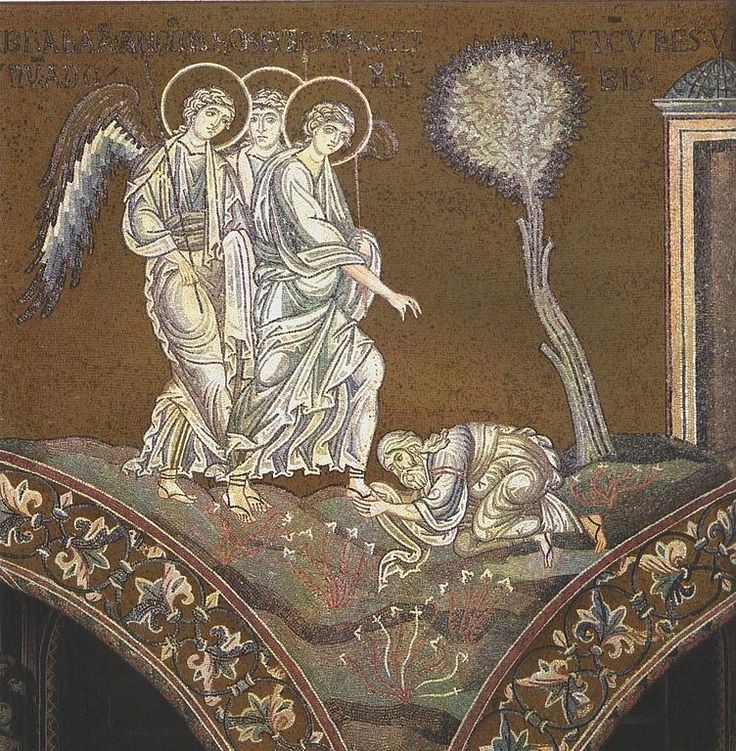
Exod 18 Abraham bends down before Holy Trinity - angelic visitors at Mamre - mosaic in Monreale Cathedral

“Compassion through Hospitality”

Almost everyone enjoys visiting with friends. This can involve meeting for a cup of coffee or tea, going out for a meal, or having friends over at your house. What do you do to make friends or relatives welcome at your table? How do you like to be welcomed, when you go over to someone’s house or apartment?

These are great things to think about. We begin our first sermon of the summer, our Compassion sermon series. Let’s take a look at Genesis and at Abraham, the friend of God. He and his wife Sarah were on a nomadic journey—a very long caravan camping trip that lasted for years and years. While they were traveling, they camped for a time in the land of Canaan near what is now the town of Hebron.

God appeared to him. Here’s how it happened: “The Lord appeared to Abraham near the great trees of Mamre while he was sitting at the entrance to his tent in the heat of the day.” Right off the bat, this bible reading lets us know an important fact. It’s sort of the summary statement at the beginning of this reading, and then the passage explains what it’s all about.

This first verse tells us a lot. Abraham had his tent set up by some big trees. There wasn’t any air conditioning in those days, so he looked for some big trees to provide natural cooling. Abraham sat at the entrance to his tent—a cool place, to catch any little breath of wind drifting by. We also know it was the middle of the day—a really hot time in that semi-desert terrain!

Now that we’ve explained more about it, in your mind’s eye, can’t you just see Abraham sitting there, catching the breeze in the cool shade, at the door of his tent?

What happens next? “Abraham looked up and saw three men standing nearby. When he saw them, he hurried from the entrance of his tent to meet them and bowed low to the ground.”

We are not sure how much Abraham knew about these three men, but he goes out of his way to greet these three strangers. In many places in the world, people give you a warm welcome when you come to their home. It’s certainly true of many people and places throughout the Middle East.

“As a nomad, Abraham and his family lived in tents, as they traveled with their grazing herds in the desert. The few who lived in the harsh deserts of Judea depended upon each other for survival. Visitors were treated very well, for they brought companionship and help for the host. The practice of hospitality was highly prized in Abraham’s time.[1]

“Abraham and Sarah offer hospitality to strangers that come to their camp, upon seeing the strangers coming in the heat of the day, it’s suddenly high gear hospitality.  Hospitality would be the duty of any desert dweller of the time.” [2] I mean, really greet you! They give any stranger an extravagant welcome.

Let’s turn to a modern-day example. When our children, or grandchildren, or nieces and nephews go over to a friend’s house, what are some things that might make these young people feel welcome? Yes, their friend might offer them a drink or a snack. That is great. But, let’s go further. What if their friend goes the extra step? What if their friend lets our children play with their toys? What if their friend lets them pick what show they would like to watch on cable or DVD? How about inviting them to stay for dinner, or even inviting them to sleep over? All these ways of helping them feel welcome in their home are ways of showing “hospitality.”

Just as Abraham and Sarah welcomed these unexpected strangers, can’t we do the same thing? Maybe make a special effort to welcome each person into our house—or church, regardless of whether we know them or not? We can help them feel noticed, cared for and safe in joining our group of friends. How did Abraham show these three people they were welcome?

“Abraham said, “If I have found favor in your eyes, my lord, do not pass your servant by. Let a little water be brought, and then you may all wash your feet and rest under this tree.”

Let’s play a little game with this bible reading, a topsy turvy game.

What if Abraham did not feel like showing hospitality to the three strangers? What would that have looked like? What might have happened, then? As the three persons came near the tent, Abraham might hide inside and shut the tent flaps tight. When they knocked at the tent door, Abraham could tell them to go away, in an angry voice. If the three persons insisted that they were thirsty or hungry, Abraham might yell that they should go some other place, and freeload off of someone else.

If all that had been true, bible history might have happened very differently!

But, no! Abraham and Sarah were fine hosts. Let’s read more of the bible passage: “Let me get you something to eat, so you can be refreshed and then go on your way—now that you have come to your servant.” “Very well,” they answered, “do as you say.”

As a fellow pastor commented, “There was no Holiday Inn, or highway rest area, there is only Abraham and Sarah’s camp and their herds and their well. So, when strangers appear in the heat of the day, needing a wash and a rest, you tend to their needs. Some kind of host switch has been flipped.  Abraham runs, he hastens, he quickly prepares.  His hospitality seems to go above and beyond – the best of the herd, the best flour and in abundance for the meal.” [3]

Modern times have not changed hospitality. How do good hosts show us their hospitality today? They offer food and drink and try to make us as comfortable as they can.

I remember my dear prayer partner Zhou Hui. She was born in mainland China, grew up in a poor neighborhood in a medium-sized town, did really well in school, and was able to get awarded a scholarship to university. She came here to the United States as a graduate student, and became a naturalized citizen. She lives near here, and her children attend New Trier High School. She is a devout Christian, and a real pray-er. I thank God I was able to be her prayer partner for years.

I bring up Zhou Hui because she always bends over backwards to be a wonderful hostess. She has the spiritual gift of hospitality, and she always offers wonderful food and drink to her guests. I can remember many, many enjoyable meals my young children and I had at her house. That is just what Abraham did here. He and Sarah hurried up and offered their unexpected visitors wonderful food and drink.

Abraham and Sarah not only showed these strangers genuine hospitality, they showed compassion—Godly compassion.

Hospitality is the way we help others feel welcomed and cared for, and that we can do this anywhere we are: for friends at our homes, new students in our classrooms or new neighbors on our block.

This narrative is a beautiful reminder that when we show compassion and kindness to other people, we are showing compassion and kindness to God.

When we read about Abraham, we might think, “How nice! What a good job, showing kindness and hospitality.” I have news for you: Jesus shows us hospitality! Jesus shows each of us kindness and compassion! Does this change the way we see other people in our lives, especially those we don’t know very well? Or, those we don’t even know at all?

How might we show hospitality to others? I know we pride ourselves on our kind, compassionate welcome to anyone who comes into our church. We can show our community that St. Luke’s Church witnesses to the love of Christ, not only with words, but doing what we do best: serving food and showing people a warm welcome.

Hospitality is a wonderful way to show everyone the love of God and show kindness and compassion—the same way God has already shown love, kindness, compassion and welcome to each of us. Let us go out, and do likewise.

Alleluia, amen.

[1] http://www.word-sunday.com/Files/c/16-c/FR-16-c.html “Abraham Welcomes the Lord,” Larry Broding’s Word-Sunday.Com: A Lectionary Resource for Catholics.

[2] https://seattlemennonite.org/2014/07/27/the-last-laugh/

[3] https://seattlemennonite.org/2014/07/27/the-last-laugh/

(A heartfelt thank you to An Illustrated Compassion: Learning to Love Like God. Many sermon ideas and thoughts came directly from this series.  I appreciate this intergenerational curriculum, which is the basis for my summer sermon series on compassion. This curriculum comes from Illustrated Children’s Ministry. Thanks so much for such great ideas!)

Unknown's avatar

Pour Out the Spirit

Acts 2:17-18 – June 4, 2017


Acts 2-3 pentecost

“Pour Out the Spirit”

Waiting can be difficult. We wait for buses and trains. We wait for school to let out and for work to end for the day. Waiting in a doctor’s or dentist’s office can sometimes be long and painful, too. In fact, time seems to pass much more slowly as we wait, with caution, questioning, or with fear and trembling.

Let’s consider the followers of Jesus as they waited. Were they eager? Were they fearful? How did they feel, not knowing what was going to happen? What was their situation, after the ascension of their leader, Rabbi, our Lord Jesus Christ?

Remember our service last Sunday, how we celebrated the Ascension of Jesus? After several weeks of post-Resurrection appearances, Jesus went to the top of a hill and addressed His friends for the final time. Jesus gave the followers specific instructions to go to Jerusalem and…wait. Wait for power. Wait for some Spirit to come from somewhere. Then, He rose from the earth, and ascended bodily into heaven.

Shortly after the ascension, the followers of the risen Jesus do go back to Jerusalem, in obedience to the final words of Jesus. These followers include Mary, the mother of Jesus and His brothers, plus the disciples and the women who followed Jesus faithfully, as well. And—they all wait. They wait for several days.

The followers of Jesus stayed in hiding, keeping a low profile, not wanting to attract the attention of the religious leaders or the Roman soldiers in Jerusalem. Remember, these leaders were still really angry that someone “stole” the body of the Rabbi Jesus several weeks before. Of course the friends of Jesus wanted to lie low, in case any of these religious leaders wanted to drag any of them in for questioning.

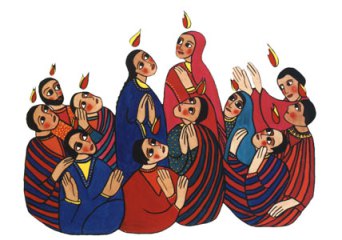
Then—something happened, all right! It was another important feast of the Jewish calendar. Let’s listen to what Dr. Luke says in Acts 2: “When the day of Pentecost came, all the believers were gathered together in one place. Suddenly there was a noise from the sky which sounded like a strong wind blowing, and it filled the whole house where they were sitting.”

The followers’ time of waiting suddenly was interrupted! Can you imagine a strong wind blowing, so strong you could feel it almost blow you over? Except, they were all locked in that closed upper room, inside, and they actually felt the strong wind inside the building.

But, that wasn’t the end—by no means! “Then, they saw what looked like tongues of fire which spread out and touched each person there. They were all filled with the Holy Spirit and began to talk in other languages, as the Spirit enabled them to speak. There were Jews living in Jerusalem, religious people who had come from every country in the world. When they heard this noise, a large crowd gathered. They were all excited, because all of them heard the believers talking in their own languages.”

We are not going to describe the differences in speaking foreign languages, or speaking in ecstatic utterances. No, I will leave that for specialists in biblical interpretation. I am more of a general biblical interpreter, as a pastor and preacher. What I see from this scripture passage is that God sent the Holy Spirit upon the followers of Jesus in a powerful way. What is more, a huge audience gathered when this Holy Spirit phenomenon happened in Jerusalem that day—a multicultural audience who had traveled from all over the known world to worship God.

We are all aware of the multicultural, multi-ethnic community we live in, here in Morton Grove, Niles, Des Plaines, Glenview, and Skokie. Such wonderful, diverse neighborhoods we all share! That was very much what the disciples and other followers of Jesus were dealing with, in Jerusalem on that grand feast day.

Sure, the followers of Jesus had the mighty power of the Holy Spirit poured out upon them, as they spilled out into the street and started talking what God had done in their lives, crying out, excited and overjoyed. The awesome power of God filled them, energized them, so much so they could not hold it in.

The audience—the gathered crowd in Jerusalem had a few reactions to this action. Surprise, certainly! “In amazement and wonder they exclaimed, ‘These people who are talking like this are Galileans! How is it, then, that all of us hear them speaking in our own native languages?’” However, some in the audience scoffed: “But others made fun of the believers, saying, ‘These people are drunk!’”

As commentator Mitzi Smith says, “Confounded, the men do not agree about how to interpret the event that they have all witnessed together at the same time. Some translate what they hear as babble resulting from a midday drinking binge (2:13).” [1] Many of these people were confused—confounded, as Mitzi Smith says.

How often did the disciples have problems understanding what was going on, while Jesus was with them? How often do we misunderstand the words and acts of God? Didn’t the people of Israel need to be reminded again and again and again of the lessons and works and words of God? Is it any wonder that these multicultural Jews had difficulty comprehending the mighty works of God through the pouring out of the Holy Spirit?

Then Peter stood up with the other eleven apostles and in a loud voice began to speak to the crowd: “Fellow Jews and all of you who live in Jerusalem, listen to me and let me tell you what this means. 15 These people are not drunk, as you suppose; it is only nine o’clock in the morning. 16 Instead, this is what the prophet Joel spoke about: 17 ‘This is what I will do in the last days, God says: ‘I will pour out my Spirit on everyone.’”

Can you picture this scene? More than a hundred excited believers in Christ, newly energized by the Holy Spirit, spilling out into the streets of Jerusalem. They are not like robots, emitting a canned message, like a cookie cutter, exactly the same as everyone else. No! The pouring out of the Holy Spirit is truly an amazing event.

As Mitzi Smith says, “the first act of God’s Spirit at Pentecost honors the diversity and individuality of the believers.” [2] Each person who believes is still an individual, and each one who hears is celebrated in their diversity! Each one hears God’s mighty acts in the heart language they grew up with. Listen: “Devout males, Jews and proselytes, from every nation, and who had traveled from Africa, Rome, and Asia hear this group of disciples speaking to them about the mighty acts of God in their own languages (2:8-11).” Plus, here is the kicker, the most important part: “God’s acts remain God’s acts in every language and culture.” [3]

God pours out Holy Spirit power that enables us to do God’s work on earth.  God inspires us, gives us gifts (talents), and works through us.  God expects us to “do something in God’s name.”  This is a powerful self-image.  We are powerful and God has work for us to do. [4]

The followers of Jesus told others about what God had just done in their lives! It doesn’t matter when or where we talk about God. We are still witnessing. (Just like the disciples.) We can still talk about God’s mighty acts in our lives, today.

Can you name something that God has done in your life, recently? You, or someone in your family? Are you excited about what God has done in your lives? I encourage you to tell someone about it, today! What is more, we can look forward to what God will do in our lives, tomorrow. We can all celebrate the mighty acts of God with joy, with praise, and with adoration.

Alleluia, amen!

[1] http://www.workingpreacher.org/preaching.aspx?commentary_id=823 Mitzi J. Smith

[2] Ibid, Mitzi J. Smith.

[3] Ibid, Mitzi J. Smith.

[4] http://worshipingwithchildren.blogspot.com/2014/05/year-pentecost-june-8-2014.html Worshiping with Children, Pentecost, Including children in the congregation’s worship, using the Revised Common Lectionary, Carolyn C. Brown

@chaplaineliza

(Suggestion: visit me at my regular blog for 2017: matterofprayer: A Year of Everyday Prayers. #PursuePEACE – and my other blog,  A Year of Being Kind . Thanks!)

Unknown's avatar

The First Missionary

John 4:5-42 (4:29) – March 19, 2017

Jesus and woman at well icon

“The First Missionary”

When I say these words: “rotten half-breeds!” what comes to mind? Arguments, animosity, maybe even blood feuds. Fighting going on for years, decades, perhaps even centuries. Certainly, nothing good or positive.

That’s the situation we have here in John chapter 4, with the Jews and their hated half-brothers, the Samaritans. The Samaritans were, indeed, half-breeds who had been settled in the middle of modern-day Israel by the Assyrian occupation, about 700 BCE. The fighting and the hatred between these two closely-related tribes of people had been going on for several centuries.

That’s the backdrop we have as we consider this extended conversation between the Rabbi Jesus and an unnamed Samaritan woman, right smack in the middle of the Samaritan region of the country. Typical Jews would not often cross through Samaria to get from the south part of the country—around Jerusalem, to the north part of the country—around Nazareth and the Sea of Galilee. For the Jews, this encounter was in the middle of enemy territory.

Let’s listen in on Jesus and this woman.

In Samaria Jesus came to a town named Sychar. Jacob’s well was there, and Jesus, tired out by the trip, sat down by the well. It was about noon. A Samaritan woman came to draw some water, and Jesus said to her, “Give me a drink of water.” (His disciples had gone into town to buy food.)

Here is the situation. Jesus has been walking all morning, wants water, and asks for a drink. I am not going to give a long explanation concerning why this woman came to the well when everyone else had gotten their water for the day. No, and I am not going to ask what kinds of behavior might be scaring the other Samaritan townspeople away. I will let you all imagine what kinds of things they might be.

Continuing with John 4: “The woman answered, “You are a Jew, and I am a Samaritan—so how can you ask me for a drink?” 10 Jesus answered, “If you only knew what God gives and who it is that is asking you for a drink, you would ask him, and he would give you life-giving water.” 11 “Sir,” the woman said, “you don’t have a bucket, and the well is deep. Where would you get that life-giving water? 12 It was our ancestor Jacob who gave us this well; he and his children and his flocks all drank from it. You don’t claim to be greater than Jacob, do you?”

According to common Jewish thought at that time, this was a “rotten, half-breed Samaritan woman.” Yet, she goes right to the heart of it, and unerringly puts her finger on the complication in this extended conversation. “Life-giving water:” what kind of water is that? Where does it come from?

Stagnant water sits in a cistern or barrel and harbors deadly bacteria. “Life-giving water” or “living water” means running water, like in a stream or river. “Living water, rushing over rocks, cleans us more thoroughly and is much safer to drink. We build settlements where living water flows at the surface, or where wells can be dug reaching to underground streams or springs of water.” [1]

The woman’s rhetorical question, “You’re not greater than Jacob, are you?” can also imply she is rather skeptical of this Jewish guy sitting by the well. 13 Jesus answered, “Those who drink this water will get thirsty again, 14 but those who drink the water that I will give them will never be thirsty again. The water that I will give them will become in them a spring with life-giving water and give them eternal life.”

15 “Sir,” the woman said, “give me that water! Then I will never be thirsty again, nor will I have to come here to draw water.” Ah. Jesus is upping the stakes, offering this woman living water, and even life-giving water that becomes a spring inside of each person. See how eagerly the woman responds?

16 “Go and call your husband,” Jesus told her, “and come back.” 17 “I don’t have a husband,” she answered. Jesus goes to the heart of the woman (and, the heart of the interaction) by broaching the highly personal subject of the woman’s husband. Some might say it was a sore spot. However, Jesus is revealing Himself further to this woman through this statement. Back to the story.

“Jesus replied, “You are right when you say you don’t have a husband. 18 You have been married to five men, and the man you live with now is not really your husband. You have told me the truth.” 19 “I see you are a prophet, sir,” the woman said.

20 “My Samaritan ancestors worshiped God on this mountain, but you Jews say that Jerusalem is the place where we should worship God.” 21 Jesus said to her, “Believe me, woman, the time will come when people will not worship the Father either on this mountain or in Jerusalem. 22 You Samaritans do not really know whom you worship; but we Jews know whom we worship, because it is from the Jews that salvation comes.

25 The woman said to him, “I know that the Messiah will come, and when he comes, he will tell us everything.” 26 Jesus answered, “I am he, I who am talking with you.”

Do you see the natural steps of interaction Jesus took with this woman? Her surprise at his asking for a drink of water changed to curiosity at the offer of living water. This further changed to wonder and amazement at Jesus knowing all about her past, and her several marriages. Finally, they reach the topic of religion, and Jesus tells her—in plain words—that He is, indeed, the Messiah. All in a short interchange.

In fact, when Jesus reveals Himself to this woman, He speaks the words “I am.” These words make explicit connections with the divine name in Exodus 3:14, which also confirm the words of the first chapter of the Gospel of John: “the Word was God.” In this way, Jesus fulfills this woman’s expectations of the Messiah and transcends them, at the same time. [2]

27 At that moment Jesus’ disciples returned, and they were greatly surprised to find him talking with a woman.” (Jesus, as a Jewish religious leader, was not supposed to talk with a woman in public, much less a Samaritan woman.) “But none of them said to her, “What do you want?” or asked him, “Why are you talking with her?”

28 Then the woman left her water jar, went back to the town, and said to the people there, 29 “Come and see the man who told me everything I have ever done. Could he be the Messiah?” 30 So they left the town and went to Jesus.

Here we have an evangelist. The first Christian missionary! She was so struck by what Jesus had just said to her that she had to go and tell others about it. What is more, she invited all her fellow townspeople to come and see! Come and see this man who told her everything she had done in her life.

Because of this woman’s witness, the number of people who believed in Jesus grows—and not just Jews! The “hated, rotten, half-breed” Samaritans believe, too! Jesus and His words challenge each of us, today.

How do you and I come to believe in Jesus Christ as our Lord, our Savior, our Messiah? Was there some life-changing moment in your life that softened your heart and changed your mind? What was it—what is it that causes us to want to go and tell everyone the Good News? Are we eager to tell others to “Come and see?” [3]

Are we so excited that we forget our water jars—or smart phones—or briefcases—or tool belts? It is important to share our witness and to tell our own story. Jesus encourages us to tell others to “come and see!” Come on, come closer. Come, see the One who knows everything about me, and loves me anyway!

Come and see!  

[1] https://www.umcdiscipleship.org/resources/planning-for-worship-during-lent-year-a-living-our-baptismal-calling

[2] Gail R. O’Day and The New Interpreter’s Bible Commentary (Vol. 10, The Gospel of John), (Nashville, TN: Abingdon Press, 2000), 568.

[3] https://www.umcdiscipleship.org/resources/planning-for-worship-during-lent-year-a-living-our-baptismal-calling

@chaplaineliza

(Suggestion: visit me at my regular blog for 2017: matterofprayer: A Year of Everyday Prayers. #PursuePEACE – and my other blog,  A Year of Being Kind . Thanks!)

Unknown's avatar

Hear Creation’s Cry

“Hear Creation’s Cry”

Psalm 24-1 creation picture

Psalm 24:1-2 – July 10, 2016

Have you ever had a family member, or a friend, go out of town? Or how about go on vacation? Your friend, your family member, asks you to take care of something of theirs. It may be a dog or cat, sometimes houseplants indoors or a garden outside. Asking you to be a good steward for them. Taking good care, being responsible for your friend’s property. That includes all the stuff in your friend’s house or apartment, all their valuables and beloved possessions.

Let’s go on a tour of Scripture today. Think about the earth God created. Creation is the handiwork of a loving God who saw all that was made and in Genesis pronounced it “very good.” Scripture tells us that God delights in creation and creation delights in praising the creator.  A great example is Psalm 150:6. “Let everything that breathes praise the Lord!”

One of the oldest forms of expression of Christianity today is Celtic Christianity. Coming from the British Isles, it carries within it the deeply Celtic understanding that nature itself is a testament to God. One of the Celtic holy men, Saint Columbanus once said, “If you want to know God, first get to know his creation.” [1]

That is exactly the case with the earth, the world, today. The earth belongs to the Lord. God created it—all of it. The dogs, the cats, the other animals, things that swim in the water and fly in the air. All the plants, and trees, and other growing things. All the valuable things on the earth and underground.

God wants us, expects us human beings to be good stewards of the earth, to take excellent care of it, nurturing it, loving it. Exactly how you’d expect someone to take care of your dog or cat while you were away on an extended vacation.

Let’s look at the UCC Statement of Mission. Which sentence are we on this week?

“Empowered by the Holy Spirit … To hear and give voice to creation’s cry for justice and peace.” We are to listen and respond to this wonderful gift God has given to all of us.

Our next stops on our tour of Scripture are the books of Genesis and Numbers.  We have seen that God has given humankind a special responsibility to care for creation. Genesis 2:15 says the Lord God took humanity and put them in the garden of Eden to till it and to keep it. A form of the Hebrew verb “shamar,” meaning “to keep,” is also used in Aaron’s blessing from Numbers 6:24. Lacey closes our services playing Lutkin’s arrangement of that blessing each week as Al extinguishes the candles. “The Lord bless you and keep you.”

We are not only to nurture, sustain and care for creation, but we are to follow God’s example. We can see how God nurtures, sustains and cares for us—each one of us. This interconnected aspect of creation helps all of us remain aware of the joys and concerns encountered in the world around us, and of their impact on all of our lives each day.

However, there is a problem. A huge problem.

Our relationship with God, with each other and with creation are all part of the same multi-colored fabric. Pull any one thread and the whole piece begins to unravel. Human selfishness, ignorance, fear and mistrust have ecological consequences. Add some territorial urges, and feelings of animosity and xenophobia. A basic name for all of this is sin.

The Bible is not hesitant to make connections between human sinfulness and the degradation of creation. Two telling examples come to us from the prophets Isaiah and Hosea.  “The Earth lies polluted under its inhabitants; for they have transgressed laws, violated the statutes, broken the everlasting covenant” (Isaiah 24: 5). “There is no faithfulness or loyalty, and no knowledge of God in the land. . . . Therefore the land mourns . . . even the fish of the sea are perishing” (Hosea 4: 1-3).

What is to be done? People will not stop being selfish, or territorial, or fearful, or displaying hatred. But it’s also much bigger than that. Going clear back to the fall, to Adam and Eve’s disobedience in the garden, we learn that broken relationships are costly.  Lord, who will deliver us from this horrible state of sin?

We could throw up our hands, and say that saving the world is a lost cause. The earth is too far gone. The scales have been tipped, and it’s all downhill from here. But—it is not true!

When all else seems totally dark, God steps in.

I have talked about this before. Remember? God the Son became incarnate in Jesus Christ. He was born as a baby in Bethlehem. Jesus became part of the “stuff” of creation to heal and restore the relationships broken by human sinfulness.

The apostle Paul tells us “God was in Christ reconciling the world” (2 Corinthians 5:19). An early hymn praises Jesus Christ, the firstborn of creation, the firstborn from the dead, through whom God was pleased to reconcile all things, whether on Earth or in heaven (Colossians 1:15-20). The resurrection of Jesus Christ, God’s great victory over sin and death, is a pledge and sign not only of our resurrection, but also of God’s promised redemption of all creation.

Can I hear an “Amen” for that? Jesus and His resurrection means that we will be redeemed, just like creation. Just like the world will be. We all have had experience with God and how incredibly stunning this creation is, right now.

However, let me remind you. Andy Wade tells us something so important: “God’s creation is not somehow separate from God’s plan of redemption. When we forget that God’s very good creation also gives testimony to God, we can begin to think that it’s ours to trample on, ours to exploit, and ours to use for our own selfish purposes.” [2]

This selfish, self-centered kind of attitude and way of dealing with the wonders of creation and the great gift God has blessed us with? Thank God that God has made a way for creation to be made new, just as much as God has made a way for us to be made new!

The next question is simple: what is the next step? Where do we go after realizing God has plans to make all of creation new?

We as followers of Christ are called to witness to the resurrection of Jesus Christ. In our words and actions we are called to reflect the love of the one whose victory over sin and death was a victory for the whole of creation.

It is all very well to simply talk about being a witness. But, how can we do that, right here and right now? I’m glad you asked.

Some years ago, Solana Beach Presbyterian Church, near San Diego, received one of six “2000 Energy Star for Congregations Awards” from the US EPA. Following an energy audit, the congregation invested in energy-saving measures, including new lighting fixtures and energy-efficient light bulbs. The Solana Beach Church witnesses to Christ’s redeeming power every time they turn on the lights!

Just like this church! We can praise God that Kids Academy got all of the light bulbs in St. Luke’s Church building changed to energy efficient light bulbs. This is a wonderful start! Every time anyone here turns on the lights, we, too, can witness to Christ’s redeeming power.

Let’s not stop here. Let’s continue to keep looking for ways to hear creation’s cry, and to respond in loving ways. Ways to witness to the world around us that we are striving to be good stewards. Ways to celebrate God’s goodness, too. Alleluia, amen!

@chaplaineliza

(Suggestion: visit me at my regular blog for 2016: matterofprayer: A Year of Everyday Prayers. and my other blog,  A Year of Being Kind . Thanks!)

My sincere thanks goes to the National Council of Churches’ great resources. I borrowed liberally from the Earth Day 2001 Sermon Notes and Worship Resources.

http://web.archive.org/web/20110706140053/http://www.nccecojustice.org/earthday/PastEarthDayResources.php


[1] http://godspace-msa.com/2016/07/07/creations-sacrifice-gives-testimony-to-god/

[2] http://godspace-msa.com/2016/07/07/creations-sacrifice-gives-testimony-to-god/