Unknown's avatar

Goodness and Mercy!

“Goodness and Mercy!”

Psalm 23 (23:5-6) – May 11, 2025

If you have been listening to the news at all this past week, you probably have heard: there is a new pope! Pope Leo XIV.

With the pageantry and voting by the Papal Conclave, during this last week the world has had many news stories and op-eds about the process of choosing a pope. As the Papal Conclave met, on Thursday the first North American pope was chosen, the former Robert Prevost, now Pope Leo XIV. And, not only is there a new pope, but he was born on the south side of Chicago! A real home town boy, indeed.  

As we think about this recent selection of the head of the worldwide Catholic church, several general descriptions of a representative Pope, the leader of the church, come to my mind. Some popes can be described as more this way than others, but Pope Leo sounds like he may indeed be an example of all of these.

The pope is seen as a bridge, connecting the disparate countries and regions of the Catholic church, and a bridge reaching out to other faith communities around the world. Also, a champion of the poor, the hungry, the migrant and immigrant, the least of these. And, most importantly for us today, the Pope can be seen as a Shepherd among shepherds. The Chief Shepherd for the Catholic church, caring for his sheep.

Does that sound familiar? Our Scripture reading today is Psalm 23. This reading goes along with Shepherd Sunday. Like the other Scripture readings today, it reminds us that God is our Chief heavenly Shepherd. We highlight this gorgeous expression of trust in God, written by King David several thousand years ago. Countless people over the centuries have found comfort in grief, solace and encouragement in sorrow, in these words and reflections.

As we consider the reflections of King David, thinking back to his time shepherding his father’s sheep, this psalm displays “comfort and reassurance of God’s caring presence with us throughout life, whether we’re in the ‘green pastures’ of verse 2 or the ‘darkest valley’ of verse 4. That’s definitely the narrative that the psalmist intended to describe and celebrate and from which, millions of us have taken comfort for generations past.” [1]

One of my favorite commentators Carolyn Brown reminds us that “it is important to recognize that the Good Shepherd is a metaphor and children have a hard time with metaphors.  Studies show that most children do not develop the brain skill of transference that is necessary to understand metaphors until they are into adolescence.  But, the Bible and our worship is filled with metaphors.  I suspect that we help the children claim them when we carefully explore the details of a few key ones, expecting them to become familiar with the concrete part of the metaphor and some of the spiritual realities it embodies, but not fully making the connection until later.  The Good Shepherd is definitely one of those key metaphors. 

“Dr. Maria Montessori reports that while working in a children’s hospital she found that when she told sick children stories about the Good Shepherd using small wooden figures, they almost all grabbed the figure and held onto it “for keeps.”  So the Good Shepherd made sense to them in some way.” [2]

That is all very well, to talk about the Shepherd psalm as literature and as a metaphor. But, can I personalize this scripture reading, and get some meaning out of it for me? Where am I in this psalm? Can I see myself in this scripture passage?

Yes, I certainly can, and I hope you can, too.

I can recognize myself throughout. David compares himself to a sheep, here, and the Lord God is the Good Shepherd. So, when I look at this psalm, I find I have no problem seeing myself as a sheep, too. If you imagine with me here, we can all identify as sheep in the flock that Jesus our Good Shepherd herds and leads.

This Sunday is the fourth Sunday after Easter, which many faith traditions in the Christian church celebrate as “Good Shepherd Sunday.” This is the Sunday where we particularly highlight our Good Shepherd, our true and eternal shepherd Jesus.

When we consider the Latin word for shepherd, we come upon the word “pastor.” Catholics worldwide are rejoicing that they again have what they term as a “universal pastor here on earth in Pope Leo.” [3] From all accounts, as the former Father Robert Prevost served in Peru for several decades, he was a pastor and shepherd for the local churches among the rural parishes he served. He highlights social justice. He has a heart for the poor, the underserved, the migrant and immigrant, and the stranger among us – just as our Lord Jesus told us to do, in Matthew 25.  

In Psalm 23, the Good Shepherd knows the difficulties and the dangers of the land, as well as the easy places, the pleasant, sheltered places. That’s true, in our case, too. God knows where each of us has been, and where each of us is going. God knows our every step, and our every misstep, too. God goes ahead of us, to look over the terrain, and check out any adverse conditions. There are no surprises to God.

            So, is it any wonder that this psalm ends with the marvelous words “Surely goodness and mercy shall follow me all the days of my life, and I will dwell in the house of the Lord forever.” God knows where we have been, and God knows where each of us is going. And, God is right by our sides all the way, no matter what.

            Good, devout people of faith all over the world are praying today with hope and thanksgiving for this new church leader, Pope Leo XIV. We can join our prayers with theirs as we come to God on this Shepherd Sunday, remembering our Good Shepherd, our Lord Jesus. That is truly good news for all of us! Alleluia, amen.

@chaplaineliza

(Suggestion: visit me at my other blogs: matterofprayer: A Year of Everyday Prayers. #PursuePEACE – and  A Year of Being Kind . Thanks!


[1] https://www.churchofscotland.org.uk/worship/weekly-worship/monthly/2025-may/sunday-11-may-2025-fourth-sunday-of-easter-year-c

[2] http://worshipingwithchildren.blogspot.com/2015/03/year-b-fourth-sunday-of-easter-april-26.html

[3] https://nypost.com/2025/05/10/world-news/cardinal-dolan-reveals-how-future-pope-leo-xiv-impressed-him-at-the-conclave-and-predicts-what-kind-of-pontiff-he-will-be/
Unknown's avatar

God Prepares a Table!

“God Prepares a Table!”

Psalm 23:5 – September 3, 2023

            I am fascinated by a painting I’ve encountered a number of times, of Jesus the Good Shepherd. This is the very first picture we have of Jesus, painted around 250 CE. It is found in the catacombs in Rome, those narrow, twisting underground tunnels. The walls are filled floor to ceiling with graves that have been dug – as tombs. Just imagine walking quietly through these twisting tunnels with a small oil lamp!

As you continue imagining, see yourself going to find fellow Christian friends who are gathering to worship by a designated grave. You need to be cautious as you listen for the clank of Roman soldiers’ armor, as you glide quietly along. Given this, it is easy to imagine why someone painted a picture of Jesus as a strong young shepherd on the ceiling of the catacomb! Jesus certainly can take care of us, as this Psalm says. [1]

Our Scripture reading today comes from the book of Psalms, and is one of the most familiar and beloved readings in the whole Bible, in either the Hebrew Scriptures or the New Testament. Countless people have turned to Psalm 23 for peace, for reassurance, in times of anxiety or struggle, and even in times of great joy. This psalm is a psalm for the ages, and has been read for centuries by believers, skeptics, and atheists alike.

            This very familiar psalm begins with the view of the Good Shepherd, taking loving care of His sheep. We hear about how the sheep depend upon the Shepherd to guide them and guard them as they roam in a flock. The sheep depend upon the Shepherd’s watchfulness and protection as they travel through dark and dangerous places. Yet, a change comes in verse five. We see the Shepherd change into a generous Host.  

            You and I know the familiar possessions many people own to show off their wealth and status. The huge, expensive, and showy house, sometimes with a large fence around it or now, in a gated community. Or, the luxury automobile, with all the bells and whistles, and a price tag I can’t even image. Except, those are signs of wealth and prestige here in the Western world, here in a culture we are familiar with.

            The traditional culture of the Middle East is very different, when it comes to displays of wealth and prosperity. “When you want the community to know that you have acquired wealth, you do not buy an expensive car or a large house. Rather, you host meals with three times as much food on the table as the numerous guests can eat.” [2]

            Such radical hospitality and generosity goes way overboard, in the eyes of many in our Western culture! But, this is the cultural way that traditional Middle Eastern people-groups show great wealth and prominence. The psalmist’s imagery goes even further. In Middle Eastern culture, men do not prepare food. Instead, women prepare the food for a banquet, and that does not mean setting a table with individual place settings and elaborate china.

Eating is carried out by tearing off a small piece of flat bread and using it to lift food from the common dish to the mouth. Each bite starts with a fresh piece of bread. There is nothing to do to ‘set the table’ except perhaps ‘spread the rugs’ (as referenced in Isa 21:5). As regards the food, servants and women prepare it. The master of the house provides the food, he does not prepare it.” [3] Several times in the Hebrew Scriptures, verses explicitly say that female involvement is instrumental for the spreading the table and serving of food.

Yet, here in verse 23:5 the psalm clearly says “You prepare a table before me in the presence of my enemies.” Here in one of our most beloved Bible passages, our God is portrayed as a nurturing, even mothering God! “Here too, what counts is that God is provides and protects. How surprising that the table spread in the presence of enemies! It is hard to relax and be fed in their presence. Yet God invites us to the table, come what may and come who may.” [4] You and I may be surprised at some of the visitors surrounding God’s welcoming table. And, for this Scripture to highlight God acting as a woman, doing traditional feminine tasks in preparing the table, is fully in keeping with numerous Scriptural references.

One of the many hymns written about Psalm 23 comes from the wonderful hymn writer Isaac Watts. “My Shepherd Will Supply My Need” is a touching reflection of the great care and nurture God takes on each of our accounts, in each of our lives.  You will note how Watts mirrors the shift in the Psalmist’s speech (from third person to second person in verse 4 and back to third person in verse 6) as he moves from the first to the second stanza.

“Much of Watts’ hymn text reflects the Psalmist speaking to the Lord. Changing the voice to second person highlights the prayerfulness of this Psalm, thereby emphasizing the more intimate relational aspect between God and God’s children.“ [5]

            As this comforting, relational psalm reminds us about the table prepared for us, the Apostle Paul references this table in 1 Corinthians 10 when mentioning Communion. Are you tired and worn, eager to come to the table of the Lord? What is more, God, our generous Host, invites us to come and partake of the abundant heavenly food and drink.

As we come together to celebrate the Lord’s Supper, we look forward to that marvelous banquet spread for all of us. For each of us. So, come. The Lord has prepared this table. Amen, alleluia.

@chaplaineliza

(Suggestion: visit me at my other blogs: matterofprayer: A Year of Everyday Prayers. #PursuePEACE – and  A Year of Being Kind . Thanks!

(I would like to express my great appreciation for Ken Bailey’s marvelous examination of all of the mentions of the Good Shepherd throughout the Bible in The Good Shepherd, the commentary published by IVP Academic in 2014. I got several excellent ideas and quotes for this sermon from this excellent book.)


[1] http://worshipingwithchildren.blogspot.com/2015/03/year-b-fourth-sunday-of-easter-april-26.html

[2] Bailey, Kenneth E., The Good Shepherd (InterVarsity Academic, Downers Grove, IL: 2014), 55-56.

[3] Ibid.

[4] https://www.workingpreacher.org/commentaries/revised-common-lectionary/ordinary-28/commentary-on-psalm-23-16

[5] https://www.workingpreacher.org/commentaries/revised-common-lectionary/fourth-sunday-of-easter-3/commentary-on-psalm-23-9

Unknown's avatar

Returning to the Shepherd

“Returning to the Shepherd”

1 Peter 2:19-25 – April 30, 2023

            How many here know the 23rd Psalm by heart? The 23rd Psalm is probably one of the most familiar Bible passages in either the Hebrew Scriptures or the New Testament. I myself memorized it when I was younger, when I was regularly memorizing verses from the Bible. These verses can be by turn comforting, soothing, encouraging, and supportive. Just what many people need at challenging or difficult times in their lives!

            Today’s Bible reading hearkens back to Psalm 23. In 1 Peter 2, the apostle is straightforward in his statements. He talks clearly of suffering: the suffering of believers, and about Christ’s suffering on our behalf. Wait a minute! I thought that since I became a Christian that I would not have to suffer! Didn’t you? When we become Christians, we get a nice, easy life, don’t we? Who said anything about suffering?

Here in 1 Peter 2 is one of many places in the New Testament that talk about suffering, certainly. A number of other places in the apostle Paul’s letters mention suffering, too. Paul’s suffering, as well as that of his friends’. And, what about the Gospels? Our Lord Jesus does not shy away from talking straight about suffering. Carrying the cross, and following Him.

            Sadly, I regularly have contact with people for whom life has become very difficult. Living one day at a time becomes the only way that some can possibly make it. Sure, since I am a hospice chaplain during the week, many of the patients and families I interact with are dealing with huge difficulties. And, usually these difficulties are physical in nature.

            Except, life does not always send us physical problems. (Or, just physical difficulties.) Life happens, as we all can attest. Life can throw many of us curve balls, and even see us (or our friends) striking out at home plate. Not only reverses in health, but emotional upsets, lack of financial security, even spiritual distress of many kinds.

            For many, many people throughout the centuries, Psalm 23 has been a help and a stay when the unexpected challenges and difficulties in life happen. This 4th Sunday of Easter is Shepherd Sunday, the day when we not only lift up the many blessings of Psalm 23, but on this Sunday we also look at other Shepherd-related Scriptures.  

             “Perhaps it was the image of Jesus tenderly carrying a lamb over his shoulders. Or the memory of shepherds in a field hearing the good news of God’s love born for them in Bethlehem. Or the Sunday School story of a shepherd boy becoming king. Even if they’d never met a shepherd. Even if they had only encountered sheep from a distance.” [1] Just about everyone attending church during Eastertide has some kind of connection to sheep and shepherds.

            What happens when this Psalm 23, these familiar verses just do not fit with our state of mind, or specific situation. What happens, then? People still get very much afraid, still have health reversals, still get into financial difficulties, still walk through dark valleys.

            This reading from 1 Peter 2 has some difficult words for us to listen to. Difficult words for us to swallow. “To this you were called, because Christ suffered for you, leaving you an example, that you should follow in his steps.” I can attest that I have seen people who know that they will greatly suffer for the sake of and for the name of Christ, and yet they still believe. They can do no other but believe!

I am remembering my trip to Egypt, just a few weeks ago. I had the experience of being in a Muslim-majority country. Just like many believers today in North Africa and the Middle East, “This letter was written [during the first century] when the church was under constant threat; when the benediction was spoken in a whisper because everyone knew when they gathered again someone likely would be missing, caught up in the cleansing, deportations, and imprisonment. They were afraid of their neighbors. They were afraid people might discover that they practiced a minority religion, a suspect faith. They worried that neighbors might turn them in to the increasingly vigilant authorities who were out to make the nation safe.” [2]

            This was the situation for these scattered believers in Christ, in the first century. And, this is the current situation – the suffering – for countless believers throughout the world today. Life continues to throw us curve balls, unexpected and sometimes unrelenting. Life continues to happen to all of us, in any number of ways. It does not matter how strong of a believer you or I may be, it can be terrifying to walk in the darkest valley, whatever that dark valley of our life may be. But – Jesus, that Shepherd of our souls is walking right beside us. Gathering His sheep together.

“The promise is that this one understands; this one has been where we are. This one walks with us into the suffering. This guardian is a close companion, not one who waits until we make it through on our own and then gives us a gold star or some other commendation. No, this one is right there with us. This one knows us. This [shepherd] cares for us.” [3]

In my chaplain’s work, I meet with patients and their loved ones who are in denial, fearful, or angry. Sometimes, they even are serene and accepting of that valley of shadow. What I have been moved to say, again and again, is that our Great Shepherd Jesus is right by our sides. Right there in the room or the hallway, whether they or their loved is sleeping or awake, in pain or pain-free.

            To be sure, our reading from 1 Peter does not just leave us wallowing in suffering. No! Our reading “presents the [shepherd] of our souls as the one who brings us back together, who brings us home. We celebrate that [shepherd] today, the one who walked through the world and showed us what a life of meaning and purpose looked like.” [4]

The message from 1 Peter for us today? Our Shepherd Jesus is with us always. Always! And, He will bring us home. No matter where, no matter what. And, that’s a promise.

            Alleluia, amen.

@chaplaineliza

(Suggestion: visit me at my other blogs: matterofprayer: A Year of Everyday Prayers. #PursuePEACE – and  A Year of Being Kind . Thanks!


[1] http://words.dancingwiththeword.com/2012/04/of-sheep-and-shepherds.html

[2] https://www.umcdiscipleship.org/worship-planning/a-living-hope/second-sunday-of-easter-year-a-lectionary-planning-notes/second-sunday-of-easter-year-a-preaching-notes

[3] https://www.umcdiscipleship.org/worship-planning/a-living-hope/fourth-sunday-of-easter-year-a-lectionary-planning-notes/fourth-sunday-of-easter-year-a-preaching-notes

[4] https://www.umcdiscipleship.org/worship-planning/a-living-hope/fourth-sunday-of-easter-year-a-lectionary-planning-notes

Unknown's avatar

Surely Goodness and Mercy

“Surely Goodness and Mercy”

Psalm 23 (23:6) – May 8, 2022

            Words matter. The words you and I choose to use really do matter. How do you speak about God? Do you – do I – speak of God as being a strict, even punitive taskmaster? Perhaps we speak of God as distant, and really far away, not to be bothered with our petty little affairs here on earth. Do the words you and I use about God show others God’s marvelous love and care? Or do those words show how scary and intimidating God is, instead?

            Our Scripture reading today comes from the book of Psalms, and is one of the most familiar and beloved readings in the whole Bible, in either the Hebrew Scriptures or the New Testament. Countless people have turned to Psalm 23 for peace, for reassurance, in times of anxiety or struggle, and even in times of great joy. This psalm is a psalm for the ages, and has been read for centuries by believers, skeptics and atheists alike.

            What words does King David have to say about the Lord? We can see those words of trust and encouragement throughout this psalm. For, this is indeed a song of praise to God and comfort to one another!

            Except, what if David’s trusting expressions for the Lord are not what you and I might say to God? Or, about God? What if we think of the Lord as something other than a loving Shepherd? What other words do you and I have to describe our Shepherd? Strict? Angry? Distant? What about disapproving? Even, unforgiving? This is not the way that I came to know the Lord Jesus, as a child in Sunday school. I came to know Him as a loving Shepherd!

            One of my favorite commentators Carolyn Brown reminds us that “it is important to recognize that the Good Shepherd is a metaphor and children have a hard time with metaphors.  Studies show that most children do not develop the brain skill of transference that is necessary to understand metaphors until they are into adolescence.  But, the Bible and our worship is filled with metaphors.  I suspect that we help the children claim them when we carefully explore the details of a few key ones, expecting them to become familiar with the concrete part of the metaphor and some of the spiritual realities it embodies, but not fully making the connection until later.  The Good Shepherd is definitely one of those key metaphors. 

“Dr. Maria Montessori reports that while working in a children’s hospital she found that when she told sick children stories about the Good Shepherd using small wooden figures, they almost all grabbed the [shepherd] figure and held onto it “for keeps.”  So the Good Shepherd made sense to them in some way.” [1]

That is all very well, to talk about the Shepherd psalm as literature and as a metaphor. But, can I personalize this scripture reading, and get some meaning out of it for me? Where am I in this psalm? Where are you? Can we see ourselves in this scripture passage?

            Yes, I certainly can, and I hope you can, too. I can recognize myself throughout. David compares himself to a sheep, here, and the Lord God is the Good Shepherd. So, when I look at this psalm, I find I have no problem seeing myself as a sheep, too. If you imagine with me here, we can all identify as sheep in the flock that Jesus our Good Shepherd herds.

I want us to focus on one particular idea from verse 4 of this very personal psalm. “Even though I walk through the darkest valley . . . “  King David had some scary experiences, and downright dangerous ones, as well. Even though he had already been anointed as king by the prophet Samuel, there was a problem . . . in the person of King Saul. King Saul was still claiming to be king, and he sent his soldiers after David for a whole bunch of years. So, David was seriously on the run for his life, for a long time. He got into some really tight situations after being acknowledged as king by the people of Israel, too. He lost friends and family to illness and death. And I am sure he was scared over the years, much more than once or twice.

In the same way, it does not matter how strong of a believer you or I happen to be, it can be terrifying to walk in the darkest valley, whatever that dark valley of our life may be. Believers, whatever their personal or inner strength may be, cannot help but be frightened.

It is scary to walk through the dark valleys of life. I see people who are walking through some of life’s darkest valleys on a weekly basis, even on a daily basis. In my chaplain’s work at Unity Hospice, I meet with patients and their loved ones who at times are in denial, fearful, or angry. Sometimes, they even may be serene and accepting of that valley of shadow.

            Phillip Keller, a pastor who had also been a sheep farmer, or shepherd, for about eight years, wrote a book called A Shepherd Looks at Psalm 23. Rev. Keller was brought up in East Africa, surrounded by native herders. Their manner of herding sheep was very similar to the way their counterparts in the Middle East herded sheep.

            In talking about this verse from the psalm, Rev. Keller mentions that a good shepherd knows every step of the rough terrain his sheep are likely to tread upon. The good shepherd knows the difficulties and the dangers of the land, as well as the easy places, the pleasant, sheltered places. That’s true, in our case, too. God knows where each of us has been, and where each of us is going. God knows our every step, and our every misstep, too. God goes ahead of us, to look over the terrain, and check out any adverse conditions. There are no surprises to God.

            So, is it any wonder that this psalm ends with the marvelous words “Surely goodness and mercy shall follow me all the days of my life, and I will dwell in the house of the Lord forever.” God knows where we have been, and God knows where each of us is going. And, God is right by our sides all the way. God will lead us home, no matter what. That is good news for all of us! Alleluia, amen.


[1] http://worshipingwithchildren.blogspot.com/2015/03/year-b-fourth-sunday-of-easter-april-26.html

@chaplaineliza

(Suggestion: visit me at my other blogs: matterofprayer: A Year of Everyday Prayers. #PursuePEACE – and  A Year of Being Kind . Thanks!

Unknown's avatar

Everything We Need?

“Everything We Need?”

Psalm 23 KJV

Psalm 23:1 – May 12, 2019

Advertising lets us know how much stuff we really “need.” Madison Avenue certainly knows how to plant the thoughts of desire and dissatisfaction in our hearts, prompting us to go out and buy, buy, buy! Consume, consume, consume!

Aren’t we supposed to be dissatisfied with what we have? I thought I was supposed to buy lots of things at shoe stores, department stores, sporting goods stores, computer stores, car dealerships, even garden supply stores at this green and growing time of the year.

What does King David tell us, in the very first verse of our psalm reading today? From the Good News Translation, “The Lord is my shepherd; I have everything I need.”

The first verse of Psalm 23 many people are familiar with? “the Lord is my Shepherd; I shall not want.” The other translation has a bit different words for the second phrase; ‘I have everything I want.” But, doesn’t this fly in the face of advertising and popular culture today?

One pastor expanded on this thought in his comments on this psalm: “We live in a consumerist society that thrives on teaching us to want. Wanting more and more and more: I want a new car. I want a flat screen TV and a Blue Ray player. I want more apps for my iPhone. I want to win Lotto. I want a bigger house. I want it all… “ [1]

Anyone who knows more than one language knows what a challenge it is to exactly translate certain words and phrases from one language to another. Sometimes there are no exact translations. The Good News Translation is one of those versions of the Bible that instead of words, it translates thoughts and phrases from the original Hebrew and Greek into English. Like, right here, where we have the phrase “I have everything I want.”

If I look at life from a sheep’s perspective—which is one perspective of Psalm 23—we do have everything we want. Fields of green grass to eat, quiet pools of fresh water to drink, and a quiet place to rest, all provided for us by this Good Shepherd.

The problem is, we are not sheep. We are human beings, with the complexities and challenges of living in the real world. Life continues to happen. Friends get sick, relatives lose their jobs, loved ones die. Wildfires burn many acres of land, hurricanes devastate towns, floods wash away livelihoods.

We come back to the opening words of this psalm: “The Lord is my shepherd; I have everything I need.”

Another word for a psalm is a poem. King David begins with a simple metaphor. This first line is concise, simple, and expresses the message of the entire psalm. The Lord supplies—or satisfies—every need. [2] This idea of King David’s definitely goes against everything that Madison Avenue and popular American culture tells us today. But, most of us want to have our emotional and spiritual needs met, too.

Rev. Lockhart lists these needs: “I want a happy life. I want to live in safety and security. I want to be left alone. I want someone to show that they care about me. I want someone to visit me. I want the best for my children and my grandchildren. I want my husband to be more considerate. I want my wife to understand me. I want worship to be more fun. I want to know God loves me. And I want to die peacefully in my bed. I want and I want and I want.” [3]

What’s the use? Life is just not fair. I want so much. I’m never going to get what I want. I may as well quit trying to get what I need.

Except—that attitude of defeat is not what God wants for us.

I can tell us all right now that God never promised us a huge flat-screen television, or a fifteen-room mansion, or the latest iPhone, or winning numbers in next week’s Lotto drawing. However, God did promise us the Good Shepherd’s presence at our sides, all along our journey.

This psalm is so familiar, and well-loved. The pastoral images leap right off the page, they are so vivid. We sheep do have a Good Shepherd. We sheep are led into green pastures full of grass. We even have nice, quiet pools of water to drink from, and can lie down to rest, free from all danger.

Except—we are not supposed to flop down and stay in those green, verdant pastures forever. King David describes a journey. We—that is, all of us—are on a journey. A journey through life that the Lord oversees and guides. Sure, sometimes we do get to rest in those green pastures, but it’s just temporary. Our psalmist is on the go, walking beside the water, along paths, and through valleys. Some of those valleys are really deep and dark, too! [4]

What does verse 4 say? “Even if I go through the deepest darkness, I will not be afraid, Lord, for You are with me.” It does not matter what the darkness is—devastating disaster, mental illness, shattering disease, emotional trauma, sexual abuse, grinding poverty, constant warfare. God has promised to be with us all the way, and all the time, too.

Verse 6 says “Surely goodness and love will follow me all the days of my life.” The Hebrew word “follow” can also be translated “pursue.” You know, the same word used when enemies pursue us when we are trying to run away. Except, it’s not enemies pursuing us. Instead, goodness and love will be pursuing us and chasing us down! [5]

We can thank God for such a wonderful image.

The last line of our psalm finishes up our journey. We are to dwell in the house of the Lord all our lives long. Except—the Hebrew word is not exactly “dwell.” Instead, our verb means “to return.” Again, we were—we are—on a journey with God. Our lives are sometimes peaceful, and sometimes difficult. Sometimes quiet, and sometimes traumatic. This psalm enables us to shoulder difficult burdens, and aids us as we sometimes walk sad paths, as well as those times when we rest in beautiful green pastures—or comfortable, joyful places.

No matter where we are on this journey with the Good Shepherd, Jesus has promised to be right by our sides. Yes, we will end up with God when we finish our journey! I do not know exactly what that will be like. I can’t give you a blow-by-blow description. However, as King David tells us, we can continually return to God’s presence all the days of our lives. And, no matter what, if God is there, for sure we will have no more worries or concerns.

What a Good Shepherd. What a wonderful promise. Amen, alleluia.

[1] http://revplockhart.blogspot.com/2012/04/psalm-23.html

Psalm 23, Peter Lockhart, A Different Heresy, 2012.

[2] http://www.workingpreacher.org/preaching.aspx?commentary_id=2372

Commentary, Psalm 23, Joel LeMon, Preaching This Week, WorkingPreacher, 2015.

[3] http://revplockhart.blogspot.com/2012/04/psalm-23.html

Psalm 23, Peter Lockhart, A Different Heresy, 2012.

[4] http://www.workingpreacher.org/preaching.aspx?commentary_id=2372

Commentary, Psalm 23, Joel LeMon, Preaching This Week, WorkingPreacher, 2015.

[5] Ibid.

@chaplaineliza

(Suggestion: visit me at my regular blog for 2019: matterofprayer: A Year of Everyday Prayers. #PursuePEACE – and my other blog,  A Year of Being Kind . Thanks!

Unknown's avatar

For the Sheep

“For the Sheep”

John 10:11-18 (10:11) – April 22, 2018

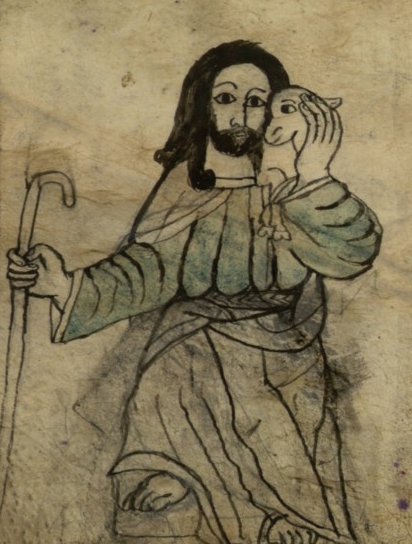
Jesus Good Shepherd_BnF_Ethiopien_389_fol_1v

The Bible often talks about sheep. Sheep in a sheep fold. All we like sheep. The sheep and the shepherd. The nation Israel is like sheep. The followers of our Lord Jesus are like sheep. We can follow the repeated illustrations of sheep and a shepherd in many places in the Bible, in both the Hebrew Scriptures and the New Testament. Just like in today’s scripture readings.

The words of Jesus can be a bit puzzling to both children and adults. We as adults can figure out what Jesus is saying here in chapter 10 of the Gospel of John. We have more developed brains and we can figure out what Jesus means by the metaphor “I am the Good Shepherd.“ Jesus is like a Good Shepherd, and we are like sheep.

But, what makes a shepherd “good?”

Jesus gives us further information in His description about what a Good Shepherd is not. A good shepherd is not a hired hand, since a hired hand doesn’t own the sheep. And so, he does not truly care about the sheep. If the hired hand is watching the sheep, a wolf might come and attack and scatter the flock. A hired hand will probably run away and leave the flock unprotected. So, the hired hand is most definitely not a Good Shepherd.

I go back to my initial question: what makes a shepherd “good?” For a more complete answer to that question, we need to take a close look at Psalm 23, our psalm reading for today. Remember, we are still trying to figure out what makes a shepherd “good.”

Our description from King David lets us know more about what makes a shepherd “good.” As sheep, we might be unsure about where we will find grass to eat, especially in a semi-arid region like most of the country of Israel. Yet, our Good Shepherd knows where there are places with grass to eat; we as sheep will feel safe enough to lie down in green pastures.

What else makes a shepherd “good?” When flocks of sheep are wandering around the fields and foothills of many dry places in Israel, sometimes it is difficult finding places to get water. A quickly rushing stream is not a place where sheep like to drink, since they can get hurt or swept away by the swiftly moving water. Yet, the Good Shepherd can lead His sheep to pools of still water, where they can safely drink.

Even today, we can ask similar questions. What makes a Shepherd “Good?” Dangers and problems can crop up today, at any time, among Jesus’s sheep, too. Will I have enough to eat or drink? What about a quiet place to live? Will the place where I live be safe? Or, will there be wolves and other nasty creatures wandering in my general area?

One of the earliest known depictions of Jesus in early church art is found in the Roman catacombs, under the ancient city. One of my favorite commentators, Carolyn Brown, tells us that “The catacombs are narrow, twisting underground tunnels.  The walls are filled floor to ceiling with graves that have been dug out of them.  They are dark and spooky.” [1]

Carolyn Brown suggests that we imagine we are walking quietly through the catacombs with a small oil lamp to find Christian friends who are gathering to worship by a designated grave. Can you hear the clank or crunch of Roman soldiers’ armor or boots? Christianity was an illegal religion. Christians were often hiding or on the run from the authorities. Since this was the case, it is easy to imagine why someone painted on the catacomb ceiling a picture of Jesus as a strong young shepherd who would take care of them.

What does a Good Shepherd look like, to you?

Jesus expands on this illustration of the Good Shepherd. The people of His time lived mostly in villages or small towns. Even if they worked doing other things, I suspect almost all of them were familiar with sheep, lambs and shepherds. I bet they had some ideas about what made a “good shepherd,” and what a “bad shepherd” looked like, too.

Even though today we might not be very familiar with the job of a shepherd, we still know how safe we feel when someone truly cares for us and looks out for our best interests. We still understand when someone protective stands guard and watches out for enemies so we can feel secure. We still appreciate when someone loving goes out of his or her way to search for a lost sheep when we wander away or get hurt or are in distress.

Jesus wanted to get across the idea of how much He cared for His sheep—that’s all of us. Jesus not only compares us to sheep (a biblical illustration repeated several times in the Hebrew Scriptures), but He tells us just what a hired hand does with the sheep. Or rather, Jesus tells us that the hired hand just runs away. The sheep would then be deserted and alone, liable to be attacked and perhaps eaten by wild animals.

Except, our Lord Jesus will not run away. Instead, He will care for the sheep, feed and water them, and lead them in good places. Jesus will not allow them to stray, but instead will lovingly protect and guard the flock.

As commentator Lucy Lind Hogan says, “To be [Jesus’s] followers was to enter into his sheepfold. He came to be the one who cared for and fed them.  It was a dangerous job; protecting the sheep from wolves and bandits. As the good shepherd Jesus had not only to be willing to, he did, lay down his life for the sheep that God had given him.” [2]

What does our Good Shepherd look like? How do we know when we have found Him?

And, is it possible that Jesus loves us so much that He gave His life for us? That He laid down His life for the sheep God had given Him? Jesus goes further in this reading from John 10, even further than King David in Psalm 23. Jesus not only cares for the sheep, and loves them, but He even dies for them. Gives up His life for the sheep.

Similarly, we lay down our lives every time we set aside what we want to take care of the needs of others.  We all need to hear Jesus’ insistence that if He lays down his life He can take it up again.  Giving up what you want once does not mean you will never get it or that you will always be called on to give up what you want.  Adults have learned that, but it takes a while for children to learn it, too. [3]

I said earlier that some people, young children especially, have a problem understanding metaphors. When Jesus said “I am the Good Shepherd,” that can be one of those hard sayings.

When Dr. Maria Montessori was working in a children’s hospital “she found that when she told sick children stories about the Good Shepherd using small wooden figures, they almost all grabbed the figure [of the Good Shepherd] and held onto it “for keeps.”  So the Good Shepherd made sense to them in some way.” [4] Jesus our Good Shepherd is able to come alongside of all of us, too. We are able to take hold of His hand, “for keeps.”

We know today Jesus loves us so much He gave His life for us. How much did Jesus love us? He loves us this much. [spreads arms wide]

Alleluia, amen.

[1] http://worshipingwithchildren.blogspot.com/2015/03/year-b-fourth-sunday-of-easter-april-26.html

Worshiping with Children, Easter 4, Including children in the congregation’s worship, using the Revised Common Lectionary, Carolyn C. Brown, 2015.

[2] http://www.workingpreacher.org/preaching.aspx?commentary_id=1239

Commentary, John 10:11-18, Lucy Lind Hogan, Preaching This Week, WorkingPreacher.org, 2012.

[3] http://worshipingwithchildren.blogspot.com/2015/03/year-b-fourth-sunday-of-easter-april-26.html

Worshiping with Children, Easter 4, Including children in the congregation’s worship, using the Revised Common Lectionary, Carolyn C. Brown, 2015.

[4] Ibid.

@chaplaineliza

(Suggestion: visit me at my regular blog for 2018: matterofprayer: A Year of Everyday Prayers. #PursuePEACE – and my other blog,  A Year of Being Kind . Thanks!)


Unknown's avatar

Green Pastures, Quiet Waters

Psalm 23:2, John 10:4 – May 7, 2017

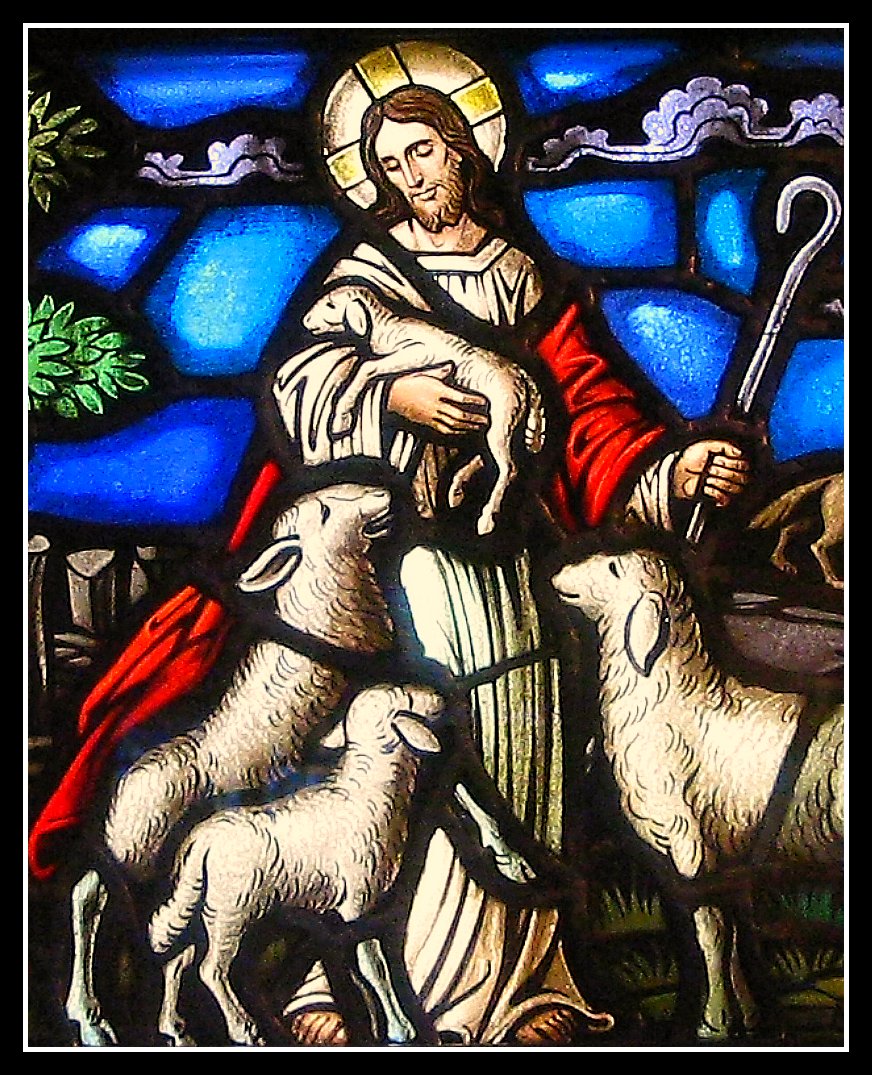
John 14 Good Shepherd, stained glass

“Green Pastures, Quiet Waters”

If I mention images of sheep and green pastures, what comes to your mind, on that video screen in your head? For some people, it might be something on the Nature channel on cable television, with verdant, green grass and gently rolling hills, dotted with fluffy white sheep. For others, it’s a painting at an art museum, with lush green meadows under brilliant blue skies. Again, dotted with sheep feeding on that green grass.

In Psalm 23, our psalm writer is King David. He is writing about his youth as a shepherd for his father’s sheep, long before he ever became king. That time as a shepherd must have been vivid in his mind, because David’s poetic description of sheep and shepherd remains one of the most striking, beloved, and relatable passages in the Bible, in either the Hebrew Scriptures or the New Testament.

Here is another way of saying the first verse of Psalm 23: Because the Lord is my Shepherd, I have everything that I need.

Wait, that makes me a sheep, and sheep are not particularly intelligent. Now, I am okay with that. As I have said in the past, this is a common analogy in the Bible. The nation of Israel is referred to as sheep several times in the Hebrew Scriptures. Different biblical writers refer to people who believe in God as sheep. Several times in the Gospels—as in our Gospel passage from John 10, today—Jesus talks about Himself as Shepherd, and His followers as sheep.

I figure God must know a few things about people, being the Creator of the Universe, and all. Since God uses this common analogy of sheep and shepherd so many times in the Bible, and since sheep have been known to be stubborn and timid and sometimes even foolish, I guess I might have a few things in common with sheep. Maybe you do, too.

Sheep need stuff. They need grass, water, nurture, and protection against enemies. They depend on their Shepherd to provide all of these things for them. But, what if there is no Shepherd? What if there is no one to provide all of this good stuff for us—I mean, for sheep?

Sometimes bible study leaders and bible teachers have their students do an exercise. They write a reverse psalm. That is, writing the reverse of what the verses say. One of the bible commentators I read used this process. She said, “I’ve been led in this process, and led my Bible Study in it. At first you might ask, ‘Why do it this way?’ But, especially when in a group, reading back all the hopeless examples of our life without God, we see the power of this psalm more clearly.” [1]

I’m going to read just the first few verses of Psalm 23, written in reverse. It was written by a then-15 year old named Anna Thompson.

“I have no shepherd, I need a shepherd./I am caught in the desert.
I am thirsty/and no one is telling me where to go.
I am lost and no one cares./I am scared of evil, because I am alone.”  [2]

This is truly a hopeless example of our life without God! What would happen to a few little sheep, huddling in the wilderness or the desert, with no one to guide them, take care of them, or to shepherd them? I don’t think they would last very long. Some predator might come along and have some lamb and mutton for dinner. That’s what probably would happen. This is a far cry from the green pastures and the quiet waters the psalm describes for us, and quite different from the Good Shepherd who supplies our wants and needs.

Jesus takes this image of sheep and a Shepherd from Psalm 23, and enlarges on it.

Notice what is not mentioned in either Psalm 23 or John 10. Is there any mention of the sheep needing all the stuff we see on television? I must have this new outfit or latest electronic gadget or trendy pair of shoes. I absolutely need to be healthy, beautiful, entertained, wealthy and successful. No, neither of these bible readings have anything of the kind.

Psalm 23 has a basic set of wants that “the shepherd provides for his sheep. That list includes food, drink, tranquility, rescue when lost, freedom from the fear of evil and death, a sense of being surrounded by the grace of the Lord, and a permanent dwelling place in the house of God. An ever-rising mountain of material possessions is not on the list.” [3]

.           Let’s think about the reverse psalm again. I have no shepherd. I am caught in the desert. I am thirsty. I am lost. I am all alone.

Doesn’t that hit you right in the gut? Hopeless, helpless, life without God. Where are You, God? I’m all alone out here, and I am lost and scared!

One of my favorite commentators is Carolyn Brown, a Christian educator who’s worked with children for decades. She writes about the Bible and our worship being filled with metaphors. We try to help children understand them “when we carefully explore the details of a few key ones, expecting them to become familiar with the concrete part of the metaphor and some of the spiritual realities it embodies, but not fully making the connection until later [when they are older].  The Good Shepherd is definitely one of those key metaphors. [Doctor and educator] Maria Montessori reports that while working in a children’s hospital she found that when she told sick children stories about the Good Shepherd using small wooden figures, they almost all grabbed the figure and held onto it ‘for keeps.’” [4]

It doesn’t matter if we are talking about the Shepherd of Psalm 23, or the Good Shepherd of John 10. The Shepherd helps the sheep to feel safe, to feel protected and full, able to rest and feel content. Not to feel hungry, thirsty, frightened, lost and alone.

In our Gospel reading this morning, Jesus adds something to the picture of the Good Shepherd that is not in the 23rd Psalm. Jesus talks about the sheep knowing the Shepherd’s voice. That means whether sheep are in green pastures or brown ones, in the desert or high in the hills, the sheep will recognize the shepherd’s voice and call. As Jesus said, “When he has brought out all his own, he goes on ahead of them, and his sheep follow him because they know his voice. But they will never follow a stranger; in fact, they will run away from him because they do not recognize a stranger’s voice.”

In Palestine, in the mid 1930’s, a village near Haifa had some internal conflict. The occupying British soldiers confiscated all the villagers’ animals and put them in a central pen, mixing them all up. The animals’ owners were permitted to redeem their animals, if they could identify them. An orphan shepherd boy whose only possessions were six sheep and goats came to the officer in charge, and asked for his animals. The officer ridiculed the idea that the shepherd boy could possibly pick out his “little flock” from among the hundreds of animals in the pen. The shepherd boy had his pipe and gave his own “call”—his unique call for his animals. “His own” separated from all the others and trotted out around him. [5]

The sheep know the Shepherd. They follow the Good Shepherd’s voice, and willingly go with Him to green pastures, and by the quiet waters. Jesus is the Good Shepherd, and He will be with us in green pastures as well as desert places, by quiet waters as well as in thirsty times. And, Jesus will walk with us through those dark and scary valleys of the shadow, too.

Even when we walk though the valley of the shadow more than we like, praise God, our Good Shepherd will always be there beside us, to help, nourish, protect and nurture us.

Yes, I am a sheep. I freely admit that.

I know if the Good Shepherd is my Shepherd, surely His goodness and love will follow me all the days of my life, and I will dwell in the house of the Lord forever.

[1] http://bethquick.blogspot.de/2011/05/lectionary-notes-for-fourth-sunday-of.html

[2] Psalm 23: “I Have No Shepherd” https://re-worship.blogspot.com/2011/05/psalm-23-i-have-no-shepherd.html

[3] Bailey, Kenneth E., The Good Shepherd (Downers Grove: IVP Academic, 2014), 39.

[4] http://worshipingwithchildren.blogspot.com/2014/03/year-fourth-sunday-of-easter-may-11-2014.html

Worshiping with Children, Easter 4A, Including children in the congregation’s worship, using the Revised Common Lectionary, Carolyn C. Brown, 2014. 2011.

[5] Bishop, Eric F. F., Jesus of Palestine (London: Lutterworth, 1955), 297-98. Quoted by Kenneth E. Bailey in The Good Shepherd, 42.


@chaplaineliza

(Suggestion: visit me at my regular blog for 2017: matterofprayer: A Year of Everyday Prayers. #PursuePEACE – and my other blog,  A Year of Being Kind . Thanks!)