Unknown's avatar

Hope, for Mary and for Us

“Hope, for Mary and for Us”

Luke 1:26-45 (1:38) – November 30, 2025

            I have a secret confession to make. I am greatly thankful that I have never had to take a job in retail. As I said to my husband this past weekend, I would have quit after the first day, simply because of the constant, cheesy, sometimes saccharin-sweet Christmas music that is piped in over the PA system at every retail store I go into. This is done for about two months before Christmas. And, that’s a long, long time to hear Christmas carols and songs, non-stop.

            And yet – and yet, as we consider this alternative Advent Bible reading from Luke chapter 1 today, I invite you to come with me back in time, to a time before there even was a Christmas. We are not only going to time-travel, but we are going to ocean-hop, too. Let us go to the modest home of a teenager named Mary, living with her parents in Palestine, around the beginning of the first century of the Common (or, Christian) Era.

            This teenaged girl – really, young woman, as she was in that time and place – had an angel visitation. We even find out the Angel’s name, Gabriel. The few times that the angel Gabriel appears in the Bible (that we know of), are times of great importance. Especially this appearance, when Gabriel heralds the birth of the coming Messiah! But, we haven’t gotten there yet. Mary is in her parents’ home when the angel suddenly arrives, about to upend everything concerning Mary and her life as she knows it.  

            Another very important fact: the country where Mary is living, and her people, the Jews, are under Roman rule. Palestine is an occupied country, like so many other regions and nations under the boot of Rome and the powerful Roman army. Palestine doesn’t sound much like a “Silent Night, Holy Night,” where “all is calm, all is bright.” Does it?

            Our mighty God does not wait until everything is perfect, or everything is calm and placid, to work wonders and miracles. God sent the angel Gabriel to a teenager in a modest house, in a country under military occupation. Not to the ruling classes, not to the king’s family in his luxurious palace, but to an unlikely young woman in a backwater town.

            Let us shift gears and move our focus to the modern day. Here in the United States, we have a great deal of internal struggle! Things today are certainly not perfect, or calm or placid. As we mark the first Sunday in Advent, the first candle on the Advent wreath is called the candle of Hope. Can you and I possibly find hope in an atmosphere of anxiety? Of uncertainty? Overwhelmed by pervasive negativity, with the American people’s attitudes filled with division, derision and defensiveness?

            Let’s return to Mary and the angel. How does Gabriel lead off in this conversation from Luke chapter 1? 28 The angel went to her and said, “Greetings, you who are highly favored! The Lord is with you.” Admittedly, Mary wonders what on earth is going on! Dr. Luke tells us, Mary “was greatly troubled at his words and wondered what kind of greeting this might be.” I dare say you and I would be greatly troubled, too, if we were to encounter an angel!

            Sure enough, Gabriel announces to Mary that she is highly favored, and that “you will conceive and give birth to a son, and you are to call him Jesus. 32 He will be great and will be called the Son of the Most High. The Lord God will give him the throne of his father David, 33 and he will reign over Jacob’s descendants forever; his kingdom will never end.”

Mary probably knew her place in society of her time, as a female, as a second-class citizen. Mary “is common, ordinary, of little account in her world and definitely not the stuff of legends…and she knows it. Only after expressing her wonder and dismay, and then hearing again Gabriel’s affirmation and promise, does she manage to summon the courage to believe that God has indeed favoring her by working in her and through her for the health of the world.” [1] What was Mary’s response to the angel? 38 “I am the Lord’s servant,” Mary answered. “May your word to me be fulfilled.”

We all know very well that our teenaged Mary became pregnant by the Holy Spirit, and gave birth to the baby Jesus in Bethlehem. We are well used to seeing Mary as a sweet, calm, quiet, almost docile follower of God’s will for her life. However, I would like to suggest that Mary was also a prophet! As a prophet, she would also be a bringer of hope to the world!

This prophetic role, this insight is a new way of looking at Mary for me. New for me, and I hope enlightening to you, too. As we consider the call of the prophets in the Hebrew Scriptures, and consider the call of Mary by the angel Gabriel, we see all the familiar, classic steps: we see God’s initial call, God’s task, the prophet’s objection, God’s reassurance, and the prophet’s acceptance of call. [2]

 I will say more about this next week, when we take a look at the Canticle that Mary sings, but I want to bring before us the earth-shattering idea that “Luke portrays her in a startling role: one that shakes up the way we’ve been brought up to think of her and invites us to stop observing her and start imitating her.” [3]

 I know that the Christmas carol “Once in Royal David’s City” calls mother Mary “mild,” and the typical portrayal of her on Christmas cards is calm, placid and docile. But, how can this mild depiction of Mary cause our hearts to be hopeful, today? Especially when it seems that the whole world is uncertain, the current political situation is contentious, and our society in the United States is fractured and broken?

            While Mary’s specific task is specific to her, the prophetic call remains open to everyone. God can call each one of us to a prophetic role, especially at this time of Advent, at this grateful and expectant time of year when people are looking up, looking outward, looking for hope. We can all be like Mary, the prophet, bearing good news to everyone.

            Alleluia, amen.

@chaplaineliza

(Suggestion: visit me at my other blogs: matterofprayer: A Year of Everyday Prayers. #PursuePEACE – and  A Year of Being Kind . Thanks!


[1] https://www.workingpreacher.org/dear-working-preacher/favored-ones

[2] http://www.patheos.com/progressive-christian/mary-reluctant-prophet-alyce-mckenzie-12-17-2012.html

[3] Ibid.
Unknown's avatar

Hometown Prophet!

“Hometown Prophet!”

Mark 6:1-6 (6:4) – July 4, 2021

            I suspect you have heard of the saying “local boy makes good.” This is an old-fashioned newspaper type of story that used to be common in print journalism. And not only print! It’s a common trope or plot line in movies and television shows, too.

            I am sure you know kids from the neighborhood who moved away after high school or college, who have become quite successful in whatever craft or trade they may have taken up. Their parents, grandparents, aunts or uncles can’t wait to boast about their young person, all grown up and doing wonderful things in the world of adults.

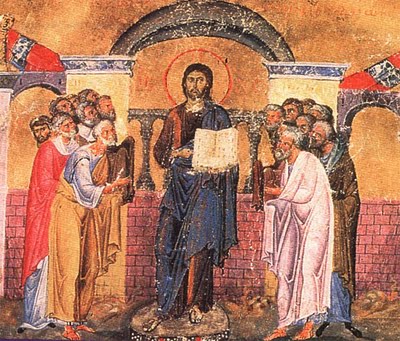
The Gospel reading from Mark today talks about a “local boy makes good,” too. The Rabbi Jesus and His group of disciples come into the town where Jesus grew up. And, what a complicated home-coming this is for Jesus!

Let’s imagine how a small town of today might approach this situation. “The town sign maker is yawning; he stayed up late last night finishing the banner that is now draped across the entry gate to town that says “Welcome to Nazareth, home of Jesus.” The City Council members on the front row [of the synagogue] are all abuzz. They can’t wait to show Jesus the drawings for his Ministry Center to be built on some prime real estate just south of town. They’ve made him a website and set up a blog and a twitter account for him.”[1]

But, wait a minute. That is not quite right. Mark’s Gospel reading doesn’t work that way. Sure, some of the people in Nazareth might be looking forward to having their hometown boy come back to preach in their hometown synagogue, but that is by no means the majority opinion.

            Can’t you hear the grumbling and mumbling going on? Is Jesus getting too big for His britches, putting on airs?  “Isn’t this the son of Mary sitting over there?  And aren’t those his brothers standing there, Judas, Joses, and Simon?  Aren’t those his sisters?  He is just that common kid from Nazareth.  You know, the kid who grazed our donkeys; who watered our animals, who drew water from the well for us to drink. There is nothing too special about him.” [2]

            Can you remember learning to do something you were not able to do when you were younger? I can remember teaching my children to tie their shoes, in kindergarten. One day they were struggling with that skill, and the next day, no problem! Other skills, too – like riding a bike, or driving a car, or learning to knit, or how to hit a baseball. These are things that take some time. We need to learn and grow in order to be able to accomplish these skills and abilities.

            Perhaps the townspeople in Nazareth weren’t used to that idea – the concept of learning and growing, and taking time to accomplish different skills and abilities. Mark’s Gospel clearly says that a number of townsfolk took offense at Jesus. Some commentaries particularly mention this word. In Greek, it is “skandalon,” from which we get the word “scandal.” Can you imagine being scandalized by a young man from your hometown or neighborhood actually preaching, teaching, and even doing miracles? I cannot imagine it – it’s  a little beyond me, but Mark says it’s so, right here in chapter 6.     

            Some people very much want to go home. After traveling, sometimes wandering, the concept of “home” – wherever or whatever that is – becomes  a yearning deep within the heart. One of my commentators said, “Jesus went home, but home didn’t take him in. My inclination in such a scenario would be to feel sorry for myself. Poor me, they don’t understand me, the real me, the me I have become. They still see the goofy kid I was instead of the man I have become. Because there is within us the desire to go home. Or maybe better, there is within us the desire to be home, to be welcomed home, to feel at home.”[3]

            Isn’t that a deep, heartfelt need within each of us? Don’t we all – in some sense – desire to be at home? Think of home, talk about home, wish for home, even when far, far away?

            A pastor acquaintance of mine was remembering about her family’s high school exchange student from Kenya, a number of years back. At the high school talent show, the student did not tell anyone what she was going to sing. Lo and behold, she sang “This Land Is Your Land,” using all descriptions of Kenya – far away though she was. She picked that song and believed that song was written especially for Kenya! [4]

            There are hometowns all over this country, in fact, all over this world. People sometimes have an incredible connection to their hometown. True, some people in Jesus’ hometown didn’t believe He could do all of the preaching, teaching and miracles! Instead, they remembered Jesus when he was a young child— when he hadn’t yet learned how to teach, preach, and heal people. They couldn’t believe God had given Jesus the power to speak and to heal others.

            This neighborhood, where this church sits, is diverse, multi-ethnic and multi-cultural. People around here have hometowns all over this world! Not just from Chicago, or Illinois, or even the United States. We all want a country that feels like home, which means we need people, all the people – of the people, by the people, and for the people – to show us the way to go home. Show us the way to be home, a heavenly home for all God’s children. No matter where they were born. [5]

Please God, we can all have eyes open and hearts ready to receive all God has to offer us, today, including a deep, true sense of home – a heavenly home with God. Alleluia, amen.

@chaplaineliza

(Suggestion: visit me at my other blogs: matterofprayer: A Year of Everyday Prayers. #PursuePEACE – and  A Year of Being Kind . Thanks!

(Thanks to Illustrated Ministries for their lesson for the 6th Sunday after Pentecost from Mark 6, from their 2020 Summer Children’s series.)


[1] “Following a Hometown Boy,” Alyce M. McKenzie, Edgy Exegesis, Patheos, 2012.

[2] “Offended by the Nice Little Kid from Nazareth,” Pastor Edward F. Markquart, Grace Lutheran Church, Seattle, Washington.

[3] https://www.umcdiscipleship.org/worship-planning/your-bone-flesh/sixth-sunday-after-pentecost-year-b-lectionary-planning-notes/sixth-sunday-after-pentecost-year-b-preaching-notes

[4] Thanks to Rev. Elizabeth Mae Magill for this wonderful story!

[5] Ibid, www.umcdiscipleship.org

Unknown's avatar

Saved—By Prayer

“Saved—By Prayer”

Dan 6 Daniel with lions

Daniel 6:22-23 – August 25, 2019

Have you ever prayed hard? I have heard from friends about people in their lives who prayed, and sincerely felt heard. Usually, it’s been someone’s grandma, or great-aunt, or perhaps their father. Or, perhaps you remember some respected person from a church where you attended as a child or young person. There was someone in that church who seemed to have a special connection to God; so much so that others in the church would notice and remark about it.

I suspect the prophet Daniel was just such a person. Daniel had a special connection to God, and he regularly prayed. Each and every day, several times a day.

Yes, Daniel was a prophet, in exile. A large number of young people—most probably from the nobility and well-to-do class—were taken captive to Babylon when the Babylonian army conquered Israel. He and his three friends were especially chosen to work in the king’s palace as civil servants. Long story short, all four were filled with integrity, honesty and an excellent work ethic. The king noticed their hard work, and promoted them.

This story about Daniel in the Lions’ Den is well-known, probably the best known among the stories of the Hebrew prophets. At this point, Daniel continues to be in great favor with the king for years, since he is always hard-working, honest and filled with integrity. Except—the homegrown Babylonian civil servants become so jealous and resentful that they hardly can see straight. We can just see them plotting and planning in their nefarious way.

Sometimes, that is the way it happens, when other people in your department or in your neighborhood see your integrity or honesty or hard work. These other vindictive people not only can grumble and engage in backbiting or smear campaigns against these honest, upright people, they may retaliate or even go one step further. Sometimes, bad things happen to good people.

We can find accounts of bad things happening to good people all over the place. Not only in the Bible, but throughout history. We see people of faith, people filled with integrity, prayerful people who are persecuted, maligned, abandoned, exiled, and even martyred. The story of Daniel in the Lions’ Den does not end that way. But, I’m getting ahead of myself.

We are told in Daniel 6 that the king was so pleased with Daniel that he was going to promote him to a position of great authority over the whole kingdom, like being vice-chancellor, second-in-command over all government affairs. Here is where the plotting and planning comes in. We read: “the administrators and the satraps tried to find grounds for charges against Daniel in his conduct of government affairs, but they were unable to do so. They could find no corruption in him, because he was trustworthy and neither corrupt nor negligent. Finally these men said, “We will never find any basis for charges against this man Daniel unless it has something to do with the law of his God.”

Yes, Daniel was a person of prayer, too. He had the daily habit of praying three times a day, in addition to being a man of integrity. It was this feature of prayer that the Babylonian administrators were going to attack. These bad guys from Babylon cook up a scheme to convince the king to pass a law that for thirty days would condemn anyone who had the audacity to pray and ask things of anyone except the king himself.

An aside here; an important aside. Kings in those days were absolute rulers, with the power of life and death over the people they ruled. Commentator John Walvoord thought “The probability is that Darius regarded this act as a pledge of loyalty to himself and a token of their desire to respect his authority to the utmost.” [1] This was a way of ensuring that the people of Babylon were completely subservient to the king and his authority. After the law was signed, Daniel continued to pray to the Lord God, creator of heaven and earth, three times a day. He knew he would be liable to die for his actions. He not only was a man of prayer, he was also a man of deep convictions.

I suspect we all are in awe of Daniel and his strength of purpose. I do not think I would have the strength to go out on a limb, in the same way our favorite prophet did. It is a hard thing, to stand up for your faith, stand apart from the crowd, be honest, filled with integrity and prayer. The bad Babylonian administrators were delighted to find that Daniel was steadfastly praying, just as he had done before. Can you see them scurrying to tell King Darius about Daniel?

Reading from the Message:  “The conspirators came and found Daniel praying, asking God for help. They went straight to the king and reminded him of the royal decree that he had signed. “Did you not,” they said, “sign a decree forbidding anyone to pray to any god or man except you for the next thirty days? And anyone caught doing it would be thrown into the lions’ den?” “Absolutely,” said the king. “Written in stone, like all the laws of the Medes and Persians.”

13 Then they said, “Daniel, one of the Jewish exiles, ignores you, O king, and defies your decree. Three times a day he prays.” 14 At this, the king was very upset and tried his best to get Daniel out of the fix he’d put him in. He worked at it the whole day long. 15 But then the conspirators were back: “Remember, O king, it’s the law of the Medes and Persians that the king’s decree can never be changed.”

We know that Daniel was thrown into the lions’ den overnight. The king was worried to death, and went back in the morning, afraid to peep into the enclosure. However, Daniel was sitting there unharmed. God had shut the lions’ mouths and kept Daniel safe. And the prophet was a mighty witness to God in that place and in that time. Even the king acknowledged God.

We can name countless others who were not saved from the lions’ den, who were hurt, maligned, tortured, and even killed for the faith they so stubbornly held. Yet, we also hear of occasional people for whom God did do a miracle. We do not know why some were saved, and others were not. I think we can leave that question to God. Something more to ask when we all get to heaven.

I would like to lift up Daniel as an example of faithful prayer. Jesus reminds us several times in the Gospels that prayer is like children coming to their parents. We know that children come with all kinds of things. Crazy requests as well as expressions of love that make our hearts melt. It is the same way with us and God. Just as Daniel did, we are encouraged to have regular, intimate, ongoing interaction with our Heavenly Parent.

Yes, things can be difficult in this life. Yes, life can have twists and turns, yet we can be encouraged by the witness and example of Daniel. Even though our journey through life can go through valleys, up hills, and down winding roads, we have a faithful Friend and loving Companion. We have the opportunity to have regular, intimate, ongoing interaction with our God. Just like Daniel.

Alleluia, amen.

[1] https://bible.org/seriespage/6-daniel-lions-den

https://walvoord.com/article/247  John F. Walvoord, Theologian, Educator, Author

@chaplaineliza

(Suggestion: visit me at my regular blog for 2019: matterofprayer: A Year of Everyday Prayers. #PursuePEACE – and my other blog,  A Year of Being Kind . Thanks!