Unknown's avatar

Under His Wings

“Under His Wings”

Luke 13:31-35 (13:34) – March 16, 2025

During this season of Lent, our focus is on love.

When we think of the animal kingdom—and let’s broaden that to all birds and beasts, all creatures great and small—how does love fit into the picture? Picture this. A mama cat or dog, licking and cleaning her little ones. A mama horse or elephant or dolphin, feeding her baby. A mother hen on her nest, spreading out her feathers, her wings, to keep her chicks warm and safe at night. All loving and caring pictures. All maternal. Motherly. 

When we think about God and God’s actions, maternal and motherly images are not necessarily the first things that pop into a person’s mind.  

This little, short Scripture reading from Dr. Luke today really packs a lot into it! Just four verses, and, my! We start with some Pharisees, coming to warn the Rabbi Jesus. Many Pharisees were part of the Jewish leadership, which generally did not look very kindly upon Jesus. However, these particular Pharisees warned the Rabbi Jesus that King Herod was out to get Him, and there is definitely trouble ahead!

This is one of the times that Jesus is reported calling someone a name, and probably (knowing what we know about Jesus) His words were ironic. Jesus says, “Go and tell that fox: ‘I am driving out demons and performing cures today and tomorrow, and on the third day I shall finish my work.’” The appellation “that fox” most probably meant “that wily, scheming person!” All of which was true, concerning King Herod!

Except, we are not going to focus primarily on foxes for our sermon today. No, we are going to continue on in our reading, and examine more closely what Jesus says and does next. But, just one mention first – Herod was someone who did a lot of evil things!

I said last week that we will look at a phrase (or petition) of the Lord’s Prayer each week in Lent. This week we think of “Deliver us from evil.” As we consider nasty King Herod and his evil clutches, being delivered from Herod certainly qualifies as being delivered from evil! But, that is this particular situation, with the Rabbi Jesus. There are plenty of other evil things and evil people in the world, more than enough to go around!

A clear, simple definition of evil is “bad stuff.” When we think of all the bad stuff we need to be saved from, we can come up with quite a list! Bullies, diseases, war, unemployment, natural disasters, anger and bitterness, being greedy. And that is hardly scratching the surface of all the evils that can happen! One of the best, straight forward translations of this part of the Lord’s Prayer is “Lord, save us from all the bad stuff that happens.” [1]

As our commentator on Psalm 27, Beth Tanner, says, “With all of the violence in our world, Christians are faced almost daily with a decision to live in fear, or despite their fear, to trust in God and God’s promises.“ [2]  “Deliver us from evil” is a powerful prayer! A prayer of trust and assurance in God’s provision, in God’s ability to keep us safe, whatever our situation.

Which brings us to the other image Jesus brings up in this short Gospel reading. Jesus says, “Jerusalem, Jerusalem! You kill the prophets, you stone the messengers God has sent you! How many times I wanted to put my arms around all your people, just as a hen gathers her chicks under her wings, but you would not let me!”

In my imagination, I can just see our Lord Jesus, on a hill looking down on a large portion of the city of Jerusalem. His heart is broken, and He says these very sad, very heart-breaking things about the city – and about the residents of the city. And by extension, about the Jewish people. Here is a very maternal, motherly image, “just as a hen gathers her chicks under her wings.” Jesus sees Himself as the loving, caring, nurturing mother hen!

When many people think of our Lord Jesus, often the images that come to mind are strong and mighty. The Lion of the tribe of Judah. The Messiah, the King. The Son of God, the Miracle Worker, the Lord Jesus Christ. All strong, powerful images!  

One of our commentators, Karoline Lewis, reflects that women are made in the image of God just as much as men are. She goes on to say, “if you rarely, if ever, hear about God’s femininity, female images for God, or female characteristics of God, then even that biblical truth will be hard to believe. And, if God is mostly assumed to be male, referred to with male pronouns, and described as male, then it will be more difficult and take more energy to imagine God in female categories — and to believe that you have a place in the kingdom of God.” [3]

I am reminded of the summer sermon series I preached in 2023, where I featured many of the maternal, motherly images of God in both the Hebrew Scriptures and the New Testament. This mothering image used by our Lord Jesus in Luke 13 reminded me of a newer hymn, found in several newer hymnals. The lyrics for hymns are often theological, moving and stirring, emotionally and intellectually. Here is the first verse of a hymn called “Mothering God.”\

Mothering God, you gave me birth / in the bright morning of this world.

Creator, source of ev’ry breath, / you are my rain, my wind, my sun. [4]

Of course God has male attributes and characteristics. God also has female attributes and characteristics, as we can see from this motherly word picture that Jesus uses!

            Jesus welcomes us into His embrace, into His community of love and caring. Just as a lost little chick who finally finds the way home into the nest, into his or her mother hen’s warm feathery embrace, so we can find our way into a community of caring, love, nourishing and belonging. I hope our church community extends that caring and loving welcome to everyone. Jesus wants us to know that we are welcome with Him, always.  

            Are you still searching for that community of belonging? That warm, caring place? I pray that we all may find it. Not only here, in this community, but especially in the embrace of Jesus.

            Amen, amen.

@chaplaineliza

(Suggestion: visit me at my other blogs: matterofprayer: A Year of Everyday Prayers. #PursuePEACE – and  A Year of Being Kind . Thanks!


[1] http://worshipingwithchildren.blogspot.com/2016/01/year-c-second-sunday-in-lent-february.html

[2]  https://www.workingpreacher.org/commentaries/revised-common-lectionary/second-sunday-in-lent-3/commentary-on-psalm-27-3

[3]  https://www.workingpreacher.org/dear-working-preacher/love-and-belonging

[4] “Mothering God, you gave me birth,” Evangelical Lutheran Worship, hymn #735,

Unknown's avatar

Like An Eagle

“Like An Eagle”

Deuteronomy 32:1-3, 7-12 – June 25, 2023

            Almost two years ago my husband and I went to visit our daughter over Labor Day in St. Louis at graduate school. On the way back, we drove north and stopped at Pere Marquette State Park, at the confluence of the Illinois and Mississippi Rivers. In case you did not know, there are bluffs and rock formations at many points on the Mississippi River. Just the place for eagles to nest and raise their young eaglets! Just like in places around Pere Marquette State Park.

            We are focusing on a Bible reading today from the book of Deuteronomy, in the Hebrew Scriptures. The fifth book of the Bible, a part of the revered Torah of the Jews, this reading comes from chapter 32, near the end of this retelling of the Law – God’s Law – to the people of Israel. And, Deuteronomy also restates God’s covenant, or contract, with God’s people.

            This reading from Deuteronomy comes in the middle of somewhat dry reading material. Most people do not particularly sink their teeth into talk of laws, statutes, and commands, which is what a large part of this book is all about. However, chapter 32 is the last song of the elderly Moses, shortly before his death. Moses’s song has many words of warning for the people of Israel, but it also has words of warmth and nurture: like the passage we look at today!

            This is how Moses describes the relationship between the people of Israel and the Lord! 10 In a desert land God found him, in a barren and howling waste. The Lord shielded him and cared for him; God guarded him as the apple of his eye, 11 like an eagle that stirs up its nest and hovers over its young, that spreads its wings to catch them and carries them aloft.”

            Right here, Moses is talking about a mama eagle! I suspect Moses and perhaps many other keen-eyed people from Israel had observed eagles and their behavior. Especially, in this case, their nesting behavior, and how the mother eagles interact with their young.

            While my husband and I were at the state park, I want to let you all know that we both were especially fascinated by an actual eagle’s nest in the interpretive center. I suspect you all are familiar with the typical bird’s nests around here, nests from robins, sparrows, cardinals, and other types of birds. The eagle’s nest is absolutely gigantic, compared to a nest that is smaller than six inches around. We could stand in the eagle’s nest and have it be higher than our waists.

            Moses sang about the mama eagle stirring up her nest. More importantly, the eagle hovers over the young eaglets in the nest. This Hebrew verb is the same verb that is used in Genesis 1. Genesis 1:1 (the summary statement for this first chapter of the Bible) says that “God created.” God created the heavens up above and the earth beneath. And in particular, verse 2 describes the Spirit of God as “hovering over the waters.”

If you remember back two weeks ago, I preached on Genesis 1. In the original language of the Hebrew Scriptures, “Spirit” is feminine. What’s more, the Spirit of God hovering or brooding over the waters is – according to the Hebrew language – a feminine Spirit. This verb “hovering” is also mentioned here in Deuteronomy 32, where the mother eagle is protective towards her young in the nest. The “hovering” of God is a mothering activity! Here in Deuteronomy (as in Genesis), God is a protective, nurturing presence over Israel, over the young eaglets in the nest. [1] Not just a masculine presence of God, but also feminine. Both/and.

            Commentator Matthew Henry says, “The eagle is observed to have a strong affection for her young, and to show it, not only as other creatures by protecting them and making provision for them, but by educating them and teaching them to fly. For this purpose she stirs them out of the nest where they lie dozing, flutters over them, to show them how they must use their wings, and then accustoms them to fly upon her wings till they have learnt to fly upon their own.” [2]

Yes, we often see God pictured in the Hebrew Scriptures as strong and mighty. A strong Deliverer, and mighty to save God’s people! A mama eagle is pretty powerful, too. When we consider her hovering over the nest, her protective presence and action on the behalf of her young is a striking image for the reader. And, in the last song of Moses, he uses this same imagery to show the people of Israel how much the Lord loves, cares for and nurtures them, too.

We young eaglets might be huddling in the nest. We might be frightened, or hurt, or sick. We might not be ready to fly yet. But, the Lord is hovering over us. Our God is protecting us, and keeping the predators away. Besides that, God is teaching us and guiding us to learn how to fly on our own, too.

When my husband and I stood looking at that eagle’s nest, we were amazed at the size of the nest, and the accompanying photos of the actual nests in place and in use. Amazing birds, guiding, guarding and protecting their young. And, that is exactly how God is with us!

We can take heart, too! Right here in Deuteronomy, Moses tells the people of Israel of God’s continuing love and care and nurture. As hesitant to follow God and as foolish as the people of Israel often were, the Lord kept loving them, kept forgiving them, and kept hovering over those eaglets in God’s nest. Just as the Lord does for us!

Sure, we may mess up sometimes. We may turn away from following God, and go our own way. Sure, we might be foolish sometimes, too! Saying, doing, and thinking things that are not what God would have us say, do or think. We know God still is our strong, caring, loving Mama Eagle! And, we can always trust in God’s goodness, caring and nurture towards all God’s eaglets! That is, towards all God’s children. Praise God, God has been loving, caring and full of nurture for us all. God is our protecting Mama Eagle, and that’s a blessed fact. Alleluia, amen.  

@chaplaineliza

(Suggestion: visit me at my other blogs: matterofprayer: A Year of Everyday Prayers. #PursuePEACE – and  A Year of Being Kind . Thanks!


[1] van Wijk-Bos, Johanna, W.H., “Reimagining God” (Westminster John Knox Press: Louisville, KY, 1995), 72,73.

[2] https://www.biblestudytools.com/commentaries/matthew-henry-complete/deuteronomy/32.html

Unknown's avatar

God Created

“God Created”

Genesis 1:1-6, 26-28 – June 11, 2023

            With June, everything is blooming! All kinds of trees, plants, flowers and leaves are growing and blossoming, and it’s just like that song from the great American songbook, “June is Busting Out All Over!” We can easily see how much joy God took in creating the heavens and the earth, with how green and verdant all of nature appears, outside.

            And, God not only created the plants and growing things. The Lord created a whole lot more! As Genesis 1 tells us, God created all living things on the earth, sea and sky, and all the heavenly bodies in the universe, too. A mighty act of creation, for our mighty God! 

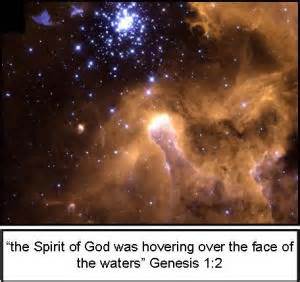
            This act of creation comes at the very beginning of things, in the very beginning of the Bible. Genesis chapter 1. “In the beginning God created the heavens and the earth. Now the earth was formless and empty, darkness was over the surface of the deep, and the Spirit of God was hovering over the waters.”

            We are starting our summer sermon series today, Re-imaging God. This series will highlight different ways of thinking about and naming attributes of our God. In this series, we will work on stretching ourselves! We will try to enlarge our image of our God.

            The words we use are important – not only the words we say, but the words we read on the printed page. The words of Scripture are all important, too. Let us take a closer look at how verses 1 and 2 describe our God. Verse 1 (the summary statement for this chapter) says that “God created.” God created the heavens up above and the earth beneath. Verse 2 describes the Spirit of God as “hovering over the waters.”

            This lean, spare description is marvelous! Can you see it? The dark heavens and the earth, formless, empty, just waiting for something to happen.

I don’t know whether you are aware, but different languages use different articles for nouns. In English, we all say “the cat” and “the dog,” and by the article “the,” they could be either male or female animals. However, many languages are structured differently.

In German or Italian, Spanish or Greek, different nouns are gendered. It’s a “male dog,” or a “female cat.” The article “the” in front of the noun changes with the word. Plus, the gender of the verbs must agree with the gender of the nouns! Any native English speaker who learns one of these languages in school struggles with the gender of the nouns and matching the proper articles and proper gender of verbs with the nouns!

It’s the same way with the Spirit of God. In the original language of the Hebrew Scriptures, “Spirit” is feminine. What’s more, the Spirit of God hovering or brooding over the waters is – according to the Hebrew language – a feminine Spirit. This verb “hovering” is also mentioned in Deuteronomy 32, where the mother eagle is protective towards her young in the nest. The “hovering” of the Spirit is a mothering activity! Here in Genesis, the Spirit of God, the Ruach ha Kodesh, is a protective, nurturing presence over the still formless waters. [1]

            Just so we do not get lost in the weeds of different languages, here’s the highlight I want us all to focus on. Whether Scripture is in Hebrew or Greek, “both masculine and feminine verbs are used for God, masculine for God, feminine for the Spirit. [And as we will see,] God’s human creation will reflect their creator as female and male.” [2]

               Seeing the nurturing, mothering nature of mammals, of dogs, cats, and humans – these mental images of puppies, kittens and babies can bring to mind gentle caring, loving encouragement, and supportive love. These are exactly the kinds of things that describe the activities of the Spirit of God! Plus, God the Father is caring, loving and supportive, too!

And what about the Good Shepherd? That’s Jesus, I want everyone to know. Remember how Jesus cares for His sheep, and how in several places in the Gospels Jesus is described as a loving, supportive Good Shepherd who guards, guides and protects His sheep.

            Isn’t it wonderful to see God as a mothering, nurturing God? Not only mighty and strong – a just, even stern, protector. Yes, God is all of those things. And, mothering and nurturing, caring and loving, too! Both/and – not either/or.

            Let us continue with verse 26: “Then God said, “Let us make humankind in our image, in our likeness, so that they may rule over the fish in the sea and the birds in the sky, over the livestock and all the wild animals, and over all the creatures that move along the ground.” God has created humans male and female. We, as humans, are created in the image of God! And, this whole chapter of Genesis 1 follows the same pattern, using pronouns of both genders.

            “We forget that Genesis 1 is a chapter brimming with goodness and blessing. In fact, God pronounces blessing on the created order three times. [God] calls creation “good” and “very good” seven times.” [3]

            We can see how the earth – the world – the universe was lovingly, joyfully created by God. And, whether we think of the feminine Spirit of God or the almighty Lord, or the Word that was in the beginning (from the Gospel of John), the preincarnate Son of God – however we consider the Triune God – all we can do is lift our hands in worship, thanksgiving and praise.

 What will you and I do with this fresh understanding of God? This understanding that transcends gender? “The creation story insists that God’s mark is imprinted on my very being. I might ignore or distort it, but the mark is always there. Whether I acknowledge it or not, I reflect something of God’s joy, God’s intentions, God’s love, and God’s beauty just by virtue of existing on the earth. I am His, and so He is mine.” [4]

            We can go out into the world, knowing that the Creator God made each of us, all of us, in the image of God. Male and female we are made, and each is in the image of God. Just as Psalm 139 tells us, “I praise you because I am fearfully and wonderfully made; your works are wonderful, I know that full well.”

            Our loving, caring, nurturing Creator God created the heavens and the earth; God created all humanity, and that includes you and me, too. Praise God! Alleluia, amen. 

@chaplaineliza

(Suggestion: visit me at my other blogs: matterofprayer: A Year of Everyday Prayers. #PursuePEACE – and  A Year of Being Kind . Thanks!


[1] van Wijk-Bos, Johanna, W.H., “Reimagining God” (Westminster John Knox Press: Louisville, KY, 1995), 72.73.

[2] Gafney, Wilda, “A Women’s Lectionary for the Whole Church” (Church Publishing, New York, NY, 2021), 142.

[3] https://www.journeywithjesus.net/Essays/20140609JJ.shtml

[4] Ibid.