Unknown's avatar

Who Does Jesus Love?

“Who Does Jesus Love?”

John 11:32-44 – Sunday, November 3, 2024

            Today is All Saints Sunday. A lot of people think of “saints” as super-holy people. Like St. Francis of Assisi, or Mother Teresa, or St. Ignatius of Loyola. These people and many other titled saints are super-stars (or, super-saints) of the faith! What kinds of things do you think about when you consider these super-holy people? Do they pray all the time? Do they do good works for God all the time? Or, what exactly do they do all day long? And when they get to heaven, do they play harps all the time?

            When we consider the people of the Bible, many of them are considered saints. Yet, if we read more closely, almost every person recorded in the Bible – either in the Hebrew Scriptures or the New Testament – displays very human characteristics! They show very human emotions, grieve, cry, get mad, say or do stupid things, and sometimes even worse.  

            Listen to Mary of Bethany as she pours out her agonized heart to her friend the Rabbi Jesus, and the following, very human exchange: “Mary came to where Jesus was waiting and fell at his feet, saying, “Master, if only you had been here, my brother would not have died.”

 When Jesus saw her sobbing and the Jews with her sobbing, a deep anger welled up within him. He said, “Where did you put him?”“Master, come and see,” they said. Now Jesus wept.”

            Merriam-Webster’s Dictionary has several definitions for “saint,” including “one of the spirits of the departed in heaven” and “one of God’s chosen and usually Christian people.” [1] This definition is more broad than what people often think of, when they think about saints. If we take this broader definition to heart, we can think of all Christians as being saints, and all of the people in the Hebrew Scripture as being saints, too.  

            Our Scripture reading today from the Gospel of John is often read during Lent, during the period right before Easter. However, this reading is also read on All Saints Sunday, as a witness to the power of our Lord Jesus over death. This reading is also lifted up in the African American tradition in a service of healing, for those suffering emotional distress, grief, divorce, and physical ailments. This healing also “speaks to a range of human issues and concerns. Suffering often drives individuals to petition for God’s healing.” [2]

            Whether we come to the Gospel of John expecting healing, or in preparation for Easter, or to commemorate all the saints, this reading remains one of the most hopeful, one of the most triumphant proclamations in the Bible. Our Lord Jesus has power over the living and the dead.

            Yet, here we are, on All Saints Sunday. Consider our Lord Jesus – or, the Rabbi Jesus, as He was considered then. His reaction to the death of Lazarus brings the reality of death close to us all. Jesus wept! He wept over his friend Lazarus. As our commentator Karoline Lewis says, “death is inevitable, and its pain, its loss, its cause for anger is all true and real.” She is speaking to preachers, like me. We are working professionals, who bear the hard part of death, being in the business of tending its consequences to those we professionally care for, yet so often do not take the time for our own personal sadness and grief. [3]

            How often do we tell ourselves that we will grieve “later on,” after we finish this necessary paperwork, or after we make these phone calls, or after we do these needed errands, putting off the grieving, the pain, the loss of our loved ones.

            The message we receive from the Gospel of John today tells us in detail about the raising of Lazarus. But before that happens, his sisters are devastated! Who wouldn’t be? A loved one’s death is devastating, even if death is a blessed release or a welcome and final end of pain.

I know, in my life, it is difficult for me to get up and get going when I feel devastated. It’s so hard to continue doing the normal, everyday things that need to get done in my life.  Have you ever experienced this kind of an invisible wall? Or, has someone close to you ever come up against something like this? These kinds of deep feelings happen with sad regularity among people who have just lost a loved one, a dear relative.

So many people let us down, here in this world. Either on purpose, or accidentally. Even unconsciously, sometimes. I know, it still happens. We get let down, time and again. It feels like a punch in the gut, sometimes! It hurts!

Here is where this Scripture reading comes in. It works on our hearts, draws each of us closer. We see the grief Jesus clearly felt, being disturbed at death and at the brokenness of this world, as we see Him approach the tomb. The wonder of Lazarus stepping out and the command to unbind him is a certain and sure symbol and promise of the freedom we will all know one day! And surely, this points to God’s Power, God’s Grace and God’s Gifts, for all of us. [4]

            We gather together here, in this place, to remember our friends and relatives each of us has lost, whether in this past year or in years past. Yes, we grieve and mourn. It is fitting and right that we do so. We are reminded that Jesus wept at the grave of Lazarus.

There is a tension we hold – holding many complicated emotions, holding grief and mourning, and at the same time joy and gratitude as we sit with the stark fact of missing our friends, our relatives who have died. And yes, we can rejoice as we consider “the promise and hope of the Resurrection and that even as Lazarus and his beloved family are privileged to live into that promise in this life even now, so are we [for the resurrection life to come]. So are we. Thank God, so are we.” [5]

Our Scripture reading today asks us to reflect that Jesus is, indeed, the Resurrection and the Life, not just for the crisis moment of death, but for all moments in life. Jesus announces that the world is definitively under God’s care and power. And, John chapter 11 offers all of us the promise about how each of us can live our lives today, not just about how our days will end. [6]

Is there someone you particularly remember, or especially miss? Someone who has crossed that river Jordan to join our Lord Jesus in the heavenly places? We have candles here. I invite anyone who wishes to come, to light candles for those loved ones. Light them in your hearts as well, as we come together in gentle comfort and encouragement of each other.

As we lean on relationship with each other in this life, even when faced with death itself, we see with eyes of hope that new life can spring up, through faith in Jesus Christ.  Yes, there is a balm in Gilead to heal the sin-sick soul, to make the wounded whole, and His name is Jesus. Alleluia, amen!  

@chaplaineliza

(Suggestion: visit me at my other blogs: matterofprayer: A Year of Everyday Prayers. #PursuePEACE – and  A Year of Being Kind . Thanks!


[1] https://www.merriam-webster.com/dictionary/saint

[2] http://www.theafricanamericanlectionary.org/PopupLectionaryReading.asp?LRID=64

[3] https://www.workingpreacher.org/dear-working-preacher/for-all-the-saints-2

[4] http://dancingwiththeword.com/these-precious-gifts-of-all-saints-day/

[5] Ibid.

[6] O’Day, Gail R., Gospel of John, New Interpreter’s Bible Commentary, Vol. 9 (Abington Press, 1996) 695.

Unknown's avatar

Be Prepared!

“Be Prepared!”

Ephesians 6:10-20 (6:10) – August 25, 2024

            I love to go to a baseball game! I do not go that often now, but in years past, I used to regularly go to Wrigley Field and watch the Cubs play. I don’t know if everyone is familiar with the equipment that baseball players need, but one player on a baseball team needs special equipment. The catcher is in a key spot on the team, and a very dangerous one! The pitcher regularly throws the ball at very high speeds. A catcher needs protection from those balls! A catcher’s mask, a chest protector, and shin guards, just to mention a few!

            This is similar to our Bible reading today. The Apostle Paul is finishing up his letter to his Ephesian friends. He warns them to be prepared, with a few practical, direct words for his long-time congregation. (I say long-time, because he spent about three years with this church, longer than with any other church he planted.)

Paul goes through a list of spiritual equipment that will protect his friends from attacks – the attacks of the Devil! Paul does not pull any punches. He is straight and up front with his former church members. He wants to warn them, prepare them for some really difficult times. These difficult times can often come into our lives today, too.

Let’s look more closely at what Paul says. “Finally, be strong in the Lord and in his mighty power. 11Put on the full armor of God, so that you can take your stand against the devil’s schemes. Therefore put on the full armor of God, so that when the day of evil comes, you may be able to stand your ground, and after you have done everything, to stand.”

            When I think of armor, my mind immediately goes to the military. Military service people definitely wear armor to protect themselves every day, in some duty stations, where some serve. Just as in baseball a catcher needs certain equipment to be prepared and safe while in a dangerous position, so do Christian people. Paul was in prison, in Rome, while writing this letter to the Ephesians. Paul was shackled to a Roman soldier inside of his cell, to make double sure he was going to stay put. Paul had the opportunity to become sadly familiar with the Roman soldier’s armor. Everyone, all believers in Christ need certain equipment (or pieces of armor) simply to be prepared!   

Let’s talk about baseball again, for a minute. What about the pieces of equipment the catcher wears? “The mask protects the catcher’s face from foul tips or pitches that might get past the glove. The glove protects the hand from balls. The chest protector protects the middle part of the body. Finally, the catcher wears shin guards to protect the knees and legs. No catcher would ever think of going into the game without this protective equipment.[1]

            Here in the letter to the Ephesians, at the very end of the practical portion of Paul’s letter, Paul details the protection you and I need in our lives, too. (And, this protection is so similar to what a baseball catcher wears!) We can see very well the kind of protection Paul is talking about if we think of a Roman soldier. Roman soldiers were commonplace, all over the Roman empire. Paul calls this protection the armor of God. He is thinking specifically of the armor the typical Roman soldier wears.

            We buckle the belt of truth around our waists. This is like putting on truthfulness. We are to tell the truth – at all times. Sometimes, it is not easy to be honest! In some situations, we are so tempted to bend the truth a little, or even a lot! But, the indwelling power of the Holy Spirit will help each of us with this important foundation of our faith.

            Next, each of us puts on the breastplate of righteousness. That’s a word we mention a lot in religious circles. Another way of thinking of it is putting on right behavior, putting on justice. Just like a catcher puts on a chest protector. Paul exhorts us to act rightly! This is certainly not easy! This thoughtful and prudent kind of action and behavior is often laughed at, by many people. Just think of rude or uncaring people, who may tease you or be mean to you for acting in a way that Jesus tells us to! (And, Jesus is our model for righteousness.)

            Which leads us to our shoes. Paul tells us to put on shoes that show we are speakers of peace. Not to argue and bicker, we are to go out of our way to bring peace to people!  

            These next two pieces of armor are clearly protective pieces. The shield of faith is our protection against those fiery darts that Satan can fire at us. And, not just physical darts! What about mean and nasty words that come our way, words that plant seeds of doubt in our hearts and minds? And, the helmet of salvation keeps the Evil One away. Thank God we have Jesus gifting each of us with salvation, because that is exactly what Paul talks about here.

            The last piece of armor is actually a weapon. The sword of the Spirit is the word of God. The letter to the Hebrews tells us that the Word of God is living, and active, and sharper than any two-edged sword. The Roman sword is a short sword, or weapon, used for combat at close quarters. This means that we are to actually engage the enemy, become active participants in battle! No sitting on the sidelines, as far as Paul’s fellow believers are concerned. As we continue to follow Jesus, we will continue to win the battle against Satan.

Whether inside or outside the church, however and wherever we serve our Lord, God intends for us to be prepared. That means being prepared by these words of caution and exhortation. Paul used these words in Ephesians to advise all of us to be ready to deal with challenging, even dangerous situations. We all need this prudent protection of God’s armor, in our everyday walk as believers.

Final words for today, quoting Paul? Be strong in the Lord! Stand ready, inside and out. And, do all this in prayer, always asking for God’s help. Are you prepared? Am I? With God’s help, yes – we are! Alleluia, amen! 

@chaplaineliza

(Suggestion: visit me at my other blogs: matterofprayer: A Year of Everyday Prayers. #PursuePEACE – and  A Year of Being Kind . Thanks!

(Thanks so much to link http://www.lectionarystudies.com/sunday21bae.html from the Rev. Bryan Findlayson of Pumpkin Cottage Ministry Resources, a lectionary resource I often quote from. Rev. Bryan gave me a lot of insight this week, and I used much of his material for describing the pieces of Godly armor!)


[1] https://sermons4kids.com/sermons/the-armor-of-god

Unknown's avatar

The Spirit Intercedes for Us!

“The Spirit Intercedes for Us!”

Romans 8:22-27 (8:26) – May 19, 2024

            Have you ever been in a building with a power outage? A brown-out? Where something disrupted the electricity? A number of years ago, I was at an evening meeting in a large building here in Evanston, and that is exactly what happened. The electrical power was somehow shut off or interrupted, and everyone had to evacuate the building.

In situations like that, there can be a real feeling of helplessness. What happened? Where did the power go? When can we get it back? What do we do now?

            This is the situation at the beginning of Acts, chapter 2. We have a small band of disciples, followers of this Jewish Rabbi Jesus, who was crucified, raised from the dead on the third day after He died, and ascended into heaven several weeks after that. Jesus was not always perfectly clear in His communication or explanations, at least as far as His followers were concerned. Even after His resurrection and ascension, Jesus’ disciples still had problems understanding exactly what they were to do.

So, after His ascension into heaven (complete with some more, rather cryptic, remarks from Jesus, recorded in Acts 1), Jesus’ followers are in possession of this really far-out story; their miracle-worker of a teacher, rabbi and leader, died, buried, resurrected, and ascended to heaven. And, they are still on the run, or at least keeping a very low profile, in the eyes of both the Jewish and Roman authorities.

Let’s turn to one of our Scripture passages for today. Acts Chapter 2. All of a sudden, things have made a surprising turnaround! Listen to verses 1 and 2. “When the day of Pentecost had come, they were all together in one place. And suddenly from heaven there came a sound like the rush of a violent wind, and it filled the entire house where they were sitting.”

Something extraordinary happened. We now know it today as the coming of the Holy Spirit, the Day of Pentecost, the birthday of the Church. But, think of what it must have been like for these few dozen followers of Jesus—something extraordinary had happened!

            Let’s fast forward. No matter where people live in this world today, no matter what their situations are, no matter what they do for a living, a common desire among many people is that desire for reassurance, a wish for something to hope in, to believe in. A desire to know exactly where their power is coming from.

Some people—for various reasons—give up on a belief in a Higher Power, and fall back on the vacuum of nothingness, or hopelessness, the concept that life ends at the point of death, and there is nothing whatsoever afterwards—that is all there is. Others raise up the substitution of some man-made idol (like the golden calf). All kinds of things can function in our lives like a golden calf—something else like money, prosperity, position, success, or comfort. Other people cling to the Higher Power of self-sufficiency, the substitution of self for God, the crazy idea that I run the show, I’m all that matters, I can be that Power-Source in everyone’s life.

One huge surprise on that first Pentecost, “was that even though Jesus had died, been raised, and then gone to heaven, his disciples were not alone.  The Holy Spirit, the very power of God, was with them giving them the power to be the body of Christ in the world!  What was true for them on the day the church was born is also true for us today, [two thousand years later].” [1] 

            Which brings us to the Scripture we highlight today. Here in Romans, the apostle Paul tells his friends about the Holy Spirit – that same Holy Spirit that was heard and felt like a powerful rushing wind on the day of Pentecost! That same Holy Spirit helps us day by day. And, that same power enables us to do God’s work here on earth.

The apostle Paul gets specific, and lets us know that the blessed Holy Spirit will not leave us alone and forsaken. Instead, the Holy Spirit comes alongside of us, giving us heavenly power when we need it. The Spirit assists us as we journey our way through this day-to-day life.

As Paul says in Romans chapter 8, “the Spirit helps us in our weakness. We do not know what we ought to pray for, but the Spirit himself intercedes for us through wordless groans. 27 And he who searches our hearts knows the mind of the Spirit, because the Spirit intercedes for God’s people in accordance with the will of God.”

Just as the Holy Spirit empowered those first disciples on that Pentecost morning so long ago, God still intends for followers of Jesus to do powerful things for God! “God gives us power that enables us to do God’s work on earth. God inspires us, gives us gifts (talents), and works through us. God expects us to ‘do something in God’s name.’” [2] Yes, we all can pray, to further God’s work in the world! And yes, our Lord Jesus encourages each of us to touch people’s lives, speak to others in Christ’s name. We are encouraged to do acts and speak words of kindness and Godliness, each and every day. Each person, to their best ability.

Just think of it. On that first Pentecost morning, the Holy Spirit, the third Person of the Trinity, the Ruach ha Kodesh came down from heaven! The Spirit blew through these people’s lives, through their hearts, turned them inside out and upside down! The Holy Spirit is still blowing through the lives and hearts of the followers of Jesus today.

Yes, Pentecost happened, two thousand years ago, and Pentecost can happen again, right here and right now. Is the Holy Spirit speaking to you right now? God’s power can be scary, but remember, God will be with us, through whatever comes our way. Thank God for turning on the power in all of our lives, today! Alleluia, amen.

@chaplaineliza

(Suggestion: visit me at my other blogs: matterofprayer: A Year of Everyday Prayers. and  A Year of Being Kind . Thanks!


[1] http://worshipingwithchildren.blogspot.com/2015/04/year-b-day-of-pentecost-may-24-2015.html

[2] Ibid.

Unknown's avatar

God Cares for Us

“God Cares for Us!”

Isaiah 46:3-9 – July 9, 2023

            I have wonderful memories of being a mom of small children. I would be fascinated to see their endless awe, wonder and amazement. Small children love discovery and inquiry, they love Finding Out New Things. With discovery and exploring come the possibility for falling down, bumping elbows and skinning knees. Not to mention falling flat on your face! I remember washing the dirt off various owies, putting band-aids on knees, fingers and elbows. Sometimes, a small person would climb up in my lap, ready to rest and be cuddled.

            Here in Isaiah 46, we listen to the prophet talk about the Lord. Listen to this message for the remnant of the nation of Israel: ““Listen to me, descendants of Jacob, all you who remain in Israel. I have cared for you since you were born. Yes, I carried you before you were born. I will be your God throughout your lifetime—until your hair is white with age. I made you, and I will care for you. I will carry you along and save you.”

            Except, this is a different image of God than we have heard about in other parts of the book of Isaiah. As we have said during the past few weeks, not a strong, mighty, and fearsome Deliverer! No! Instead, we have a another, different view of our Lord. This image is nurturing, warm and mothering.

            I don’t know if anyone here remembers baby slings? A long piece of fabric or material that mothers use to carry their small (and even not so small) infants right near their hearts. And sometimes, as with indigenous mothers, they might carry the child on their backs, secured in a sling of fabric. What a caring, comforting way to carry an infant close to a mom’s heart!

            This image from Isaiah 46 is similar – nurturing and comforting! The God of Israel is “carrying” God’s people close to God’s heart. Like a mother, who carries the child in her uterus for nine months, and afterwards carries it close to her heart. When the prophet actually wrote these words, it had to have a powerful effect upon the nation of Israel. Imagine, actually feeling that God bore them up, and held both them and their burdens close to God’s heart!  

            As we reflect upon our powerful God, God is also creative and caring. We can see that the Lord does not simply wind up the world or the universe like a huge watch, put it down on a forgotten shelf and then go away for centuries, even eons. Remember, verse 4 tells us “I will be your God throughout your lifetime—until your hair is white with age. I made you, and I will care for you. I will carry you along and save you.”

            Just as the nation of Israel is reminded that they have experienced God’s power by constant benefits, as John Calvin’s commentary on Isaiah tells us, but God diffuses power – and creativity – through all God’s creatures, so that everyone feels God’s strength and energy. As well as Divine caring and salvation! [1]

            This metaphor used in verses 3 and 4 is so expressive. Who has not seen a pregnant mother, or a mother with a young infant? God compares Godself to a mother who carries a baby in her uterus. We hear the Lord speaking of times past, when humans were (and still are) given testimonies of God’s grace! We all can be thankful and grateful that God nourishes not only the people of Israel, but God nourishes us, too! That is, if we are okay with thinking of ourselves as babies and young children in our nurturing, caring God’s lap.

            Alyson Rockhold writes in her article on Isaiah “I sense God’s arms wrapping around me. I hear a gentle invitation to lay down my weary head. In my mind’s eye, I imagine God patting my hair like a mother comforts an overwrought child. It is in intimate moments like this that I experience the mothering God. As a child, I would run to my mother with every skinned knee and broken heart. Her acceptance was total, and her presence never failed to soothe me. Now I’m grown, and an ocean separates my home from hers. Still, in moments of sadness and struggle, I long to feel like a child in my mother’s arms: completely loved and totally accepted. I rediscover this in the Lord’s embrace.” [2]

            In past weeks, this sermon series has focused on Scriptural images of God that are not the usual images put forward. Even referring to God as “mother” might stretch our Divine vocabulary! God as spirit, yes! I would like all of us to think about widening our understanding of God. God is a divine Being beyond male and female, since male and female we all were created in God’s image, in the beginning.

            Here in this summer sermon series, we look at a dozen instances where the Scripture clearly uses feminine imagery and metaphor to explain how God relates to us! We are certainly not referring to any sort of Mother Goddess, or ancient fertility symbol. I know that kind of earthy worship involved agriculture, fertility, sexuality, and even temple prostitutes.

No, this is definitely not what we are focusing on! Neither am I only glorifying God as “Father,” putting human fatherhood and the Divine as Heavenly Father on some sort of lofty, unreachable pedestal. No! As we can see, the Scriptures “consistently merge the images and metaphors of the fatherly God with motherly compassion and love,” [3] as these Scriptural and maternal images tell us repeatedly. Both fatherly and motherly images of our God.

            I encourage all of us to pray with these images. We can all come before God in prayer, climbing up into the Lord’s loving, nurturing lap. Not only can we be grateful for mothering and nurturing of earthly mothers and those who care for us as mothers, around the world.  We can also be thankful for our ever present, sustaining and caring God. Join me in bringing thanks to our Lord for God’s enduring, everlasting care and nurture.

No matter how big or small we are, no matter how grown-up or childlike we may be, we all can say “thank You, God.” Alleluia, amen.

@chaplaineliza

(Suggestion: visit me at my other blogs: matterofprayer: A Year of Everyday Prayers. #PursuePEACE – and  A Year of Being Kind . Thanks!


[1] https://www.studylight.org/commentaries/eng/cal/isaiah-46.html

[2] https://www.americamagazine.org/faith/2021/05/09/god-mother-faith-prayer-240581

[3] https://juniaproject.com/biblical-maternal-images-for-god/  

Unknown's avatar

Dynamic Spirit Power!

“Dynamic Spirit Power!”

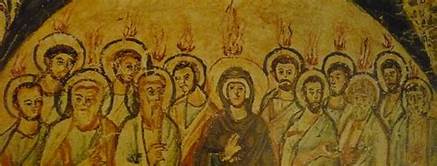
Acts 2 Pentecost mural

Acts 2:2-4 – June 9, 2019

Have you ever been outside in hurricane-force winds? Either you, or a loved one you know and who is very dear to you? How about a massive storm that has huge bolts of lightning, and loud cracks of thunder? Can you imagine God’s mighty power displayed, for everyone to see and hear and feel? Anyone who has ever been caught in such a powerful storm can tell you, such a dynamic panorama can be earthshaking, literally. That mighty God-sent power is just what I’ll be preaching about today.

Most of us, perhaps even all of us are familiar with the disciples’ fearful reaction after our Lord Jesus ascended into heaven. And, for good reason! The Roman authorities were still hunting for the body of the Rabbi Jesus that disappeared from the tomb, some weeks before. Remember what happened on Easter morning? Not only the Roman authorities but also Jewish leaders were still demanding to see the body of this itinerant rabbi that they said was stolen from the tomb! Of course, we know better.

God’s mighty, miraculous power intervened, by way of the Resurrection and Ascension. Our Lord rose from the dead, walked and taught on this earth in His resurrected body for seven weeks, followed by His bodily ascension into heaven. What is more, the last instructions of Jesus to wait for power, to stay put in Jerusalem, were still fresh in people’s ears.

But—still, God left the disciples very much afraid, and very much in hiding. At least, after the risen Jesus went away for good. That’s what humans thought, anyhow.

Here we are, on Pentecost morning, waiting with the disciples. As was their custom, they were gathered for prayer in the Upper Room. Can you imagine a large group of disciples, with Jesus’ mother Mary in the midst of them? Talk about a prayer meeting! Still, they were huddled, in hiding. These disciples were being faithful, as best as they could. When, on Pentecost morning, a God-sent happening occurred. But, you don’t need to take my word for it!

Listen to what Dr. Luke says at the beginning of Acts 2: “When the day of Pentecost came, they were all together in one place. Suddenly a sound like the blowing of a violent wind came from heaven and filled the whole house where they were sitting. They saw what seemed to be tongues of fire that separated and came to rest on each of them.

Now, today, if something like that happened, we might look around for the fancy special effects team in the background. We might wonder where the cameras were placed when those tongues of fire wondrously appeared above each person—marking them, letting everyone know that God was director, and God wrote the script.

Getting back to a description of a display of God’s mighty power, that other-worldly power was certainly on display in the sound like the blowing of a violent wind from heaven. In keeping with my analogy, God was also producer and certainly handled all special effects.

The Koine Greek word for “power” is dunamis, which the Analytical Lexicon of the Greek New Testament defines as: able to produce a strong effect power, might, strength” and “as supernatural manifestations of power, miracle, wonder, powerful deed.” This is the same word that is used ten times in the book of Acts to refer to God’s mighty power or acts. Plus, dunamis is the root word for dynamite: the mighty, powerful dynamite of God!

This dynamic power was on display to the disciples, in the upper room. Dr. Luke mentions that “All of them were filled with the Holy Spirit and began to speak in other tongues as the Spirit enabled them.” On display only among the disciples—at first. But, soon, other people started to get in on the action!

Let’s hear from Dr. Luke: “Now there were staying in Jerusalem God-fearing Jews from every nation under heaven. When they heard this sound, a crowd came together in bewilderment, because each one heard their own language being spoken. Utterly amazed, they asked: “Aren’t all these who are speaking Galileans? Then how is it that each of us hears them in our native language?”

Once the dynamic Holy Spirit blows in on the disciples with tongues of fire, and their physical tongues are loosened in many other languages, what an awesome display of power! Passersby from other countries off the street gathered around. They heard the violent wind of the Spirit and the expression of many languages that quickly followed. All of the disciples were telling the Good News, that Jesus our Messiah is risen from the dead—in many different languages. And, probably because of the regional pronunciation, the expat onlookers were able to tell that many of those who were speaking different languages were Galileans. Is it any wonder that these onlookers were totally amazed?

I am reminded of a flash mob in some public place, like a mall or in a downtown square. Just as passersby are engrossed in the performance the flash mob does, in a similar way, the onlookers are fascinated by the whole God-sent operation that happened in Jerusalem on Pentecost morning, especially by the sharing of the Good News of our Lord Jesus Christ in their own heart-language, their own mother tongue. And, since the Holy Spirit was present in mighty power on that Pentecost morning, many came to believe in Jesus as their Messiah that day.

But, Pentecost was not just a one-time event. You know, an event that happened just in the distant past, in Bible times, never to be repeated. No! Whenever anyone believes on the name of the Lord Jesus Christ, a Pentecost happens! The Holy Spirit blows through that person, that beloved one of God. The Holy Spirit blows into each of our lives, and the power and possibility of God acting with and through each one of us is an amazing and awesome truth!

Commentator Rev. Gary Simpson brings out the fact “I am more aware of the numerous ways the Holy Spirit comes into people’s lives and affects positive change. No longer is my understanding of Pentecost simply wrapped around the phonetic languages we speak out of our mouths. Rather, I am aware of the many ways the Holy Spirit speaks through us and to us through sounds, pictures, ideas and even hope.” [1]

I am reminded that some people think Pentecost was just a day, an event that happened two thousand years ago. But, no! Wait a minute! Are these well-meaning people putting limits on the mighty power of God? What about that violent wind of the Holy Spirit that blew through the house on that first Pentecost? Are these well-meaning people trying to put God in a little box of their own devising and understanding?

As the Rev. Simpson reminds us, Pentecost is not simply a day to remember the birth of the Church, but it is also a day to celebrate the mighty power of the Holy Spirit, the dynamite of God, active and present in each believer’s life and heart. It is God’s power working in us and through us, so we can be witnesses to what the risen Lord Jesus has done for us. Yes, we are changed, too! And we have the opportunity to change the world, just as much as the first-century disciples of Christ—by the power of the God-sent dynamite of the Holy Spirit.

Alleluia! Amen.

[1] http://www.theafricanamericanlectionary.org/PopupLectionaryReading.asp?LRID=88

Lectionary Commentary, Acts 2:1-8, Gary V. Simpson, The African American Lectionary, 2009.

@chaplaineliza

(Suggestion: visit me at my regular blog for 2019: matterofprayer: A Year of Everyday Prayers. #PursuePEACE – and my other blog,  A Year of Being Kind . Thanks!


Unknown's avatar

Terrified? Astounded!

“Terrified? Astounded!”

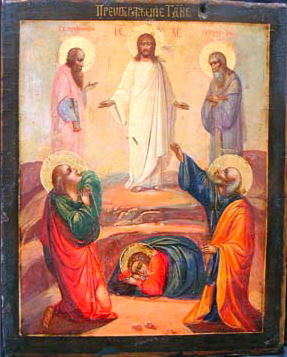
Jesus Transfiguration_Russian icon


Luke 9:28-36 (9:34-35) – March 3, 2019

Have you ever been truly terrified? Not of a horror movie on the movie screen, or of a horrific news story on television, in the newspaper or on the computer, but something terrifying that happened in real life? A first-hand experience, when you were an eye-witness to something truly terrifying?

Both Scripture readings today feature people who were eye-witnesses, who were also absolutely terrified. Both situations are so extraordinary, so far out of the observers’ common, every-day experience that they are frightened almost to death.

Let’s take the three disciples, first. Peter, James, and John, his brother. Jesus asks them to climb with Him to the top of a mountain to pray. This was a regular thing that Jesus did—not the mountain part, but going away by Himself—or with a couple of other people—to pray and meditate in depth. (May I say that this practice of regular prayer is a wonderful practice! And, one we will talk more about as we journey with Jesus throughout Lent in the coming weeks.)

So, Jesus and the three disciples retreat up the mountain to pray, and Peter, James and John were pleased and proud to be singled out in this way by Jesus. I am sure Jesus had a regular practice of prayer and communion with God. He probably led the disciples in regular prayer, and His habit of prayer times were a normal, every-day activity to the disciples.

Let us look at the Scripture reading from Exodus, where the people of Israel are at the foot of the mountain while Moses is up on top, meeting with God and receiving the tablets with the Ten Commandments on them. I am sure the people of Israel were living their common, ordinary, every-day lives while Moses communicated with God for days at a time. Other than some thunder and lightning from the top of the mountain, nothing had really changed for the people of Israel.

Except—in both situations—something suddenly crashed into their every-day lives and ordinary experiences and made all of these people terrified. What was it? They were all eye-witnesses, but what could possibly make them so terror-stricken?

Has anything suddenly crashed into your lives, and upended everything normal and ordinary? Something fearsome and terrifying?

C.S. Lewis wrote the Chronicles of Narnia, a series of books for children that featured a mysterious lion, Aslan. Aslan is the Great King of Narnia, who we later see as a Christ-figure. There are talking beasts—animals, in the Narnia books. When the children from this world speak with some talking beavers in Narnia, Mr. Beaver mentions Aslan: “He’ll be coming and going. One day you’ll see him and another you won’t. He doesn’t like being tied down – and of course he has other countries to attend to. It’s quite all right. He’ll often drop in. Only you mustn’t press him. He’s wild, you know. Not like a tame lion.” [1] The character of Aslan shows himself in Narnia as a large and terrifying, but also magnificent and wise, lion with warm, kind eyes.

Aslan is dangerous! His roar is both fearsome and magnificent. People in Narnia say “He’s not a tame lion.” Aslan embodies all that is good, and yet is terrifying at the same time. Can you see how something awfully good and magnificent can also be fearsome and terrifying? Both, at the same time?

I suspect that was what the disciples experienced, on top of the mount of Transfiguration as well as the people of Israel, when Moses came down the mountain with the tablets of the Ten Commandments. Good and magnificent, but fearsome and terrifying at the same time.

The disciples were familiar with the figure of their Rabbi Jesus in prayer. They knew that common sight; it was comforting, even. But, listen to what Luke says: “29 As Jesus was praying, the appearance of his face changed, and his clothes became as bright as a flash of lightning. 30 Two men, Moses and Elijah, appeared in glorious splendor, talking with Jesus. 31 They spoke about his departure, which he was about to bring to fulfillment at Jerusalem. 32 Peter and his companions were very sleepy, but when they became fully awake, they saw his glory and the two men standing with him.”

In other words, Peter, James and John were astounded and terrified. Jesus was manifesting the presence of God, the divine glory, so His face shone and His clothes became brighter than bright. Fearsome, indeed!

In the case of the people of Israel, when Moses came close to them after being in the presence of God for days and days, his face shone brighter than bright. All of the people of Israel were terrified! What’s more, they begged Moses to cover his face, so that they did not have to see the divine glory reflected in the face of Moses.

Have we ever been eye-witnesses to the presence of God? To the divine glory? In all honesty, I have heard God’s voice on two occasions, but I have not seen the divine glory. Yet, in both readings today, all the people seeing the divine glory were terrified. By all accounts, what a fearsome sight, to be sure!

The three disciples saw the transformed Jesus talking with Moses and Elijah, discussing His departure, His crucifixion and what would come next. Except, they did not understand all that, yet. The point that fascinates me is that God manifested divine glory in Jesus—made His face all shiny and magnificent—not for Jesus’s benefit. No! God did this for the disciples! They were the ones who needed to see the glory of the transfigured Christ! Not their Rabbi Jesus, who they had been living with for the past few years. They sort of knew He was special, but they did not realize how special! “By wrapping Jesus in a shiny cloud and incredible clothes, God was telling the disciples, ‘Jesus is more than a special person. Jesus is God-with-you.’” [2]

Praise God! Jesus, Emmanuel, God-with-us! Jesus has great power, magnificence and divine glory. Yet, Jesus is kind and gentle, loving and caring. Astounding, terrifying, and God-with-us in His majesty and power.

Moses and Elijah came to talk with Jesus while He was transfigured with the divine glory. In Communion today, we can imagine ourselves coming to the Lord’s table with Moses and Elijah and a host of others. A traditional phrase from the Communion liturgy is “with the angels and archangels and all the heavenly host.” That is exactly who we are joining as we come to the Communion table today.

Who are you joining at the Communion table today? We are connected to God, our heavenly Parent, to our Lord Jesus, as well as to a whole host of others, both those living today as well as those with the Lord. Yes, a terrifying thought! But, also welcoming. Not either/or, but both/and.

The divine glory surrounding Jesus is terrifying! Yet, also magnificent, and welcoming, with God’s glorious transformative power. Can we be drawn closer to God today? God willing, we can.

Alleluia, Amen.

[1] Lewis, C.S., The Lion, the Witch and the Wardrobe (New York: Macmillan Publishing, 1950), 180.

[2] http://worshipingwithchildren.blogspot.com/2016/01/year-c-transfiguration-of-lord-february.html

Worshiping with Children, Transfiguration, Including children in the congregation’s worship, using the Revised Common Lectionary, Carolyn C. Brown, 2016.

@chaplaineliza

(Suggestion: visit me at my regular blog for 2019: matterofprayer: A Year of Everyday Prayers. #PursuePEACE – and my other blog,  A Year of Being Kind . Thanks!

Unknown's avatar

But Now I See

John 9:1-41 (9:25) – March 26, 2017

John 9 word cloud

“But Now I See”

In the first century, when Jesus walked the earth, people commonly believed a number of things that have since been proven mistaken, including something mentioned here in our Gospel passage today. When babies were born with a handicap or impediment—like born with a club foot, born with a cleft palate, or born blind—many, many people thought this was a punishment from God.

The parents were at fault. Sin was the reason the child was born that way!

In the encounter we have today in our Gospel lesson from John, Jesus deals with that kind of thinking. Let’s set the scene. “9 As Jesus was walking along, he saw a man who had been born blind. His disciples asked him, “Teacher, whose sin caused him to be born blind? Was it his own or his parents’ sin?”

In certain parts of the world today, people still think like that. Sad state of events, but that is the way it is. Some people mistakenly assign the “blame” for a “disability” or “illness.” Let’s see how Jesus responds.

Jesus answered, “His blindness has nothing to do with his sins or his parents’ sins. He is blind so that God’s power might be seen at work in him. As long as it is day, we must do the work of him who sent me; night is coming when no one can work. While I am in the world, I am the light for the world.”

Jesus rejects this blaming kind of talk! He “suggests that this man’s blindness offers the opportunity for God’s power to be revealed…. There is, in this case, physical blindness, but it’s not the only kind of blindness.  There are those who can see just fine, but live in spiritual darkness.” [1] More on that, later.

Plus, Jesus goes from talking about blindness, to God’s power, to Jesus being the light for the world. Can you follow Him in the progression of His thought? Actual, physical blindness, leading to God’s power made manifest by our Lord Jesus, who is God’s Light for the world, enlightening everyone. Back to the story.

After he said this, Jesus spat on the ground and made some mud with the spittle; he rubbed the mud on the man’s eyes and told him, “Go and wash your face in the Pool of Siloam.” (This name means “Sent.”) So the man went, washed his face, and came back seeing.

A man, born blind, made to see? This is a miracle, by anyone’s estimation! But, this is not quite a happily-ever-after story. By no means the end of our story.

13 Then they took to the Pharisees the man who had been blind. 14 The day that Jesus made the mud and cured him of his blindness was a Sabbath. 15 The Pharisees, then, asked the man again how he had received his sight. He told them, “He put some mud on my eyes; I washed my face, and now I can see.” Here is a clear statement of facts, as reported by the man who formerly was born blind.

We can tell the Pharisees believed the commonly held theological position of the day: illness and disability were God’s punishment for sin. What is more, people disagreed about whose sin was responsible for this former baby’s (now grown man’s) blindness. Most thought it was the parents. However, some thought that the newborn baby had somehow sinned! (Hard to believe, but true.)

On top of that, the Pharisees had some unkind words for this upstart Rabbi Jesus. Imagine, healing on a Sabbath! Who does He think He is?

16 Some of the Pharisees said, “The man who did this cannot be from God, for he does not obey the Sabbath law.” Others, however, said, “How could a man who is a sinner perform such miracles as these?” And there was a division among them. 17 So the Pharisees asked the man once more, “You say he cured you of your blindness—well, what do you say about him?” “He is a prophet,” the man answered. 18 The Jewish authorities, however, were not willing to believe that he had been blind and could now see, until they called his parents 19 and asked them, “Is this your son? You say that he was born blind; how is it, then, that he can now see?”

The Pharisees could not see past the noses on their faces. All they could see was healing, or work being done on the Sabbath, which was forbidden in their strict interpretation of the Law of Moses. That was huge, in their eyes. Hugely wrong!

Looking for additional people to cast blame on, the Pharisees just did not believe this guy who was formerly blind—so they called his parents!

20 His parents answered, “We know that he is our son, and we know that he was born blind. 21 But we do not know how it is that he is now able to see, nor do we know who cured him of his blindness. Ask him; he is old enough, and he can answer for himself!” 22 His parents said this because they were afraid of the Jewish authorities, who had already agreed that anyone who said he believed that Jesus was the Messiah would be expelled from the synagogue. 23 That is why his parents said, “He is old enough; ask him!”

24 A second time they called back the man who had been born blind, and said to him, “Promise before God that you will tell the truth! We know that this man who cured you is a sinner.” 25 “I do not know if he is a sinner or not,” the man replied. “One thing I do know: I was blind, and now I see.”

One of the most familiar and beloved traditional hymns is “Amazing Grace.” This hymn talks about several important things, including salvation. The hymn also talks about blindness, and the change that comes into a person’s life when they receive sight—spiritual sight. “Was blind, but now I see.” What a theological truth. What a profound insight. Jesus wasn’t blinded at all to seeing this man born blind.

It is the Pharisees who have been blind—spiritually blind—and they don’t even know it. “The religious leaders remain spiritually blind, still contending that the work of Jesus is demonic.  In their resistance to [Jesus,] their blindness – their sin – is revealed.” [2]

Is this just some nice bible story, or could it apply to us, today? Similar to the Pharisees, are we so preoccupied with our own holiness and righteousness that we are blinded? I mean, spiritually blinded to seeing signs of God’s work right here in our midst? [3]

“How does Jesus open our eyes to the things of God?  How does he reveal our blind spots so that we can let go of them and give glory to God? The good news is that there is amazing grace available to us.” [4] We can testify, along with this formerly blind man, “One thing I do know: I was blind, and now I see.”

This is something to celebrate! Jesus can open our eyes to those around us. We can be healed of our spiritual blindness and come into the light of God’s presence, and be able to testify to others of God’s light-giving and grace-giving. Praise God! Amen.

[1] http://www.bobcornwall.com/2014/03/who-is-really-blind-lectionary.html

[2] http://www.bobcornwall.com/2014/03/who-is-really-blind-lectionary.html

[3] https://www.umcdiscipleship.org/worship/lectionary-calendar/fourth-sunday-in-lent-one-great-hour-of-sharing#preaching

[4] http://www.bobcornwall.com/2014/03/who-is-really-blind-lectionary.html

@chaplaineliza

(Suggestion: visit me at my regular blog for 2017: matterofprayer: A Year of Everyday Prayers. #PursuePEACE – and my other blog,  A Year of Being Kind . Thanks!)

Unknown's avatar

The Light of the Lord

“The Light of the Lord”

isa-2-5-teach-me-to-walk-in-the-light

Isaiah 2:1-5 (2:5) – November 27, 2016

At this holiday and homecoming time of the year, some people’s thoughts turn to those who are traveling. Those who will be coming to a gathering, a party, a meal. Have you been waiting for someone to arrive at a gathering? A meal, perhaps? At this time of year, the sun sets early. People often put the porch light on to welcome the traveler, in hope and expectation. That is the situation we have here, in our scripture passage from the prophet Isaiah.

And, what a grand porch light it is! Let’s read from Isaiah 2, verse 2: “In days to come the mountain of the Lord’s house shall be established as the highest of the mountains, and shall be raised above the hills; all the nations shall stream to it.”
But, what of Isaiah’s audience? What about them? Times in the nation of Judah were uncertain, to say the least. Spirits were low. The Israelites were in fear for their lives. The Assyrian armies were closing in. The nation of Assyria was a major world power in that time, conquering nations, kings, and vast areas of land right and left. (This was several centuries before Jesus Christ was even born in Bethlehem.) What about today? We can look at our times, too. A great deal of uncertainty, everywhere we look. Uncertain times here, locally, in the immediate community. On a nation-wide scale, as well. What about internationally? However—Isaiah brings a word of hope to people of his day, and hope to people of ours, too.

The prophet gives a prophetic announcement in these verses. It isn’t a hymn of praise, but instead words to let people know that God is not absent or unable to help, but instead a very present help. A hope, in times of uncertainty and need. The very promise of salvation, to not only the people of Israel, but to anyone who hears these words. We can see that from the mention of “all nations” streaming to the mountain of the Lord.

Many people in Isaiah’s time frankly doubted God’s power and faithfulness, with the Assyrians breathing down their necks. These were uncertain times, indeed. Can you imagine, a huge army right on our border, and not very much in between? Imagine the fear, anxiety, and conflict for those people of Judah! Even though, today, we here in the United States are not in such dire straits as little, puny Israel, we face uncertainty and times of conflict, too.

What does the prophet have to say about that fear, that anxiety? He brings words of hope and expectation to his listeners. Listen to verse 3: “Many peoples shall come and say, “Come, let us go up to the mountain of the Lord, to the house of the God of Jacob; that God may teach us His ways and that we may walk in God’s paths.” So, God will begin a time of learning, a time of pilgrimage! “A purposeful journey to a holy place.” [1]

Again, we see that the prophet tells us many, many people will come to God’s house! Remember, this proclamation refers to all nations, all peoples, and addresses all who have open ears to hear.

All this will occur “in days to come.” Sure, the prophet is not specific; this is an indefinite time, but there also will be a radical transformation! Listen to verse 4: “[God] shall judge between the nations, and shall arbitrate for many peoples; they shall beat their swords into plowshares, and their spears into pruning hooks; nation shall not lift up sword against nation, neither shall they learn war any more.”

Can anyone read these verses and not long for peace? And not have keen hope and expectation for this coming time of peace and concord? The Lord God will sit as a judge or arbiter for many, many people. And—this is fascinating—the nations, themselves, shall willingly lay down their weapons. Many nations shall cause their weapons—their swords—to be turned into something radically different. To rephrase, “God promises that there will be a time when everyone gets along.  It will be so peaceful that people won’t need swords and other weapons anymore.  So, they will turn them into garden tools.” [2]

It does not take a brilliant student of current events to tell us that this prophecy is not here, yet. We regularly hear about wars and rumors of war today. We see for ourselves that nations are at each others’ throats, bickering, sometimes fighting, and even committing acts of mass destruction and death. What is to be done?

The prophet brings these words of hope and expectation to a fearful and anxious people, at an uncertain time centuries ago. Is the situation much different, today? Our time is filled with conflict. Fearful, anxious, and uncertain, too.

The prophet’s message holds out hope and expectation, true. But hope would be empty if we did not have a situation where we needed God’s help. We have to see our desperate need first, in order for us to realize that we are sunk without God. This whole mindset of conflict, fighting and resistance to any kind of peace certainly registers as a time of great need. The prophet was calling to the nation of Israelites just as much as he is calling to us.

“God is taking us somewhere we cannot go on our own, not because of our righteousness, but because of God’s goodness. The coming peace is God’s, but it is promised to us. And thus, like Israel, Isaiah calls us to act in the meantime as though the promise is ours.” [3]

Today is the first Sunday in Advent. We have the reminder of our hope set before us, in this Advent wreath. Today, Carl and Irene lit our first candle, the candle of hope. Yes, both scripture readings this morning spoke of expectation in the Lord’s working, in different ways. Yet, how does this work show itself?

Practically everyone here is familiar with the need for light. If we have a dark closet or a dark basement corner, bright light is so useful and needful to shine in and reveal our needs.  What about dark news? Dark times need light, too. The prophet talks about hope and expectation of nations turning tools of destruction and war into tools that will help us to grow food, and to provide nurture and healthfulness. Isn’t this a promise of light? And wonderful things to come?

Can we “compare lighting the Advent candles to putting a candle in the window?  [This is a way] of saying we are ready, you are welcome, come in. Often we turn these lights on while we are setting the table, sweeping the floor, and cooking dinner.” [4] Isn’t this a way to use common, everyday things to work with God to bring God’s light into the world?

In Christ’s kingdom, we have the opportunity to tend with everyday garden tools to cultivate and grow the peaceful, loving ways of God rather than using swords and spears—and bombs, tanks and guns—to cultivate wayward humanity’s own ways of conflict, fighting and war. Truly, may we all be faithful, anticipate God’s light and expect it in God’s peaceful ways, and not our own. Come, Lord Jesus!


[Thanks for several ideas to Gene M. Tucker and the The New Interpreter’s Bible Commentary (Vol. 6, The Book of Isaiah, Chapters 1-39), (Nashville, TN: Abingdon Press, 2000)]

[1] Gene M. Tucker and the The New Interpreter’s Bible Commentary (Vol. 6, The Book of Isaiah, Chapters 1-39), (Nashville, TN: Abingdon Press, 2000).

[2] http://worshipingwithchildren.blogspot.com/2013/08/year-first-sunday-of-advent-also-sunday.html ; Carolyn C. Brown, Year A – First Sunday of Advent, Also the Sunday after Thanksgiving in the USA.

[3]  http://www.workingpreacher.org/preaching.aspx?commentary_id=7

[4] http://worshipingwithchildren.blogspot.com/2013/08/year-first-sunday-of-advent-also-sunday.html ; Carolyn C. Brown, Year A – First Sunday of Advent, Also the Sunday after Thanksgiving in the USA.