Unknown's avatar

God Knows Us Full Well

“God Knows Us Full Well”
Psalm 139:1-6, 13-18 (139:14) – September 7, 2025

If you look at the news online, or on television, or listen to the radio or podcasts, many people often look for knowledgeable experts. Experts in their field or craft. People who know things. Think about it: cooking shows have culinary experts, home repair shows have building experts, news reports have experts in various fields, talk shows have behavioral experts to help solve the relationship problems of society, even newspapers have horoscopes written by psychics who are supposedly experts in astrology. Expert opinions!

            This craving for information, for people who know about things … I am afraid that I get sucked right into it. I go to people who are experts in their fields, and try to pick their brains and get what information I can, so I can masquerade as a sort of an expert, too. I like to think I know about things. And, I do. I know lots of things. I know lots about how to be a chaplain, and about music, and about the Bible, but that doesn’t hold a candle to the amount God knows! 

            God knows—now there is an expert opinion. Let’s look at the scripture reading for today. “O LORD, You have searched me and known me, You know when I sit down and when I rise up, You discern my thought from far away.” That truly is knowing. God knows every part of me. King David wrote this psalm many centuries ago, and its message still strikes home and hits my heart with penetrating directness.

            These verses from this psalm are among the most direct and poetic description of God’s omniscience in the whole Bible. Omniscience. Knowing absolutely everything. That’s a pretty scary thought, if we sit down and think about it.  It’s a good thing that God is loving, caring and merciful. We just have a shadow of understanding about how God knows us, yet it’s a loving, caring and intimate knowing. The omniscience of our knowing by our heavenly Father.

            When a word is repeated in a passage in the Bible, that is a way of underlining that word, indicating that word is particularly important. The Hebrew word “yada,” or “to know,” appears in today’s reading four times. The emphasis of this rich biblical word, this “concept of ‘knowledge’ is a critical element of meaningful relationship. We are to know God, just as God knows us.” [1]

            When you and I contemplate God, the totality, the tremendous experience of God’s knowledge is just “too wonderful” for us! That is us, as limited humans, trying to understand and contemplate the Lord. That is the eternal God who created the heavens and the earth! We read here in Psalm 139 that God’s capacity for knowing is utterly beyond comprehension, so far beyond us limited humans that we feel like we are reaching up to touch the moon, much less the stars in the sky. King David said, “so high that I cannot attain it,” in verse 6. And yet – God wants to be known! Known by us.

            This Sunday is when the church in Scotland celebrates the beginning of the season of Creation, when we celebrate God creating the world, the galaxy, the whole universe. As we contemplate God’s vast creative power, let us consider the creation of a single human life. Our psalmist considers it, too! Verse 13 says, “For you created my inmost being; you knit me together in my mother’s womb.” This is a glimpse of the psalmist’s understanding of the nature of God, of knowing God!

“This points to a God whose love for God’s own creation extends to concern, since this human creation is finite and therefore not perfect. Yet, it does not lessen but instead heightens the amazing and magnificent artistry of God’s creation. Indeed, this recognition becomes reason for praising God and affirming the self’s ultimate worth in the sight of God (v. 14).” [2]

God knows. God knows my circumstances, knows whether I’m sitting or getting up or lying down. God even knows what I’m thinking, before I can say a word. Talk about being an expert! The Lord knows my psychological makeup, my emotions and my heart, so much better than I do myself.

            It’s a good thing to get to know ourselves. It’s a worthy study, and one that would be useful in helping us to understand others. I like to tell myself that I know myself pretty well. I’ve seen a therapist for a number of years who has helped me come to understand my own thoughts and emotions better. He’s helped me to understand how I relate to others and why I act and react in certain ways. At times, after years of therapy, I may fancy myself somewhat of an expert on myself. But in reality, I am not. Sometimes I may think I am, but I’m just fooling myself.

            God knows everything about me, too. Everything. God knows all the flaws, all the rough spots, every praiseworthy feature as well as everything that isn’t. And–here’s the amazing part–God loves me anyway! Even with all that intimate knowledge about every single aspect of our character as well as our character flaws, God loves us anyway!

And, it isn’t just all about me. God knows each of us in the same way. He knows each one of you, intimately, too. The Lord has searched you and known you, and is acquainted with all your ways. And, God loves each of us, even more intensely than we can possibly imagine.

            Sometimes, certain authors have a way of capturing an idea in a special way. It’s that way with Max Lucado, a recent Christian author for both children and adults. I know I have referenced this before, and it’s just so good that I have to quote it again! This is a quote from Prayer: A Heavenly Invitation, which describes just the idea I’ve been trying to communicate.

            ”If God had a refrigerator, your picture would be on it. If He had a wallet, your photo would be in it. He sends you flowers every spring and a sunrise every morning. Whenever you want to talk, He’ll listen. He can live anywhere in the universe, and He chose your heart. And the Christmas gift He sent you in Bethlehem? Face it, friend. He’s crazy about you.” [3]

            Friends, God knows all about us, and He loves us anyway. What else can we do but fall on our knees before God in praise, thanksgiving and adoration? Thank God for His boundless love towards you and towards me.

            Alleluia, amen.

@chaplaineliza

(Suggestion: visit me at my other blogs: matterofprayer: A Year of Everyday Prayers. #PursuePEACE – and  A Year of Being Kind . Thanks!


[1] https://www.workingpreacher.org/commentaries/revised-common-lectionary/second-sunday-after-epiphany-2/commentary-on-psalm-1391-6-13-18-2

[2] http://www.theafricanamericanlectionary.org/PopupLectionaryReading.asp?LRID=27

[3] Prayer: A Heavenly Invitation – Max Lucado

Unknown's avatar

He Ascended!

“He Ascended!”

Acts 1:6-11 (1:8-9) – June 1, 2025

            I love butterflies! I love their different colors, their delicate wings, and how they are such a beautiful part of nature. I respect them so much for their help in pollinating flowers and flowering vegetables. All in all, butterflies are a marvelous part of God’s creation!

            Butterflies can help us think about our Scripture reading for today, too. We just heard the narrative from Acts chapter 1, where the resurrected Lord Jesus meets with His disciples for the very last time, and is taken up into heaven. Jesus rises, or ascends into heaven. Just as we proclaim in our Apostles Creed – “He (meaning Jesus) ascended into heaven.”

            But, wait. Before we get to this reading from Acts, let’s backtrack. We are still celebrating Eastertide. We are still thinking about the Resurrection, and how amazing that was! Like a butterfly bursting out of a cocoon, Jesus was resurrected from the dead.  This whole situation after Easter was totally unprecedented. The Rabbi Jesus, God’s Anointed, the Messiah, come back from the dead? Being resurrected, and brought back to life?  How can such a thing be? It was a blessed miracle of God, that’s how!  

            Many school children see when they watch caterpillars in their classrooms, the caterpillars eat all the time! This can be compared to the typical human concerns for food, shelter and taking care of our basic needs. Yet, what happens with a caterpillar and the metamorphosis? “The butterfly has long been a Christian symbol of the resurrection; it disappears into a cocoon and appears dead, but emerges later far more beautiful and powerful than before.” [1]

            We can compare this metamorphosis to what happened with our Lord Jesus. After the crucifixion, our Apostles Creed tells us “He died and was buried.” After His resurrection, the Risen Lord Jesus had now burst on the scene in a marvelous Resurrected body. As the disciple Thomas said to Jesus in the Upper Room, “My Lord, and my God!”

Jesus walked and talked for forty days with His disciples. We do not know for sure, but I suspect He gave them further information about why He had come down from heaven, setting aside His divinity, being born of the Virgin Mary as a human baby. From the Gospel reading from Luke chapter 24: “44 Jesus said to them, “This is what I told you while I was still with you: Everything must be fulfilled that is written about me in the Law of Moses, the Prophets and the Psalms.” 45 Then he opened their minds so they could understand the Scriptures.”

            Just imagine. What a marvelous gift that was for the disciples! They were given the gift of understanding all the Scriptures from the Hebrew Bible, that predict the coming of the Messiah Jesus. Whereas the Rabbi Jesus before His crucifixion and resurrection was walking and talking among them, as they thought, a very special man. But now?

Wouldn’t that be absolutely fantastic, to have the resurrected Jesus, the Word made flesh, interpreting Scripture so that we could more fully understand it? Talk about an in-depth bible study! Those would be some awesome conversations. I know I would be sitting at our Lord Jesus’s feet, like Mary of Bethany, hanging on His every word.

I also suspect our Lord Jesus significantly affected and touched His followers while He realized His time was becoming shorter and shorter. Don’t you think Jesus must have told them He would be going away—soon? We know how upset the disciples became when Jesus told them such things before His crucifixion. In John 16, at that Last Supper the night Jesus was betrayed, He spoke plainly about His departure. But, that was the last thing His followers wanted to hear about, or think about, either!

            If we reflect more deeply on that thought—the thought of Jesus going away—it’s similar to the idea of our loved ones dying and going away. Many people become deeply distressed at even the thought of it, much less the actuality. Even if we know our loved ones have died and gone to heaven, and we will eventually be reunited with them, it still can be distressing, even traumatizing for us to contemplate their departure from earth.  

            Often, we are in a quandary on how to help children understand the death of a dear loved one. A grandparent, or a parent, or another dear loved relative or close friend. One high school-aged Girl Scout wanted younger Sunday school and preschoolers at her church to see and understand the connection of a caterpillar transforming into a butterfly, and how it reminds Christians of Jesus Christ’s death and resurrection. So, she constructed a teaching tool for all ages to visit at her church, First Presbyterian Church of Virginia Beach.

            Emma Reed “completed the butterfly garden and accompanying instructional materials as part of her Girl Scout Gold Project Award. She said, ‘Allow me to pose this question: How often do you see kids wanting to run around the backyard or go on an outdoor adventure?’

            “In addition to constructing the butterfly garden, Reed’s project includes educational posters, felt board and drawing activities on the butterfly life cycle for Sunday school students as well as preschoolers at the church’s Beach Day School. ‘I sincerely hope that my project will spark interest in these kids to want to learn more about butterflies, gardens and anything about nature,’ Reed said. ‘As important as it is to get young kids involved in the outdoors, it is just as important to bring the whole community together in these endeavors.’”  [2]

            Yes, it is important for the whole community, the whole church to come together and to see the glorious truth of the Resurrection. And, if butterflies can help us in the telling of the Gospel truth, so much the better! Plus, the beauty and wonder of a butterfly garden is a marvelous way to spread God’s message!

We all are familiar with the words of the Apostles Creed. I quote again: Jesus Christ, “born of the Virgin Mary, suffered under Pontius Pilate, was crucified, dead, and buried; He descended into hell; the third day He rose again from the dead; He ascended into heaven, and sits on the right hand of God the Father Almighty.” These words are the very words I am preaching about here, today. They are not just stuffy old words found in some theological tome or some stilted book of creeds of the church. No! These words are faithful, true, and powerful.

            Jesus had the cosmic, heavenly view in mind. In other words, here in the first chapter of Acts, it is like the glorious, resurrected Jesus is telling His followers, “Forget that other stuff. Look, I am going now. I will send you all a Helper, an Advocate, to help you in the important work of being My witnesses. So, BE my witnesses!”

The followers of Jesus did not know what to expect. But, we know.  This ascension may be the end of Jesus’s time on earth, but no fear! We are going to celebrate the coming of the Holy Spirit next week, on Pentecost Sunday. Talk about coming attractions! Praise God, today we have the power and help of the Holy Spirit assisting us as we share the Good News of Jesus, reconciling us to God. That is something we can all celebrate! Alleluia, amen!

@chaplaineliza

(Suggestion: visit me at my other blogs: matterofprayer: A Year of Everyday Prayers. #PursuePEACE – and  A Year of Being Kind . Thanks!


[1] https://www.springbranchpres.org/how-is-a-butterfly-a-symbol-for-easter/

[2] https://pcusa.org/news-storytelling/news/2020/12/2/educational-green-space-teaches-about-butterflies-and-resurrection

Unknown's avatar

Diverse Gifts and Abilities!

“Diverse Gifts and Abilities!”

1 Corinthians 12:1-11 (12:10) – January 19, 2025

“In the beginning, God created the heavens and the earth.” God created everything on the face of the earth. Just think of the myriads of different kinds of plants, animals, climates, languages, cultures. God made it all, and God rejoices in the countless variations and differences. What a diversity in creation! We can be amazed over and over, at the ever-renewable wonders of God’s creation, whether we look at a flower in a vase, through a microscope at a microbe, or at the photographs sent from the landing craft now exploring on the planet Mars.

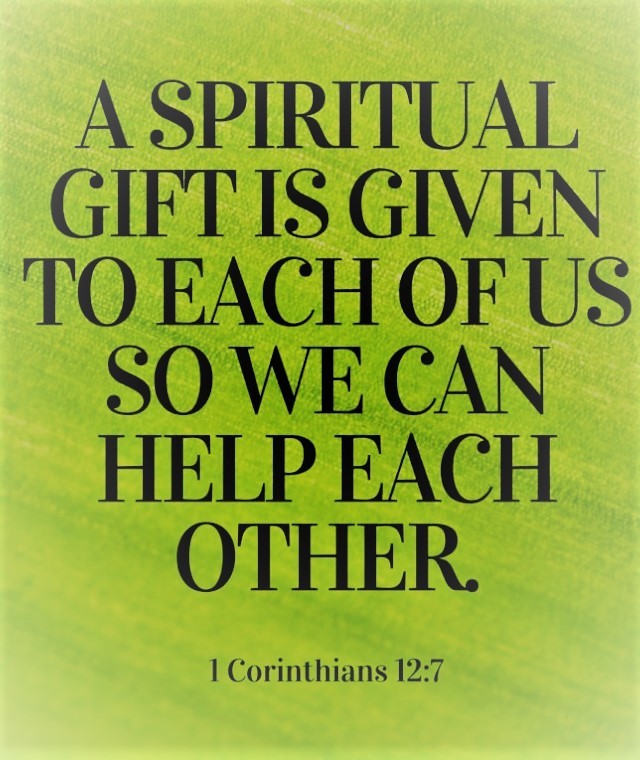
When we consider our reading for today, we can also see that God made different kinds of spiritual gifts, as well. God’s plan is for human beings to live together, with one another, in community. The main purpose for these diverse gifts is for the common good. God wants us to use our gifts for one another. What an awesome opportunity! Here, God freely and openly gives us gifts—spiritual gifts—to serve one another.

Now, let’s back up. The Apostle Paul cites Jesus Christ as a starting point at the beginning of Chapter 12. He states the authority of Jesus, and even makes the statement “Jesus is Lord” a sort of litmus test for being a follower of Jesus Christ. After all, no one who is a pagan can say “Jesus is Lord” and really mean it (at least in Paul’s day, that was true). But there is a problem. The problem is us human beings.

We are fallen people. We sin. In and of ourselves, we have no standing, and are not righteous before God. As Romans 3:23 reminds us, “There is none righteous, no, not one.” But the Holy Spirit gives us a big assist here! The Holy Spirit helps us to say the words “Jesus is Lord!” It is through the power of the Holy Spirit that we exercise these gifts that God so graciously gives to us!

Let’s look at what Paul says about these spiritual gifts. There are many kinds of gifts! Yet, there is one Lord. There are diverse abilities! Yet, one Spirit. I see a definite connection here. It’s all about God, and God’s immense creativity. Just as God created the world in all of its glory, beauty and diversity, so too the Lord created people in all their wonderful diversity, with diverse gifts and abilities for us to share with one another.

I started out quoting Genesis 1:1–”in the beginning, God created the heavens and the earth.” Looking back at Genesis, we can see that diversity is definitely in God’s plan for humanity from the very beginning. The sheer creativity of God in creation is so big and so varied. Musically speaking, there are countless variations on a countless number of themes. The only way I can figure this out is that God is pleased when we use our God-given creativity in any one of a myriad of ways—inventing, designing, doing, helping, making, thinking, crafting, composing, giving. And when we use our God-given gifts and abilities, it plain feels good inside.

When we look at this chapter in 1 Corinthians, Paul stresses that the church—the group of believers in Christ he was writing to–in all of its diversity, is a community. A great, big extended family, if that helps you think about it. I know that can remind us of the whole topic of the families each of us were born into–and some people don’t want to go there–with in-laws, out-laws, black sheep, and all the rest. But biblically speaking, this is God’s family.

This reminds me of my birth family, my family of origin. I am one of six sisters and brothers. The six of us are about as diverse as anyone would want to see. Across the political spectrum, in terms of talents, abilities, interests and activities, the six of us are so different from each other. Yet, we came from the same parents, and grew up in the same household. Even within my own family, there is such a rich diversity.

With God as our Heavenly Parent, we as believers in Jesus Christ are all sisters and brothers of one another. Why? Because God’s Word says so. Paul says, several verses down in this same chapter, “For in the one Spirit we were all baptized into one body—Jews or Greek, slaves or free—and we were all made to drink of one Spirit.”

There are different services, and different activities, yet there is one Holy Spirit over all, energizing all. And this is a corollary benefit: whatever happens, whenever people use their God-given gifts and abilities, God receives praise and honor!

Tomorrow, we observe a federal holiday, where we remember and give thanks for Martin Luther King Jr. His stirring words helped to move this nation toward justice, empathy and equity. His witness called forth the best of all of us.

Sadly, in recent years, we have seen the increasing rise of hatred, separation one from another, and white supremacy. We need to go forward towards those loving, caring and equitable ideas that Martin spoke of. We have been given these gifts to show the whole world that God means for all of us to serve one another, no matter who they are, no matter where they may be.

God can break through insular, tribal loyalties! God can and does knit all of us together as one humanity, one great big extended family. Plus, tomorrow as a Day of Service is not simply a day on the calendar, but it is a day on which all of us can serve and work, pray and hope, struggle and strive to – as Martin said – bend the arc of history closer to justice, and be shaped into the people of God that God’s prophets call all of us to be. Each day. Every day.

So, we can praise God that we have been graciously given these gifts and abilities to use, for each person we meet.  What an awesome opportunity! Here, God freely and openly gives us gifts—spiritual gifts—to serve one another, for the common good. How can you take that opportunity, and use these gifts for one another’s benefit, and continue to build the Beloved Community we are told of repeatedly in the Bible? Not just tomorrow, on the MLK Day of Service, but every day? How can you best serve God’s worldwide family? How can I?

God willing, we can and we will. Alleluia, amen.

@chaplaineliza

(Suggestion: visit me at my other blogs: matterofprayer: A Year of Everyday Prayers. #PursuePEACE – and  A Year of Being Kind . Thanks!

Unknown's avatar

A Star and a Gift from God!

“A Star and a Gift from God!”

Matthew 2:1-12 (2:10) – January 5, 2025

I remember Christmases when I was very young. I was the youngest of six children, and we lived on the northwest side of Chicago. My father worked for the National Safety Council, which was a not-for-profit organization. He didn’t get paid a huge amount of money, so I remember Christmases when we children would not have a huge pile of presents under the Christmas tree, like the television commercials of today always seem to show. But, I do remember the happiness and joy of those Christmas mornings. Those are warm memories, all of us gathered around the tree, exchanging presents.

I’m sure we all could bring to mind a similar warm memory or two, regarding Christmas. Many of my memories do involve gifts. The Scripture passage just read mentions gifts, too. It’s from Matthew, Chapter 2, the traditional Epiphany narrative, when Magi from the East came to see the young child Jesus, bearing gifts.

Here we have some wise people—probably nobles who know a great deal about stars and constellations. They have been studying the heavens for years and years, as well as studying religious books and writings. Just as it says in the gospel record, a great sign (or star) rose in the sky, so these wise astrologers knew that something momentous was going to happen.

These wise people, or Magi, were not Jewish wise people, but instead were Gentiles. Non-Jews. “Could an unusual phenomenon in the night skies have caught the attention of some of them—interest in the stars was legendary in the region—and led them to set out to Jerusalem? That people of other lands and religions are drawn to Jesus, even as a child, is also significant: in Christ, God is speaking to the hearts and minds of all people.” [1]

The old saying is true, “If you want to go fast, go alone; but if you want to go far, go together.” These Magi traveled together, and supported one another. These wise people encouraged each other and (I suspect) spurred each other on to continue following that star. It is important to point out that they were on the lookout and knew which way to go—towards Jerusalem. And, eventually, they turned up at the palace, on King Herod’s doorstep.

God understood that these Magi made a careful study of the stars, and God sovereignly decided to display signs and wonders in the heavenly places at the time of the birth of Jesus. God reached these Magi where they were at. The wonderful thing is: God continues to reach out to people, no matter what is happening to them, no matter where they might happen to be.

But, let’s go back to these Wise people. No one is exactly sure about the number of Magi who arrived in Jerusalem so long ago. Church tradition tells us that the number was three. These were not just Magi, but also royalty of the East. Assuming they were at least minor royalty, these non-Jewish V.I.P.s show up at King Herod’s palace, and he was not pleased to see them.

Turning back to our Scripture reading, “After the Magi had heard the king, they went on their way, and the star they had seen when it rose went ahead of them until it stopped over the place where the child was. 10 When they saw the star, they were overjoyed. 11 On coming to the house, they saw the child with his mother Mary, and they bowed down and worshiped him. Then they opened their treasures and presented him with gifts of gold, frankincense and myrrh.”

            The Non-Jewish wise people who followed that star found what they were searching for. And, they were overjoyed, they worshipped, and then gave precious gifts.

What about that special star? Is it easy for us to get so distracted that we cannot even see the majesty and wonder of God’s creation? Do we get turned around and separated, all alone?

For that matter, do we get comments of direction from an unlikely source? Because, that is exactly what King Herod was: an unlikely source of direction. Do we get lost as we try to follow Jesus? Or, have you even found Him in the first place?

Matthew’s birth story centers around the Star. We have come to see this as the Star of Epiphany, the Light that has come into the world! We use Light to symbolize God. The Star of Wonder represents the Light of God! Just think of the Star at the top of many Christmas trees. This signifies the Star that the Magi followed – that same star we talk about today.

I have mentioned God’s Gift, and I have mentioned God’s Light. The Gift given to the world, and the Light that has come into the world. Epiphany is all about celebrating the light that has come into the world as the Baby Jesus, and at the same time Christ the Lord. “But it is also a celebration of the community that gathers to see and follow that light. Worship this day needs to be corporate. It needs to move away from “I” language toward “us” language. We need to be reminded that this is a walk we take together.” [2]

We are reminded that the Magi came together to the Baby Jesus with a need to worship, to come to Him and bow down, and give rich gifts. “That is what brought these Magi so far – however far it was. That was why they went to Herod and anyone who might help them find their way. They longed to worship, as do we all.” [3]

Today, we celebrate Epiphany, Twelfth Night, Three Kings Day, January 6th. We mark this celebration a day early, since the 6th falls on Monday this year. Today is also our celebration of Communion, the Lord’s Supper. Epiphany commemorates the visit of the Magi as told to us by Matthew. As we consider the Star the Magi followed, we fix our eyes on Jesus, the Light of the World, the Bright Morning Star. And as we consider the precious gifts the Magi gave to the Baby in Bethlehem, we also consider that best Christmas Gift of all, for all the world – and we worship Jesus. As the Christmas carol tells us, O come, let us adore Him, Christ the Lord.

We, too, can bring our gifts. We all can give our talents, and our hearts to our Lord Jesus this Epiphany. May we continue to place ourselves, our hearts and lives in Christ’s keeping. May God bless us all as we walk with Jesus in this new year. Alleluia, amen.

@chaplaineliza

(Suggestion: visit me at my other blogs: matterofprayer: A Year of Everyday Prayers. #PursuePEACE – and  A Year of Being Kind . Thanks!


[1] http://www.taize.fr/en_article167.html?date=2012-01-01

“Jesus, Herod, the Magi and Us,” Commented Bible Passages from Taize, 2012.

[2] https://www.umcdiscipleship.org/worship-planning/re-membering-the-body/second-sunday-after-christmas-day-epiphany-year-c-lectionary-planning-notes

[3] https://www.umcdiscipleship.org/worship-planning/re-membering-the-body/second-sunday-after-christmas-day-epiphany-year-c-lectionary-planning-notes/second-sunday-after-christmas-day-epiphany-year-c-preaching-notes

Unknown's avatar

Fearfully and Wonderfully Made!

“Fearfully and Wonderfully Made!”

Psalm 139:13-18 (Psalm 139:14) – June 2, 2024

            As some of you know, I am a new grandma. My lovely twin grandchildren were born recently, much-awaited, and very welcome to their family and their parents. I was praying for the twins each day while my daughter was pregnant, and now that they are here, growing and maturing, and being their own wonderful selves, of course I continue to pray for them.

            I have always felt a real connection with Psalm 139, but never more so than when I – with their parents – was awaiting the birth of my lovely grandchildren. This psalm was written by King David, and shows his trust and confidence that God is indeed with him, all the time. And, indeed, with all of us.

            As Dr. Streaty-Wimberly says in her commentary on this psalm, the 139th Psalm reveals an account of what may be called “an encounter of the closest kind” with God. What a statement! And, what a word-picture David paints here.

“The psalm details an intimate conversation with God in which the psalmist is speaker and God is listener. The psalmist focuses quickly in verses1-2 on the word, “know(n).” This key reference points to the psalmist’s relating to God the experience of not simply being recognized and acknowledged by God, but of belonging inseparably to God.[1]

Along with the rest of my family, I eagerly awaited the arrival of my grandchildren! And, I find my wonder and amazement echoed by so many friends and acquaintances as they welcome newborns into their larger families, too.

One of the commentators I read has an extended example of her joy and wonder at welcoming her nephew. “My nephew was born on the day I started working on this commentary [about Psalm 139]. When the picture of Mason James arrived, my initial thoughts were, “There you are. What were you doing in there all of these months?” And then I read: For it was you who formed my inward parts;you knit me together in my mother’s womb (vs. 13).

“How did you go from a hoped-for dream of your parents to flesh and blood, bones, muscles and those long, skinny fingers and those cute ears?” I wondered. Then I read: My frame was not hidden from you, when I was being made in secret, intricately woven in the depths of the earth. Your eyes beheld my unformed substance (vs. 15).

“I wanted to shout, “Mason, you are perfect.” Yet this acclamation paled in comparison to his parents’ “You are perfect!” which pales in comparison to God’s “You are PERFECT!”

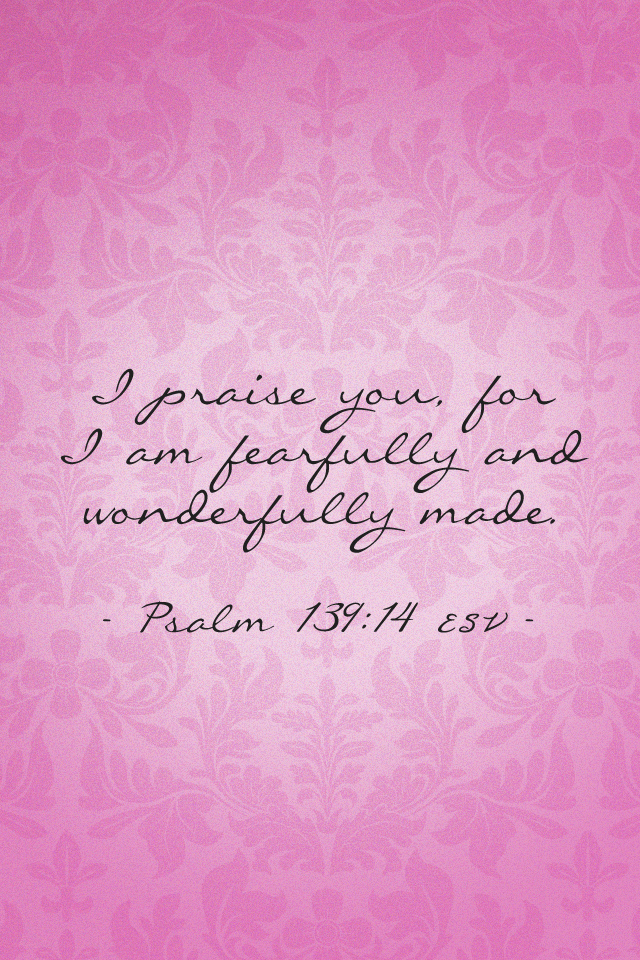
My hope for this little guy on his first day, his birth day, was that one day he would realize and pray with the psalmist, I praise you, for I am fearfully and wonderfully made (vs. 14). [2]

            What a marvelous addition to this commentary on such a rich, praise-worthy psalm! Dr. Hannan usually writes in a more academic style, but enriched and awed by the birth of her nephew, this particular commentary is unusually personal. And, her prayer is heartfelt.

            Sure, if we go to biology and look at the growth of a bunch of cells inside a female mammal, we can still be intellectually amazed by the intricacy of the growing being inside of the uterus. However, when we take into consideration the reference to “being ‘knit together’ in the mother’s womb, the psalmist seems to describe God as a weaver who engages on the highly intricate, and artistic, endeavor of creating a unique and wonderfully made living being.” [3]

            How marvelous that each of us – whether parents, grandparents, siblings, great-aunts and -uncles, or dear friends of the parents – can stand by and observe these miracles that come into the world each day. What a privilege to welcome one of these little ones, and nurture and help it grow!

            Now, we need to turn from beloved babies, entering life as very much wanted members of the family (and of God’s family), and consider another sad possibility. Sadly, there are many, many babies and children who have unhappy childhoods, are not valued members of a family, and even know that they are not welcome in their homes – from a young age. This is heart-breaking, and happens much more often in this world, for any number of sad reasons.

            Rabbi Sharon Brous talks about a commentary written in the ninth century that “declares that every person is accompanied, at all times, by a procession of angels crying out, “Make way, for an image of the Holy One is approaching!” Every person, like royalty… How do we keep missing all those angels, with their trumpets and proclamations, desperate to rouse us to the dignity of every human being?” [4]

            What an earth-shaking concept! This is true not only for cute, adorable newborn babies, but also for all children. For tweens and teenagers (even if we are irked or frustrated with them). This is true for each adult, whoever and wherever they may be on their journey through life. And, this is true as well for each sick person and each senior I may encounter as a chaplain in my day-to-day travels to skilled nursing facilities and extended care centers.

            Rabbi Brous continues to reflect that this attitude “heightens the amazing and magnificent artistry of God’s creation. Indeed, this recognition becomes reason for praising God and affirming the self’s ultimate worth in the sight of God (v. 14).” [5]

            Indeed, we are all – each of us, every person in the world – fearfully and wonderfully made! Each person is accompanied, at all times, by a procession of angels crying out, “Make way, for an image of the Holy One is approaching!” That means every single person, in beautiful diversity, regardless of color, creed, cultural difference, language or nation of origin.

            We are celebrating our graduates today! Let us celebrate each other, too. In the words of the lovely children’s hymn “All things bright and beautiful, all creatures great and small, All things wise and wonderful, the Lord God made them all.” [6] God made you, me, and every single person in the world – all fearfully and wonderfully made. Alleluia, amen!


[1] http://www.theafricanamericanlectionary.org/PopupLectionaryReading.asp?LRID=27
[2] https://www.workingpreacher.org/commentaries/revised-common-lectionary/second-sunday-after-epiphany-2/commentary-on-psalm-1391-6-13-18-3

[3] http://www.theafricanamericanlectionary.org/PopupLectionaryReading.asp?LRID=27

[4] Brous, Sharon, The Amen Effect: Ancient Wisdom to Mend Our Broken Hearts and World (New York: Avery, 2024), 53–54,

[5] Ibid.

[6] https://hymnary.org/text/each_little_flower_that_opens

@chaplaineliza

(Suggestion: visit me at my other blogs: matterofprayer: A Year of Everyday Prayers. and  A Year of Being Kind . Thanks!

Unknown's avatar

Rejoice with Me!

“Rejoice with Me!”

Luke 15:1-10 (15:6-7) – September 11, 2022

Lost and found—this concept is very real and meaningful to my children. I have four children, and at various times, they have had to go looking for various possessions of theirs. You know, small items, things that were very precious to them somehow got lost. And oftentimes, they were persistent in looking for those precious things.

            I can remember when my son was younger, probably in first grade. He had a favorite stocking cap he wore almost every day in the winter. He wore it to school, out to play, on the weekends, almost everywhere. And then one day it got lost. My son could not find it anywhere. He was heartbroken at the loss of this precious stocking cap—precious to my son, at least. We searched everywhere—and I mean everywhere—in the house, in the car, in his classroom, in his locker. He even looked in the lost and found at his school. Sadly, we never could find it.

            Can you relate? Have you ever lost anything that was precious to you? Maybe not valuable in a monetary sense, but precious to you, your very favorite. Losing something precious can be quite a blow.

            This is exactly what our Lord Jesus talked about in our scripture passage today. He tells the parables of the lost things. In fact, one nickname for this chapter, Luke 15, is the chapter of the lost things—the lost sheep, the lost coin, the lost son.

Our scripture reading today tells us about the lost sheep. We will leave the parable of the lost son, or the Prodigal, for another time and another sermon.

            How precious was that sheep the shepherd lost? Let’s back up, and think about the parable our Lord told. He mentioned one hundred sheep belonging to this shepherd. One hundred sheep. A good-sized flock for one shepherd. And out of those one hundred sheep, one gets lost. We aren’t told how the sheep gets lost. The sheep could have done any number of typical things sheep do—sheep cannot just take care of themselves. This particular sheep could have wandered off, or lallygagged behind, or stubbornly gone its own way. We don’t know.

            What we do know, from what Jesus said, is that the sheep is lost. Gone. Missing.

If a statistical analysis is done of this flock of one hundred sheep, what are some possible extenuating factors? Certainly, the rocky hills of much of the area and the subsistence-level terrain have a bearing on the well-being of the flock. And the difficulty of finding water can also be a factor. Statistically speaking, losing only one sheep out of one hundred is not much at all, not when the shepherd is dealing with such unfavorable conditions. From a loss prevention point of view, this percentage – one percent – of loss may very well be acceptable.

            But this is not taking into consideration the plight of that one lost sheep. This individual sheep matters. This sheep is a creation of God.  How does the lost sheep feel? Is the sheep scared? Lonely? Hungry? Injured?

This reminds me of my oldest daughter years ago, when she was just a preschooler. I was at a department store in Chicago with my two children (at that time), my older daughter just turned three, and my second daughter a baby in a stroller. I was looking at clothing on the round metal racks that are common to many department stores. And as I looked at clothing and tried to keep track of my toddler at the same time, she got lost. I could not find her, and she was much too small to see me over the clothing racks.

            It only took me about four or five minutes of searching to discover where she had gone, but that time was anxious for me. And that time was traumatic for my daughter—I suspect those four or five minutes seemed to go on forever. She was lost. She did not know where she was, or where I was. And she was all alone, far from her home and familiar things, until I found her and reassured her that everything was all right.

            Isn’t this similar to us? Isn’t this our situation, from time to time? You or I lose our way, get off track, slip and fall, or even stubbornly go our own way.

Periodically, I try to put myself into the scripture passage I’m considering. So, where am I in this scripture passage? Where are you? How do we fit in? Is this just a nice little story, or is there something more?

Theologian Howard Thurman reflects in his sermon on this passage, “Now, Jesus says that God is like the shepherd, seeking always to find those who are out of community with their fellows, and when they have found it, when they have found their community with their fellows, then all the world seems to fit back into place, and life takes on a new meaning. . . . The lost sheep. The searching shepherd. And the cry of anguish of the sheep was the voice of identification that the shepherd heard. That is how God is, if we let him.” [1]

But, how did Jesus see this parable? “Most often readers assume that they are the lost ones sought out by God and celebrate God’s persistence in finding them.  But, Jesus told these stories to the Pharisees who were unhappy that Jesus was eating with known lost sinners.” (Remember, the Pharisees and other religious leaders were all part of the ‘in-crowd,’ the people who were really trying to follow God and God’s rules.)  “Jesus’s message to them is that God is more interested in the lost than in them – and they should be too.” [2]

Jesus doesn’t just throw up His hands and forget about the lost ones. No! He goes after me, and you, searches for us, and makes sure that we are back with Him, in the place of security and protection, and says, “Rejoice with me! For I have found my sheep that was lost!”

            Isn’t that good news? And the best part is, the Lord Jesus, the good Shepherd, is our good Shepherd, too. He cares about me, and He cares about each of you, as well. To me, the news about our good Shepherd is the best news in the world.

@chaplaineliza

(Suggestion: visit me at my other blogs: matterofprayer: A Year of Everyday Prayers. #PursuePEACE – and  A Year of Being Kind . Thanks!


[1] Howard Thurman, Sermons on the Parables, ed. David B. Gowler and Kipton E. Jensen (Maryknoll, NY: Orbis Books, 2018), 22–24, 25.

[2] http://worshipingwithchildren.blogspot.com/2013/08/year-c-proper-19-24th-sunday-in.html

Unknown's avatar

We Know the Ending!

“We Know the Ending!”

Isa 65-17 new-heavens-new-earth

Isaiah 65:17-19 – November 17, 2019

Who likes to watch movies? I’m thinking in particular of scary movies. There’s the plucky heroine, the brave protagonist, the encouraging older character actor, the quirky supporting actor. I bet you recognize these typical parts of the horror movie formula. And, have you ever found yourself yelling at the screen, “Don’t go down in the creepy basement!” or “Don’t go up to the scary attic!” You and I could almost guess what was coming, couldn’t we? Many of them are so formulaic we already know the ending.

In the scripture reading from the end of Isaiah 65, we find out how things are going to end, at the end of all recorded time. It’s the end of the ultimate scary and suspenseful movie. Sure, there is a lot of scary stuff that happens in each of our lives, as well as really sad things and even some overwhelmingly traumatic happenings. But, there is no ultimate surprise ending to the overarching story. We already know the ending. God wins, and the whole world is re-created!

Let’s take a step back. What came before chapter 65 of Isaiah, in the original creation?

We all remember the blessed words of Genesis 1: “In the beginning, God created the heavens and the earth.” That was the time of the first creation. God created everything in this world, and God made it all very good. We have God’s word on it – it says so at the end of Genesis 1:31. “God saw all that He had made, and it was very good.”

The sad—even traumatic—events of Genesis 3 happened so soon afterwards, where the spotless creation was marred by sin, and the whole world was changed, turned topsy-turvy.

Just think—creation, blessed and sanctified by God in the beginning, was indelibly altered, leaving a huge upheaval in the whole order of all created beings and created places. We are still in that in-between time, dealing with the aftermath of Adam, Eve and the apple.

All this fall, I have done a part-time chaplain internship in a busy downtown hospital. There is nothing quite so intense as a critical care unit of a busy hospital to get across the sorrow, agony and mourning of the human experience.

Here at this church last week, we prayed for a senior who was scheduled for a delicate procedure the next day, last Monday. I have not checked up to see how that dear senior is doing now, but there are several serious continuing health issues in this dear one’s life and body. I do not know whether or not there are additional concerns in this situation. All I know is that I promised we would pray for this prayer request for four weeks. That is what I could do for this dear senior, to encourage and come alongside of this dear one.

But, we all are still in the time of the first creation. We all know about that time; still in the time of imperfection, of fallenness, of crying and suffering and sorrow.

I have mentioned Rev. Janet Hunt before. She is a Lutheran pastor in DeKalb. She is dealing with a real-life experience right now, where one of the families in her congregation is reeling from the unexpected news of cancer. This heart-breaking diagnosis affects not only the young person medically affected, but the whole extended family as well.

Rev. Hunt is correct when she says that this loving family has resources, both material and spiritual. They have adequate health insurance, and live near wonderful medical care and excellent hospitals. This youth’s particular medical diagnosis is the most common, and the most treatable form of that hated disease, cancer. And still—and still, Rev. Hunt’s heart breaks “to be living in a world where mothers weep, and dads stand stoic so as to emit a sense of much needed calm, and [young people] try to hold back tears of confusion and fear.” [1]

While here in this flawed world, we groan, and we struggle; we cry and we mourn. Why me, Lord? Why us? Why are there many children and young people in horrible circumstances, both in and out of the hospital? For that matter, why is anyone suffering? Why do bad, negative, even traumatic things happen to good, loving and compassionate people?

Why, Lord? Why, oh why? Please let me know. Please, please, dear Lord, act in all their troubled lives, relational difficulties, and medical situations

As we consider today’s Scripture reading from Isaiah 65, Rev. Hunt says, “I want the world the prophet promises now:

  • Where the sounds of weeping and distress are simply no more.
  • Where little ones (and children) never die and where life is still short when we live to be 100.
  • Where hard work is rewarded with adequate shelter and enough to eat for everyone.
  • Where sworn enemies —- the wolf and the lamb — eat together.

Oh, what a world that would be, will be where not one is hurt or destroyed on God’s holy mountain.” [2] This whole reading incorporates God’s wish for the entire world. When God describes Jerusalem, God means the whole world.

Remember how I started this sermon, talking about scary movies? We wanted to warn the characters of the dangers.  But, what if we have already seen that movie for the second, third, even fifth time when we knew the ending?  Once we knew the ending we sometimes might want to tell the hero not to worry during the scary parts and sometimes want to warn the heroine to be careful when everything is going well.

In our Gospel reading from Luke 21, the disciples ask, “Teacher, when will these [dire, horrible] things happen? And what will be the sign that they are about to take place?” The Hebrew Scripture readings for this week tell us God’s final ending.  The New Testament readings advise us on how to live until the ending comes. [3] Yes, we could concentrate on the disheartening Gospel reading, and look at all the bad, awful, and even worse things that are going to happen – and even happen right now. However, I wanted to look at God’s truly happily-ever-after ending. Let us all know and look forward to God’s ultimate, Good News ending.

Yes, creation is part of God’s continuing work today, and the continuing reality of the world today. Remember the prophet’s words in verse 65:19, that sorrow and crying will be taken away as God re-creates the world. Never fear – God will wipe away every tear from every eye. No more sorrow! In this reading, we see real celebration! Praise God, we will have joy in the morning on that day! In the words of that joyful gospel song, Soon and very soon!

Isn’t that God’s ultimate Good News? Alleluia, amen.

[1] http://dancingwiththeword.com/new-heavens-new-earth/

[2] http://dancingwiththeword.com/new-heavens-new-earth/

[3] http://worshipingwithchildren.blogspot.com/2016/10/year-c-proper-28-33rd-sunday-in.html

Worshiping with Children, Proper 28, Including children in the congregation’s worship, using the Revised Common Lectionary, Carolyn C. Brown, 2016.

@chaplaineliza

(Suggestion: visit me at my regular blog for 2019: matterofprayer: A Year of Everyday Prayers. #PursuePEACE – and my other blog,  A Year of Being Kind . Thanks!


Unknown's avatar

Transforming Creation

“Transforming Creation”

isa-35-word-cloud

Isaiah 35:1-6, 10 – December 11, 2016

Expectation. Anticipation. Sitting on the edge of one’s seat in excitement. That sounds like we just hardly can wait another minute for a long-expected, awaited event! Can you think of events which were so exciting for you? A long-awaited trip to a far-away place, a well-deserved promotion at work, or finally celebrating a wonderful wedding or a significant anniversary. Can you remember being so excited about these things that you were sitting on the edge of your seat in preparation and anticipation?

“O come, O come, Emmanuel.” This is a familiar hymn we sing in the month of December, in the weeks leading up to Christmas. It is an Advent hymn, full of hope, preparation, and expectation about the Messiah’s coming. Are you sitting on the edge of your seat, waiting for the arrival of Christmas, of the Baby born in Bethlehem? Or, is this just another ho-hum, not-so-exciting occurrence for you?

We all know the Messiah is long-expected. Time and again in the Hebrew scriptures, we hear the prophets declaring their marvelous news, that the Savior and Redeemer of Israel is coming. The heir to King David’s throne is coming to reign over Israel. But, this week, this passage from the prophet is a little different. We turn to the prophecy from Isaiah 35, starting at verse 1: “The wilderness and the dry land shall be glad, the desert shall rejoice and blossom; like the crocus it shall blossom abundantly, and rejoice with joy and singing.” Here, the prophet is talking about what will happen in the future.

Here, the prophet talks about all creation: the wilderness, the dry land, and the desert. Large parts of the land of Israel was parched, inhospitable to both humans and animals. Here, in these verses, we hear about what is going to happen to the land, to creation itself.

As Dr. Michael Chan, one of my commentators, said, “The general theme is that desolate, dry places will be transformed into paradise. Those who live in desert environs can appreciate the transformative power of water on the desert. Overnight, even a small amount of rain can change a dry desert into a vibrant landscape. But Isaiah’s poem moves far beyond the natural consequences of water on the desert. Creation itself will “be glad,” “rejoice,” and sing (verses 1-2). Creation’s praise joins human praise, in recognition of God’s marvelous work.” [1]

Death Valley, a large desert area in southern California, has wildflower blooms every year. Once every ten (or so) years, Death Valley receives an unusual amount of rain from storms that are way out of the ordinary. This causes what is known as a “super bloom,” as happened in spring of 2016. For a number of days, the valley was covered in an unusually huge amount of wildflowers. [2] Talk about anticipation for the coming of the Messiah! Thinking of the super-bloom in Death Valley gives us a foretaste of what we read here in Isaiah, certainly.

Looking at verses 3 and 4: “Strengthen the weak hands, and make firm the feeble knees.
Say to those who are of a fearful heart, “Be strong, do not fear! Here is your God.” The prophecy not only refers to creation, it also is talking to the people of this world, the people of our God. According to commentator Dr. Chan, “Like so many other texts in Isaiah, Isaiah 35 confronts fear with promise: “Here is your God … He will come with vengeance … He will come and save you.” In switching to the second person, the prophet leaves nothing to chance, making sure that his audience knows that this message is ‘for you.’[3]

But, what was the situation of these people of Israel? A huge group of them were in exile. Israel was occupied territory, and the occupying forces had been the strong, conquering forces. They took a large number of the people as prisoners back with them to Babylon, to force the good behavior of the whole nation of Israel.

So, the prophet encourages his listeners “to be strong and not be afraid no matter how bad things look at the moment because God will come to their rescue.” [4]  Just think of how so many of them felt, being prisoners of war in a foreign country.  As you can imagine, life for them was lousy. The prophet urged the Israelites to be strong because God will always have the last word. It does not matter, not for the people of Israel, not for us, either. God is in the process of overcoming, and the end result will be a wonderful thing.

May I point out that though we are not prisoners of war like the people of Israel, we face lots of really hard situations in our lives. Personally, in my extended family, we are facing a difficult and sad situation right now. Especially hard on my husband and his sisters. Their elderly father is gradually dying; slipping away. Yes, it is particularly tough for me and my whole family right now. And yes, God is a refuge and strength for our family, a very present help in times of our trouble and difficulty.

This is a challenging time of the year for many people. Carolyn Brown so helpfully reminds us that “many congregations have become sensitive to people for whom it is hard to rejoice at this time of year.” [5] Since her ministry focus is on children, she mentions that this group includes children as well as adults. Imagine how difficult, how confusing, even overwhelming the holidays can be for children, sometimes. (And for adults, too.)

“Children face the same problems that daunt the adults, but do so with different twists.  For one thing, they lack the experience of many Christmases that the adults can draw on to keep a sense of balance.  For another, they feel that as a child they should be totally into the season.  It feels even more unfair to them than to the adults that they are not going to have special gifts or fun family gatherings or decorations.” [6]

I am going to our sister church, Epiphany United Church of Christ, to assist for their Blue Christmas service this coming Wednesday. And, Pastor Kevin will assist me here at St. Luke’s Church for our Blue Christmas service a week from tomorrow, on Monday, Dec. 19th. Often- times, people get overwhelmed by the holidays. Perhaps they have lost a loved one during the past year, and this is the first Christmas with that empty chair. Perhaps there has been some other significant change or major move in their lives. No matter what the event or grief or situation, sometimes people need a refuge, they need a quiet gathering for support in this very busy time.

May I say that Isaiah’s promise is for us—all of us. No matter how hard things seem at the moment, we know that God will eventually win and God’s peace will come to the whole world. God will send joy to us all, despite the difficulties we all go through, on a daily basis. Knowing that, we can be strong and patient.

We can praise God for the witness of the prophet: “Then the eyes of the blind shall be opened, and the ears of the deaf unstopped; then the lame shall leap like a deer, and the tongue of the speechless sing for joy. For waters shall break forth in the wilderness, and streams in the desert;” Do you hear? Creation will be transformed, both the world and the people therein.

We can look forward to that, when Christ comes again in His glory. Soon and very soon, we will see Him face to face. We can sit on the edge of our seats as we await this wonderful, marvelous event. Praise God! The Messiah, the King is coming. We all can sing, “O come, O come, Emmanuel,” and really mean it, truly wait with anticipation and excitement.

Alleluia, amen.

[1] Michael J. Chan, http://www.workingpreacher.org/preaching.aspx?commentary_id=3118 

[2] http://news.nationalgeographic.com/2016/03/160302-death-valley-super-bloom-wildflowers-weather/

[3] hael J. Chan, http://www.workingpreacher.org/preaching.aspx?commentary_id=3118 

[4] http://worshipingwithchildren.blogspot.com/2013/08/year-third-sunday-of-advent-december-15.html

[5] http://worshipingwithchildren.blogspot.com/2013/08/year-third-sunday-of-advent-december-15.html

[6] http://worshipingwithchildren.blogspot.com/2013/08/year-third-sunday-o

f-advent-december-15.html 

@chaplaineliza

(Suggestion: visit me at my regular blog for 2016: matterofprayer: A Year of Everyday Prayers. #PursuePEACE – and my other blog,  A Year of Being Kind . Thanks!)


Unknown's avatar

Hear Creation’s Cry

“Hear Creation’s Cry”

Psalm 24-1 creation picture

Psalm 24:1-2 – July 10, 2016

Have you ever had a family member, or a friend, go out of town? Or how about go on vacation? Your friend, your family member, asks you to take care of something of theirs. It may be a dog or cat, sometimes houseplants indoors or a garden outside. Asking you to be a good steward for them. Taking good care, being responsible for your friend’s property. That includes all the stuff in your friend’s house or apartment, all their valuables and beloved possessions.

Let’s go on a tour of Scripture today. Think about the earth God created. Creation is the handiwork of a loving God who saw all that was made and in Genesis pronounced it “very good.” Scripture tells us that God delights in creation and creation delights in praising the creator.  A great example is Psalm 150:6. “Let everything that breathes praise the Lord!”

One of the oldest forms of expression of Christianity today is Celtic Christianity. Coming from the British Isles, it carries within it the deeply Celtic understanding that nature itself is a testament to God. One of the Celtic holy men, Saint Columbanus once said, “If you want to know God, first get to know his creation.” [1]

That is exactly the case with the earth, the world, today. The earth belongs to the Lord. God created it—all of it. The dogs, the cats, the other animals, things that swim in the water and fly in the air. All the plants, and trees, and other growing things. All the valuable things on the earth and underground.

God wants us, expects us human beings to be good stewards of the earth, to take excellent care of it, nurturing it, loving it. Exactly how you’d expect someone to take care of your dog or cat while you were away on an extended vacation.

Let’s look at the UCC Statement of Mission. Which sentence are we on this week?

“Empowered by the Holy Spirit … To hear and give voice to creation’s cry for justice and peace.” We are to listen and respond to this wonderful gift God has given to all of us.

Our next stops on our tour of Scripture are the books of Genesis and Numbers.  We have seen that God has given humankind a special responsibility to care for creation. Genesis 2:15 says the Lord God took humanity and put them in the garden of Eden to till it and to keep it. A form of the Hebrew verb “shamar,” meaning “to keep,” is also used in Aaron’s blessing from Numbers 6:24. Lacey closes our services playing Lutkin’s arrangement of that blessing each week as Al extinguishes the candles. “The Lord bless you and keep you.”

We are not only to nurture, sustain and care for creation, but we are to follow God’s example. We can see how God nurtures, sustains and cares for us—each one of us. This interconnected aspect of creation helps all of us remain aware of the joys and concerns encountered in the world around us, and of their impact on all of our lives each day.

However, there is a problem. A huge problem.

Our relationship with God, with each other and with creation are all part of the same multi-colored fabric. Pull any one thread and the whole piece begins to unravel. Human selfishness, ignorance, fear and mistrust have ecological consequences. Add some territorial urges, and feelings of animosity and xenophobia. A basic name for all of this is sin.

The Bible is not hesitant to make connections between human sinfulness and the degradation of creation. Two telling examples come to us from the prophets Isaiah and Hosea.  “The Earth lies polluted under its inhabitants; for they have transgressed laws, violated the statutes, broken the everlasting covenant” (Isaiah 24: 5). “There is no faithfulness or loyalty, and no knowledge of God in the land. . . . Therefore the land mourns . . . even the fish of the sea are perishing” (Hosea 4: 1-3).

What is to be done? People will not stop being selfish, or territorial, or fearful, or displaying hatred. But it’s also much bigger than that. Going clear back to the fall, to Adam and Eve’s disobedience in the garden, we learn that broken relationships are costly.  Lord, who will deliver us from this horrible state of sin?

We could throw up our hands, and say that saving the world is a lost cause. The earth is too far gone. The scales have been tipped, and it’s all downhill from here. But—it is not true!

When all else seems totally dark, God steps in.

I have talked about this before. Remember? God the Son became incarnate in Jesus Christ. He was born as a baby in Bethlehem. Jesus became part of the “stuff” of creation to heal and restore the relationships broken by human sinfulness.

The apostle Paul tells us “God was in Christ reconciling the world” (2 Corinthians 5:19). An early hymn praises Jesus Christ, the firstborn of creation, the firstborn from the dead, through whom God was pleased to reconcile all things, whether on Earth or in heaven (Colossians 1:15-20). The resurrection of Jesus Christ, God’s great victory over sin and death, is a pledge and sign not only of our resurrection, but also of God’s promised redemption of all creation.

Can I hear an “Amen” for that? Jesus and His resurrection means that we will be redeemed, just like creation. Just like the world will be. We all have had experience with God and how incredibly stunning this creation is, right now.

However, let me remind you. Andy Wade tells us something so important: “God’s creation is not somehow separate from God’s plan of redemption. When we forget that God’s very good creation also gives testimony to God, we can begin to think that it’s ours to trample on, ours to exploit, and ours to use for our own selfish purposes.” [2]

This selfish, self-centered kind of attitude and way of dealing with the wonders of creation and the great gift God has blessed us with? Thank God that God has made a way for creation to be made new, just as much as God has made a way for us to be made new!

The next question is simple: what is the next step? Where do we go after realizing God has plans to make all of creation new?

We as followers of Christ are called to witness to the resurrection of Jesus Christ. In our words and actions we are called to reflect the love of the one whose victory over sin and death was a victory for the whole of creation.

It is all very well to simply talk about being a witness. But, how can we do that, right here and right now? I’m glad you asked.

Some years ago, Solana Beach Presbyterian Church, near San Diego, received one of six “2000 Energy Star for Congregations Awards” from the US EPA. Following an energy audit, the congregation invested in energy-saving measures, including new lighting fixtures and energy-efficient light bulbs. The Solana Beach Church witnesses to Christ’s redeeming power every time they turn on the lights!

Just like this church! We can praise God that Kids Academy got all of the light bulbs in St. Luke’s Church building changed to energy efficient light bulbs. This is a wonderful start! Every time anyone here turns on the lights, we, too, can witness to Christ’s redeeming power.

Let’s not stop here. Let’s continue to keep looking for ways to hear creation’s cry, and to respond in loving ways. Ways to witness to the world around us that we are striving to be good stewards. Ways to celebrate God’s goodness, too. Alleluia, amen!

@chaplaineliza

(Suggestion: visit me at my regular blog for 2016: matterofprayer: A Year of Everyday Prayers. and my other blog,  A Year of Being Kind . Thanks!)

My sincere thanks goes to the National Council of Churches’ great resources. I borrowed liberally from the Earth Day 2001 Sermon Notes and Worship Resources.

http://web.archive.org/web/20110706140053/http://www.nccecojustice.org/earthday/PastEarthDayResources.php


[1] http://godspace-msa.com/2016/07/07/creations-sacrifice-gives-testimony-to-god/

[2] http://godspace-msa.com/2016/07/07/creations-sacrifice-gives-testimony-to-god/

Unknown's avatar

God’s Dwelling Place

“God’s Dwelling Place”

Rev 21-6 Alpha and Omega

Revelation 21:1-6 – April 24, 2016

It’s spring! It is finally spring! Bushes and trees are budding, the grass is greening up, the spring flowers are in full display. After the long, cold winter, everything finally is blooming and budding—showing signs of green, fresh, new life.

It seems like it’s been a long, long time since we have seen the last leaves fall from the trees, last year—in the autumn of the year. This past week I read several books to the four and five year old children at Kids Academy about trees. In one book, I read about what happens to trees during the winter. They certainly appear dead, from the outside. But now in spring time, life starts shifting into forward motion. Full speed ahead, with the new growing season!

Imagine the newness of spring, of exactly this time of year, with everything outside budding and blossoming and growing. See that in your mind’s eye. Now, imagine it, 100 times bigger and better. No, 1000 times bigger and better! Now we’re getting the beginnings of an idea of what the new heavens and the new earth are like. That’s a little of what Eugene Peterson meant when he wrote his translation of Revelation 21:1; “I saw Heaven and earth new-created. Gone the first Heaven, gone the first earth, gone the sea.”

Doesn’t it say somewhere that “God saw everything that he had made, and indeed, it was very good?” As the book of Genesis tells us, in the beginning, God created the heavens and the earth, and God created everything good.

God gave humanity the world and everything in it for us to enjoy. It is all a gift, everything, for us to enjoy together with God. Not only that, God wants to be in relationship with us. Can you imagine, daily strolls through beautiful gardens, in the cool of the evening? That’s just the picture that is painted for us by Genesis chapter 3.

You all know the plot line. God did have a close relationship with Adam and Eve. Then, one day, God came looking for Adam and Eve, but what happened? Sin happened. That relationship was fractured. Humanity was separated from God by sin. Now, today too, I am separated from God by my sin. We all are separated from God. Alienated from God.

When the world was created, everything was created very good. God says so, at the end of Genesis 1. Beautiful, glorious, magnificent Earth was created, and humans were placed on it to be good stewards of the Earth, and to take good care of it. But, we all know what happened. Sin happened. Not only we—us humans—were separated from God, but something catastrophic happened to the Earth, too. The world has been suffering from the catastrophe of sin, inside and out, ever since.

Another word for sin is separation. I know I sin. I displease God. And when I sin, I am separated from God. I feel it. I know I am alienated from God. I feel intense sadness, sorrow, and longing to be back in relationship with God. (And with other humans, too.)

This separation and alienation is a problem. Not only for you and for me, but for the Earth, too. The Bible is not specific on this point, but when Jesus died on the cross, the gospel of Matthew tells us that the Earth shook and the rocks were split. Somehow, the Earth knew when the Son of God died. The Earth reacted when the Creator of the heavens and the Earth died.

Thank God that Jesus, the eternal Son of God, became a human being. Just like us. Thank God that Jesus reconciled us to God, so that we don’t have to be separated from God for eternity. And, this passage from Revelation reminds us that the world is going to be renewed, reconciled to God. The Earth is going to become that fresh, new, spring green place that it once was.

Remember, the book of Revelation was written by John. This book of amazing, fantastical visions was written for our edification and to help us get ready for things to come in the future. When you read this passage, this description in Revelation 21, what is your reaction? Do you think this description is pie in the sky? Is it way, way far-fetched? Or, is it a blessed promise of things to come?

Let’s read more from Eugene Peterson’s translation. Starting with verse 3: I heard a voice thunder from the Throne: “Look! Look! God has moved into the neighborhood, making his home with men and women! They’re his people, he’s their God. He’ll wipe every tear from their eyes. Death is gone for good—tears gone, crying gone, pain gone—all the first order of things gone.”

That doesn’t sound like this crazy, messed-up world, at all. Does it? Especially the part with God moving into the neighborhood!

How would you like God—the Lord God Almighty, who created the heavens and the earth—to live in your neighborhood? On your block? Across the street, or maybe even living right next door?  For some, it’s a scary, daunting thought.

Some bible scholars say that cities—like Chicago—are scary! Sometimes, they are. Dark, dreary, dangerous places, where sin, evil, violence and alienation reign, and keep the good Christian folk huddling inside their homes and buildings. However, that is not the case here. John tells his readers that the New Jerusalem is a bright, shining city! The city of God, where God dwells. That’s God settling down, getting comfy in our very own neighborhood!

The commentator Dana Ferguson describes urban settings and cities in a fascinating way: she talks of cities being places of cooperation, interdependence and welcome. (See Feasting on the Word Year C, Vol. 2). Let’s go with that description, and think like that. What a positive, encouraging way to think of the Heavenly City, the New Jerusalem.

Yes, this bible passage provides a vision of the future, of where we’re going. These descriptive words tell how wonderful it will be. Not only a bright, shining city, but also a welcoming snapshot of what God has promised to us. And, just think. That’s where God is settling down. As Peterson translated, “Look! Look! God has moved into the neighborhood, making his home with men and women!”

Theologian Frederich Buechner gave a telling response: “What does it mean to be ‘with God’? To say that a person is ‘with it’ is slang for saying that whether he’s playing an electric guitar or just watching the clouds roll by, he’s so caught up in what he’s doing and so totally himself while he’s doing it that there’s none of him left over to be doing anything else . . . In other words, to live Eternal Life in the full and final sense is to be with God as Christ is with him, and with each other as Christ is with us.” [1] [italics mine]

Let’s enlarge that vision to include all of Earth. Have you ever thought of caring for the Earth as caring for God’s creation? We just celebrated Earth Day on Friday. Earth Day is a day of responsibility and caring for this wonderful world. And, it serves as a tangible reminder of God’s unconditional love, extended toward all humanity.

We can celebrate God’s love, God’s presence with us, and the gift of God’s creation.

Sometimes, I hear language like, “Jesus lives in my heart.” Or, “My heart, Christ’s home.” Is it, really? How welcome is Jesus Christ in my heart? Am I generous and kind with my heart and my attitude, or does Jesus feel unwelcome when He knocks at the door of our hearts? Great question! An intriguing thing to think about. Sometimes, a serious thing to think about.

I know, I know. We aren’t there yet. The new heavens and the new earth are not here, yet.  However—what are we going to do with these Bible words in this in-between time? How can these words from Scripture impact our lives, today?

We can take these words as hopeful, encouraging words: “Look! Look! God has moved into the neighborhood, making his home with men and women!”  We can celebrate God’s presence right by our sides, today. Now, in the in-between time, and at the time of the new creation, too.

Alleluia, amen!

(Thanks to Kathryn M. Matthews and her online commentary, Sermon Seeds, http://www.ucc.org/worship_samuel_sermon_seeds_april_24_2016 Several of the ideas in this sermon were used in Kathryn’s article.)

[1] Wishful Thinking: A Theological ABC by Frederick Buechner, Harper & Row, 1973, 21-23.

@chaplaineliza

(Suggestion: visit me at my daily blog for 2015: matterofprayer: A Year of Everyday Prayers. and my other blog,  A Year of Being Kind .  Thanks!)