Unknown's avatar

That You May Believe!

“That You May Believe!”

John 20:19-31 (20:31) – April 27, 2025

            Seeing is believing! Or . . . is it? I wonder what things come to mind when I mention the phrase, “Seeing is believing”? Or even, “I won’t believe it until I see it!” Sometimes, people can be really doubtful about things. I can just imagine several people I know folding their arms across their chests and saying, “Unless you show me . . . “

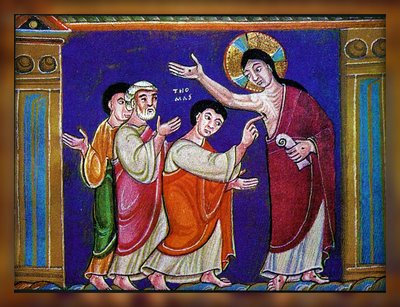
            In the gospel account we read today, from John 20, the disciple Thomas had just that reaction. After the resurrection, the first time Jesus came to the disciples, Thomas was not there. We’re not told why, simply that he wasn’t there. Maybe he was scared, maybe he was away, or out of town. Maybe he was sick. We just aren’t told why he wasn’t there.

            The ‘why’ is not the important part. The fact that Thomas wasn’t present is. Thomas had doubts. Sincere doubts. Truth to tell, the other disciples’ story was a little farfetched. I mean, how many people have you known who came back from the dead, and walked through walls into a locked room?

            I wonder. I wonder if Thomas’ reaction strikes a chord with anyone here today. How many of us today are like Thomas? Doubting that Jesus has risen indeed from the dead? Or, completely missing Jesus, and doubting that Jesus is even here at all, today?

            Let’s think some more about Thomas and his reaction. Thomas not only doubted, he wanted concrete proof. Tangible proof, proof he could touch and feel and handle. Thomas wanted to put his hands in the nail marks on Jesus’ hands. That’s pretty concrete.

            As I thought more about Thomas and his reaction and attitude toward Jesus and His first appearance to the disciples, the Gospel of John is not clear at this point. We as readers don’t know why Thomas had difficulty believing. But the gospel account says he did.

            How many of us today are like Thomas? Not sure? Not believing? Closed up behind the locked doors of feeble faith? Not believing that Jesus can make a difference in our lives today? Could Jesus come and reveal Himself to Thomas? Can He come and reveal Himself to those today who are fearful, doubting, and unbelieving? . . . Can He reveal Himself to me?

            Perhaps Thomas had difficulty finding something to believe in, since he had so recently seen his Master and Teacher arrested and crucified. Grief, fear, anger, dashed hopes, shattered dreams. I strongly suspect several, if not all of these, were operating in Thomas’ life at this time.

            These strong feelings and emotions inside are intense, and raw. From what is known today about the stages of grief, Thomas could have been feeling awful, and angry, and upset. Thomas could have felt his life was falling apart. But Jesus can break through all of that. Jesus could enter Thomas’ life with new hope, standing right in front of him. In the same way, Jesus Christ can enter through the closed doors of our hearts, meet us where we are, with open arms.

Just as Jesus did not leave Thomas high and dry, to figure things out on his own, so Jesus will not leave us. Our Lord came to Thomas in the upper room, despite his doubts and unbelief, and Jesus also comes to us in our doubts, and in our unbelief.  “The resurrection is among us, whether we see it or not. The resurrection is all around us, whether we recognize it or not. The resurrection is in the midst of us whether we are able to point to it or not.” [1]

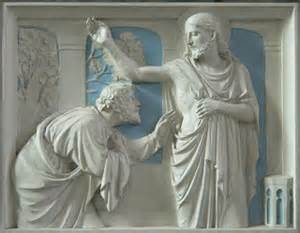
            Now, Thomas didn’t actually see Jesus, at first. He had just heard from others who had seen Jesus. But then, a second time, the risen Lord appeared to the disciples. Again, in the locked room, and this time, Thomas was there. What were Jesus’ words to Thomas? “Put your finger here and see my hands. Reach out your hand and put it in my side. Do not doubt, but believe.”

            Thomas responded with that tremendous affirmation, “My Lord and my God!”  Praise God for the sincere, heartfelt response of Thomas.

            Jesus’ words to His doubting disciple serve as words of comfort and reassurance to me. I know I have doubts, sometimes. And just as Jesus did not leave Thomas doubting, so too, Jesus will not leave me doubting, either. He will welcome me with open arms, coming through the locked doors of my fear, anger, doubt and unbelief.

            Thomas saw Jesus. Seeing was believing, in Thomas’ case. And then, the risen Jesus continues with the statement, “Have you believed because you have seen me?” Here’s the best part of all. “Blessed are those who have not seen and yet have come to believe.”

            What was that Jesus just said? Did I read that correctly? “Blessed are those who have not seen and yet have come to believe.” So—the Gospel of John says here that all who have not actually seen the risen Lord and yet have come to believe are indeed blessed.

            That means Christians throughout the centuries are blessed, since they have come to believe in Jesus Christ and yet have not actually, physically seen Him as risen from the dead. That means you and I are blessed, since we have come to believe in Jesus Christ, too. How awesome is that? We are blessed because the Lord Jesus says so!

            Just in case we didn’t quite understand where the evangelist was coming from the first time, verses 30 and 31 of John 20 underline this concept. “Jesus did many other signs in the presence of His disciples, which are not written in this book. But these are written so that you may come to believe that Jesus is the Messiah, the Son of God, and that through believing you may have life in His name.”

            Just as Jesus helped Thomas to believe, so the Gospel of John helps us to believe, too. This Gospel was not only written to bear witness so long ago, in the first century, some years after Jesus was raised from the dead. This Gospel was also written for the many generations which have come to believe throughout the centuries. That includes us, too.

Plus, Jesus does not mean for us to hide this Good News and keep it for ourselves. We all are “to be involved and engaged with the communities around us, in which there are the lives of many who do not yet know the Gospel. We respond to them with loving service, walking alongside them and sharing Jesus with every step.” [2]

Even though we may have doubts, and unbelief, and wonder whether, and why, or even why not, Jesus comes to us in our doubts and unbelief. Our Lord comes to all of us with reassurance and open arms and says “Do not doubt, but believe!”

            Praise God that as we come to believe that Jesus is the Messiah, we can have life in His name. Jesus can come to us, at any point in our walk with the Lord, no matter what the circumstance happens to be, no matter where we are in our lives. Thank God that Jesus will be there for us and with us, no matter what. May we all be able to affirm, with Thomas, that the risen Jesus is our Lord and our God.

            Alleluia, amen.

@chaplaineliza

(Suggestion: visit me at my other blogs: matterofprayer: A Year of Everyday Prayers. #PursuePEACE – and  A Year of Being Kind . Thanks!


[1]  https://www.workingpreacher.org/dear-working-preacher/when-seeing-is-believing

[2] https://www.churchofscotland.org.uk/worship/weekly-worship/monthly/2025-april/sunday-27-april-2025-second-sunday-of-easter-year-c

Unknown's avatar

How Majestic is God’s Name!

“How Majestic is God’s Name!”

Psalm 8 (8:4) – October 6, 2024

            How many here can think of a truly unforgettable experience you have had? Maybe going on vacation, and seeing an unforgettable sunset or rainbow? Or perhaps taking a trip to a National Park, and experiencing some unforgettable scenery, like a spectacular waterfall? Or maybe traveling by boat or ship and seeing unforgettable sea creatures, whales, or sea lions? The world is full of marvelous, unforgettable things, and God created them all!

            But, we can’t go on vacation every day. Very few of us are able to see marvelous scenery or go to exotic places on a regular basis In the every-day, ordinary kind of way, I wonder if you and I really think the world is majestic? Awesome? God has made the world, and I think the Lord has done a pretty good job. But, how many of us think the Lord is majestic? Awesome? I mean, on an every-day basis. Are we stunned, at a loss for words by the majesty of the Lord?

            Let’s hear how our psalm today starts, again. “Lord, our Lord,  how majestic is your name in all the earth! You have set your glory in the heavens.” Wow! And, that is just the first verse! The Lord is OUR Lord, and the Lord’s name is majestic. Not just so-so, not pretty good, but majestic! Not to mention, the Lord has set glory and majesty in the heavens!

            I can see the stars on a clear night, but not quite as many here in Chicago as I can up in Wisconsin or in Michigan, far from the city. My husband Kevin spent two years in the mountains of Colorado, a number of years ago. He said the stars regularly put on an amazing display in the mountains, on a clear night. And, the moon, too! Truly majestic to see.

            Our psalmist marvels at the heavens, too – and more! “When I consider your heavens, the work of your fingers, the moon and the stars, which you have set in place, what is humankind that you are mindful of them, human beings that you care for them?

Our psalmist King David started out contemplating the heavens, and the awesome majesty of God. Now, he shifts to considering humanity. “In comparison to the grandeur of the universe, the psalmist questions why God would be mindful of humanity and care for them.” [1] Really, this is a valid question! After God created the heavens, and the stars and moons and all the other heavenly bodies, we humans are like grains of sand. Maybe even smaller, maybe microscopic. Who are we that God is even mindful, even aware of us? 

From time to time, maybe even more often than that, it is so easy to get caught up in the pressures and expectations of the world! You and I can know that very well. Such feelings of loneliness, insecurity and doubt can threaten to overwhelm us. Imagine, not being sure that we are worth anything, and feeling that we are like tiny grasshoppers or worms.

I don’t know about you, but just reading this description of humanity makes me feel so insignificant, especially in the face of such glory, such grandeur of all creation. However, isn’t this an opportunity to affirm, to witness to the blessed fact that this God who is described here by King David is also my God? In fact, our God?

            We have reassurance from King David! “Psalm 8 reminds us of our unique identity as children of God and the incredible value and purpose we have in Him. This psalm teaches us to look beyond ourselves and recognize the greatness of our Creator, who has entrusted us with the responsibility to care for [God’s] creation.” [2]

            Listen to the next verses of this psalm, and see how much trust the Lord gives to us, how much happiness and at the same time, responsibility: “You have made thema little lower than the angelsand crowned them with glory and honor You made them rulers over the works of your hands; you put everything under their feet:”

            How amazing that we – we puny humans – are crowned by God with glory and honor! And, that is all humanity we are talking about. Not just a few humans, not just the humans in our particular group or from our particular country. No! This psalm says ALL. Everyone. What a Godly proclamation to give each of us a worthy opinion of ourselves!

But wait, there’s more! God not only has made a royal proclamation that crowns all of us with glory and honor, the Lord has also made each of us heaven-appointed stewards of this marvelous world we all inhabit.

We all have a task to do, simply by nature of being born on this earth. Just as in the beginning of Genesis, Adam and Eve were assigned tasks by God to tend and keep the Garden of Eden, so with each person today. Whether we garden, or recycle and pick up trash, or choose responsibly-sourced food items and clothing, we all can be good stewards of this beautiful earth God has created for each of us and given us to live in.   
            One of my favorite people I follow on social media comes from the Peak District in northern England. She is a brilliant photographer of her native Peak district, and her handle is “Peaklass.” I love the description and the advice she gives: “In our rush through life, moving faster, working smarter, we miss so much. We miss the drift of seasons and the gentle ebb and flow of nature. We miss patterns, colours, changing light. We miss beauty and quiet. Sometimes we all need to stop and just watch the clouds roll.” [3]

            This psalm ends as it begins, “Lord, our Lord, how majestic is your name in all the earth!” Can you think of a more wonderful praise and prayer to our God than to enjoy the beauty and majesty of God’s creation, today? Yes, God’s name is majestic in all the earth! Each of us can stop where we are today, and praise God for all creation, all creatures great and small.  

            Two days ago was the feast day of St. Francis of Assisi; many faith traditions celebrate with a Blessing of the Animals this weekend. St. Francis is not only a patron saint of animals, he is also the patron of all creation, or the natural world. I want to end today with a benediction, a verse from the hymn that is attributed to Francis, “All Creatures of Our God and King.”

Let all things their Creator bless,
And worship Him in humbleness,
O praise Him! Alleluia!

Praise, praise the Father, praise the Son,
And praise the Spirit, Three in One!

            O, let us praise God, indeed! Alleluia, amen.

@chaplaineliza

(Suggestion: visit me at my other blogs: matterofprayer: A Year of Everyday Prayers. #PursuePEACE – and  A Year of Being Kind . Thanks!


[1] https://youthgroupministry.com/lessons/youth-ministry-lesson-on-psalm-8-embracing-our-identity-in-christ/

[2] Ibid.

[3] https://x.com/peaklass1/status/1842835391595905259/photo/1

Unknown's avatar

That You May Believe

“That You May Believe”

John 20:19-20, 24-31 (20:30-31) – April 24, 2022

            Have you ever missed a really exciting event? Perhaps a big game or sports playoff? You had tickets, but at the last minute you got sick – or couldn’t go? And then, something really exciting happened at the game? Just recall what it felt like to miss out on something big like that! Frustrating, perhaps sad-making? Maybe you were even upset and angry? How do you think the disciple Thomas felt, missing out on the risen Jesus and His surprise first appearance?

            Let’s consider today’s narrative. John tells us in his Gospel: “Now Thomas (also known as Didymus, or “the Twin”), one of the Twelve, was not with the disciples when Jesus came. 25 So the other disciples told him, “We have seen the Lord!” But Thomas said to them, “Unless I see the nail marks in his hands and put my finger where the nails were, and put my hand into his side, I will not believe.” I suspect Thomas was gently ridiculed by his friends for not believing. But, Jesus did not return to His disciples for a full week, either.

            I don’t blame Thomas one bit for wanting some verifiable evidence, evidence he could see with his own eyes. I mean, this story the other disciples told him – it was a wild story, to be sure! Wouldn’t you want to see proof of such a thing for yourself before you swallowed the story, hook, line and sinker?   

            Thomas has gotten a bad rap for centuries. Imagine, having the nickname “Doubting Thomas” hung around your neck! Whenever anyone brings up your name, everyone always goes back to that single instance in your life. We can change that up, and look at Thomas as someone who really wonders. Someone who is curious and honest! What else can we say about Thomas?

            If we remember, Thomas was the disciple who cared enough – who was passionate enough about what Jesus was saying – to interrupt Jesus! In John chapter 14, Thomas did not understand, and he stopped Jesus in the middle of a statement. Jesus welcomed Thomas’s question! And, I am certain that that was not the only time Thomas asked his Rabbi a question. Thomas was a sincere seeker, and he truly wanted to know. To understand. And, to have proof. This is a good reminder for all of us: There is no honest question God cannot handle.

            It is important for everyone to keep wondering, and to continue to ask honest, sincere questions! Do you remember how your children, grandchildren, nieces or nephews went through a time in their lives when they asked constant questions? “Why is the sky blue?” “How does the grass grow?” and “What kind of music does God like?”

Do you have questions for God? Is there a burning question you wish to ask Jesus, that you very much want to have answered? Perhaps a question about the whole Easter narrative, what we have been looking at during this Easter season? Remember, God has given us good minds and sensibilities, to help us figure things out in life. Even Godly things. God wants us to use our brains and celebrate our intelligence! Just like Thomas.

In the Upper Room, it’s like Jesus said, “Thomas, I know you don’t understand what is happening, But, whatever happens, I will be with you. You’ve got me.” It isn’t necessary to have a reasoned argument in every case – but we do need a faithful, loving presence, all the time. In Jesus, we have that!

            But, sometimes, people are scared to approach Jesus. Shy of pestering God. Are we straight forward? I mean, in terms of God? Thomas was! By the time Jesus raised Lazarus from the dead, the Jewish authorities very much wanted to arrest the Rabbi Jesus. Thomas actually voiced the statement that going to Jerusalem was now a reckless, even foolish act. Thomas was a realist, and was not afraid to say what he meant, even when Jesus insisted He was going to Jerusalem anyway. Thomas finished that interaction with the bold, faithful statement, “Let us go and die with him.” Whatever else we say about Thomas, we can see how brave and loyal he was.

            Which brings us back to today’s reading from the Gospel of John. 26 A week later his disciples were in the house again, and Thomas was with them. Though the doors were locked, Jesus came and stood among them and said, “Peace be with you!” 27 Then he said to Thomas, “Put your finger here; see my hands. Reach out your hand and put it into my side. Stop doubting and believe.” 28 Thomas said to him, “My Lord and my God!”

Thomas needed to see for himself. He needed concrete evidence. (as some people do!) After Jesus returned and invited Thomas to place his fingers in the scars, Thomas made the most stirring confession of faith in the New Testament: “My Lord and my God!” His skepticism – his realistic questioning – was turned to certain, true belief. That was Thomas’s statement of faith! Thomas the realist. Loyal, bold, brave Thomas.

            Let’s move from Thomas, who has been known as a doubter. (Even though he probably was not, as we can see from the Gospel record!) Let’s think about doubting, in general. Which of us has never, ever doubted in our lives? I suspect all of us have had a whole wilderness of doubts and uncertainties in our lives! What do we doubt? Are we ever unsure about Jesus and His claims? About Jesus and His presence right next to us? About God’s faithful love for us?  

            Perhaps Thomas’s confession cancels out his previous question in the Upper Room, “Lord, we do not know where you are going. How can we know the way?” Perhaps that is why John finishes chapter 20 with the words “30 Jesus performed many other signs in the presence of his disciples, which are not recorded in this book. 31 But these are written that you may believe that Jesus is the Messiah, the Son of God, and that by believing you may have life in his name.”

            We can rejoice in the Resurrection! And, we can rejoice by believing in Jesus, the Resurrected One, and have life in His name – eternal life! Alleluia, amen!            

@chaplaineliza

(Suggestion: visit me at my other blogs: matterofprayer: A Year of Everyday Prayers. #PursuePEACE – and  A Year of Being Kind . Thanks!

(Thanks to Carolyn C. Brown and her excellent article Worshiping with Children, Easter 2C, Including children in the congregation’s worship, using the Revised Common Lectionary, Carolyn C. Brown, 2016. For this sermon, I took a number of ideas from her suggestions for the Gospel reading. Wonderful commentary, too!)

Unknown's avatar

Jesus is Back! Just Ask Thomas.

“Jesus is Back! Just Ask Thomas.”

John 20-28 st-thomas

John 20:19-29 – April 28, 2019

Who remembers reading storybooks to their children or grandchildren? I do! I love to read stories, and I read books to the preschoolers here every Tuesday morning. One of my favorite stories is about Curious George. Curious George is a monkey who is very curious and mischievous, and always gets into big trouble because of his curiosity. But, by the end of the books, everything always comes out all right. Except—George remains curious.

Traditionally, many people have thought of “doubting Thomas” as really negative, a person we might point our fingers at, and perhaps view as “the Disciple least likely to believe in Jesus.” But what if we viewed Thomas as curious, as the kind of person who needed evidence? Sincere questioning is positive. Being curious is positive. Some people need first-hand evidence. Curious Thomas was just such a person.

What would the monkey Curious George have thought of not being there for something exciting, a super exciting event he missed out on? That was what happened to Curious Thomas. For some reason—we are not told why—Thomas was not with the other Disciples when the risen Lord Jesus came to be with them on that first day of the week. Afterwards, I suspect when the others told Thomas about it, Curious Thomas was beside himself with curiosity! He had to see for himself what had happened!

Do you know someone who is like that, who really needs evidence to fully believe? How many of us need evidence before we stop being skeptical? “Well, I’m not sure. It seems like a real long shot. I wonder—but we will have to see.” Curious, yes! And skeptical, yes!

We know God welcomes questions! How many times was Jesus asked honest questions during the Gospels? And how many times was Thomas one of those asking the questions? I suspect Thomas was one of the Disciples who just had to know “why,” who was both skeptical and curious. Curious Thomas.

Dr. David Lose, one of my favorite commentators, put it this way: “But that’s not the way it works with Thomas. He doubts. He questions. He disbelieves. He’s not satisfied with second-hand reports and wants to see for himself. And again I would say, who can blame him? He was, after all, one of those who saw his Lord and friend mistreated, beaten, and then crucified and has probably spent the last few days pulling the broken pieces of his life back together and trying to figure out what to do next.” [1]

Listen again to our Gospel reading from John: “24 Now Thomas (also known as Didymus[a]), one of the Twelve, was not with the disciples when Jesus came. 25 So the other disciples told him, “We have seen the Lord!” But he said to them, “Unless I see the nail marks in his hands and put my finger where the nails were, and put my hand into his side, I will not believe.”

In this modern day and age, scientific evidence is held up as the gold standard for many things: for medical testing, for chemistry experiments, for biological research. Commentator Dr. Martin Marty says, “The counsel is clear: do not accept something just because people traditionally have done so. Science is creatively disrespectful of such traditions. Scientists reason that if they are to heal, they must probe, criticize, evaluate, and seek to discover.” [2]

Sometimes, our honest questions show we are particularly curious, and extremely interested in what we are questioning. Sometimes, we need evidence, just like Thomas.

Except—Jesus does something remarkable the next time He returns to the Upper Room. He obviously knows that Thomas has honest questions, and He will certainly respond to them! However, listen to what Jesus does first: “26 A week later his disciples were in the house again, and Thomas was with them. Though the doors were locked, Jesus came and stood among them and said, “Peace be with you!”

Did you hear? Before Jesus does anything else, He wishes His disciples peace. “Peace be with you.” That is what we did after the reading of Scripture today. Many churches make the Passing of the Peace a weekly part of their worship service, and I wanted to highlight it. Peace, or shalom, is a traditional Jewish greeting, it is true, but for Jesus to wish His friends peace? For the risen Lord Jesus to bless His disciples with peace, and commend peace to them? This is so significant, and so moving.

It is only then that our Lord Jesus turns to curious, skeptical Thomas: “Then Jesus focused his attention on Thomas. “Take your finger and examine my hands. Take your hand and stick it in my side. Don’t be unbelieving. Believe.”

The Italian Baroque painter Caravaggio created a famous painting called “The Incredulity of Saint Thomas.” In this painting, the risen Jesus shows the wound in His side, and Thomas is actually sticking his finger into the wound. We know from John’s Gospel account that Jesus was quite willing to go to any length to give Thomas the evidence he needed to satisfy his questions, to allay his curiosity and skepticism.

How far are we willing to go with Jesus? Do we have honest questions? Do we have questions regarding some miracle, or are we curious about a parable Jesus told? Or, perhaps are we just plain skeptical about the Resurrection story itself? Do we wonder how on earth the story of Jesus rising from the dead 2000 years ago will make any difference in our lives today?

What is it to be a Christian? Do we need faith? Do we need evidence? Do we need to see God at work in people’s lives?

How serious are we about this thing we call Christianity? Is it a religion, a creed, a set of beliefs we believe in, and if other people don’t believe exactly the way we do, are they wrong? Do we banish them to outer darkness, and not allow those people to come into our churches or our lives? Or, do we have a living, vital relationship with the risen Lord Jesus Christ? Is He our Best Friend? Does He come alongside of each one of us, in the happy times as well as the sad times, and walk by our sides all the way? No matter what?

Thomas made the first-person testimony after he was convinced that Jesus was alive. He said, “My Lord and my God!” Can you and I say that, and mean it?

Jesus is waiting. He has His arms open wide. Come with your honest questions: God can handle them. Come with your skepticism and fear, your anger, or hesitancy and doubt. Jesus does understand. He really does.

Come to Jesus, today. Alleluia, amen.

[1] http://www.davidlose.net/2016/03/easter-2-c-blessed-doubt/

“Blessed Doubt,” David Lose, …in the meantime, 2016.

[2] Marty, Martin E., Theological Perspective on John 20:19-31, 2nd Sunday of Easter, Feasting on the Word: Preaching the Revised Common Lectionary, Year C, Vol. 2 (Louisville KY: Westminster John Knox, 2009), 396.

@chaplaineliza

(Suggestion: visit me at my regular blog for 2019: matterofprayer: A Year of Everyday Prayers. #PursuePEACE – and my other blog,  A Year of Being Kind . Thanks!

Unknown's avatar

Don’t Doubt—Believe!

John 20:19-31 (20:27) – April 23, 2017

Jesus and Thomas John 20-24

“Don’t Doubt—Believe!”

Being skeptical can be a positive thing. Just think of ice in winter, covering a lake. Am I right in being skeptical that the ice is hard enough to hold me (and my weight)? And, think about engineers and scientists. They are often naturally, honestly skeptical and analytical; they hold things at arms’ length and consider all sides of a situation. That can be positive and helpful, in many situations. Even necessary, at times.

Consider Thomas. He missed the big event, the first time that the resurrected Lord Jesus came back to the rest of the disciples. Let’s look at this event from Thomas’s side. For some reason (we are not told the reason), Thomas missed the weekend gathering of the eleven disciples, plus some others who also were traveling with Jesus. Perhaps they were gathering for regular prayer, or for a worship service. Maybe to have a meal together. Maybe all of the above.

The gathering was secretive. Remember, the Roman and Jewish authorities were disgruntled and angry. The body of Jesus had disappeared completely, even though the tomb had been guarded by Roman soldiers. Therefore, the authorities were looking for a really high-profile body, and it was unbelievable to them that there was no trace of the Rabbi Jesus’s remains, anywhere. Of course the authorities would seek out this upstart Rabbi’s close companions, and keep them under surveillance, just in case any of them knew where the body was.

Whatever the reason, Thomas was not there the previous week. And, he—and the other disciples—had good reason to be jumpy, and cautious. Even, skeptical, as we will see.

Reading from our Gospel passage, “So the other disciples told him, “We have seen the Lord!” But Thomas said to them, “Unless I see the nail marks in his hands and put my finger where the nails were, and put my hand into his side, I will not believe.”

This passage comes to us from the Gospel of John. Throughout John’s Gospel, this writer has an understanding of believing that is active. To John, believing in Jesus is not just an intellectual exercise. No! Belief to John is very much an action verb.

Believing in Jesus is having a relationship with Jesus. As Jesus Himself said earlier in the Gospel of John, “I abide in you and you abide in Me.”  So, for this Gospel writer to say that skeptical Thomas was having trouble believing is not quite the same thing as making light of Thomas for doubting. Thomas had just seen his Rabbi and leader die on the cross, be executed by an extreme and cruel form of suffering and agony. I suspect Thomas’s relationship with his Rabbi was pretty close to being extinguished. Sure, Thomas was skeptical.

Are there times when you or I are skeptical, too? I mean, times of sincere questioning of our faith? When we might think, with Elijah, that the heavens are all closed up, and nothing can penetrate, not even a desperate prayer? If we were honest with ourselves, I suspect in almost every person’s life there are difficult times, challenging times, times when we  come to the end of ourselves and have no more hope, no more tears, no more swear words to say.

Desperate times, indeed. Who can blame Thomas for being skeptical? As Father Rick mentioned on a sermon preparation site I follow, how crushed Thomas must have been. Perhaps, to keep his heart safe, he refuses to believe… it hurts too much to believe. [1] Can you hear pain, and fear, and maybe stubbornness in his response?

Here is a slightly different translation of Thomas’s dramatic statement: “Unless I see the mark of the nails in his hands and shove my finger into the mark of the nails, and shove my hand into his side, I absolutely will not believe” (20:25, translation by Jaime Clark-Soles). Here, we look at the verb from a slightly different angle. The Greek verb ‘believe’ is a forceful one (ballo), as is the emphatic negative (ou me). “I absolutely will not believe.” Not a simple, “I’ll believe it when I see it” —Thomas has a lot of conditions;” [2] conditions that he speaks out of a dark place of anger and grief and anxiety, and conditions that will only be met by the resurrected Jesus.

But, what happens next?

Now, this is not resolved right away. Thomas is left doubting—rather, being skeptical, for a week. Reading from our Gospel passage: “A week later his disciples were in the house again, and Thomas was with them. Though the doors were locked, Jesus came and stood among them and said, “Peace be with you!”

What would that do to your faith? If your faith were wavering, and you were faint of heart, perhaps doubting, maybe even skeptical—what would we do if Jesus were to come among us today—right there—and say, “Peace be with you!” Would that cause people to believe in Jesus? Let’s find out.

“Then Jesus said to Thomas, “Put your finger here; see my hands. Reach out your hand and put it into my side. Stop doubting and believe.”

If Jesus appeared among us and said those things to us, would that cause you and me to have the kind of belief that John is talking about here—where we start or cement a deep, true relationship with our Lord and Savior Jesus, and believe in our hearts that God has raised Him from the dead? What did those words do for Thomas?

28 Thomas said to Jesus, “My Lord and my God!”

Did you hear? Thomas just made an earthshaking confession of faith as well as a crystal clear statement of belief.

(And, remember, we are using John’s definition of belief. A deep, true relationship with our Lord and Savior Jesus!) Praise God, this is a confession that Jesus is our Lord, He is our God. As John tells us in the beginning of his Gospel, He is the Word made flesh, come into this world to make His dwelling among us. To abide in us as we abide in Him. All this Thomas confesses in this statement of faith. This confession is made all the more powerful because skeptical, discouraged, frightened Thomas has made it.

I ask all of us, again. What would we do if Jesus were to come among us today—right there—and say, “Peace be with you!” What would we do if Jesus showed us the nail scars and where the spear went into His side? Oh, no! some might say. Jesus would never do that. Not here, not now. Perhaps in bible times, but not today.

Here we have a clear invitation to the skeptics, to the doubters, to those who are not sure about their faith any longer. This Gospel reading is also for those who have been hurt by the church, and perhaps are not sure there is Anyone up there listening to them any longer. This passage is for you, too.

Praise God, Jesus has conquered death, and He will be with us when we walk through fiery trials and dark places in our lives. Using John’s definition of belief, we all can have a true, deep relationship with Jesus as our Lord and our God, just like Thomas.

Have you heard? Do you know that Jesus has risen from the dead? This is not only Good News, it’s the best news ever shared, in the history of ever. It is much more than just the dry words from the Apostles Creed, written on a page. Jesus holds out His hands, shows us His side. Christ is risen, indeed!

[1] http://desperatepreacher.com//bodyii.htm Posted by Rick+ in Reno, March 31, 2016.

[2] http://www.workingpreacher.org/preaching.aspx?commentary_id=3222  Jaime Clark-Soles

@chaplaineliza

(Suggestion: visit me at my regular blog for 2017: matterofprayer: A Year of Everyday Prayers. #PursuePEACE – and my other blog,  A Year of Being Kind . Thanks!)