Unknown's avatar

Losing and Finding!

“Losing and Finding!”

Luke 15:1-7 (15:7) – September 14, 2025

            Lost and found—this concept is very real and meaningful to many people, especially children. I have four children, and at various times, they have had to go looking for various possessions of theirs. You know, small items, things that were very precious to them somehow got lost. And oftentimes, they went looking everywhere for those precious things.

            I can remember when my son was younger, probably in first grade. He had a favorite stocking cap he wore almost every day in the winter. He wore it to school, out to play, on the weekends, almost everywhere. And then, one day it got lost. My son could not find it anywhere. He was heartbroken at the loss of this precious stocking cap—precious to my son, at least. We searched everywhere—and I mean everywhere—in the house, in the car, in his classroom, in his locker. He even looked in the lost and found at his school. Sadly, we never could find it.

Can you relate? Have you ever lost anything that was precious to you? Maybe not valuable in a monetary sense, but precious to you, your very favorite. And let’s go further. What about the things that are worth a great deal? Valuable in a very special way, in terms of both monetary and sentimental value. Losing something precious can be quite a blow.

            This is exactly what our Lord Jesus talked about in our scripture passage today. He tells the parables of the lost things. In fact, one nickname for this chapter, Luke 15, is the chapter of the lost things—the parables of the lost sheep, the lost coin, the lost son.

            Dr. Luke sets the scene for us. He says, “Now the tax collectors and sinners were all gathering around to hear Jesus. But the Pharisees and the teachers of the law muttered, “This man welcomes sinners and eats with them.” Tax collectors and “sinners” were two groups of people who were especially hated by the good, synagogue-going Jews! And, especially by the Jewish leaders, the Pharisees and teachers of the Jewish law, who had particularly high standing in their local community! How dare that upstart Rabbi Jesus waste His time with riff-raff, with no-good, low-class, dregs of society?  

            And, that’s not all the Rabbi Jesus is doing! “Eating — that is, sharing table fellowship — is a mark of camaraderie, acceptance, and friendship. And so in eating with tax collectors and sinners, Jesus is demonstrating a deep and abiding acceptance of those society has deemed beyond the moral pale.” [1] 

            In response to this complaining and carping from the Jewish leaders, Jesus has a response. Three responses, in fact. This week we look at His first parable, the parable of the Lost Sheep. As with many of the parables of Jesus, this one starts out in a straight-forward manner, but somehow doesn’t set quite right.

Jesus says, “Suppose one of you has a hundred sheep and loses one of them. Doesn’t he leave the ninety-nine in the open country and go after the lost sheep until he finds it?” In other words, if you are a shepherd, you put the other 99 sheep at risk! You leave them in the wilderness, with no protection or shelter while you go seeking the one that is lost! And, how about that lost sheep? How does that sheep feel? Lonely? Hungry? Injured? Scared?

From an accounting, balance-statement point of view, the loss of one percent of your stock or flock is an acceptable business loss. Why do we need to leave 99 sheep at dangerous risk? Just for one, single, measly little sheep? But, God does not take that point of view!

Sometimes, people – individuals – get lost. Can you and I relate? “Sometimes you can identify why you feel lost and other times you simply feel unmoored — unable to give a name or reason for a sense of confusion, disorientation, bewilderment, abandonment, loneliness — all of which can be manifestations of lostness.” [2]

            I work during the week as a full-time hospice chaplain. It is sometimes my heartbreaking job to go to see patients in dementia, and sometimes even severe dementia. I would like us to listen to this heartfelt vignette from Pastor Janet Hunt, about a longtime family friend.

“Norma became not only a family friend. She was our church secretary (back when we called them that) at my home congregation for forty years. What I especially remember most about that time was that she would listen and answer and go deeper with me about whatever it was we had learned in class that morning. There are a lot of people whose influence factors into one heeding the call to become a pastor. Norma was certainly one of those for me.

“I know that I am blessed to serve not so far from home for I have the chance sometimes, still, to connect with those I knew when I was young. I especially knew it this last Saturday morning for Norma’s son called me up to ask my thoughts about nursing home options here. Both of their parents’ health are failing and her Alzheimer’s Disease, in particular, is making this next move necessary. 

“Sunday afternoon I went to see Norma. I sat down next to her daughter and we visited a while. I don’t know for sure if she really remembered me or not, but her smile was as radiant as it ever was. Before I left, I asked if I could pray with her. She placed her hand palm down on the tray table in front of her. I put my hand on top of hers and her daughter put her hand on top of mine. I prayed simply and briefly – asking for God’s protection and strength and peace. When Norma took her hand back, she wiped her eyes for those words had somehow broken through. 

“She may only have pretended to remember me, but still she knows somehow that God remembers her. Slowly but surely the disease that is erasing her memory will not finally erase what matters most. In some ways, she may seem ‘lost’ to those who have loved her, but she is not lost to God. I expect, or at least I hope, that in that moment she knew God’s persistent love embracing her once more. ‘Found’ once more, I hope her comprehension of God’s tender love for her never leaves her.” [3]

No matter how we are lost, how we are wandering in the wilderness, in the hospital or care center, or when we concentrate so much on our physical or financial situation, or in the busy-ness of life, running from place to place – God never stops seeking us. We know who is loving and caring and seeking for each of us.

Which of you, Jesus asks, would go to such lengths to search and find and then welcome back and celebrate? Truth be told, none of us would. But God would. [4] Our Good Shepherd goes after me, and after you, too. He searches for us, and makes sure that we are back with Him, in the place of security and protection, and says, “Rejoice with me! For I have found my sheep that was lost!” To me, the news about our good Shepherd is the best news in the world. Alleluia, amen.

@chaplaineliza

(Suggestion: visit me at my other blogs: matterofprayer: A Year of Everyday Prayers. #PursuePEACE – and  A Year of Being Kind . Thanks!


[1] https://www.workingpreacher.org/dear-working-preacher/lost

[2]  https://www.workingpreacher.org/dear-working-preacher/lost-and-found

[3] http://words.dancingwiththeword.com/2013/09/lost-and-found.html

[4] https://www.workingpreacher.org/dear-working-preacher/lost

Unknown's avatar

We Are All Prodigals

“We Are All Prodigals”

Luke 15:11-32 (15:3) – March 30, 2025

We have the familiar parable of the Prodigal as our Gospel reading today. One of the best known of the parables, one that resonates with the heart and soul of many. It’s the story of two brothers and a father, the story of discontent and disgruntlement, the story of wandering in a far country, the story of return, and most of all, the story of forgiveness, reconciliation and redemption.

What is the setting for this parable? In verse 1 of chapter 15 we see Jesus sitting down to dinner with a bunch of social outcasts. As far as the scribes and Pharisees were concerned, that is—they were outright offended! How could Rabbi Jesus, a self-respecting, reputable rabbi, be associating with riff-raff, with undesirables, with people like that?

Tax collectors, outcasts and sinners. The upright, righteous Jewish leaders even had rules about associating with those people. They just didn’t. They were forbidden to have any dealings with them at all. But—Rabbi Jesus welcomed the tax collectors and sinners. Get this—He even ate dinner with them!

Except, Jesus wanted to stay in dialogue with these Jewish leaders, so He did was he often did – He told them parables. What a story! “And yet, the characters, the scenario, the family dynamics, are so familiar to us, it is real. And it is true in all the ways that matter, of course, for in one way or another we have lived this story. From one viewpoint or another, this experience is ours.” [1] It’s a story about brothers (or, siblings), about family, a loving father, repentance, and ultimately, about forgiveness.

This younger son was no prize, was he? He had been selfish and self-centered, for sure! Imagine, asking his father for his inheritance right then and there! (Which is kind of like saying that he wished his father had died already!) The nerve of that kid! However, his father went along with it, maybe cashed in some stocks or sold some property, and gave the younger son what he demanded. And, the ungrateful kid promptly goes out of the country to live it up.

One title this parable could have is “The Story of the Lost Son,” because the younger brother goes to a far country, spends all his money in riotous, profligate living, eventually doesn’t have a penny to his name, and is forced to herd pigs for a farmer just to scrape by and earn a pittance.

We heard the first half of this parable in our Scripture reading today. I continue now:

Remember, we left the younger son starving in the pigsty, with the pigs. ““When he came to his senses, he said, ‘How many of my father’s hired servants have food to spare, and here I am starving to death! 18 I will set out and go back to my father and say to him: Father, I have sinned against heaven and against you. 19 I am no longer worthy to be called your son; make me like one of your hired servants.’ 20 So he got up and went to his father.”

It’s so easy to point the finger at this younger son, isn’t it? He was selfish and self-centered, wasn’t he? He didn’t think of anyone else, except for himself. Especially when he lived it up in the far country with high living, wine, women and song. Yet – how often are you and I selfish? Thinking only of our own interests, not caring for anyone else? Sound familiar?

Let’s continue with the parable. “But while he was still a long way off, his father saw him and was filled with compassion for him; he ran to his son, threw his arms around him and kissed him. 21 “The son said to him, ‘Father, I have sinned against heaven and against you. I am no longer worthy to be called your son.’” 

My, goodness! What a turnaround this young guy has had! Sure enough, he has had a major change of heart and mind. We can see how much the father loved his younger son, can’t we? Imagine, a fine, upstanding middle-aged landowner comes running to meet his son, from far away down the road! The father must have had an eye out for his son for some time!

Yet, what about the older brother? What has he been doing all this time that the younger son has been partying it up in the far country? “Meanwhile, the older son was in the field. When he came near the house, he heard music and dancing. 26 So he called one of the servants and asked him what was going on. 27 ‘Your brother has come,’ he replied, ‘and your father has killed the fattened calf because he has him back safe and sound.’

28 “The older brother became angry and refused to go in. So his father went out and pleaded with him. 29 But he answered his father, ‘Look! All these years I’ve been slaving for you and never disobeyed your orders. Yet you never gave me even a young goat so I could celebrate with my friends. 30 But when this son of yours who has squandered your property with prostitutes comes home, you kill the fattened calf for him!’”

Think about it. You and I can easily see how “lost” this younger son was. But, what about the older son? On the surface, he’s the perfect son. Always obedient, always compliant.But underneath? Discontented, disgruntled, resentful, angry. Do we see anything selfish and self-centered about the older son? Even though he stayed at home, he was pretty “lost,” as well.  

We are in the middle of Lent, a season of reflection, contemplation, particularly on our human brokenness and our need for God’s redemption, God’s forgiveness.[2] If we are honest, Lent helps us see the “lostness” of all of us – just as much as both the younger and the older sons were “lost,” too.

Both sons need a change of heart, a repentant heart. And, both sons are equally loved and forgiven by their father. We are considering the part of the Lord’s Prayer this week where we say “Forgive us our sins as we forgive those who sin against us.” It doesn’t matter whether we say “sins” or “trespasses” or “debts.” What we are asking God to do is to forgive us! Except, we ask God to forgive us exactly in the same way we forgive others!

Just think about that. If you and I are unforgiving people, why on earth ought God forgive our sins? If I come to the Lord, praying the Lord’s Prayer and asking – petitioning – for God to forgive my sins, how can I – you – we – possibly think we are going to get away with regularly being mean, nasty, and especially unforgiving to others?

            Finally, we consider that Lent is the time when we are following Jesus on His journey towards the cross. “the cross is not a means of payment [for our sins] but rather shows us just how far our prodigal God will go to tell us of God’s immeasurable love. Period.” [3]

            Did you ever think of God being a prodigal? Our prodigal God, wandering in the wilderness, seeking each one of us as we sojourn in the far country. Just like the younger son. And, just like the older son – resentful and disgruntled, and especially unforgiving to others?

            In our parable, what is the father’s response? “‘My son,’ the father said, ‘you are always with me, and everything I have is yours. 32 But we had to celebrate and be glad, because this brother of yours was dead and is alive again; he was lost and is found.’”

If we had a title of this parable from the father’s point of view, it could very well be “The Story of the Forgiving Father.” Yes, he freely forgave the younger son for his extreme disrespect, for spending all his father’s hard-earned money, and for crawling back home in such a disreputable condition. Plus, the father was loving and welcoming to his older son, the one who seemed to be permanently disgruntled and resentful, with a huge chip on his shoulder.

Praise God, we know how far our Lord Jesus went to tell us about God’s immeasurable love. He went to the cross, for our redemption. For our forgiveness. And with this parable, Jesus wants us to see how much God loves each one of us, and how willing our loving, caring, nurturing God is to welcome us home. Even going so far as to run down the road to embrace us when we return in penitence and tears, or when we stay at home doing our duty in self-righteous disgruntlement and discontent.

Yes, God forgives! And yes, we are to do the same. As the petition of the Lord’s Prayer says, “forgive us our sins, as we forgive those who sin against us.”  God offers forgiveness to both prodigal sons, all wayward children, no matter what. Remember, what a loving, caring God we have. Always loving, caring and welcoming toward each one of us. Amen!

@chaplaineliza

(Suggestion: visit me at my other blogs: matterofprayer: A Year of Everyday Prayers. #PursuePEACE – and  A Year of Being Kind . Thanks!


[1] http://words.dancingwiththeword.com/2016/02/two-sons-how-will-story-end.html

[2] https://www.workingpreacher.org/dear-working-preacher/perspective-matters

[3] https://www.davidlose.net/2016/02/lent-4-c-the-prodigal-god/

Unknown's avatar

Dance Before the Lord!

“Dance Before the Lord!”

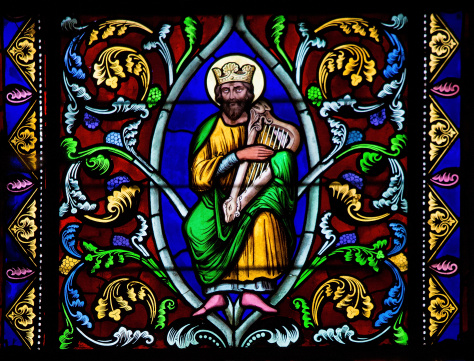
King David

2 Samuel 6:1-5, 13-19 (6:14) – July 14, 2024

            The wise theologian (and humorist) Erma Bombeck described an experience she had years ago in church. “A row or two in front of her sat a mother with a normal five-year-old boy, which means, he couldn’t sit still. As he squirmed and looked over the pew at those behind him, he was smiling. Then Erma heard the mother sternly whisper, “Stop smiling! Don’t you know that we’re in church?” [1]

            Our Bible reading this morning talks about how a large crowd behaved when they were at worship, including their leader, their King David. How different would this reading be if God’s people decided to be all stern, and stiff, and poker-faced when they came to worship? Can you imagine a stern, stiff, solemn service at this time? Or, is this joyful, musical, dance-filled procession from 2 Samuel pleasing to the Lord? Which service could you see yourself in?

            Let us listen again to a part of this reading: “David and all the Israelites were dancing and singing with all their might to honor the Lord. They were playing harps, lyres, drums, rattles, and cymbals. 15 And so [David] and all the Israelites took the Covenant Box up to Jerusalem with shouts of joy and the sound of trumpets.

            I cannot even begin to imagine the joy and exuberance of this procession! But, why so much excitement? For that, we will need to go back several chapters. Some while before, the enemy Philistines captured the Ark of the Covenant, God’s Covenant Box, and brought it back to their territory. Except, things did not go well for them. Their priests told the Philistine king that they needed to send the Covenant Box back to Israel! So, they did, and through some adventures King David and the people of Israel finally brought the Covenant Box back into Jerusalem.

            This was a rocky number of months, for the people of Israel! Losing the Covenant Box, the Ark of the Covenant, was devastating for Israel. “This was the most holy object God’s people had. The [people of Israel] had carried it as they walked through the wilderness and kept it in a special tent in the center of their town. Image how they felt when the Philistines captured it and carried it off to their country AND how they felt when they felt when they got it back.” [2]

This priceless Box was not only a beautiful, holy and precious artifact, this Covenant Box signified the very presence of God. Just imagine the rejoicing as King David and tens of thousands of Israelites danced, sang and played music as they brought the Ark into Jerusalem!

To the people of Israel, the Covenant Box was an important object, telling a story. The Ark of the Covenant “points to the larger narrative of God’s delivering the people from slavery and divine guidance into the promised land. It reminds the people of this salvation history and of the nearness of God’s Presence with them always. It provided continuity from the time of Moses to the present moment described in 2 Samuel 6.” [3]

In this chapter from 2 Samuel, God’s Covenant Box signaled God’s Presence among the people – all the people. What is more, this signified God’s promise to them! As you and I come together in our worship service today, what symbols, objects or stories help us to worship? Which of these help us to have “eyes to see and ears to hear” God’s Presence among us today? Which help us to praise and worship God, even to sing and dance before the Lord in thanksgiving?  

I know I preached on this reading three years ago, and I asked then, have you ever been to a worship service where people praised the Lord in all kinds of ways? More than singing hymns and worship songs. I mean, playing all kinds of instruments, dancing before God, and other kinds of artistic expressions.

Perhaps you have just been to worship services where there were piano and organ – and nothing else. Do you know that in a great many worship services across the world today drums are the chief instrument of praise? Drums and the human voice, the beat of human feet and clapping of hands make a joyful noise to the Lord across many cultures and in many countries today. Christians from those worship services might feel really strange if they came to a solemn service like ours where no one was actively praising God and dancing in the aisles!

We are left with a question: how do you and I respond to God’s holy Presence? We can see that King David and thousands of his people danced before the Lord “with all their might!” Pianos and organs are wonderful musical expressions, and so are praise bands and bluegrass bands and full orchestras and all kinds of percussion! Exuberant joy and dancing in the aisles is certainly a wonderful response to God! [4]

But, that is only one way. God may instead call us to quiet contemplation, or sometimes bold action. We are not required to only worship God in church buildings! No, God can be worshiped in the mountains, on the beach, or in a park. And, sometimes things can be new and different for each of us, to allow our hearts to worship in new and different ways.  

Today we can connect to God’s Presence in ways that are significant and touch the heart and soul, that are meaningful to each of us – and celebrate others for connecting in ways that are meaningful and soulful to each of them! Whether dancing and leaping, praising in loud voices, praying quietly, singing hymns and songs, drawing and painting, making banners or wall hangings. We humans have a multitude of ways to come before our God!

How does God respond to all these different types of worship, whether quiet and solemn, or joy-filled and exuberant? I go back to Carolyn Brown’s excellent commentary where she mentions the children’s tune “Hokey Pokey” “to explore the truth that we have to put more than just our left hand or our right foot in [to worship]. We must put our whole selves into worship, life, prayer, everything.[5]

 Sometimes these simple, straight-forward ways are the best ways. Put our whole selves into worship, life, prayer, everything. That’s how to honor, praise and enjoy God the best.

And, the Lord is so pleased when God’s people come together to worship! Praise the Lord!

@chaplaineliza

(Suggestion: visit me at my other blogs: matterofprayer: A Year of Everyday Prayers. and  A Year of Being Kind . Thanks!


[1] https://bible.org/seriespage/lesson-7-worship-joyful-celebration-2-samuel-6

[2] http://worshipingwithchildren.blogspot.com/2015/06/year-b-proper-10-15th-sunday-in.html

[3] https://www.workingpreacher.org/commentaries/revised-common-lectionary/ordinary-15-2/commentary-on-2-samuel-61-5-12b-19

[4] https://www.workingpreacher.org/commentaries/revised-common-lectionary/ordinary-15-2/commentary-on-2-samuel-61-5-12b-19

[5] http://worshipingwithchildren.blogspot.com/2015/06/year-b-proper-10-15th-sunday-in.html

Unknown's avatar

The Parable of the Forgiving Father

“The Parable of the Forgiving Father”

Luke 15:11-32 (15:21) – March 27, 2022

            This week we come to a story from Jesus that is beloved by many. One of the best known of the parables, one that resonates with the heart and soul of many. It’s the story of two brothers and a father, the story of discontent and disgruntlement, the story of wandering in a far country, the story of return, and most of all, the story of forgiveness, reconciliation and redemption.

Eileen began this parable with the first half of the Scripture reading this morning. We set the stage with the Rabbi Jesus teaching amongst a large crowd. The tax collectors and sinners crowded close to hear Him, but some prim and proper townsfolk objected. (Objected both to the “dregs of society” and to the Rabbi Jesus welcoming and teaching them.)

            When prim and proper folk gripe and complain about you or your friends showing a loving, caring welcome to others, what is your response? We know what Jesus’ response was: this parable of two brothers and a father.

            We know what happened. The younger brother became discontented with his lot, his place in life and in the family. I am not sure whether you know, but upon their father’s death, the older son would receive twice as much as the younger son. That was the culture and custom of the Jewish tradition at that time. The younger son would only receive one third of the father’s assets – after the father died. But – the father in this parable was still alive, and well, and able to walk, talk and reason.

            Can you believe the audacity of this son, asking right now for what he would receive after his father’s death…before the death actually happened? This was unheard of! What kind of disrespect was this? The height of disrespect from this discontented, disgruntled son!

            One title this parable could have is “The Story of the Lost Son,” because the younger brother goes to a far country, spends all his money in riotous, profligate living, eventually doesn’t have a penny to his name, and is forced to herd pigs for a farmer just to scrape by and earn a pittance. After feeling sorry for himself, the younger brother finally wakes up.

            Let’s hear what Dr. Luke says about this younger brother: “17 “When he came to his senses, he said, ‘How many of my father’s hired servants have food to spare, and here I am starving to death! 18 I will set out and go back to my father and say to him: Father, I have sinned against heaven and against you. 19 I am no longer worthy to be called your son; make me like one of your hired servants.’ 20 So he got up and went to his father.”

            Did you hear? This son came to his senses! He realized how good he had it in his father’s house! At least this younger brother had the sense to return to his father.

            Meanwhile, we have the older brother, back at home. This brother is doing his duty, working in the fields, obedient to his father’s wishes. Except, what was his attitude? Was he sour? Resentful? Feeling locked in and in a boxed-in place? Could this parable featuring the older brother also be called “the Story of the Lost Son?” Can we see some discontent and disgruntlement coming from the older son?

            Let’s move to the father, and hear the next part of the story. ““But while the son was still a long way off, his father saw him and was filled with compassion for him; he ran to his son, threw his arms around him and kissed him. 21 “The son said to him, ‘Father, I have sinned against heaven and against you. I am no longer worthy to be called your son.’ 22 “But the father said to his servants, ‘Quick! Bring the best robe and put it on him. Put a ring on his finger and sandals on his feet. 23 Bring the fattened calf and kill it. Let’s have a feast and celebrate. 24 For this son of mine was dead and is alive again; he was lost and is found.’ So they began to celebrate.”

            Hold it! Now we are going to get further information about the discontented older brother. On the surface, he’s the perfect son. Always obedient, always compliant. Except, listen to this:25 “Meanwhile, the older son was in the field. When he came near the house, he heard music and dancing. 26 So he called one of the servants and asked him what was going on. 27 ‘Your brother has come,’ he replied, ‘and your father has killed the fattened calf because he has him back safe and sound.’ 28 “The older brother became angry and refused to go in. So his father went out and pleaded with him. 29 But he answered his father, ‘Look! All these years I’ve been slaving for you and never disobeyed your orders. Yet you never gave me even a young goat so I could celebrate with my friends. 30 But when this son of yours who has squandered your property with prostitutes comes home, you kill the fattened calf for him!’

            We focus again on the father. If we had a title of this parable from the father’s point of view, it could very well be “The Story of the Forgiving Father.” Yes, he freely forgave the younger son for his extreme disrespect, for spending all his father’s hard-earned money, and for crawling back home in such a disreputable condition. Plus, the father was loving and welcoming to his older son, the one who seemed to be permanently disgruntled, with a huge chip on his shoulder.

            Sometimes, this totally loving, caring, welcoming father seems like a dream, a fantasy, something we could only hope for and never see in real life. Can anyone possibly be that fantastic and marvelous parent to their children? Or, am I – are we – just too jaded and cynical? Has life just beaten us down too much?

            I have news for all of us. With this parable, Jesus lifts up the father as an example, as an image of God our Heavenly Parent. Jesus wants us to see how much God loves each one of us, and how willing our loving, caring God is to welcome us home. Even going so far as to run down the road to embrace us when we return in penitence and tears, or when we stay at home doing our duty in self-righteous disgruntlement and discontent.

            Yes, God forgives! And yes, we are to do the same. As the petition of the Lord’s Prayer says, “forgive us our sins, as we forgive those who sin against us.” We need to continue to strive to forgive others, exactly in the same way and with the same loving, forgiving heart that God our Heavenly Parent had. Remember, the father ran down the road to forgive the prodigal – God offers forgiveness to both prodigal sons, all wayward children, no matter what.

            Remember, what a loving, caring God we have. Always loving, caring and welcoming toward each one of us. Amen.

@chaplaineliza

(Suggestion: visit me at my other blogs: matterofprayer: A Year of Everyday Prayers. #PursuePEACE – and  A Year of Being Kind . Thanks!