Unknown's avatar

Make Us Clean!

“Make Us Clean!”

Psalm 51:1-12 (51:2) – February 17, 2021

            The marvel and puzzle of adults with smudges on their foreheads – on purpose! – is a wonder to many children. Why would adults have dirt or ash crosses put on their foreheads? And why wouldn’t they wash it off to make it all clean?

            It takes a while for young people to learn, “yes, I am a sinner, too.” Doesn’t it? Sometimes it is difficult for grown-ups to state plainly that they sin, too. They fall short of what God would have for them in this life. They mess up the clean sheet of paper. Isn’t that what sin is? Falling short, missing the mark, washing away the guilt and stains of sin. However we describe it, we know very well when sin happens. King David knew when he was dirty on the inside from sin, too.

            It does not matter whether King David was remembering the women of the village where he grew up, washing, scrubbing and wringing out their families’ clothing in tubs outside their homes, or whether we think of the agitator on those automatic wringer washers of yesterday, we all need to be cleansed from the wrongs we commit, on a regular basis.

            Today is the first day of Lent, that penitential period of forty days before Easter when the Church all across the world begins to journey with Jesus towards the Cross. Many people use external things like food or drink or certain practices to show their observance of Lent. This is a good thing, and I do not want to cause anyone to rethink their Lenten practices. However, King David here in Psalm 51 had something far more radical in mind. He wanted more than just his exterior cleaned. He wanted his insides cleaned up, too. Cleaned, and renewed!

            Ash Wednesday is the day in the liturgical year when we concentrate on renewal—the messing-up we have done, on the inside as well as the outside. Whether large or small, we can all be cleansed and renewed deep down on our insides. The psalmist uses that most intimate of all things, first-person pronouns. “Have mercy upon me,” “blot out my transgressions,” “wash me thoroughly from my iniquity,” “I know my transgressions,” and “my sin is ever before me.”

“We are all first marked with the cross using water (and sometimes oil) at our baptisms.  At that time to be marked with the cross is a wonderful thing.  We are identified as the beloved children of God.  On Ash Wednesday we are marked with the cross using ashes and the words, “remember you are dust.”  The ashes and words remind us that we are not so wonderful.  In fact, we are all sinners.  The sign is not an X, marking us as [mistakes or] hopeless rejects, but a cross reminding us that God loves and forgives us, sinners though we be.” [1]  

We are not perfect believers in God. But, God says that is okay. God loves us just the same. This Ash Wednesday service is a special time to gather together, and to become aware of our turning-away from God. This understanding of the messing-up we have done and are continuing to do—prepares us to receive the forgiveness and joy of salvation that comes through Jesus Christ. And the cross of ashes on each forehead is a reminder of that blessed forgiveness in each one of our lives. Praise God, we can be restored to a close relationship with God.

Hear the Good News! In Jesus Christ, we all are forgiven! Amen.


[1] http://worshipingwithchildren.blogspot.com/2015/01/years-abc-ash-wednesday-february-18-2015.html

@chaplaineliza

(Suggestion: visit me at my other blogs: matterofprayer: A Year of Everyday Prayers. #PursuePEACE – and  A Year of Being Kind . Thanks!

Unknown's avatar

Listen Up!

“Listen Up!”

Mark 9:2-9 – February 14, 2021

            When I was in elementary school, on rainy days we would play games in our classroom instead of going outside for recess. One of these games was “Telephone.” The whole class would line up single file, in a big circle around the classroom. The teacher would quietly whisper a sentence into the first child’s ear. By turns, one by one, each child would communicate the sentence exactly as they heard it to the next person. And—imagine the giggles when the sentence got to the end of the line and ended up all garbled!

            We can imagine the way the disciples sometimes received information from Jesus. We can just tell from listening to this reading from Mark. Let’s set the scene. We have Jesus with His disciples, and some other followers. Women, too! Usually unnamed, but also there. In several important instances, Jesus had an inner circle. Three special, or key disciples, who would be the ones he wanted to tell special things. Important things, as in the Gospel reading for today.

            Jesus had been preaching God’s word, healing people and doing other miracles for some time. If we think about it, by this time the Rabbi Jesus was really in demand. Think of any popular person, or famous celebrity. Often mobbed by people when He stopped to preach in a synagogue, or if He stayed overnight at someone’s home.

            A week before the happenings in our passage today, Jesus fed more than four thousand men, plus women and children. Immediately afterwards, He heals another blind man. Jesus was even more in demand than ever, after that display of power and might! Remember, that’s one of the main emphases for Mark. Showing the power and might of the Son of God!  

            As much as Jesus taught and preached and performed miracles, He needed time to Himself, too. He withdrew to have time with his Heavenly Father, all alone, in prayer. Here at the beginning of today’s reading, Jesus took three of his disciples with Him to pray. I suspect they took off early in the morning to go up to a high mountain, nearby.

            I want you all to take note! Jesus actively looked for time to get alone with His Father. To pray as well as to listen and concentrate on what the Lord was saying to Him. Sure, Jesus said amazing things and did astounding miracles, on a regular basis. He rubbed shoulders with crowds and taught large groups of people. But He also knew He needed to separate and recharge. To have down time, personal time, family time with His Heavenly Father.

            Sure, it’s great to be in crowds, fun to be with people sometimes! But it’s also good to be alone. Restful to take some time away, time to pray and take stock. Recharging time! As one of my daughters says, alone-time can be wonderful, too.

            But this time is a little different. Jesus brings Peter, James and John with Him to the top of the mountain. And then, He prays—as it says in the parallel Transfiguration account in Luke. While all four of them are there, lifted up, apart from the ordinary everyday life down at the bottom of the mountain, something happens. Something completely unexpected, and marvelous.

            Or, was it? The disciples had already seen their Rabbi and leader Jesus do miraculous things on a regular basis! Feeding thousands of people, performing a number of miraculous healings, and ejecting unclean spirits—and we’re just talking about during the past few weeks!

            While Jesus is in prayer at the top of the mountain, His clothes become dazzling white. Whiter than any laundry could possibly make them. Plus, Moses and Elijah show up in the same bright white clothes, and start talking with Jesus. (I am not sure exactly how Peter, James and John could tell the other two were Moses and Elijah, but somehow, they knew.) Mark even tells us what the reaction of the three disciples was to all of this—they were scared to death!

            Let me ask—do you know someone who tends to dither? When they are scared, or nervous, or excited, do they just start talking? Just a reflex action? I think that’s exactly what Peter is doing here. And Mark tells us Peter didn’t even know what he was saying.

            Can you just see these three grown men, clutching at each other? Scared to death at these miraculous, out-of-this-world happenings? “Um—Lord! Um—let’s build three altars here! One for You, and—um—one for the other two guys, too!” Or, something like that. Do you think Peter and the other two disciples were receptive to what God was saying at this point? I suspect not.     

But wait—there’s more! As if that wasn’t enough, with Jesus, Moses and Elijah showing up in dazzling white, a cloud covered them all. And a voice came out of the cloud.

            Can you remember when a supernatural cloud appeared before? Remember, the LORD appeared as a cloud to the nation of Israel, in Exodus 13. Again, in Exodus 19, the LORD’s voice came out of the cloud in thunder. And so it is, again. God’s voice came out of this cloud that surrounded the disciples and Jesus, Moses and Elijah. The voice said, “This is my Son, whom I love. Listen to Him!”

            It isn’t every day that the Lord God Almighty talks to you! The Lord even gave specific instructions to the three disciples. “Listen to Jesus!” This is a command, NOT a suggestion! The verb tense is present imperative! Here God not only commands the disciples to listen, but by extension, God commands the whole world to listen—to Jesus!

            Jesus healed deaf people, so they could really hear. What’s more, Jesus came to heal the spiritually deaf to His words! Jesus opens all our ears so we can hear the truth in His words!

Just as we closely listen to a doctor when he or she is talking to us about our cancer, or heart attack, or broken leg, just as we ask our spouses or family members to accompany us so that we have another set of ears to listen accurately to the doctor, so also you and I are to listen carefully and attentively to the words of Jesus. The voice from the cloud, from heaven declared Jesus to be none other than the Son of God. Then, the voice commanded us to listen to Him.

The message of this Gospel reading today is clear. To hear, we need to listen carefully. To experience, we need to open our minds and hearts to the possibility of God’s voice. Look at the Son. Listen to His words. Open your mind and heart to His presence. We don’t need to be on the top of a mountain to experience God’s presence and fullness. Just shake off the routine, the same-old same-old. And, God will be there. We can celebrate the fullness of the Lord’s presence! The possibility of God’s power and grace! Alleluia, amen.

Take a few moments to reread the gospel. Imagine you’re before the Lord Jesus as He speaks to you in His glory. What is His word to you? We start the journey of Lent this week with Ash Wednesday. How will that word of Jesus help you this week as you begin your Lenten journey?

@chaplaineliza

(Suggestion: visit me at my other blogs: matterofprayer: A Year of Everyday Prayers. #PursuePEACE – and  A Year of Being Kind . Thanks!

Unknown's avatar

St. Luke’s Church – Part of Christ’s Body

“St. Luke’s Church – Part of Christ’s Body”

1 Corinthians 12:12-26 (12:26) – February 7, 2021

            So many activities needed to stop with the shut-down and shelter-in-place last March because of the COVID-19 pandemic. One thing I have missed very much is the wonderful time I spent reading to the preschool children here at St. Luke’s Church. Every Tuesday morning for years, I read picture books of all kinds to the children.

            I was reminded of this sad experience as I considered today’s Scripture reading. Paul’s discussion about the Church compared to an actual, human body reminded me of a delightful children’s picture book, one I’d love to read to the preschool children. This book is a retelling of a Liberian creation story about a human head, two arms, a body, and two legs, and how they all decide to come together and work as a team, creating a complete human body.

I believe the apostle Paul would greatly approve this story and message! A human body does need its various parts to work together. Just imagine the commotion, the disruption that would happen if parts of the body went on strike, or refused to work with other parts of the body!

As Paul said, “15 If the foot were to say, “Because I am not a hand, I don’t belong to the body,” that would not keep it from being a part of the body. 16 And if the ear were to say, “Because I am not an eye, I don’t belong to the body,” that would not keep it from being a part of the body. 17 If the whole body were just an eye, how could it hear? And if it were only an ear, how could it smell? 18 God put every different part in the body just as God wanted it to be.”

No matter how many parts of the body we name, each part is important, and each part is needed. We can tell right away if a part of the body is hurt, or broken, or not working normally. And, what if certain parts are missing altogether? The functionality of the body – or, as Paul would remind us, of the Church – would be very much diminished.

I know most people are associated with a local church, and many people are active members. What a wonderful way to honor and please the Lord when God’s children are active and vital parts of God’s body – the Church.

The local church has members who are active in many roles. There are those who are the mouth of the congregation – the pastor and teachers in the church. The arms of a local church are often seen as the deacons, in the food pantries and serving ministries. And, the feet of a congregation can be those who transport people, or participate in Meals on Wheels. The heart of the local church can be those vital members who are well-beloved among the church folk.

As I describe various tasks and ministries, I suspect you can think of individuals who fit these to a “T.” And, all of these parts of the body, of the Church, are needed.

From time to time, churches need to take stock, and see where they are going as a congregation. Group reflection and consideration is useful, even exciting. We here at St. Luke’s Church are going to put together a timeline of the past 20 years this coming weekend! As Fred Rogers of “Mister Rogers Neighborhood” said, “Who we are in the present includes who we were in the past.”

I need to present this church timeline as the final project in a clinical internship I am taking right now. Plus, I see this marvelous opportunity for our congregation to find out more about some important history that this church shares together. Both the ups as well as the downs, the celebrations as well as the difficulties are all so important and valuable to reflect upon and consider. The best part is that we will have a marvelous church coach to assist us this weekend.

The Rev. Brandyn Simmons has a great deal of experience in working with congregations on the historical background of a congregation as well as the assessment and understanding piece. I am very grateful to Pastor Brandyn, and I ask each of you for your prayers as we take this exciting journey of memory and discovery.

Some of you may have long experience with your local church, or you may be a more recent member. Regardless of how long you have been at your church, what has kept you coming to worship services? What aspects of fellowship and togetherness at your church are important to you? What is the single most positive thing you would like to tell me about your church? Now, take that thing – whatever it is – and write it down. Send it to your pastor in an email, or in a phone call, text, or note by mail. This is such a blessing for your pastor and your congregation!  

For many churches, the first Sunday of the month is Communion Sunday. In the Lord’s Supper, the local congregation has another reason to come together as the Body of Christ. We are invited to come together around the table and share the bread and the cup together. Even in the socially-distant time of the pandemic, we can still be together in spirit and in the sacrament of the Lord’s Supper.    

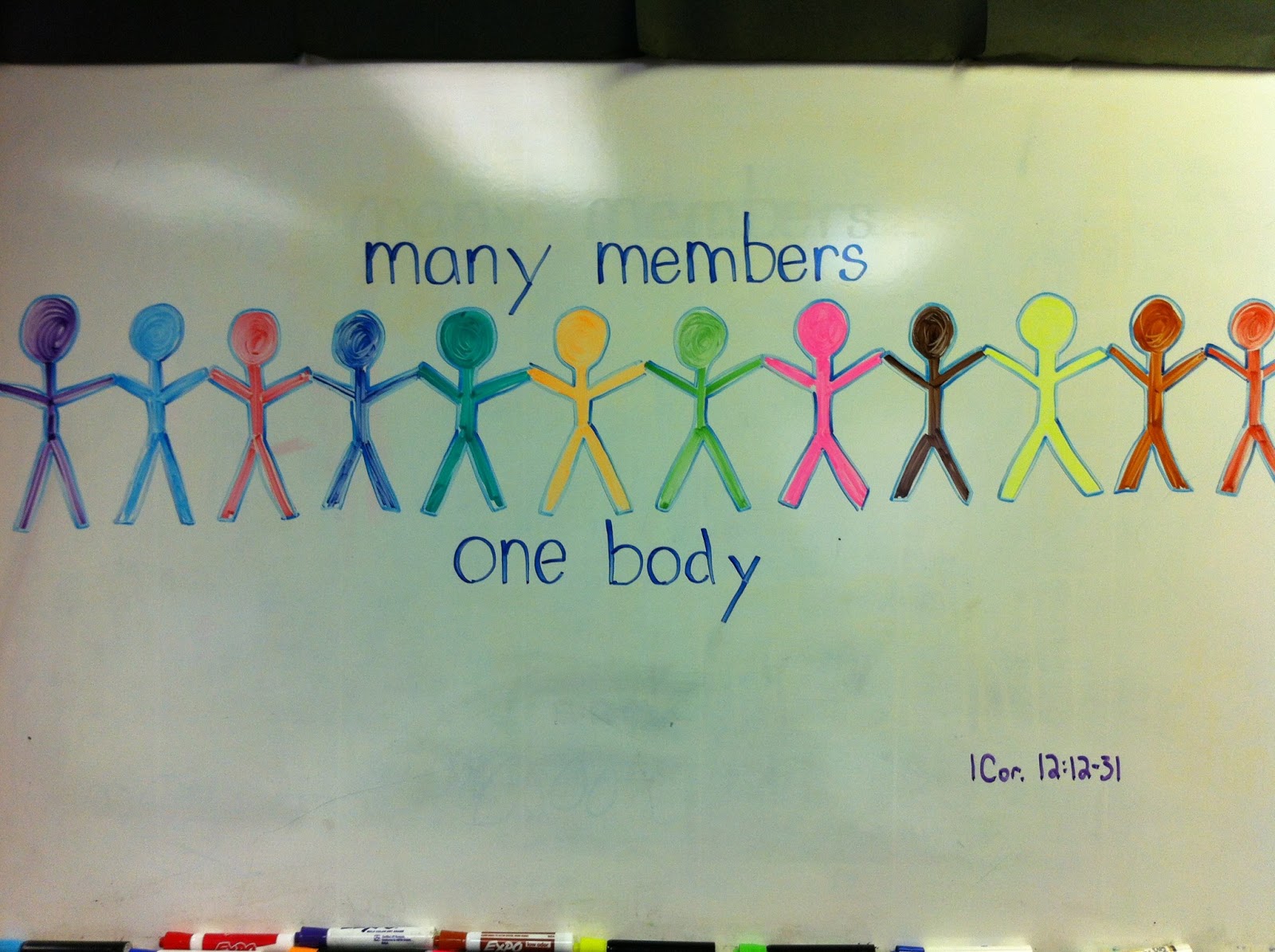
Yes, we are all individuals, and yes, each of us is beloved by God to be whatever part of the Church Body God has meant for us to be! And yes, we can be the best hand or eye or foot or whatever Church Body-part we are able. Can you do that? I know I will try. Let’s all strive to be God’s Body as we pull together, work together, and celebrate together. The apostle Paul would certainly approve!

@chaplaineliza

(Suggestion: visit me at my other blogs: matterofprayer: A Year of Everyday Prayers. #PursuePEACE – and  A Year of Being Kind . Thanks!

Unknown's avatar

Mighty Name of Jesus!

“Mighty Name of Jesus!”

Mark 1:21-28 (1:24) – January 31, 2021

            When many people think of superheroes, they cannot help but think of mighty people of valor or power. For many children (and, for some grown-up people, too!) thoughts of the most powerful superhero or mighty person in the region can be absolutely intimidating.

            Can you imagine our Gospel writer Mark wanting to kick off his narrative of Jesus with a bang? Why not start off with a really big event, displaying mighty power? Soon after the baptism in the opening scene, what does Mark present in the first chapter? An exorcism! That’s right, the unconventional Rabbi Jesus has a power encounter with a demonized man.

            The Rabbi Jesus started his itinerant travels throughout the northern region of Palestine, soon after He was baptized. Mark tells us how Jesus meets a certain man in Capernaum, while He was teaching and preaching in the town.

            But, before we zoom in and look at this encounter, can we talk about the various people the Rabbi Jesus met, each and every day? People from all walks of life, from all different levels and places and spaces in society. These folks could be broken, hurting, angry, ill, tired, frustrated, or despairing. Even perhaps cynical, miserable, in pain, or grief-stricken. Does a word or two of that description strike a chord within you? Can you see yourself in the crowd listening to Jesus? I hope you do. I know I can.

Jesus opened Himself up to all of that, all of those feelings, all that heartache and pain when He started His ministry. Do you have some deep feelings, some heartache or pain or grief or despair that you are dealing with today? See whether you can find something in common with the people listening to Jesus in Capernaum.

The Rabbi Jesus and His disciples came to the town and set up shop. Not only teaching and preaching, but I suspect talking and debating with the townspeople and leaders in Capernaum’s society and synagogue. Speaking and teaching with Godly authority, too!

Imagine everyone’s surprise when Jesus taught in the synagogue and a man stormed into the building. He screamed, 24 “What do you want with us, Jesus of Nazareth? Are you here to destroy us? I know who you are—you are God’s holy messenger!” That must have made everyone’s jaw drop. Mark identifies the man as someone with an evil spirit. I know what Mark is talking about, because I have had several similar experiences, too.

In today’s 21st century setting, especially in the urban United States, many people deny the possibility of evil spirits. This could be severe mental illness, or a complicated medical diagnosis that affects mood and stability. And, I absolutely agree. However, the Bible also is an accurate source for spiritual, emotional and psychological information. Many people in many places in the world today take this power encounter of Jesus and the demoniac very seriously.

Yes, this instance could be involving someone with a mental illness. Yes, the man in this instance could have severe behavioral problems. And, yes, Jesus could well be involved in a situation with something in the spiritual realm. Any way you look at it, our Lord Jesus is exerting mighty power and authority.  

The man (or the evil spirit within the man) definitively stated, “What do you want with us, Jesus of Nazareth? Are you here to destroy us? I know who you are—you are God’s holy messenger!” Jesus had just started His ministry, and this declaration certainly describes Jesus well and accurately.

Jesus had (and has) mighty power and authority. He did (and still does) miracles. I do not know how our Lord can tell who to do a miracle for, and who not, but there is no denying that miracles happen. However, this power encounter definitely got Jesus and His ministry started with a bang! With a great deal of fanfare and great press, too.

Just imagine the talk that spread like wildfire: “Have you heard about that itinerant Rabbi in Capernaum? He healed a demoniac! It was amazing! In an instant, this Rabbi Jesus cast the evil spirit out of the man, in the synagogue, and everything! That Rabbi – a real man of God!”

Commentator Karoline Lewis says, “Who is Jesus? A boundary breaker, which an exorcism confirms exponentially. Jesus reveals a boundary breaking God. We see this all over Mark. Each and every boundary we try to put in place, we think is in place, even that which we perceive as impenetrable, God bursts through. Political, social, religious, ethnic, racial, sexual, gendered, cosmic,” [1] it does not matter. Jesus breaks through whatever boundary we set up.

Yes, Jesus can break through boundaries, and emotional barriers, and spiritual problems, too. In our own lives, we might have barriers or boundaries set up. With such sadness, upset and distraction going on, who wouldn’t have some difficulties and problems in their lives right now? Whether you have deep feelings, some heartache or pain or grief or despair that you are dealing with today, Jesus can work wonders in your life and spirit, too. Jesus is mighty and powerful. He can overcome, and can come into our lives and hearts in ways that transcend human understanding. In ways that not only amaze us, but comfort and encourage us, as well.

Jesus loves each of us so much, so much that He will banish negative emotions, fearful feelings, and yes, evil spirits, too. Praise the Lord we have such a mighty and powerful God on our side. No matter what, for the rest of our lives. Alleluia, amen.  


[1] https://www.workingpreacher.org/dear-working-preacher/exorcisms-for-our-day

“Exorcisms for Our Day,” Karoline Lewis, Dear Working Preacher, 2015

@chaplaineliza

(Suggestion: visit me at my other blogs: matterofprayer: A Year of Everyday Prayers. #PursuePEACE – and  A Year of Being Kind . Thanks!

Unknown's avatar

Jesus Calling!

“Jesus Calling!”

Mark 1:14-20 (1:17) – January 24, 2021

            Have you ever heard someone calling, and responded right away? I am sure you have. Whether it is a call out to the back yard or the garage to come in for dinner, or a call to join in on a project or job, have you felt eager to respond? Excited? Like you can’t wait to begin?

            I wonder whether the disciples felt that way when they responded to Jesus?

            Last week, we took a closer look in the Hebrew Scriptures at the Lord’s call of the young Samuel when he was serving along with the high priest Eli in the Tabernacle. Today, our Scripture reading talks about Jesus calling four of His disciples.

            But, wait a moment. The four fishermen were actively involved in their secular jobs when Jesus came up to them and called. Simon and Andrew owned one boat at least, perhaps more than one. James and John were the sons of Zebedee, and we do know that Zebedee had a fishing business with at least several boats on the Sea of Galilee. So, we are talking about some serious fishermen seriously involved up to their elbows in fishy business.  

            I am sure our Lord Jesus talked with loads of people each week. Except – I don’t think He called all of those people to be His disciples, His followers. Do you wonder about these four fishermen, in particular? Does something about this reading today bother you? How could Simon, Andrew, James and John up and leave everything right away? How could they walk away from their nets and respond to Jesus’s call – immediately?  

            Let’s consider a different translation of this reading, from The Message. Verses 16-18: “Passing along the beach of Lake Galilee, he saw Simon and his brother Andrew net-fishing. Fishing was their regular work. Jesus said to them, “Come with me. I’ll make a new kind of fisherman out of you.” I’ll show you how to catch men and women instead of perch and bass.”

“They didn’t ask questions. They dropped their nets and followed.”

            Perhaps you might not believe this narrative. Does anyone actually DO that anymore? I mean, dropping everything and just following Jesus when He calls. Maybe, in Bible times, people did things like that. But, today? Does anyone answer God’s call like that anymore?

            Let’s be honest. I cannot imagine doing what these four fishermen did. True, we do not have many professional fishermen in the Chicago area. But, can you imagine leaving your full-time job – or, if you don’t work full-time, leaving whatever takes much of your time and attention each day. “Most of us, truth be told, would find it very hard to leave work and family and friends and all the rest to venture into such an uncertain future. Does that mean we’re more or less failures as Christians? Or at least that we are less faithful than Andrew and Peter, James and John?” [1]

            I started off looking at Jesus calling four disciples. He chose them and called them, knowing them better than they knew themselves. Why don’t we flip this around and look at this scenario from the fishermen’s point of view. These four guys had Jesus call, to follow Him.

We read that they got up without hesitation, leaving their nets and boats and catches of fish behind. Immediately! Did they feel eager to respond? Excited? Like they couldn’t wait to begin to follow this unconventional Rabbi?

“We are called, perhaps not so much to follow, but to take Mark’s ‘immediately’ seriously. This is not, “wait a few minutes. Let me pack my bag. I have a few more arrangements to make.” No preparation. No packing list. No recommendations of what to take, what to do.” [2]

When I first felt a call to serve God, I was in high school. I did not listen for a long time. At least, I don’t think I heard clearly. Sure, I heard something of a message from God for some time, but it was muffled, or garbled. I did work as an eager church leader, as a faithful church worker for years and years before I had the opportunity to go to seminary when I was forty years old. But – isn’t being a faithful church worker following the call of God, too?

As commentator David Lose says, “We follow [Jesus] in particular and distinct ways that may or may not be like the first disciples. And that, I think, is the point. Perhaps we follow by becoming a teacher. Perhaps we follow by volunteering at the senior center. Perhaps we follow by looking out for those in our schools who always seem on the outside and invite them in.

“Perhaps we follow by doing a job we love as best we can to help others. Perhaps we follow by doing a job we hate but contributes to supporting our family and helping others. Perhaps we follow by being generous with our wealth and with our time. Perhaps we follow by listening to those around us and responding with encouragement and care. Perhaps we follow by caring for an aging parent, or special needs child, or someone else who needs our care. Perhaps we follow by….” [3] Well, you get the idea.

Jesus calls us all to follow Him, in any number of ways. That means us knowing that Jesus is for real – He is the real thing, the real deal, the genuine article.  

 When we are called to follow Him, that means He calls us to turn our backs on something else in our lives. Is it possible that sometimes we get altogether too comfortable, too unwilling to risk, too unable to step out in faith? My challenge to all of us: be willing to step out, and follow the calling of Jesus, whenever and wherever He wishes us to go.

Please God, I’ll go.


[1] http://www.davidlose.net/2015/01/epiphany-3-b-following-jesus-today/

“Following Jesus Today,” David Lose, …in the meantime… 2015.

[2] https://www.workingpreacher.org/dear-working-preacher/the-immediately-of-epiphany

“The Immediately of Epiphany,” Karoline Lewis, Working Preacher, 2015.

[3] http://www.davidlose.net/2015/01/epiphany-3-b-following-jesus-today/

“Following Jesus Today,” David Lose, …in the meantime… 2015.

@chaplaineliza

(Suggestion: visit me at my other blogs: matterofprayer: A Year of Everyday Prayers. #PursuePEACE – and  A Year of Being Kind . Thanks!

Unknown's avatar

Listen Up!

“Listen Up!”

1 Samuel 3:1-10 (3:9) – January 17, 2021

            Have you ever been on the other end of a conversation over the phone or over a two-way radio or walkie-talkie, and had problems hearing the other person? Exactly that happened to me the other day. I was on the cell phone with a UCC pastor colleague, and we had a whole lot of muffle-muffle, crackle-crackle on the line. We could hardly hear one another – that is, until we hung up and reconnected with a new phone call.

             Our scripture reading today comes from 1 Samuel 3, and we can tell the boy Samuel wasn’t quite sure what – or who – he was listening to. But, we are getting ahead of ourselves!

            Let’s set the scene. Chapter 3 begins with the boy Samuel, who lives and serves in the Tabernacle, a special tent where the altar to the Lord God is housed. The elderly Eli is currently the high priest, except Eli had difficulty with his eyes and could not see much any longer.  I can relate to Eli, since several members of my extended family had or currently have problems with their eyes and vision. I wear very strong contact lenses myself, and I thank God that I live in a time and place where I can get corrective lenses to help me to see!

            This Bible reading mentions both seeing and hearing – two senses so important for people to navigate through life! Not that people cannot live, and live well, without these senses of eyes or ears, but in Bible times, people had real, acknowledged difficulty without them.

            I suspect that Samuel was a real helper for Eli, helping with the everyday duties of caring for the Tabernacle. Just so, the elderly Eli had problems seeing. Verse 1 of our reading makes a fascinating editorial comment: “In those days the word of the Lord was rare; there were not many visions.” In those days, rare was the person who heard from or saw God: an uncertain, precarious time, indeed.

Certainly, a person might think serving in the Tabernacle – or Temple, or church – would give someone a pipeline to God! But, maybe not.  

Samuel helped Eli on a regular basis, and slept in the same part of the Tabernacle where the ark of the Covenant was kept. In this narrative, the Lord speaks to Samuel in an audible voice. That means, a voice just the same as yours and mine. Or, perhaps a bit more special. Think of voices like James Earl Jones, or Charlton Heston, or Morgan Freeman.

We hear about Samuel running through the dark Tabernacle to wake Eli, saying, “Here I am; you called me.” But Eli said, “I did not call; go back and lie down.” So he went and lay down. Again the Lord called, “Samuel!” And Samuel got up and went to Eli and said, “Here I am; you called me.” “My son,” Eli said, “I did not call; go back and lie down.”

Perhaps Samuel did not understand the voice. Perhaps he hadn’t quite tuned in. Maybe there was some static, or maybe the voice was muffled at first. Let’s listen to what happens next: “A third time the Lord called, “Samuel!” Samuel got up, went to Eli and said, “Here I am; you called me.” Then Eli realized that the Lord was calling the boy. So Eli told Samuel, “Go and lie down, and if he calls you, say, ‘Speak, Lord, for your servant is listening.’” So Samuel went and lay down in his place. 10 The Lord came and stood there, calling as at the other times, “Samuel! Samuel!” Then Samuel said, “Speak, for your servant is listening.”

Does a special voice get your attention? Or, can your attention wander? Once your attention is captured, is the message conveyed by that special voice easily received?  

            As commentator Carolyn Brown mentions, “God speaks in other ways, too.  Sometimes we read something in the Bible and know it is meant for us.  Sometimes when we are scared or sad, we feel God very close to us helping us be brave.  Sometimes when we are outside, we see something God has made and feel God loving us.  Sometimes we have a feeling deep inside that God wants us to do something to take care of another person.” [1]  The Lord can communicate in a great variety of ways! God’s word and God’s instructions come to a great variety of people, too. And, not just to “religious people,” either!

            God’s words and instructions come to people for their own encouragement, sometimes. But, God can also mean for us to take action. Sure, we ought to listen up! It is truly an awesome thing to hear from the Lord. Plus, God sometimes wants us to go – do – speak – take action!

            Two days ago was the 91st birthday anniversary of the Rev. Dr. Martin Luther King, Jr. January 15, 1929. This day has been declared a Federal holiday, and also been commemorated as a national day of service. This day “is the only federal holiday designated as a national day of service to encourage all Americans to volunteer to improve their communities. This day of service helps to empower individuals, strengthen communities, bridge barriers, address social problems, and move us closer to Dr. King’s vision of a ‘Beloved Community.’” [2]

            This vision, this phrase “Beloved Community” is a great part of the United Church of Christ’s vision for our world, as well. Just as the Lord called Samuel to act and to speak, just as God calls many people to go, to do, to speak for God, perhaps God is calling you to step out for others? As Americans, as believers in God, we are all encouraged to serve others on this day. This day, and every day.

            Listen up! Listen to God, and see where God would have you serve today.

And, serve with joy and love in your heart as you do your part to bring about the “Beloved Community” of God. Alleluia, amen!


[1] http://worshipingwithchildren.blogspot.com/2011/12/year-b-2nd-sunday-after-epiphany-2nd.html

Worshiping with Children, Epiphany 2B, Including children in the congregation’s worship, using the Revised Common Lectionary, Carolyn C. Brown, 2012.

[2] https://americorps.gov/newsroom/events/mlk-day

@chaplaineliza

(Suggestion: visit me at my other blogs: matterofprayer: A Year of Everyday Prayers. #PursuePEACE – and  A Year of Being Kind . Thanks!

Unknown's avatar

The Waters of Baptism

“The Waters of Baptism”

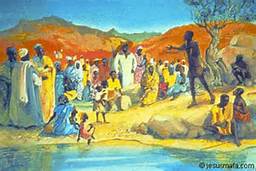
John the Baptist – Jesus MAFA

Mark 1:4-11 (1:9) – January 10, 2021

            When you or I think of baptism today, what comes to mind? A family with a precious infant or young child, the little one dressed in a special outfit. The congregation rejoicing as the minister performs the sacrament. Such a special and meaningful way of extending God’s grace.  

            But, let’s go back to our Gospel reading, when John the Baptist preached repentance. Certainly quite a different scene comes to mind. We see John as an outsider, some say a preacher of doom and gloom, and others a mighty prophet of God.

Reading from the Gospel for today, “John the Baptist appeared in the wilderness, preaching a baptism of repentance for the forgiveness of sins. The whole Judean countryside and all the people of Jerusalem went out to him. Confessing their sins, they were baptized by him in the Jordan River.”

            You may remember bracelets and t-shirts with the initials “WWJD” imprinted on them. The words “What Would Jesus Do?” were a Christian, and even pop-culture, trend some years ago. Remembering this trend brings up a valid question. Let’s reframe it into a question about baptism. Who would Jesus exclude? For that matter, who would John turn away from baptism?

            I’d like to develop that question. St. Luke’s Church, our church, is a member church of the United Churches of Christ. This denomination has taken the radical stand of radical welcome. UCC churches are supposed to welcome everyone. That means a radical, open-hearted, open-handed welcome to all people, no matter what. No matter who.

No matter if someone is grumpy, or mean, or stingy. You are welcome here at St. Luke’s Church. No matter if someone is painfully shy, or has some physical or mental infirmity, or has a really strong personality. No matter what your gender or sexual orientation is, either. All are welcome here, in this particular church, too.  

            As we ask “Who Would Jesus Exclude?” from membership in this church, this brings to mind what the Rev. Dr. David Handley often proclaimed from the pulpit in his long tenure at First Presbyterian Church of Evanston. I remember hearing when I was a member there some 15 and 20 years ago. Dr. Handley would often insist in his sermons that the church is not a private club for the righteous, but instead a hospital for sinners.

I mean to say that our church is not to have arbitrary, unspoken rules for who to include and who to exclude from membership. God does not discriminate. God does not blackball prospective members. The UCC has taken the stand of radical welcome to everyone. That means that as a member church of the UCC, St. Luke’s Church takes that stand, too.  

I would like to return to our Gospel reading for this morning. Can you imagine John the Baptist saying, “I’m not baptizing that person!” because John didn’t like him or her? Sure, John had a strong personality. John was headstrong, and determined, and definitely spoke his mind. Many of the Jewish leaders and bigwigs in the Sanhedrin were upset with John the Baptist.

However, I suspect many of the ordinary members of synagogues throughout the region heard John’s message. Some people who had been turned away from synagogues, too. John the Baptist extended that radical welcome – telling all to repent of their sins, get right with God, and come and be baptized as an outward expression of an inward change.

Even some Jewish leaders and synagogue bigwigs heard John’s preaching, and were convicted of their small-minded and biased point of view. Even people John knew who had bad-mouthed and shunned him. I am sure John did not turn them away, but baptized them, too.  

Do you think God was surprised about the conflict in synagogues, and at the Temple? How about the conflict in the early churches? What do you think Paul and Peter, James and John were addressing when they wrote their letters that are included in the New Testament? Sins like hatred, conflict, bitterness and envy do not somehow “scare” God.

Just as in this past week here in the United States, the heightened rhetoric and the storming of the Capitol building did not shock God. God was not surprised or scared of the massive conflict and disruption. God recognizes that people are human. People sin – that is what they do. That is why John the Baptist came, to make people aware of their sin, and to call people to repentance. Baptism lets everyone know about people’s individual, internal change.

This church baptizes infants and small children. As commentator Carolyn Brown says, Infants and children “didn’t even know what was going on; [and] God, their parents, and the congregation loved them and claimed them as their own for all time.” [1] That can be extended to ALL of us. We all have been loved and claimed by God for all time. We are all God’s beloved.

The waters of baptism are here to wash away our sin, in this day and age. And not only that, but to extend God’s grace to those who have gone through the baptismal waters. Yes, we continue to sin, and yes, God does extend grace. We do not become suddenly sin-less, but as we walk with God, we will sin less and less. (At least, that is the hope.)

            I say to you, in the spirit of John the Baptist, Repent, and remember your baptism! Determine to journey with Jesus from this point onwards. Alleluia, amen. 


[1] http://worshipingwithchildren.blogspot.com/2014/12/year-b-baptism-of-lord-first-sunday.html

Worshiping with Children, Baptism of the Lord, Including children in the congregation’s worship, using the Revised Common Lectionary, Carolyn C. Brown, 2015.

@chaplaineliza

(Suggestion: visit me at my other blogs: matterofprayer: A Year of Everyday Prayers. #PursuePEACE – and  A Year of Being Kind . Thanks!

Unknown's avatar

Seeing the Star

“Seeing the Star”

Matthew 2:1-12 (2:9) – January 3, 2021

            Have you ever been far away from the city, far enough that you could see countless stars when you went outside on a clear night? When I was far north in Wisconsin some years ago, I was amazed at how crystal clear the night sky appeared, with all the stars laid out overhead.

            That must have been how it was for the Magi so long ago. Imagine, having a job where your job description said you were required to examine the amazing night skies closely, night after night. These people were not “kings of the Orient,” but instead people skilled in any number of sacred arts of the time: philosophy, natural sciences, and especially astronomy.

            Did you see the conjunction of two planets some days ago? Just before Christmas? On December 21, a special astronomical event occurred: the closest great conjunction of Jupiter and Saturn in 397 years! Sadly, the skies were overcast when I tried to take a look on the 21st, but according to some of my friends, it was truly a sight to see. The planets appeared to almost touch each other, high above. Some huge astronomical event very much like this was what the learned astronomers saw in the night skies two thousand years ago.

            These wise ones became important among the Medes and later among the Persians including interpretating of dreams or other divine messages, magic and divination. Our Gospel writer Matthew calls them “Magi.”

The Babylonians and Persians probably learned of the promise of the “Messiah” from Jews who had been brought to Babylon centuries before. These Magi – likely nobles or scholars from the East – determined to find the King their books of divination told them had just been born. That was why the Magi from the East appeared in Judea in the first place, and why they are in the narrative of the Nativity, in the gospel of Matthew.

            These Magi started off in a westward direction, following yonder Star, just like the Christmas (or, Epiphany) carol tells us. Except – they got lost along the way. Is that at all like us? Do we try to follow the Star, to follow Jesus, and get distracted, and detour along the way?

            One of my commentators tells about distractions, when he was visiting some good friends up in New Hampshire. “They took us on a long hike up a mountain and at the very top of it we stopped and had a picnic overlooking the valley down below. We were awestruck and silenced by the majesty and beauty of the face of God all around us. All the while that we were up there, on this beautiful mountain, there was another person down off to the side of us who spent all of his time trying to get his smart phone to work so he could check his emails while they ate.” [1]

Is it easy for us to get so distracted that we cannot even see the majesty of God? Do we get turned around? Do we get comments from an unlikely source? Because, that is exactly what King Herod was: an unlikely source of directions.

            Oh, sure. At first glance, the local king seems to be a good choice to ask where the newborn King of Israel is to be found. Except, Herod had no idea that anything of the sort was going on. Moreover, Herod was particularly bloodthirsty. Not a good choice at all.  

Significantly, the Magi were foreigners. Gentiles. Non-Jews. “These Wise Ones from the East were scientists and practiced other religions, and God used their faith and knowledge to bring them to the Christ. More ironic, God used scientists who practiced other religions to let King Herod and the chief priests and scribes of the people [of Israel] in on the news that their Messiah had been born.” [2]

Do we get lost as we try to follow Jesus? Or, have you even found Him in the first place?

The amazing thing about the Magi was that they saw a star that was so bright, so meaningful, that they had to follow. After consulting their learned books and discovering which direction they needed to go, these foreign dignitaries “felt the prodding of one particular star to take this incredible journey; [and when] they came to the place to which the star led them, they were met there by God.“ [3]

What an amazing journey’s end, meeting God in the Babe born in Bethlehem.

As we approach the house the Holy Family lives in, with the Magi, are we hesitant to enter in? Do we hold back from the presence of the young Jesus, with Mary His mother? Is there something especially holy and precious about Jesus that causes us to bow our heads in worship? God in the flesh, Emmanuel, God-with-us. The Gospel of John calls Him the Light of the World, and the Bright Morning Star is one of Jesus’ names in Revelation.

We celebrate Epiphany, Twelfth Night, Three Kings Day, January 6th. We mark this celebration several days early, since the 6th falls on Wednesday this year. Today is also our celebration of Communion. Epiphany commemorates the visit of the Magi as told to us by Matthew. As we consider the Star the Magi followed, we fix our eyes on Jesus, the Light of the World, the Bright Morning Star.

As we celebrate the One who the Magi worshipped. Jesus holds out His arms to us – O, come, let us adore Him! Christ the Lord.


[1] https://homebynow.blogspot.com/2013/01/who-were-those-guys.html

“Who Were Those Guys?” Stan Duncan, Home by Now, 2013.

[2] https://www.workingpreacher.org/commentaries/revised-common-lectionary/epiphany-of-our-lord/commentary-on-matthew-21-12

Craig A. Satterlee Bishop, North/West Lower Michigan Synod, Lansing, Mich.

[3] http://words.dancingwiththeword.com/2012/12/on-magi-and-journeys.html

“On Magi and Journeys,” the Rev. Dr. Janet H. Hunt, Dancing with the Word, 2013.

@chaplaineliza

(Suggestion: visit me at my other blogs: matterofprayer: A Year of Everyday Prayers. #PursuePEACE – and  A Year of Being Kind . Thanks!
Unknown's avatar

The Word Became Flesh

“The Word Became Flesh”

John 1:14 – December 27, 2020

            We all use language. Every day. In conversation at home, on the cellphone, or at work. Reading a news site or writing e-mail. Words communicate meaning, ideas, stories. Each one of us has a personal story. Each story is individual and unique. Our stories are communicated using words and language, and each individual has a creative, unique way to tell his or her story.

The story of a personal life makes sense because it is part of a larger story, the Story that has the story of Jesus Christ at its center. This story of God’s initiative calls for my gratitude and response, a Story some theologians have called ‘the history of salvation.’ It is the Story set forth in the Word of God that crosses boundaries and transcends lines of race, class, culture and age.

Our Scripture text for tonight, the first 14 verses of John’s Gospel, is a restatement of an old theme. Remember Genesis 1:1? “In the beginning, God created the heavens and the earth.” Scholars believe the apostle John was thinking of that introduction to the Greatest Story ever told. John 1:1: “In the beginning was the Word.” John reframed that Story, and gave it a new look from a different perspective.

            The almighty God wanted to communicate with us puny, limited human beings. But how was God supposed to communicate God’s Story? What with the stress, anxiety, isolation and depression running rampant, all across our country? For that matter, what about communicating God’s Story in the time of COVID?

            The Gospel of John tells us how, no matter what the earthly situation holds. In the beginning was the Word. The Word was God. The Word is God. Jesus is the Word. John 1:14 says that the Word, Jesus, became flesh,  and . . . the Word dwelt among us.

            Think about it: the whole idea of God becoming a helpless baby, able to feel cold and heat, to be hungry and thirsty, with blood and bones, a nervous system and a digestive system. So staggering was this idea that some of the people in John’s day could not believe it. God? the creative God who made heaven and earth? Coming to earth as a helpless, human baby? No way!!

            And, not only did this Creator God appear in creation so that our eyes could see Him, this almighty God has the crazy idea of dwelling among people. Becoming one of us limited human beings, sharing our food and living in our midst. Jesus became fully man. He didn’t just seem to be a man, and pretend to be human. He really and truly became man, living with us as one of us.

            What a way for the almighty, eternal, creative God to communicate to us in a way that we limited human beings might possibly understand. God also wanted humanity to understand His Word made flesh, the one called Jesus of Nazareth.

            A good many years ago, a bible translator went to a remote, mountainous region in the interior of Africa. He worked hard at turning an obscure oral language into a written language, which involved decoding the language, writing a grammar, learning extensive vocabulary, and finally translating a portion of the Bible into the heart language of that particular people-group.

            After years of intense work and language preparation, when he felt he was ready, the missionary made his presentation of the Story of Jesus to a group of headmen from the tribe. He was surprised at their response, which was unlike any he had ever had before in all his years of telling people the Story of Jesus. The men just sat there in silence. Then, the chief came forward.

            The chief grasped the missionary’s hands and, with tears in his eyes, thanked him for coming to tell them the Story of Jesus. “This Story of good news is the one my people have waited for, all their lives long!!” And then came the clincher: the chief asked, “Your tribe has had this Story for many, many years. What took you so long to tell us?”

            This is a Story that can change people’s lives for eternity. Telling the God’s story in someone’s heart language is one of the best ways to communicate how much God loves us.

            Praise the Lord that God sent Jesus into this world, the Word incarnate, the Word that became a helpless baby in Bethlehem. Praise God that God has repaired that broken relationship with us, and to be called the children of God. The Lord loved us so much that God gave His only begotten Son on our behalf, to reconcile us to God for eternity.

            Gloria in excelsis Deo.

@chaplaineliza

(Suggestion: visit me at my regular blog for 2020: matterofprayer: A Year of Everyday Prayers. #PursuePEACE – and my other blog,  A Year of Being Kind . Thanks!
Unknown's avatar

Good News of Great Joy!

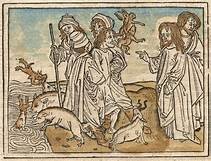
Stained Glass Nativity

“Good News of Great Joy!”

Luke 2:8-16 (2:10) – December 20, 2020

            Do you need Good News? So many are discouraged. Disconnected. Downhearted. This disconnected year of 2020 makes us all feel isolated and separated, even with the computer and social media. Especially at holiday time.

            The shepherds needed some Good News, too. On those hilltops around Bethlehem, they were not exactly welcome in the general society of the town, either. Focusing on today’s Scripture reading, Dr. Luke tells us about the shepherds, abiding in the fields, keeping watch over their flocks by night. But, he does not mention anything about the low position they held in society.

            Did you ever think you had something in common with those shepherds? This year of the pandemic, we certainly do. We all experience a real disconnect and isolation in society—and so did the shepherds.

            Throughout the centuries, in many situations, Christians have found themselves set at a distance from society at large. As you are feeling a similar kind of discombobulation, it may be that there is some solidarity in our worldwide disconnection.

            Differences in language can be a real barrier between people, too. It does not matter whether a family comes to a new land or a different area in times of conflict, or famine, or some other upheaval. If you are unfamiliar with the common language spoken in the area in which you are now living, that can be a huge disconnect, too. That is a large reason why ethnic groups of people gather together in towns and cities—for solidarity, social purposes, and for ease in communication.  

            I worked as a chaplain at Swedish Covenant Hospital for a number of years. I can remember how particularly touched an elderly woman was when I spoke to her with the few words of Polish I knew. This woman from Poland had dementia, and there was no one working in the hospital that evening who spoke Polish. I heard about this very sick woman when I went to the nurses’ station. I told them I just knew a very few Polish words. However, a few nurses encouraged me to come to her bedside and say those few words—which I did. It calmed the woman immediately, and the nurse and CNA were so grateful to me.

            Even a few words in a familiar language can bridge that disconnect and barrier, and make a stranger feel more at home, more connected.

            But, the disconnect for the shepherds was even more than that. “By the time of Jesus, shepherding had become a profession most likely to be filled from the bottom rung of the social ladder, by persons who could not find what was regarded as decent work. Society stereotyped shepherds as liars, degenerates, and thieves. The testimony of shepherds was not admissible in court, and many towns had ordinances barring shepherds from their city limits.” [1]

Imagine the difference in class between the shepherds and the bulk of the townspeople of Bethlehem. Certain people live “on the wrong side of the tracks,” or “on the other side of town.” Or, perhaps they come from the hill country, or down by the river.   

            For that matter, can you believe the disconnect between all people on earth and the angels? When the angels came to communicate their Good News to humanity, who were they sent to, first thing? Not the wealthy, in their expensive houses. Not the leaders of the community, or the rabbis or ministers of the houses of worship. No, the angels came to the lowly shepherds in the hill country, who did not even rate a home or a welcome among the “decent folk” in the middle of town.  

            I know this is not quite the same as the shepherds’ loneliness, but have you been feeling the isolation of COVID-19? Not being able to connect, or go out for coffee, or sit down with a friend or relative for a meal? Isn’t this similar to the shepherds’ isolation and loneliness?

            The angels did not observe the class consciousness of society, or the language barriers or color barriers of so much of our world. No! The angels sent from God brought glad tidings of great joy to ALL the people. Not just some select few, not even to most of the earth’s population. No! This Good News came to ALL the people. To all with a spiritual disconnect, too!          

            The angels came to the “fields of the isolated, the disenfranchised and the forgotten, or in our own painful places of spiritual wilderness, because God speaks the good news of Christ’s coming there. God brings great joy to those who need it most there.” [2]

            Whether we are isolated spiritually, or disconnected in real life, God wishes to draw ALL of us in to the Good News of the birth of God’s Son. Regardless of where we come from, or where we are right now, we are welcome.

            Do you hear? Each of us is special—each one of us has the angel of the Lord bringing Good News to us—personally. Glad tidings of great joy, no matter what!

            Wonderful news for Christmas, for sure. Wonderful news, any time we need it!

Alleluia, amen!


[1] http://www.workingpreacher.org/preaching.aspx?commentary_id=1522

[2] http://www.workingpreacher.org/preaching.aspx?commentary_id=1522

@chaplaineliza

(Suggestion: visit me at my regular blog for 2020: matterofprayer: A Year of Everyday Prayers. #PursuePEACE – and my other blog,  A Year of Being Kind . Thanks!