Unknown's avatar

Prologue to the Beatitudes

“Prologue to the Beatitudes”

Matthew 4:23-25 (4:23) – June 12, 2022

We are starting a new summer sermon series this week. We will be looking at the Beatitudes from Matthew chapter 5, all summer long. The Beatitudes, blessings of God, and blessings from our Lord Jesus. Plus, blessings to a number of unlikely groups of people, too!  

We toss around the word “blessed” here, but we ought to define this word. What is “blessed,” anyhow? Is “blessed” a secret code word for Christians or churches? Or a word that only people on the inside “in-crowd” know about? Well, of course not! I just got done telling you that Jesus blesses a lot of unlikely people and groups! “Blessed” in the first century meant “happy” or “content.” A deep down happiness, and not just on the surface!

Can you remember a time when you were really deep down happy? That’s what our Lord Jesus is talking about, Jesus can bless individuals, and He can bless groups of people.

When I say less-than, downtrodden, overlooked, or excluded, what do you think of? Poor people? People who don’t have enough? People on the sidelines or borders of society? How about people who are definitely not in the inner circle, not having preferred places or special treatment? Our Lord Jesus went around Palestine and Galilee preaching and teaching to just these kinds of people. The unimportant. Excluded. What some might call “the little people.” The Rabbi Jesus was always hanging out with people the “in-crowd” wouldn’t possibly recognize!

I do not have much of a problem considering myself an outsider, on the sidelines, or overlooked. That’s the attitude and the outlook we all are going to take this summer, as we take a closer look at the Beatitudes. Another title for this series is the Topsy Turvy Teachings of Jesus! Where Jesus blesses unexpected and unlikely groups of people!

First, we need to set the scene, and take a look at the backdrop where the Rabbi Jesus is teaching and preaching. Matthew chapter 4 is right at the beginning of Jesus’s ministry. He is just starting to travel around the northern region of Galilee. Right off the bat, Jesus preaches and teaches to everyone. He heals all who come to Him. He does not discriminate.

Jesus had only just started His ministry, and I am sure that many, many people were moved and touched by His words. Imagine – “News about Jesus spread all over Syria, and people brought to him all who were ill with various diseases, those suffering severe pain, the demon-possessed, those having seizures, and the paralyzed; and he healed them.”

Pay close attention: Jesus was not just another traveling dog and pony show. A number of these itinerant preachers traveled in Palestine, at any one time.  Jesus did more. Much more! He healed anyone who came to Him, and healed really serious diseases. Do you have any serious disease in your life or body that you would like to have totally gone? That’s what Jesus did. And, the word spread! How could it not? Word about amazing miracles, especially!

Plus, Jesus taught these crowds, wherever Jesus set up shop. People flocked to hear Jesus, from the next country of Syria, from north of Palestine, and from way south around Jerusalem and beyond the Red Sea. Wouldn’t you, if you had the opportunity to travel to see a proven miracle worker? But, wait! There is so much more! The Rabbi Jesus also taught about hope! God’s kingdom. God coming close to each person.

 At its most basic, God’s kingdom is a reality in the nuts-and-bolts living of life. Our Lord Jesus told everyone about the kingdom of God coming near to each one. This is the good news that comes near to all, that forgiveness of God’s love, that seeking of healing from all. Not only looking for actual physical healing, but also spiritual and mental healing. Who wouldn’t want to know about the healing forgiveness of God’s love? Available to everyone!

Just imagine that good news preached here and now, today! In the kingdom of God, there is enough for everyone – not only in terms of spiritual things, but in physical resources, too. Not so in the imperfect, worldly world. Imperfect, fallible people hoard money and resources, prestige and honor. This keeps them from the weaker, poorer, less fortunate parts of society. Let’s not forget that the few, the favored, the people on top of the world exclude anyone they think is unworthy. That almost always means the weaker, poorer, less fortunate parts of society.    

Can you even imagine our Lord Jesus discriminating or excluding people?

No, I can’t, either. Never, ever. Simply impossible. Jesus would never do such a thing, especially in uncertain, topsy-turvy times. The Rabbi Jesus brought healing to their physical selves, and also to their hearts, souls and minds. He wanted everyone to know that they are blessed and favored by God, no matter who, no matter what. Everything Jesus taught and did was about breaking down hurtful expectations and separations in society and among individuals.

Even though we all live in this very imperfect world, we are all blessed by God. Even though our modern times are uncertain, Jesus wants everyone to know that followers of Jesus will have what they need. Even though times are hard and questionable, there is always more than enough love to go around! Jesus makes sure we all know that. When God provides abundance and love, no one needs to bicker or fight or exclude or oppress any more.

Jesus and His topsy-turvy teaching shows us all that we are loved. Each of us is special to God, and we are never alone. That is a marvelous truth, available to each and every one.

That is good news for all of us! Alleluia, amen!

@chaplaineliza

(Suggestion: visit me at my other blogs: matterofprayer: A Year of Everyday Prayers. #PursuePEACE – and  A Year of Being Kind . Thanks!

(Thanks to illustratedministries.com for their excellent curriculum on the Beatitudes. I will be using this curriculum all summer as source material for a summer sermon series on Topsy-Turvy Teachings of Jesus!)

Unknown's avatar

Promises Kept

 “Promises Kept”

John 14:8-17 (14:17) – June 5, 2022

When you think of our Lord Jesus when He was here on earth, what kinds of things come to your mind? Was the Rabbi Jesus an extraordinary preacher and teacher? I believe He was. How about a miracle worker? Certainly, by countless accounts! Did He always tell the truth? I think so. And, how about keeping the promises He made? Absolutely.  

Very often in the Bible, people predict what is going to happen in the future. The prophets of God were very good at this. Sometimes these predictions are warnings and negative things; sometimes the predictions are good things and events to be eagerly awaited!

After the Ascension, the group of disciples were all in Jerusalem, awaiting some really big predictions to come to pass. Predictions by angels, and by the Hebrew Scriptures, and some plain-spoken words by the risen Lord Jesus Himself. It was on Pentecost morning that a large number of predictions came to pass – in a huge way!

You remember the scene? A little over one hundred followers of the risen Lord Jesus had gathered together in Jerusalem, in that very same second story of a building. The place that was the same Upper Room where the disciples had their Last Supper with their Rabbi, the night before His crucifixion.

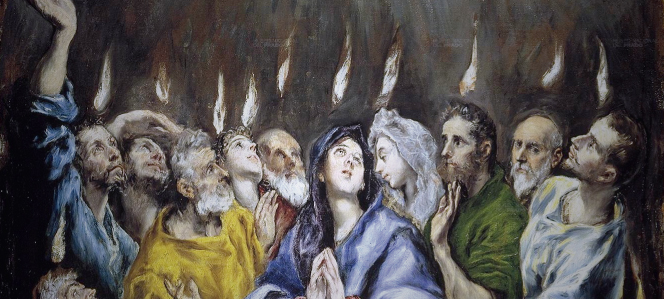
You remember the train of events? A big holiday and Jewish festival was celebrated: the festival of Shavuot, or First Fruits. Lo and behold, the group of disciples was having a prayer meeting, when suddenly “there was a sound from heaven like the roaring of a mighty windstorm, and it filled the house where they were sitting. Then, what looked like flames or tongues of fire appeared and settled on each of them. And everyone present was filled with the Holy Spirit and began speaking in other languages, as the Holy Spirit gave them this ability.”

The disciples were as surprised as anyone! Yet, Peter realized what was going on and as one of the spokesmen for the disciples, he stood up and proclaimed that this was indeed an earthshaking sign from God! He even quoted from the prophet Joel, about the descending of the Spirit of God.

You remember what happened? Peter said, ““People of Israel, listen! God publicly endorsed Jesus the Nazarene by doing powerful miracles, wonders, and signs through him, as you well know. 23 But God knew what would happen, and his prearranged plan was carried out when Jesus was betrayed.”

I am certain that as Peter spoke he remembered that last night in the Upper Room; their leader and Rabbi Jesus gave the disciples a firm promise, saying “And I will ask the Father, and he will give you another advocate to help you and be with you forever— 17 the Spirit of truth. The world cannot accept him, because it neither sees him nor knows him. But you know him, for he lives with you and will bein you.”

This cataclysmic happening on Pentecost morning was that exact thing! The pouring out of the Spirit of truth, God’s Holy Spirit! It was not a gentle, even passive pouring out, but instead a mighty rush of wind! Flames appearing over each believer’s head! And, the gift of tongues or speaking in languages that the disciples had never learned! God displayed awesome power and might on that Pentecost morning!

Let’s go back a few weeks, to that Upper Room, to that Passover dinner just before Jesus was betrayed. All during the past few weeks Jesus had been predicting His death. Fulfillment of prophecy often seems distant and impersonal…like it is not warm or intimate. By some standards, Jesus gave a prophecy, it’s true. But more than that, Jesus gave a firm promise. He promised that His Heavenly Father would send the Spirit of truth upon the disciples.

 “For he lives with you and will be in you.” Such a positive way of seeing this marvelous event! Jesus recognized that His promise would become a lifeline for the disciples, a promise made, and a promise He certainly kept! Isn’t keeping a promise warm, positive and genuine? That describes our Lord Jesus to a “T”

Throughout the Gospel of John, Jesus supplied deep needs. Wants and desires, too. He supplied a whole description on new life to Nicodemus. Jesus supplied living water, spiritual hydration to the woman at the well. He supplied healing to the man by the pool of Bethesda. Jesus supplied guidance into an unknown and frightening future to Thomas, and for knowledge that God’s promises are definitely true, in Philip’s case.

And here, in the Upper Room, to all of us here today and throughout the centuries, Jesus elaborated on the gift of the Holy Spirit. Our Gospel reading today points to “an intimate Pentecost, to the Holy Spirit at work in our inner lives and in our world drawing us into intimate relationship with God who delivers on all God’s promises.” [1]

The Pentecost event two thousand years ago was indeed a huge cataclysm of sound and wind and flame and excitement! Yes, and our individual Pentecosts today can also be quiet, introspective and just as full of the Holy Spirit. Have you not known? Have you not heard? The everlasting Lord, the God of all creation is sending the Holy Spirit into each of our lives.

This is not a mere prophecy, an impersonal declaration of the might and power of some distant Higher Power. Our risen and ascended Lord Jesus has given us a personal promise, a warm, genuine affirmation of God-With-Us, Emmanuel. A genuine promise given, and a promise bountifully kept – in your life and mine. Amen, alleluia!    

@chaplaineliza

(Suggestion: visit me at my other blogs: matterofprayer: A Year of Everyday Prayers. #PursuePEACE – and  A Year of Being Kind . Thanks!


[1] https://www.patheos.com/progressive-christian/intimate-pentecost-alyce-mckenzie-05-10-2013

Unknown's avatar

Ascended into Heaven

“Ascended into Heaven”

Acts 1:1-11 (1:11) – May 29, 2022

            When I was young, I attended a Lutheran church on the northwest side of Chicago. That church had many traditions, including everyone in the church reciting the Apostles Creed after the sermon each Sunday. This church does not have this tradition, at least, it hasn’t for a long time. Many words from the Apostles Creed are familiar, of course, but it is not quite like the Lord’s Prayer. We do not recite it here as often as every single Sunday.  

            What about the section of the Apostles Creed that highlights our Lord Jesus Christ? I invite you to say it along with me: I believe in Jesus Christ, his only Son, our Lord, who was conceived by the Holy Spirit, born of the Virgin Mary, suffered under Pontius Pilate, was crucified, died, and was buried; he descended to the dead. On the third day he rose again; he ascended into heaven, is seated at the right hand of the Father, and will come again to judge the living and the dead.

            Today we are celebrating “On the third day he rose again; he ascended into heaven,” How amazing this must have been for Jesus’ followers! I know we have been over the same ground during this Easter season, as we consider Jesus and the time line after His resurrection. This whole string of events must have been absolutely out of the disciples’ experience.

            Imagine, your Rabbi and leader gets arrested, tried, and killed in a most horrible way. You are devastated. Then, on the third day, some of your women companions come back with a wild story – absolutely amazing! And, it’s true. You see the risen Jesus, too!

            Fast forward several weeks, The risen Lord Jesus appears to you and your companions a number of times, and continues to teach and prepare you – for what? If we go back to the Apostles Creed, this creed is a quick synopsis and theological summary of Jesus, His life, death, resurrection and ascension. Except, we are going to stay on the ascension part. The resurrected Jesus was around for some weeks, long enough for the disciples to kind of accustom themselves to His presence.

What do you know? The disciples (at least most of them!) were more interested in what was going to happen politically! Look at what Dr. Luke highlights for us here in Acts 1: “Then they gathered around him and asked him, “Lord, are you at this time going to restore the kingdom to Israel?”

“The disciples were still interested in the restoration of the kingdom of Israel. [Except,] the days and seasons of coming events were not something the disciples needed to worry about. Matters of churchmanship, denominational doctrines, church growth, church/state relations…… and the like, all pale before a far greater purpose” [1] that the risen Lord Jesus tried to communicate just before He ascended into heaven.

We can see this clearly from our Lord’s response: “Jesus said to them: “It is not for you to know the times or dates the Father has set by his own authority. But you will receive power when the Holy Spirit comes on you; and you will be my witnesses in Jerusalem, and in all Judea and Samaria, and to the ends of the earth.”

Jesus used stories to communicate great truths all during the three years He was an itinerant Rabbi, journeying all around Palestine. Is it any wonder that one of the most effective ways of “witnessing” to our Lord Jesus is by telling our personal stories?

            The Apostles Creed states that Jesus “ascended to heaven” and “he sits on the right hand of God the Father Almighty.” We can see God sitting on a heavenly throne (perhaps in the temple from Isaiah 6!), and Jesus sits right beside God on God’s right hand. This was a very important place in historic accounts about kings. “The most important person other than the king always sat on the kings’ right hand.  What we are saying about Jesus is that he is right with God and that he is more important than any angel or any person who has ever lived.” [2]

            Yes, this account from Acts 1 is one of our most treasured stories about Jesus, along with the story of the Passion, the trials, and the Crucifixion. And then, we have the greatest story ever told in the account of the Resurrection and its aftermath! Can’t these stories about Jesus be paired with our own personal stories?

            In track and field, when the runners run a relay race, they pass a baton from one to another as each begins to run their leg of the race. Another way to think about the risen Lord Jesus ascending into heaven is Jesus passing the baton to His disciples. They have been in training for these past three years, and now our Lord Jesus is about to leave. “Jesus did tell them very clearly that they were to take up his ministry on earth.  His earthly part of the race was complete, but theirs was just starting.” [3] 

            We are witnesses to Jesus and His power and transformation in our lives today. Jesus “comes to you and me, he comes to his Church, lifts us up, loves us without limit, and invites us to tell the story of love over and over again. Remember His words: ”You shall be my witnesses in Jerusalem and in all Judea and in Samaria and to the uttermost parts of the world.” [4]  How has Jesus been active in our lives, today? How is He telling the story of love to each of us? Jesus invites us to go and tell – tell others, today! Alleluia, amen.

@chaplaineliza

(Suggestion: visit me at my other blogs: matterofprayer: A Year of Everyday Prayers. #PursuePEACE – and  A Year of Being Kind . Thanks!


[1] http://www.lectionarystudies.com/studyot/ascensionot.html

[2] http://worshipingwithchildren.blogspot.com/2016/04/year-c-ascension-of-lord-thursday-may-5.html

[3] Ibid.

[4] “‘Why do you stand looking up into heaven?’ (Acts 1:11),” William Loader, Being the Church Then and Now: Issues from the Acts of the Apostles.

Unknown's avatar

Peace of Mind and Heart

“Peace of Mind and Heart”

John 14:23-27 (14:27) – May 22, 2022

            The world is in powerful need of peace right now! Isn’t it? Just think of the many places in the world today, right now, where there is strife, conflict, fighting, and even outright warfare. The gift of Jesus that He speaks of here in today’s reading, peace of mind and heart, is something truly to wish for! Even, to clasp tightly to our minds and hearts!

            Here in John, chapters 14 through 17, is His Farewell Discourse. These are the last words that Jesus gave to His friends before His arrest and crucifixion. Important words, indeed!

            Even at this point, on the night before Jesus was betrayed, His disciples needed some further explanation of what Jesus was saying to them. First Peter (John 13:36), then Thomas (14:5), then Phillip (14:8), and then Judas (not Iscariot) (14:22) ask for clarification about exactly what Jesus is telling them. Jesus packs a whole lot into just a few short verses.

            I would like to highlight one particular verse: John 14:27. Jesus said, 27 “I am leaving you with a gift—peace of mind and heart. And the peace I give is a gift the world cannot give. So don’t be troubled or afraid.” There is so much conflict, fighting, mass shootings, and attacks of one kind or another happening in this world right now. We need peace badly!

            David Lose, one of my favorite commentators, wants us to think more deeply about this word “peace.” I hear Jesus say this word. But why? How do we understand peace? What do we imagine Jesus means? “Too often, I think, we think of peace as simply the cessation of conflict. And clearly an end to violence is a good thing. Many of us have prayed for peace in the Middle East, [peace in the Ukraine,] peace in our community, perhaps even peace in our homes. But I think the peace Jesus offers is more than the absence of something negative.” [1]

            But, wait a minute, some people say! I know the world needs peace in the Middle East, and peace in Ukraine, and peace in lots of other places worldwide. But, what about me? What about my house, my neighborhood? I am not experiencing much peace in my personal life!

            Rev. Janet Hunt agrees just this past week that peace is regularly shattered in her neighborhood in the town of Dekalb, in the community where she lives and serves. She mourns the fact that “peace of mind, heart and body are too hard to find; so many needs, physical and otherwise, go unmet. And even if all else seems to be going well, still we struggle through our personal, sometimes private heartaches which threaten our peace, our sense of wellbeing.” [2]

            Looking at Chicago, I was just on the spot of a mass shooting on Friday, just a few blocks west of the Water Tower, off of Michigan Avenue. The police activity was still very present as they investigated that evening shooting and the aftermath. I needed to be in the area for my job, to visit a patient for the hospice I work for. Yet, I saw firsthand the very real conflict and disruption in the city center, in one of the most affluent parts of the city.

When someone reports feeling calm and “at peace,” so often people scoff, or are jealous, or disbelieve. That is, at first. Why is this? Is peace so rare or so unusual?

            I want us to go back to the Upper Room, back to the Farewell Discourse. “Think, again, of the timing of Jesus’ promise: it is the night of his betrayal, the evening when he will be handed over to those who hate him and who will take him away to be executed. And yet in that moment, he not only senses peace but gives it to others.[3]

            Yes, Jesus knows He doesn’t live in a peaceful world, and Jesus knows very well that His personal life is going to be rocked to the core in just a few hours. Yet, Jesus tells His disciples that He gives them His peace. And, guess what? We can access that same peace! That peace which the world does not understand, that the world cannot give.

              When someone reports feeling “at peace,” that person “instead testifies to a sense of wholeness, even rightness, of and in one’s very being It’s a sense of harmony with those persons and things around us. Peace connotes a sense of contentment, but even more fulfillment, a sense that in this moment one is basking in God’s pleasure.” [4]

            Even when you and I are in the midst of hardship, struggle, even conflict or disruption, we can access Jesus and His peace! Countless believers have clung to this blessed promise, even through great difficulty, horrific tragedy, and deadly conflict. Through personal tragedies or nationwide devastation, it does not matter. Jesus still offers His peace, freely! That peace is not only to be embraced in some far distant future, but it is already ours!

            God’s promise of peace is not maybe, or perhaps, or just in case. God loves us with an everlasting love! God has already gifted us with that peace that passes all understanding. God has already laid claim to us! With that claim comes peace that is truly beyond our understanding, peace that is always ours for the receiving.

            With Rev. Janet, I can affirm that in the hardest of times, in the hugest of challenges, when my heart is most tender, God’s peace is right there for me, and for you, too. Both when faith runs deep, and when it’s hard to believe, too. And when it’s a challenge for you to have faith alone, that is what the church is for – to believe together, in community.

            Jesus said, “the peace I give is a gift the world cannot give. So don’t be troubled or afraid.” This gift of peace is truly for us all.  Alleluia, amen!

@chaplaineliza

(Suggestion: visit me at my other blogs: matterofprayer: A Year of Everyday Prayers. #PursuePEACE – and  A Year of Being Kind . Thanks!

(Thanks to Rev. Janet Hunt and her excellent commentary on this Gospel reading for the 6th week of Easter, https://dancingwiththeword.com/when-peace-like-a-river/. I have used several ideas and quotes from this post in this sermon. And, thanks to Rev. David Lose as well. I owe much to him, from http://www.davidlose.net/2016/04/easter-6-c-peace-the-world-cannot-give/)   


[1] http://www.davidlose.net/2016/04/easter-6-c-peace-the-world-cannot-give/

[2] https://dancingwiththeword.com/when-peace-like-a-river/

[3] http://www.davidlose.net/2016/04/easter-6-c-peace-the-world-cannot-give/

[4] http://www.davidlose.net/2016/04/easter-6-c-peace-the-world-cannot-give/

Unknown's avatar

The Love Command

“The Love Command”

John 13:31-35 (13:34) – May 15, 2022

When I mention the word “love,” what do you think of? For me, it’s different things at different times. When I thought of the modern conception of love this time, what came to mind were the hearts and flowers of romantic love. You know the kinds of expressions I mean. Hearts, flowers, Valentine’s Day, frilly lace, and all the rest. This is not the kind of love our Lord had in mind.  Our modern ideas of love hardly scratch the surface of Jesus’ expression of love.

John shows us the extended conversation Jesus had with His friends on that last Thursday night, the night before He died on the Cross. Jesus said many poignant, important things to His disciples. Some of them were even commands! Like this one here, from John chapter 13.

            The disciples followed their Rabbi around Palestine for three years. Living together, rubbing shoulders and elbows together, those itinerant people got particularly close. That can happen when people travel and live in close quarters with one another! Now, at the culmination of all things, Jesus gives His disciples a new command. He even highlights it! “Love one another, as I have loved you.” Jesus made sure all of His friends knew it was a command!

            Shallow people comment, thinking about valentines, candy and chocolates, and champagne toasts of romantic love. Can’t you hear them already? “Oh, how wonderful of Jesus! I love everybody already. I’m a good Christian.”

Let’s take a closer look at what exactly Jesus was asking.

            Sure, the Gospel of John mentions the disciples loving one another. But – John’s Gospel also has passages about other kinds of people, too. Nicodemus was a respected member of the Jewish religious rulers, the Sanhedrin. By and large, the Jewish rulers were no friends of the Rabbi Jesus. What about the half-Jew, the Samaritan woman of chapter 4? She was also an outcast in her own town.  

Did Jesus show any hesitation in His interaction with either one? Wasn’t He caring, loving and honest with each of them, just as He was with everyone else?

            Jesus was the ultimate in being open, loving and honest to everyone. No matter who, no matter where, no matter what faith tradition, social strata, ethnicity, or any other designation.  Jesus is commanding us to love in the same way. Not only towards strangers, but towards friends, as well. That can be even more difficult sometimes.

            “Here in John chapter 13, Jesus demonstrates his love for the same disciples who will fail him miserably. Jesus washes and feeds Judas who will betray him, Peter who will deny him, and all the rest who will fail to stand by him in his hour of greatest distress. The love that Jesus demonstrates is certainly not based on the merit of the recipients, and Jesus commands his disciples to love others in the same way.” [1]

            I get set back quite a lot when I realize the full ramifications of that Jesus-kind-of-love. Whoa, Lord! You don’t really expect me to be that way with people who insult me, or are mean to me, or disrespect me, do You? Umm. I kind of think that is exactly what Jesus means. Love them. No “but, what if…?” Love them.

I post on social media regularly, both for my personal media accounts as well as for St. Luke’s Church. This was a post I made for yesterday, Saturday, exactly mirroring this command of our Lord’s. “Confused about the Christian response to social issues? Here’s a handy reference: Male? Love them. Female? Love them. Unsure? Love them. Gay? Love them. Straight? Love them. Unsure? Love them. Addict? Love them. Sober? Love them. Unsure? Love them. Believer? Love them. Unbeliever? Love them. Unsure? Love them.”

And, this is not just a suggestion. Jesus makes it a command. If you and I want to follow Jesus, this is one of the requirements. Some well-meaning believers say that other people may not merit Jesus’ love, for whatever reason. Gosh, I don’t merit Jesus’ love a lot of the time! But, that makes no difference. Jesus still loves us, Unconditionally. No matter what. Plus, Jesus commands us to love others in the same way. The same ultimate, above-and-beyond, bottomless way.

“Jesus goes to the cross to demonstrate that, in fact, “God so loved the world.” Jesus went to the cross to show in word and deed that God is love and that we, as God’s children, are loved. So whether we succeed or fail in our attempts to love one another this week, yet God in Jesus loves us more than we can possibly imagine. And hearing of this love we are set free and sent forth, once again, to love another.[2]

Alleluia, amen.

@chaplaineliza

(Suggestion: visit me at my other blogs: matterofprayer: A Year of Everyday Prayers. #PursuePEACE – and  A Year of Being Kind . Thanks!


[1] https://www.workingpreacher.org/commentaries/revised-common-lectionary/fifth-sunday-of-easter-3/commentary-on-john-1331-35

Commentary, John 13:31-35, Elisabeth Johnson, Preaching This Week, WorkingPreacher.org, 2016.

[2] https://www.workingpreacher.org/dear-working-preacher/on-loving-and-not-loving-one-another

“On Loving – and Not Loving – One Another,” David Lose, Dear Working Preacher, 2013.

Unknown's avatar

Surely Goodness and Mercy

“Surely Goodness and Mercy”

Psalm 23 (23:6) – May 8, 2022

            Words matter. The words you and I choose to use really do matter. How do you speak about God? Do you – do I – speak of God as being a strict, even punitive taskmaster? Perhaps we speak of God as distant, and really far away, not to be bothered with our petty little affairs here on earth. Do the words you and I use about God show others God’s marvelous love and care? Or do those words show how scary and intimidating God is, instead?

            Our Scripture reading today comes from the book of Psalms, and is one of the most familiar and beloved readings in the whole Bible, in either the Hebrew Scriptures or the New Testament. Countless people have turned to Psalm 23 for peace, for reassurance, in times of anxiety or struggle, and even in times of great joy. This psalm is a psalm for the ages, and has been read for centuries by believers, skeptics and atheists alike.

            What words does King David have to say about the Lord? We can see those words of trust and encouragement throughout this psalm. For, this is indeed a song of praise to God and comfort to one another!

            Except, what if David’s trusting expressions for the Lord are not what you and I might say to God? Or, about God? What if we think of the Lord as something other than a loving Shepherd? What other words do you and I have to describe our Shepherd? Strict? Angry? Distant? What about disapproving? Even, unforgiving? This is not the way that I came to know the Lord Jesus, as a child in Sunday school. I came to know Him as a loving Shepherd!

            One of my favorite commentators Carolyn Brown reminds us that “it is important to recognize that the Good Shepherd is a metaphor and children have a hard time with metaphors.  Studies show that most children do not develop the brain skill of transference that is necessary to understand metaphors until they are into adolescence.  But, the Bible and our worship is filled with metaphors.  I suspect that we help the children claim them when we carefully explore the details of a few key ones, expecting them to become familiar with the concrete part of the metaphor and some of the spiritual realities it embodies, but not fully making the connection until later.  The Good Shepherd is definitely one of those key metaphors. 

“Dr. Maria Montessori reports that while working in a children’s hospital she found that when she told sick children stories about the Good Shepherd using small wooden figures, they almost all grabbed the [shepherd] figure and held onto it “for keeps.”  So the Good Shepherd made sense to them in some way.” [1]

That is all very well, to talk about the Shepherd psalm as literature and as a metaphor. But, can I personalize this scripture reading, and get some meaning out of it for me? Where am I in this psalm? Where are you? Can we see ourselves in this scripture passage?

            Yes, I certainly can, and I hope you can, too. I can recognize myself throughout. David compares himself to a sheep, here, and the Lord God is the Good Shepherd. So, when I look at this psalm, I find I have no problem seeing myself as a sheep, too. If you imagine with me here, we can all identify as sheep in the flock that Jesus our Good Shepherd herds.

I want us to focus on one particular idea from verse 4 of this very personal psalm. “Even though I walk through the darkest valley . . . “  King David had some scary experiences, and downright dangerous ones, as well. Even though he had already been anointed as king by the prophet Samuel, there was a problem . . . in the person of King Saul. King Saul was still claiming to be king, and he sent his soldiers after David for a whole bunch of years. So, David was seriously on the run for his life, for a long time. He got into some really tight situations after being acknowledged as king by the people of Israel, too. He lost friends and family to illness and death. And I am sure he was scared over the years, much more than once or twice.

In the same way, it does not matter how strong of a believer you or I happen to be, it can be terrifying to walk in the darkest valley, whatever that dark valley of our life may be. Believers, whatever their personal or inner strength may be, cannot help but be frightened.

It is scary to walk through the dark valleys of life. I see people who are walking through some of life’s darkest valleys on a weekly basis, even on a daily basis. In my chaplain’s work at Unity Hospice, I meet with patients and their loved ones who at times are in denial, fearful, or angry. Sometimes, they even may be serene and accepting of that valley of shadow.

            Phillip Keller, a pastor who had also been a sheep farmer, or shepherd, for about eight years, wrote a book called A Shepherd Looks at Psalm 23. Rev. Keller was brought up in East Africa, surrounded by native herders. Their manner of herding sheep was very similar to the way their counterparts in the Middle East herded sheep.

            In talking about this verse from the psalm, Rev. Keller mentions that a good shepherd knows every step of the rough terrain his sheep are likely to tread upon. The good shepherd knows the difficulties and the dangers of the land, as well as the easy places, the pleasant, sheltered places. That’s true, in our case, too. God knows where each of us has been, and where each of us is going. God knows our every step, and our every misstep, too. God goes ahead of us, to look over the terrain, and check out any adverse conditions. There are no surprises to God.

            So, is it any wonder that this psalm ends with the marvelous words “Surely goodness and mercy shall follow me all the days of my life, and I will dwell in the house of the Lord forever.” God knows where we have been, and God knows where each of us is going. And, God is right by our sides all the way. God will lead us home, no matter what. That is good news for all of us! Alleluia, amen.


[1] http://worshipingwithchildren.blogspot.com/2015/03/year-b-fourth-sunday-of-easter-april-26.html

@chaplaineliza

(Suggestion: visit me at my other blogs: matterofprayer: A Year of Everyday Prayers. #PursuePEACE – and  A Year of Being Kind . Thanks!

Unknown's avatar

Get Up and Go!

“Get Up and Go!”

Acts 9:1-9 (9:6) – May 1, 2022

            Wouldn’t it be marvelous to live back in Bible times? I mean, during the times when God actually demonstrated God’s power to us common folks? I suspect many people would really like to see heavenly light, hear Jesus’s voice, perhaps even be blinded – but only for three days. Are you – am I – kind of jealous of people back in the Bible, like the Apostle Paul? [1] He really and truly saw the risen Jesus face to face, and experienced His power, first-hand! What must that have been like? Absolutely marvelous!

            We can see people experience the power of God all over the Bible. This week, we take a close look at the Apostle Paul, when he came to know the Lord Jesus, up close and personal. The Rabbi Saul, as he was known, was faithful to his Lord Jehovah to an amazing degree. A Pharisee of the Pharisees by his own account, the Rabbi Saul had zeal to spare against the people he saw as upstart enemies of what he saw as the true faith – the Jewish faith.

The Church today knows the Apostle Paul as a pillar of the early church! How did this sudden change, this 180-degree turnaround, come about?

            What was the set-up of this narrative? “Meanwhile, Saul was still breathing out murderous threats against the Lord’s disciples. He went to the high priest and asked him for letters to the synagogues in Damascus, so that if he found any there who belonged to the Way, whether men or women, he might take them as prisoners to Jerusalem.”

While he traveled around the country hauling these religious upstarts into custody, something absolutely extraordinary happened to Saul. We get a second-hand account from Dr. Luke here in Acts chapter 9. “As he neared Damascus on his journey, suddenly a light from heaven flashed around him. He fell to the ground and heard a voice say to him, “Saul, Saul, why do you persecute me?”

This Greek word, an imperative verb in verse 3, is often omitted in translations. Literally, egeneto! One of Dr. Luke’s favorite words: “Then, it happens!” Another way of saying, “Wham!” This word signals the surprising entry of God into ordinary, every-day events! We see a heavenly light flash around Saul. [2]

Wow! Can you imagine? Just think, the risen Lord Jesus stopping you – me – in our tracks and throwing us to the ground. I would imagine that the Rabbi Saul is totally flummoxed by this astonishing train of events. I ask again. Are you jealous of people in the Bible – maybe even of the apostle Paul – for having such a dramatic confrontation with Jesus?

Let’s get back to the narrative. What happens next? “Who are you, Lord?” Saul asked. “I am Jesus, whom you are persecuting,” he replied. “Now get up and go into the city, and you will be told what you must do.”

Wow! We can see that the command of the risen Jesus quickly cuts to the chase (9:6). “Get up and go into the city.” There is no argument or explanation, and one gets the sense that Saul’s objectives in the city of Damascus will be changed. The exact words of Jesus are “And you will be told what it is necessary for you to do” (translated from the original Greek).[3]

            As we examine this story more closely, first, we can be shocked and astounded with the Rabbi Saul. Thrown onto the ground by a bolt of lightning! Jesus enters into Saul’s life in a surprising new way. Jesus can enter into our lives in a very real and very sudden way, too.

            We are NOT living in Bible times today. You and I do NOT routinely have a Damascus road experience, like the Rabbi Saul. (Or, should I say the Apostle Paul?) Yes, we can see that Paul had a life-changing experience with the risen Jesus, just as we have been examining with others, in these weeks following Easter.

            Paul reminds his friends in Corinth, in 1 Corinthians 15 “Jesus was seen by Peter and then by the Twelve. After that, he was seen by more than 500 of his followers at one time, most of whom are still alive, though some have died. Then he was seen by James and later by all the apostles. Last of all, as though I had been born at the wrong time, I also saw him. For I am the least of all the apostles.”

            We are not living in Bible times, but we can hear the words of Jesus, too. All we need to do is to open the Gospels. Jesus is speaking to us today just as much and just as clearly as He spoke to the disciples and the others hearing Him, 2000 years ago. What’s more, anyone can hear Jesus. What makes the difference is when we truly hear and respond to Jesus.

And, we can take Jesus’s words to heart. His command to Saul to “Get up and go!” gave Saul (now Paul) direction for the rest of his life. Can we take direction from that command? Be willing to go to new or unexpected places. Even down the street. Even across town. Even across the country.

            We see the Apostle Paul, who had a sudden 180-degree transformation in his life because of his encounter with the risen Lord Jesus. His life was never the same. What about you and me? Can our lives be transformed by Jesus, too? Perhaps not as radically altered, as when He sent the followers of Jesus as missionaries into far-flung places in the world. But maybe, our lives can be renewed. Perhaps we can see with new eyes. You and I are welcomed into renewed relationships because of our encounter with the risen Christ – today!

•We are called to get up and go – in the name of Jesus.

Alleluia, amen!


[1] http://worshipingwithchildren.blogspot.com/2013/03/year-c-third-sunday-of-easter-april-14.html

Worshiping with Children, Easter 3C, Including children in the congregation’s worship, using the Revised Common Lectionary, Carolyn C. Brown, 2013.

[2] https://www.workingpreacher.org/commentaries/revised-common-lectionary/third-sunday-of-easter-3/commentary-on-acts-91-6-7-20-2

[3] Ibid.

@chaplaineliza

(Suggestion: visit me at my other blogs: matterofprayer: A Year of Everyday Prayers. #PursuePEACE – and  A Year of Being Kind . Thanks!

Unknown's avatar

That You May Believe

“That You May Believe”

John 20:19-20, 24-31 (20:30-31) – April 24, 2022

            Have you ever missed a really exciting event? Perhaps a big game or sports playoff? You had tickets, but at the last minute you got sick – or couldn’t go? And then, something really exciting happened at the game? Just recall what it felt like to miss out on something big like that! Frustrating, perhaps sad-making? Maybe you were even upset and angry? How do you think the disciple Thomas felt, missing out on the risen Jesus and His surprise first appearance?

            Let’s consider today’s narrative. John tells us in his Gospel: “Now Thomas (also known as Didymus, or “the Twin”), one of the Twelve, was not with the disciples when Jesus came. 25 So the other disciples told him, “We have seen the Lord!” But Thomas said to them, “Unless I see the nail marks in his hands and put my finger where the nails were, and put my hand into his side, I will not believe.” I suspect Thomas was gently ridiculed by his friends for not believing. But, Jesus did not return to His disciples for a full week, either.

            I don’t blame Thomas one bit for wanting some verifiable evidence, evidence he could see with his own eyes. I mean, this story the other disciples told him – it was a wild story, to be sure! Wouldn’t you want to see proof of such a thing for yourself before you swallowed the story, hook, line and sinker?   

            Thomas has gotten a bad rap for centuries. Imagine, having the nickname “Doubting Thomas” hung around your neck! Whenever anyone brings up your name, everyone always goes back to that single instance in your life. We can change that up, and look at Thomas as someone who really wonders. Someone who is curious and honest! What else can we say about Thomas?

            If we remember, Thomas was the disciple who cared enough – who was passionate enough about what Jesus was saying – to interrupt Jesus! In John chapter 14, Thomas did not understand, and he stopped Jesus in the middle of a statement. Jesus welcomed Thomas’s question! And, I am certain that that was not the only time Thomas asked his Rabbi a question. Thomas was a sincere seeker, and he truly wanted to know. To understand. And, to have proof. This is a good reminder for all of us: There is no honest question God cannot handle.

            It is important for everyone to keep wondering, and to continue to ask honest, sincere questions! Do you remember how your children, grandchildren, nieces or nephews went through a time in their lives when they asked constant questions? “Why is the sky blue?” “How does the grass grow?” and “What kind of music does God like?”

Do you have questions for God? Is there a burning question you wish to ask Jesus, that you very much want to have answered? Perhaps a question about the whole Easter narrative, what we have been looking at during this Easter season? Remember, God has given us good minds and sensibilities, to help us figure things out in life. Even Godly things. God wants us to use our brains and celebrate our intelligence! Just like Thomas.

In the Upper Room, it’s like Jesus said, “Thomas, I know you don’t understand what is happening, But, whatever happens, I will be with you. You’ve got me.” It isn’t necessary to have a reasoned argument in every case – but we do need a faithful, loving presence, all the time. In Jesus, we have that!

            But, sometimes, people are scared to approach Jesus. Shy of pestering God. Are we straight forward? I mean, in terms of God? Thomas was! By the time Jesus raised Lazarus from the dead, the Jewish authorities very much wanted to arrest the Rabbi Jesus. Thomas actually voiced the statement that going to Jerusalem was now a reckless, even foolish act. Thomas was a realist, and was not afraid to say what he meant, even when Jesus insisted He was going to Jerusalem anyway. Thomas finished that interaction with the bold, faithful statement, “Let us go and die with him.” Whatever else we say about Thomas, we can see how brave and loyal he was.

            Which brings us back to today’s reading from the Gospel of John. 26 A week later his disciples were in the house again, and Thomas was with them. Though the doors were locked, Jesus came and stood among them and said, “Peace be with you!” 27 Then he said to Thomas, “Put your finger here; see my hands. Reach out your hand and put it into my side. Stop doubting and believe.” 28 Thomas said to him, “My Lord and my God!”

Thomas needed to see for himself. He needed concrete evidence. (as some people do!) After Jesus returned and invited Thomas to place his fingers in the scars, Thomas made the most stirring confession of faith in the New Testament: “My Lord and my God!” His skepticism – his realistic questioning – was turned to certain, true belief. That was Thomas’s statement of faith! Thomas the realist. Loyal, bold, brave Thomas.

            Let’s move from Thomas, who has been known as a doubter. (Even though he probably was not, as we can see from the Gospel record!) Let’s think about doubting, in general. Which of us has never, ever doubted in our lives? I suspect all of us have had a whole wilderness of doubts and uncertainties in our lives! What do we doubt? Are we ever unsure about Jesus and His claims? About Jesus and His presence right next to us? About God’s faithful love for us?  

            Perhaps Thomas’s confession cancels out his previous question in the Upper Room, “Lord, we do not know where you are going. How can we know the way?” Perhaps that is why John finishes chapter 20 with the words “30 Jesus performed many other signs in the presence of his disciples, which are not recorded in this book. 31 But these are written that you may believe that Jesus is the Messiah, the Son of God, and that by believing you may have life in his name.”

            We can rejoice in the Resurrection! And, we can rejoice by believing in Jesus, the Resurrected One, and have life in His name – eternal life! Alleluia, amen!            

@chaplaineliza

(Suggestion: visit me at my other blogs: matterofprayer: A Year of Everyday Prayers. #PursuePEACE – and  A Year of Being Kind . Thanks!

(Thanks to Carolyn C. Brown and her excellent article Worshiping with Children, Easter 2C, Including children in the congregation’s worship, using the Revised Common Lectionary, Carolyn C. Brown, 2016. For this sermon, I took a number of ideas from her suggestions for the Gospel reading. Wonderful commentary, too!)

Unknown's avatar

He Is Risen, Indeed!

“He Is Risen, Indeed!”

Luke 24:1-12 (24:7-8) – April 17, 2022

            Have you ever experienced an awful happening? The worst day of your life? Crying until you feel you have no more tears to shed? The women who followed the Rabbi Jesus for several years just had that happen, on Good Friday.

            Let us try to see things through their eyes – the women who had faithfully followed Jesus for several years.  The women probably shared many of the burdens, the tasks, the logistics of getting a large group of people from place to place, with enough food supplies, and places to stay in the various towns throughout Palestine. Sure, they had heard the Rabbi Jesus say at various times that He would die. Perhaps even that He might be killed by the Roman authorities.

But, not like this! Not so soon! Everything ended in a way for which none of them were prepared. The women were brokenhearted and confused. Wouldn’t you be, too?  

I am now working as a hospice chaplain. I journey with families and loved ones through the most awful days and nights of their lives; this is part and parcel of what hospice chaplains do, on a regular basis. I talk with patients and families as they deal with very difficult situations, regularly. Sometimes I simply hold their hands, providing comforting ministry of presence. And, often times, that is enough. I wonder whether the women at the Cross had someone to do that for them? I wonder who came alongside of the women in their time of great grief?

Dr. Luke tells us “On the first day of the week, very early in the morning, the women took the spices they had prepared and went to the tomb.” He even lists some of the women who went: it was Mary Magdalene, Joanna, Mary the mother of James, and the others with them.

“The women who followed Jesus buried him so quickly, they could not put spices on his body. The next day was the Sabbath, so they rested as God commanded in his Law…. The women who followed Jesus performed a charitable work. Burying the dead was a social expectation.” So, part of what the women customarily would do at the grave or tomb of a loved one or relative is to prepare and anoint the body. This was a social custom and practice of the day. But, “what they saw stretched them far beyond their comfort zone and thrust them into a completely new realm.” [1]

What happened at that tomb on Easter Sunday was so miraculous, I cannot blame anyone for being filled with unbelief! Would you or I have immediately believed that God raised our teacher Jesus from the dead, after all of the pain and trauma of the previous 48 hours? Not to mention the tension and fear of the past week since Palm Sunday, with the Jewish and Roman authorities suspicious of any sign of sedition and disruption in Jerusalem?

Countless people throughout the centuries have contemplated this series of events of the Passion and death of our Lord Jesus, and have walked the Via Dolorosa, the path of the Cross with Him. Truly, this time of grieving and pain is where many people find themselves right now. As a chaplain, I feel great compassion for these dear people. I wish to let them know that Jesus comes alongside of them in their grief, in their loneliness, in their depression, and especially in the dark times – because Jesus Himself traveled through incredibly dark times.

Two thousand years after the fact, ministers around the world are preaching on this Easter morning. Many of these preachers work hard on their sermons, knowing that they will have the opportunity to speak to people who do not usually attend worship services on a regular basis. And truly, today’s Easter celebration holds the Greatest Story Ever Told. Except, I am reminded that some may say “Alleluia!” quietly, even through grief, loss and very personal sadness.

Sometimes, it is enough for us to open our hearts and our hands gently, in praise, in our pews or in our homes. Other times, the glory and majesty of an Easter celebration service is exactly what people need. Neither way of worship is “wrong,” and any praise and gratitude to God is always welcome!

Dr. Luke tells us that Mary Magdalene, Joanna, Mary the mother of James, and the others with them had a simple message, a profound statement about this miracle they reported to the men disciples. “I have seen the Lord!” “It’s hard to imagine a better sermon than Mary Magdalene’s on that first Easter morning. Short and memorable and to the point. Easily fits on the church sign for all to see. Sure, [preachers] may need to flesh it out a little because people expect an Easter sermon to be longer than one sentence, but not that much.” [2]

And, the best thing about this simple statement is that we can praise God, wherever we are at the moment. We can come before the Lord with loud acclimation, or with quiet meditation. We can thank our Lord Jesus for all that He did and all that He is.

The great Good News of the risen Christ is simple and straightforward And, yes! We can all proclaim that He is risen! Christ is risen, indeed! Our Lord Jesus conquered death, once for all. The best news in the universe is this: Jesus Christ still lives! He reigns forever and ever.

A church I attended years ago closed every Easter service with the “Hallelujah Chorus” from Handel’s “Messiah.” Whether we proclaim it loudly or meditate on it quietly in our hearts, Jesus now reigns as King of Kings and Lord of Lords. Hallelujah! Amen!

@chaplaineliza

(Suggestion: visit me at my other blogs: matterofprayer: A Year of Everyday Prayers. #PursuePEACE – and  A Year of Being Kind . Thanks!


[1] http://www.word-sunday.com/Files/Seasonal/EasterVigil/A-EasterVigil-c.html

“Life on the Edge,” Larry Broding’s Word-Sunday.Com: A Catholic Resource for This Sunday’s Gospel.

[2] https://www.workingpreacher.org/dear-working-preacher/true-resurrection

“True Resurrection,” Karoline Lewis, Dear Working Preacher, 2016.

Unknown's avatar

All We Have Gone Astray

“All We Have Gone Astray”

Isaiah 53:1-7 (53:6) – April 15, 2022

            On this day – this night – of Good Friday, we finish our Lenten journey. We walk the way of Jesus, to the Cross. This bitter, grievous Biblical event and the other heartbreaking parts of the Passion are widely depicted in art and music. Music is so important to me, and I relate to much of the musical settings of the Passion and of Good Friday.

            This Passion Week can be overwhelming. Today’s story is the big story to which all the rest of the week has been leading us. As we walk (or listen) through these stories, I encourage you to take them one at a time. I invite all of us to focus on that one part; pray and meditate on the event depicted.

            What songs, what hymns, what pieces of music come to your mind as you think of this bitter event in our Lord Jesus’s time here on earth? Musical settings of Scripture come to my mind right now. I am especially remembering George Frederic Handel and the second section of his oratorio “Messiah.” All have words of Scripture, and all are gorgeous musical settings.

            Nancy read a portion of Isaiah 53 just now, and this Scripture is found in three choruses, which follow each other in quick succession in Part II of the “Messiah.” I sang in the chorus of music majors at the undergrad college I attended. Each year we sang “Messiah,” and singing this masterpiece was one of the highlights of my school years there.

            The lyrics of the first chorus? “Surely He hath borne our griefs, and carried our sorrows. He was wounded for our transgressions, he was bruised for our iniquities.” I invite you to enter into the profound grief of this Scripture reading. As He prayed in the Garden of Gethsemane, we can receive and attempt to understand what our Lord Jesus bore. He bore it all for our sakes.   

            The second chorus is somber and incredibly moving. “And with His stripes we are healed.” I am led to consider my own unrighteousness. Jesus took the sins of the world upon Himself. Through the events of that arrest and trials on Thursday night and Friday morning, Jesus was beaten. Somehow, a healing comes from the stripes, the bitter lashes in some way. It is so difficult to contemplate, but the book of Isaiah tells us it was for our corporate healing.

            The third chorus from Part II: “All we like sheep have gone astray.” The lightness of the opening of the chorus is fitting for sheep, gamboling about in green pastures. Musically, they go every which way, as the bright lines of polyphony lead us in separate directions. Yet, the homophonic finish brings us all to a sharp realization. The Lord has indeed laid on Jesus Christ the iniquity of us all.

            As a result of our Lord taking upon Himself our iniquity, “we are no longer defined by our sin, our iniquities, our sorrows, our transgressions. All are defined by Christ’s death. God’s mercy revealed in the ugliness of Christ’s crucifixion defines us all.” [1]

            We have a postscript, a coda on the life of George Frederic Handel. A few days before Handel died, he expressed his desire to die on Good Friday, “in the hopes of meeting his good God, his sweet Lord and Savior, on the day of his Resurrection.” He lived until the morning of Good Saturday, April 14, 1759. His death came only eight days after his final performance, at which he had conducted his masterpiece, “Messiah.” Handel was buried in Westminster Abbey, with over three thousand in attendance at his funeral. A statue erected there shows him holding the manuscript for the solo that opens part III of “Messiah,” “I know that my Redeemer liveth.” [2]

            Yes, the events of Good Friday are bitter and overwhelming. Yet, we can remember Christ bears all our iniquities. Christ gives us His righteousness freely. As the statue standing watch by Handel’s grave testifies, “I know that my Redeemer liveth.”

Through Jesus Christ, His Passion, and death, and Resurrection, we are forgiven! Believe the Good News of the Gospel! Amen, and amen.


[1] https://www.workingpreacher.org/commentaries/revised-common-lectionary/good-friday/commentary-on-isaiah-5213-5312-8

[2] https://revelationcentral.com/the-story-of-handels-messiah/

@chaplaineliza

(Suggestion: visit me at my other blogs: matterofprayer: A Year of Everyday Prayers. #PursuePEACE – and  A Year of Being Kind . Thanks!