Unknown's avatar

The Word Became Flesh

“The Word Became Flesh”
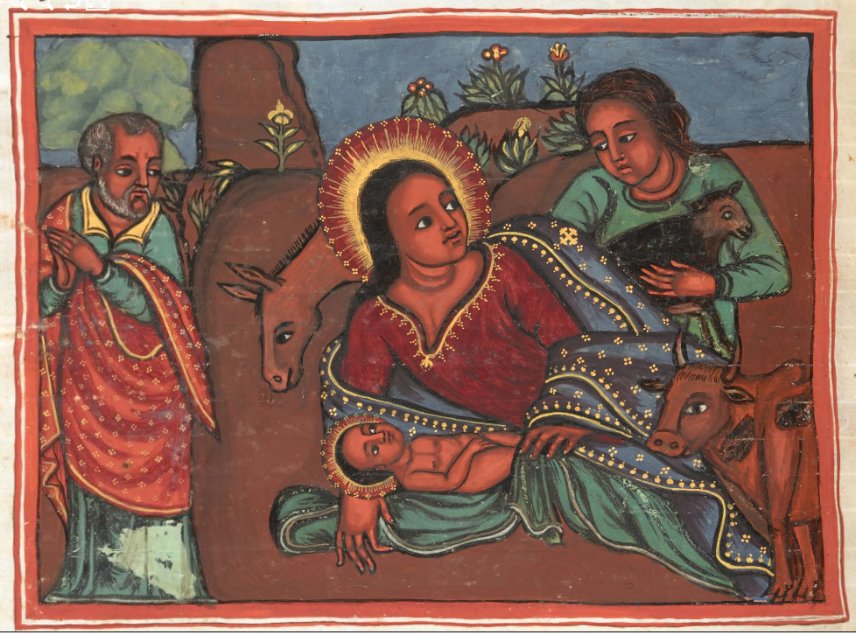
John 1:1-14 – December 25, 2025

            Words, words, words, words!! Words of every kind, of every description. Words that tell, words that show, words that praise, words that criticize. Words separate and draw together. Words fill people with joy and peace as well as with suspicion and animosity. Words have power. Whether insightful words or divisive words, encouraging words or capitulating words, words have the ability to shake emotions and to inflame passions for good or for evil.

            How do people use words and language, anyway? People speaking a common language need to agree upon the sense of what they say. It helps to be bound together by social convention as well as language rules of practice and use. In fact, language provides the structure of our common experience, understanding and perspectives. But I don’t want to get all high-falutin’ and theoretical. I want to bring this home to where we live.

            We all use language. Every day. In conversation at home, or on the telephone, or at work. Reading a newspaper or writing e-mail. All of these uses of language use words. Words communicate meaning, ideas, stories. Each one of us has a personal story, of what it was like, what happened, and what it’s like now. Our stories are communicated using words and language, and each individual has a creative, unique way to tell his or her story.

            The story of an individual’s own personal life makes sense because it is part of a larger story, the Story that has the story of Jesus Christ at its center. It is a story of God’s initiative which calls for my gratitude and response, a Story some theologians have called ‘the history of salvation.’ It is the Story of Jesus, the Story set forth in the Word of God that attracts, crossing boundaries and transcending lines of race, class, culture and age.

            Our gospel text for today, the first 14 verses of the Gospel of John, is a restatement of an old theme. Remember Genesis 1:1? “In the beginning, God created the heavens and the earth.” Most scholars today believe the apostle John was thinking of that introduction to the Greatest Story ever told when he wrote his own portion of it. John 1:1: “In the beginning was the Word.” John reframed that Story, and gave it a new look from a different perspective.

            In John, Chapter 1, we have God, the creative God who made heaven and earth. The almighty God wanted to communicate with us puny, limited human beings. But how was God supposed to communicate His Story?

            I can remember when my children were younger, in first and second grades. Sometimes they would need help with their homework at night. Years before, I had taken several courses of math in college . . . college algebra, trigonometry, analytical geometry. But, after considering more advanced mathematical ideas, how was I supposed to explain simple addition and subtraction to my young children in language they would understand?

            That’s the way I look at God’s problem sometimes. It’s sort of like God, able to do the most advanced mathematics possible–in God’s head!!–and God needed to be able to explain the simplest addition and subtraction problems to us ordinary, simple-minded human beings.

            There was another problem, as if the simple-mindedness of humanity wasn’t enough. That problem was (and is!!)  sin. Funny thing, how sin keeps cropping up in our lives and getting in the way. Sin divides people from one another as well as from God. Sin isolates and forces apart. Sin happens on a horizontal plane with other people as well as on a vertical plane with God. And sin causes humanity to walk in darkness and to run from God’s presence.

            So here we have a loving God, a God of light, a God who wants so much to communicate with us fallen, sinful human beings. But how was God supposed to communicate God’s Story?

            The Gospel of John tells us how. In the beginning was the Word. The Word was God. The Word is God. Jesus is the Word. John 1:14 says that the Word, Jesus, became flesh,  and . . . the Word dwelt among us.

            Think about it: the whole idea of God becoming a helpless baby, a human being, able to feel cold and heat, able to be hungry and thirsty, with blood and bones and a nervous system and a digestive system. So staggering was this idea that some of the people in John’s day could not believe it. God? the creative God who made heaven and earth? Coming to earth as a helpless, human baby? No way!!

            And, that’s not all!! Not only did this Creator God appear in creation so that our eyes could see Him, this almighty God, after making Himself flesh and blood, has the crazy idea of dwelling among people. Becoming one of us limited human beings, sharing our food and living in our midst. Jesus became fully man. He didn’t just seem to be a man, and pretend to be human. He really and truly became human, living with us as one of us.

            What a way for the almighty, eternal, creative God to communicate to us in a way that we limited human beings might possibly understand. God wanted humanity to understand His Story of good news, the Bible, but God also wanted humanity to understand God’s Word made flesh, the one called Jesus of Nazareth.

            Jesus (the Word incarnate) is the central principle of Scripture as well as the central character of the Greatest Story ever told. Reformed believers have throughout the centuries been finding new ways to confess their faith, using the fallible, limited resources of language that have been handed down to humanity throughout the generations. God helps us understand His Story, and there is nothing God wants more than for us to want to understand God’s Story better and better.

            A good many years ago, a bible translator went to a remote, mountainous region in the interior of Africa. He worked hard at turning an obscure oral language into a written language, which involved decoding the language, writing a grammar, learning extensive vocabulary, and finally translating a portion of the Bible into the heart language of that particular people-group.

            After several years of intense work and language preparation, when he felt he was ready, the missionary made his first presentation of the Story of Jesus to a group of headmen from the tribe. He was surprised at their response, which was unlike any he had ever had before in all his years of being a missionary and telling people the Story of Jesus. The group of men just sat there in silence, and then the chief came forward.

            The chief grasped the missionary’s hands and, with tears in his eyes, thanked him for coming to tell them the Story of Jesus. “This Story of good news is the one my people have waited for, all their lives long!!” And then came the clincher: the chief asked, “Your tribe has had this Story for many, many years. What took you so long to tell us?”

            Communicating the Story of Jesus has power! Awesome power! This is a Story that can change people’s lives for eternity. Telling the Story in someone’s heart language is one of the best ways to communicate how much God loves us.

            When Jesus came to this earth, He spoke the language of the people of His region, and He communicated ideas in ways people could understand. Yes, He was the Word become flesh, and yes, He showed us how to live this life that we have to live. Jesus, ‘the one Word of God which we have to hear and which we have to trust and obey in life and in death.’

            Praise God that God sent the Son Jesus into this world, the Word incarnate, the Word that became a helpless baby in Bethlehem. Praise God that God has given us the right to repair that broken relationship with us, and to be called the children of God. And praise God that God loved us so much that He gave His only begotten Son on our behalf, to reconcile us to God for eternity.

            Gloria in excelsis Deo.

@chaplaineliza

(Suggestion: visit me at my other blogs: matterofprayer: A Year of Everyday Prayers. #PursuePEACE – and  A Year of Being Kind . Thanks!

Unknown's avatar

Joy for Those Who Wander

“Joy for Those Who Wander”

Luke 2:1-7 (2:4-5) – December 14, 2025

            When some thing or some reading or some sermon is so familiar, so recognizable, are you tempted to tune it out? Turn it off?

I am preaching from an alternative lectionary, enlarging our Advent meditation on Dr. Luke’s so-familiar chapters. Today, I preach from the beginning of Luke chapter 2. Such a recognizable narrative! It has everything a story needs! Not only promise and heritage, not only memory and mystery. But, hearing an old story yet again brings its own kind of anticipation!

Although, the familiarity surrounding today’s reading is a particular problem for preachers. How do we make the reading fresh, bring it to life again, imbue it with that something extra special enough to cause people to tune in rather than tune out?

            Let us listen again to a portion of today’s reading: “And everyone went to their own town to register.So Joseph also went up from the town of Nazareth in Galilee to Judea, to Bethlehem the town of David, because he belonged to the house and line of David. He went there to register with Mary, who was pledged to be married to him and was expecting a child.”

            Joseph and Mary began to travel from Nazareth in the north of Galilee up to Bethlehem. A suburb of Jerusalem, really. A small town on the outskirts of the capital city, a good ways to the south of Galilee. We find Mary and Joseph (probably without a donkey – sorry to all of the lovers of traditional Christmas cards, everywhere) on the road, walking south to register for the census. And, they were not the only ones on the road.

            Can you see yourself – can I see myself – on the road? Are we all in transit, traveling along, not anywhere particularly fixed? Even those of us who have lived in the same place for a long time, is there something about your life, about our walk with God that makes you think that we all are on the road? Could it be that we all are wandering from one place to another, and not having a definite place to call home?

            The apostle Paul speaks of the temporary nature of this world, of this earthly tent we all inhabit. He says in 2 Corinthians 5, “For we know that if the earthly tent we live in is destroyed, we have a building from God, an eternal house in heaven, not built by human hands.” So, with that to look forward to, it gives us all a heavenly perspective to view our earthly tents, and the journey each of us is on, in this wide world today.

            Which brings us back to considering: the long trip for the census. And, since Bethlehem was the ancestral home of King David, that meant there were quite a lot of people who had to be counted who were descended from David. Including Joseph. Remember the genealogy written in the Gospel of Matthew?

            Speaking of descendants of David, I am sorry to prick the other balloons of belief in the traditional Christmas carols and traditions. “It would be unthinkable that Joseph, returning to his place of ancestral origins, would not have been received by family members, even if they were not close relatives.” Presbyterian missionary and pastor Dr. Kenneth Bailey, who is renowned for his studies of first-century Palestinian culture, comments:

“Even if he has never been there before he can appear suddenly at the home of a distant cousin, recite his genealogy, and he is among friends. Joseph had only to say, ‘I am Joseph, son of Jacob, son of Matthan, son of Eleazar, the son of Eliud,’ and the immediate response must have been, ‘You are welcome. What can we do for you?’” [1]

            I know this might be news to you – and it was to me. Jesus was not born in a cave or far on the outskirts of town, out adjacent to the field surrounding Bethlehem. However, this still does not let us off the hook for considering the larger question. Mary and Joseph were traveling, and were on the way, in between. According to Biblical record, they did not have very much money at all. (Although, because of the generous dictates of hospitality, they must have been put up in some cousin’s home while they were sojourning in Bethlehem.)

            I still would like to know! Our position as believers in the one true God makes us sojourners in this world; and this position is so similar to Mary and Joseph’s position as sojourners or travelers, too. Is there any solidarity for others today who are transient, who are traveling or sojourning, especially young families? Perhaps with mothers who are great with child at this time of the year, and are looking for even a temporary place to lay their heads?

             We can take this unexpected look at the Holy Family one step further. I remember a suburban church I attended a number of years ago. One of the smaller trees near the front door to the sanctuary was practically covered with blue ribbons. A sign was posted next to the tree, saying “While celebrating One homeless Family, these ribbons ask us to remember the homeless with us today.” I had never thought about the Holy Family in that way before. It’s God’s unexpected manner of opening our eyes, and displaying the new or different way we can look at Mary and Joseph and the baby Jesus.

            As we consider the birth of the baby Jesus in Bethlehem, as the Holy Family was traveling through, we can see this birth as so much more than simply a claim or confession of the church. As you and I are sojourners through this world, so we also are traveling through. Jesus, God’s eternal Son, the Second Person of the Trinity, emptied Himself. He willingly put Himself in this human flesh and became incarnate of the Virgin Mary. And, this is the most important part! This miraculous birth shows us the truth of our God. Our God loves us so much that the only way to really, truly show us how much was to become one of us. The Baby born in Bethlehem. [2]

            The baby Jesus, His parents Mary and Joseph – the Holy Family was on the way, traveling. Sojourning, and so are we. We are travelers, looking forward to that heavenly home, prepared for us in heaven. Are you on the road with us? On the way with Jesus?

            I close with two verses from a much beloved Christmas carol, collected in Appalachia by John Jacob Niles around 1900. Listen and hear the words of traveling, of being on the way.

 When Mary birthed Jesus, ’twas in a cow’s stall/with wise men and farmers and shepherd and all.
but high from God’s heaven a star’s light did fall, /and the promise of ages it did then recall.

I wonder as I wander, out under the sky, /how Jesus the Savior did come for to die
for poor ordinary people like you and like I; /I wonder as I wander, out under the sky.

            Alleluia, amen.

@chaplaineliza

(Suggestion: visit me at my other blogs: matterofprayer: A Year of Everyday Prayers. #PursuePEACE – and  A Year of Being Kind . Thanks!)


[1] https://www.psephizo.com/biblical-studies/once-more-jesus-was-not-born-in-a-stable/

[2] https://www.workingpreacher.org/dear-working-preacher/christmas-preaching

Unknown's avatar

Peace for Those Who Wait

“Peace for Those Who Wait”

            Waiting. I can remember waiting while being pregnant. Waiting for the weeks to pass. Waiting for another prenatal visit. Especially waiting during that last month. And, waiting for the labor pains finally to kick in and to get going, for the baby to finally be born. (Each of my pregnancies involved long labors.)

            I can relate to our Gospel reading from Luke chapter 1 today! Waiting! Waiting for something huge to happen. Waiting for babies to be born.

Except, Mary found herself in the early months of pregnancy without the protection of a husband or partner. I have a feeling she and Joseph were having continuing dialogue about her being pregnant, and not by Joseph. That must have been awkward, to say the least! We find that Mary traveled and went to her older cousin Elizabeth’s house, some distance away, for several months. Elizabeth’s home must have been a sanctuary in an unpeaceful time for Mary, while she was in a time of waiting.

Let us look at the current day, and focus on the United States. Things today, situations here and now are certainly not peaceful. We are looking at the second Sunday in Advent, and the second candle on the Advent wreath signifies the candle of Peace. Can you and I possibly find peace in an unpeaceful world?

Is there a way to look for God’s peace in a turbulent and tumultuous time?

As I said last week, we are well used to seeing Mary as a sweet, calm, quiet, almost docile follower of God’s will for her life. Last week, I brought up the fact that Mary, our Mary that Dr. Luke tells us about, was also a prophet! As a prophet, she brought hope to the world. Was it possible that Mary also brought peace to an unpeaceful world?  

This prophetic role, this insight is a new way of looking at Mary for me. New for me, and I hope enlightening to you, too. As we consider the call of the prophets in the Hebrew Scriptures, and consider the call of Mary by the angel Gabriel, we see all the familiar, classic steps: we see God’s initial call to Mary, God’s task, Mary the prophet’s objection, God’s reassurance, and Mary the prophet’s acceptance of call. [1]

All of these are found in Mary’s conversation with the angel Gabriel in the account of the Annunciation, found in Luke chapter 1. I was struck by – you might say, gobsmacked by – the clarity of all those classic steps of the prophet’s call displayed, and I had never seen it before. Sure, I had approached this insight in years past, even preaching about how Mary was a radical by singing about such radical ideas.

Even though I have been well acquainted with the first chapter of Luke for decades, the further concept of Mary as God’s chosen prophet never fully clicked with me. Until now.

As we go on to look at the Canticle that Mary sings, I want to bring before us the earth-shattering idea that “Luke portrays her in a startling role: one that shakes up the way we’ve been brought up to think of her and invites us to stop observing her and start imitating her.” [2]

Can you listen with open ears to Mary sing of God who “has brought down rulers from their thrones but has lifted up the humble,” and “has filled the hungry with good things but has sent the rich away empty.” This is a classic story (or song) about the “haves” and the “have-nots,” and we can guess who Mary associates herself with! The Jewish people are definitely downtrodden; the Roman empire certainly has them under their collective boot heel. Nevertheless, Mary’s prophetic notes of joy ring out for all to hear in the Magnificat!

Remember, Mary’s song, giving glory, magnifying God, is also clearly a radical protest song. As she sings about the injustice not only in her hometown, but within the whole occupied Jewish nation, any peace but a forced “peace” was the furthest thing from the minds of the Roman occupiers. Yet, “the new world Mary sings about here isn’t elusive or unquantifiable at all. The hope she holds onto is one passed on to her from her ancestors: from Hannah, who sang this hymn of reversal and revolution in the Hebrew scriptures, to the Psalmist, who echoed praise to God for raising the poor from the dust and lifting the needy out of their desperation.” [3]

One of my favorite interpretations of the Canticle Mary sings, the Magnificat, is a newer song written by artist Rory Cooney, set to a traditional Irish tune called “Star of the County Down.” It is presented as a story-song with refrain: “Though the nations rage from age to age, we remember who holds us fast: God’s mercy must deliver us from the conqueror’s crushing grasp. This saving word that our forebears heard is the promise which holds us bound, ‘til the spear and rod can be crushed by God, who is turning the world around.” [4]

Can you believe how radical, how revolutionary an idea this was (and is)? Especially to a large group of people who have been poor, downtrodden, and left on the outskirts for generations, perhaps for centuries? What good news – even marvelous news – this would be to such a group of people, to know that God not only loves them, but God cares about each of them, and is actively coming to their defense, to fill their stomachs and right their wrongs!

Here in the United States, right now, we have a large segment of the population becoming fearful and anxious. Not only about the economic situation for individuals and families, but also the current political situation. The roaming of ICE agents and Department of Homeland Security walking freely, touchy and eager to display their confounding and overwhelming strength, their power over.

How striking and similar is this to the occupying Roman army in first century Palestine? Some striking and sadly similar parallels between the first and twenty-first centuries. In both cases, God’s love was and is displayed, overcoming worldly power.

As the Canticle of the Turning says in the last verse, “Though the nations rage from age to age, we remember who holds us fast: God’s mercy must deliver us from the conqueror’s crushing grasp. This saving word that our forbears heard is the promise that holds us bound, ‘Til the spear and rod be crushed by God, who is turning the world around.” [5]

  Let those with ears to hear, hear the words of the prophet Mary. Alleluia, amen.

@chaplaineliza

(Suggestion: visit me at my other blogs: matterofprayer: A Year of Everyday Prayers. #PursuePEACE – and  A Year of Being Kind . Thanks!)


[1] http://www.patheos.com/progressive-christian/mary-reluctant-prophet-alyce-mckenzie-12-17-2012.html

[2] Ibid.

[3] The Do Not Be Afraid Advent Devotional – © 2022 Illustrated Ministry, LLC

[4] Cooney, Rory, “Canticle of the Turning,” (GIA Pulications, Inc. Chicago, IL: 1990)

[5] Ibid.