Unknown's avatar

Abide in God’s Shelter!

“Abide in God’s Shelter!”
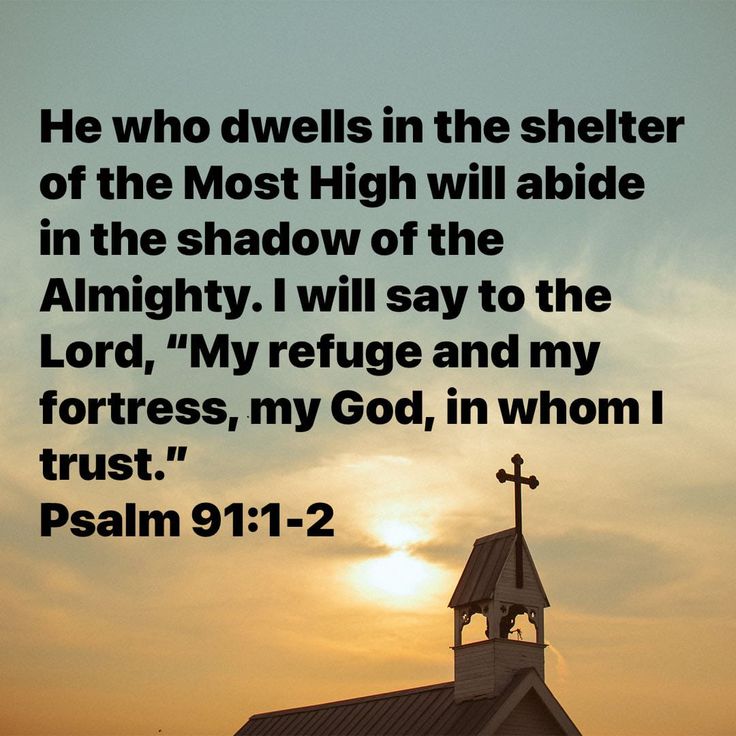
Psalm 91:1-6, 14-16 (91:2) – September 28, 2025

            I have had a number of times in my life where there was a lot of uncertainty. I am thinking of one extended time, in particular. When my older daughters were toddlers and preschoolers, my former husband and I did not have any health insurance. For years. Our girls were small, and we lived paycheck to paycheck, barely scraping by. For years.

            Times like these are downright scary, whether people have economic problems (like my family did), or health reversals, emotional or psychological concerns, or physical safety!  

            Listen to a first-person account from one of our commentators. This happened to him in rural India while he visited a missionary outpost. “As we were climbing a steep rugged narrow path, Premakar, our home missionary of Dangs cautioned us, “Wagh, Wagh” (tiger). We stopped and our torches flashed at the beast which was 200 yards away. Its glittering eyes menacingly glared at us. In spite of the blinding lights it was advancing towards us. Helpless we turned to Jesus in prayer. To our great relief the beast slinked away. We continued our journey. But within a few yards our petromax [our bright lights] failed. Just imagine our plight! It seemed ages before the petromax was fixed. After a short while a poisonous snake slithered past us and the promises of Psalm 91 sustained us.” [1]

I am not sure if you have ever had such a wild time of uncertainty in your life, but it can be beyond worrisome. Times like that can make a person anxious, fearful, even frantic. Our commentator goes on: “Thankfully the cobras and other poisonous vipers were in hibernation during my stay in the mountain village of Chikaldara. The tigers and bears, while inhabiting the area, did not harm me either. Nevertheless, my sense of danger was much more intense while walking in the darkness or through the tall grass, where some creatures could be lurking.” [2]

Just listen to these words from our reading today, Psalm 91. “Surely he will save you from the fowler’s snare and from the deadly pestilence. You will not fear the terror of night, nor the arrow that flies by day, nor the pestilence that stalks in the darkness, nor the plague that destroys at midday.”

            This reading describes a lot of unpleasant, downright dangerous things that can happen to a person. “There is a thread in this psalm that feels … dangerous. Angels will bear you up so you won’t dash your foot on a stone? Treading on lions and snakes? No scourge will come near your tent? Dangerous, and conditional: Those who love me I will deliver; I will protect those who know my name. What about those who don’t know, because they haven’t been told or haven’t been told in a way that makes sense to them? What about those who don’t know how to love You yet? Are they, are we just on our own if we find ourselves in that category, temporarily or permanently?” [3]

            I care deeply and feel for any frightened, anxious people. For, that is exactly what this psalm mentions. This psalm cautions, and gives insight, allowing you and me to get a picture of what part God plays as we go through all the trials and struggles of life.

            Verse 1 is the starting point for this psalm, the lens that aids us in reading the rest of the psalm. “God delivers because God is our shelter. God will rescue us when we call because we live in God’s shadow. People need to feel safe and secure to be brave. Notice that the psalmist encounters pestilence, arrows, and destruction as they live in the shadow of the Almighty. We need the security of abiding in God so that we can brave the trials and struggles of this life together.[4]  Can you think of a time of uncertainty in your life when you felt for sure that God was with you? When you knew for sure that God was your shelter, or shadow, or refuge? God can send this assurance into our hearts.

            And sometimes, even if it’s an extended time of uncertainty like the one my family with young children and I went through for several years straight – economic insecurity – God is still there. There is a saying: I believe in the sun even if it is not shining. In the same way, I believe in God even if the path ahead is rocky. You and I can have a deep sense of being held by God, even when answers are unclear. God can be trusted!

God is present even though we go through scary times or personal difficulties. Whether people have economic problems (like I did), or health reversals, or emotional or psychological concerns, we can trust in God’s presence. Even at the same time while we are afraid! The two feelings are not mutually exclusive, especially when we consider some really serious things like natural disasters, regional conflicts, or other catastrophes that happen beyond our control.   

            Let’s look at the last verses of this psalm. 14 “Because he loves me,” says the Lord, “I will rescue him; I will protect him, for he acknowledges my name.15 He will call on me, and I will answer him; I will be with him in trouble, I will deliver him and honor him.”

Can you imagine God speaking these words directly to you? Can you hear God saying to you, “I will rescue you, I will protect you. I will be with you in trouble and deliver you.” How does that feel, to have God lovingly responding with words of rescue, protection and long life? It is so comforting and protecting, to have God saying these things to me, personally! It is a promise I – we – didn’t even know we needed. Truly, it is a reminder that God really does see and respond to our deepest needs and cries of our hearts. [5]

            Right now, we can create a sense of safety. Here and now. We can take time to breathe. Right now. Breathe in, deeply – and breathe out, slowly. Let’s do it again. Breathe in, deeply – and breathe out, slowly. Breathing calms each of our collective nervous systems. Roll your shoulders slowly, backwards, and forwards. And, continue to breathe.

            We are, indeed, safe, living in the shelter of God. Please, bring that safety to others. Invite others to abide in God’s shelter, no matter what is happening in each individual life, in each personal situation. Because, difficult things will continue to happen. Troubles and challenges continue to crop up unexpectedly. And – and, each of us is held in God’s hand. We all can bravely face the world with strength and hope. We can all trust in God’s presence, knowing that our security comes from our God, who truly is our refuge and fortress. Alleluia, amen.

@chaplaineliza

(Suggestion: visit me at my other blogs: matterofprayer: A Year of Everyday Prayers. #PursuePEACE – and  A Year of Being Kind . Thanks!

(I would like to express appreciation for the Rev. Anthony J. Tang, one of the ministers at First United Methodist Church of Dallas TX, and his excellent small groups presentation featured on www.umcdiscipleship.org. Several of these suggestions come from that presentation.)


[1] https://bible.org/seriespage/9-psalm-91-psalm-safety

[2] Ibid.

[3] https://www.umcdiscipleship.org/worship-planning/i-will-call-upon-the-lord/sixteenth-sunday-after-pentecost-year-c-lectionary-planning-notes/sixteenth-sunday-after-pentecost-year-c-preaching-notes

[4] https://www.umcdiscipleship.org/worship-planning/i-will-call-upon-the-lord/sixteenth-sunday-after-pentecost-year-c-lectionary-planning-notes

[5] https://www.umcdiscipleship.org/worship-planning/i-will-call-upon-the-lord/sixteenth-sunday-after-pentecost-year-c-lectionary-planning-notes/sixteenth-sunday-after-pentecost-year-c-small-groups
Unknown's avatar

Prescription for Prayer

“Prescription for Prayer”

1 Timothy 2:1-8 (2:1-3) – September 21, 2025

It’s good to be in the habit of doing certain things. Say, going to the gym. Exercise is a beneficial thing, and if I go to the gym on a regular basis, like three times a week, I will be healthier for it. Same for other things—like practicing the piano, practicing swimming or square dancing—it’s beneficial to get into the habit of regular repetition, week in, and week out.   

Worship and prayer are regular, comfortable things, things many churches do the same way, week in and week out. Here in our scripture reading today, Paul gives his younger friend Timothy some words of wisdom. Recommendations, if you will, of some things Timothy’s church can do in worship and prayer that will be beneficial to them all.

Reading again from 1 Timothy 2, “I urge, then, first of all, that petitions, prayers, intercession and thanksgiving be made for all people— for kings and all those in authority, that we may live peaceful and quiet lives in all godliness and holiness. This is good, and pleases God our Savior.”

I’ll stop right there. Not because the rest of the reading is unimportant. No! But, because Paul has so many ideas that are bursting out of him one on top of the other, I am afraid we might be overloaded if I read them all.

I am on social media, daily. I feature some things regularly, including my Daily Prayer posts. I have posted Daily Prayers on my public Facebook page for five years now. I see it as something I can contribute for my Facebook friends, and for friends of friends, too. I post a prayer each evening that I find meaningful, and I hope they can be helpful to others, too.

Other people have regular habits or practices of prayer and meditation. That is what the Apostle Paul talks about here! I am in a doctoral program for Spiritual Direction, which some people refer to as spiritual companionship. That’s coming alongside of another person, or a small group of people, being a long-term companion. Walking with them, sitting with them through their joys and through their difficulties and sorrows. I have a heart for listening to people’s stories, challenges, and difficulties in their lives. Plus, I pray with people through these things.

You recognize that is what we do in church, don’t you? In our Intercessory Prayers each week, we – as a congregation – come alongside of individuals and families and pray with them through their joys, challenges, and various difficulties. That is exactly what Paul tells Timothy to do here! This reading is a prescription for intercessory prayer in a worship service!

I know that believers and followers of Christ, Paul and Timothy were very much in the minority in their communities. The majority opinion and the overwhelming cultural context for both of them was one of a worldly avarice, where people were concerned about “me, first!” and “where’s mine?” This call to intercessory prayer was very counter-cultural!

Let’s look again at what Paul recommends. Paul begins the chapter by encouraging Timothy to offer prayers for all members of the human family during church services.He wants petitions, prayers, intercession and thanksgiving – all integral parts of praying – to be made for all people. That is not just for a few, or a family, or “only for our little, insular group of people.” No! Paul is recommending to Timothy that we pray for ALL people.

He mentions prayer in the terms of: petitions (humble, general requests to God), intercessions (requests, pleading for those in need), supplications (requests for ourselves, especially when faced with a crisis) and thanksgivings (expressing gratitude for blessings we receive). [1] All people need to be held up to God in prayer.

That means for everyone. Period. Even for mean people. Even for people we disagree with. Even for people who don’t look like us. As the modern translation from “The Message” of this reading begins, “Pray every way you know how for everyone you can.” Period.

Especially in the past few years in this country, division, discord, and dissension of large portions of the American population has only speeded up in the last few years, fueled by increasingly divisive rhetoric, shrill podcasts, and fraught news reports, as well as the regional and national conversations.

As Rev. Sharon Blezzard said, “Good news doesn’t usually sell publications or improve ratings. It takes bombast, divisiveness, and catty, snarky repartee to make headlines, not prayerful peacemakers standing in the breach attempting to reknit brokenness in quiet relationship building and listening. But we are called to a different way of being, to a stewardship of self and other that places value on people, on relationships, and on the building up of community.[2]

God has not called us to be snarky or mean, nasty or divisive. God does not want big bullies on God’s team. I have never heard of God approving of or cheering on hateful, spiteful Christians, either.

Instead, when we “Pray every way you know how for everyone you can.,” Paul reminds Timothy that “This is good, and pleases God our Savior, who wants all people to be saved and to come to a knowledge of the truth.”

Remember what the situation was for Paul and Timothy, and for all other believers in that first-century time and place. It is the same for us, today!  “We are called to be counter-cultural witnesses to God’s love, mercy, and saving grace. We cannot be a witness if our hearts are filled with hate. We cannot love our neighbors if we aren’t willing to get to know them, and certainly not if we aren’t willing to stop working violence against one another.” [3]

      Paul tells us we are to pray for all people; and we are to follow Paul’s lead in supplications, prayers, intercessions and thanksgivings. The intention of such prayers is so that we Christians in society will be able to live tranquil and quiet lives. This isn’t me saying it. It’s the apostle Paul! 

Regardless of whether there is peace in our church, peace in our neighborhood, or peace in our country, prayer is always a good idea. Having a close relationship with our Lord and Savior Jesus Christ is the reason we are here. Praise God! Thank You, Jesus. Alleluia, amen.

@chaplaineliza

(Suggestion: visit me at my other blogs: matterofprayer: A Year of Everyday Prayers. #PursuePEACE – and  A Year of Being Kind . Thanks!


[1] http://www.lectionarystudies.com/sunday25ce.html Rev. Bryan Findlayson, Lectionary Bible Studies and Sermons, Pumpkin Cottage Ministry Resources.

[2] https://www.stewardshipoflife.org/2016/09/calling-all-prayerful-peacemakers/

[3] Ibid.

Unknown's avatar

Losing and Finding!

“Losing and Finding!”

Luke 15:1-7 (15:7) – September 14, 2025

            Lost and found—this concept is very real and meaningful to many people, especially children. I have four children, and at various times, they have had to go looking for various possessions of theirs. You know, small items, things that were very precious to them somehow got lost. And oftentimes, they went looking everywhere for those precious things.

            I can remember when my son was younger, probably in first grade. He had a favorite stocking cap he wore almost every day in the winter. He wore it to school, out to play, on the weekends, almost everywhere. And then, one day it got lost. My son could not find it anywhere. He was heartbroken at the loss of this precious stocking cap—precious to my son, at least. We searched everywhere—and I mean everywhere—in the house, in the car, in his classroom, in his locker. He even looked in the lost and found at his school. Sadly, we never could find it.

Can you relate? Have you ever lost anything that was precious to you? Maybe not valuable in a monetary sense, but precious to you, your very favorite. And let’s go further. What about the things that are worth a great deal? Valuable in a very special way, in terms of both monetary and sentimental value. Losing something precious can be quite a blow.

            This is exactly what our Lord Jesus talked about in our scripture passage today. He tells the parables of the lost things. In fact, one nickname for this chapter, Luke 15, is the chapter of the lost things—the parables of the lost sheep, the lost coin, the lost son.

            Dr. Luke sets the scene for us. He says, “Now the tax collectors and sinners were all gathering around to hear Jesus. But the Pharisees and the teachers of the law muttered, “This man welcomes sinners and eats with them.” Tax collectors and “sinners” were two groups of people who were especially hated by the good, synagogue-going Jews! And, especially by the Jewish leaders, the Pharisees and teachers of the Jewish law, who had particularly high standing in their local community! How dare that upstart Rabbi Jesus waste His time with riff-raff, with no-good, low-class, dregs of society?  

            And, that’s not all the Rabbi Jesus is doing! “Eating — that is, sharing table fellowship — is a mark of camaraderie, acceptance, and friendship. And so in eating with tax collectors and sinners, Jesus is demonstrating a deep and abiding acceptance of those society has deemed beyond the moral pale.” [1] 

            In response to this complaining and carping from the Jewish leaders, Jesus has a response. Three responses, in fact. This week we look at His first parable, the parable of the Lost Sheep. As with many of the parables of Jesus, this one starts out in a straight-forward manner, but somehow doesn’t set quite right.

Jesus says, “Suppose one of you has a hundred sheep and loses one of them. Doesn’t he leave the ninety-nine in the open country and go after the lost sheep until he finds it?” In other words, if you are a shepherd, you put the other 99 sheep at risk! You leave them in the wilderness, with no protection or shelter while you go seeking the one that is lost! And, how about that lost sheep? How does that sheep feel? Lonely? Hungry? Injured? Scared?

From an accounting, balance-statement point of view, the loss of one percent of your stock or flock is an acceptable business loss. Why do we need to leave 99 sheep at dangerous risk? Just for one, single, measly little sheep? But, God does not take that point of view!

Sometimes, people – individuals – get lost. Can you and I relate? “Sometimes you can identify why you feel lost and other times you simply feel unmoored — unable to give a name or reason for a sense of confusion, disorientation, bewilderment, abandonment, loneliness — all of which can be manifestations of lostness.” [2]

            I work during the week as a full-time hospice chaplain. It is sometimes my heartbreaking job to go to see patients in dementia, and sometimes even severe dementia. I would like us to listen to this heartfelt vignette from Pastor Janet Hunt, about a longtime family friend.

“Norma became not only a family friend. She was our church secretary (back when we called them that) at my home congregation for forty years. What I especially remember most about that time was that she would listen and answer and go deeper with me about whatever it was we had learned in class that morning. There are a lot of people whose influence factors into one heeding the call to become a pastor. Norma was certainly one of those for me.

“I know that I am blessed to serve not so far from home for I have the chance sometimes, still, to connect with those I knew when I was young. I especially knew it this last Saturday morning for Norma’s son called me up to ask my thoughts about nursing home options here. Both of their parents’ health are failing and her Alzheimer’s Disease, in particular, is making this next move necessary. 

“Sunday afternoon I went to see Norma. I sat down next to her daughter and we visited a while. I don’t know for sure if she really remembered me or not, but her smile was as radiant as it ever was. Before I left, I asked if I could pray with her. She placed her hand palm down on the tray table in front of her. I put my hand on top of hers and her daughter put her hand on top of mine. I prayed simply and briefly – asking for God’s protection and strength and peace. When Norma took her hand back, she wiped her eyes for those words had somehow broken through. 

“She may only have pretended to remember me, but still she knows somehow that God remembers her. Slowly but surely the disease that is erasing her memory will not finally erase what matters most. In some ways, she may seem ‘lost’ to those who have loved her, but she is not lost to God. I expect, or at least I hope, that in that moment she knew God’s persistent love embracing her once more. ‘Found’ once more, I hope her comprehension of God’s tender love for her never leaves her.” [3]

No matter how we are lost, how we are wandering in the wilderness, in the hospital or care center, or when we concentrate so much on our physical or financial situation, or in the busy-ness of life, running from place to place – God never stops seeking us. We know who is loving and caring and seeking for each of us.

Which of you, Jesus asks, would go to such lengths to search and find and then welcome back and celebrate? Truth be told, none of us would. But God would. [4] Our Good Shepherd goes after me, and after you, too. He searches for us, and makes sure that we are back with Him, in the place of security and protection, and says, “Rejoice with me! For I have found my sheep that was lost!” To me, the news about our good Shepherd is the best news in the world. Alleluia, amen.

@chaplaineliza

(Suggestion: visit me at my other blogs: matterofprayer: A Year of Everyday Prayers. #PursuePEACE – and  A Year of Being Kind . Thanks!


[1] https://www.workingpreacher.org/dear-working-preacher/lost

[2]  https://www.workingpreacher.org/dear-working-preacher/lost-and-found

[3] http://words.dancingwiththeword.com/2013/09/lost-and-found.html

[4] https://www.workingpreacher.org/dear-working-preacher/lost

Unknown's avatar

God Knows Us Full Well

“God Knows Us Full Well”

Psalm 139:1-6, 13-18 (139:14) – September 7, 2025

If you look at the news online, or on television, or listen to the radio or podcasts, many people often look for knowledgeable experts. Experts in their field or craft. People who know things. Think about it: cooking shows have culinary experts, home repair shows have building experts, news reports have experts in various fields, talk shows have behavioral experts to help solve the relationship problems of society, even newspapers have horoscopes written by psychics who are supposedly experts in astrology. Expert opinions!

            This craving for information, for people who know about things … I am afraid that I get sucked right into it. I go to people who are experts in their fields, and try to pick their brains and get what information I can, so I can masquerade as a sort of an expert, too. I like to think I know about things. And, I do. I know lots of things. I know lots about how to be a chaplain, and about music, and about the Bible, but that doesn’t hold a candle to the amount God knows! 

            God knows—now there is an expert opinion. Let’s look at the scripture reading for today. “O LORD, You have searched me and known me, You know when I sit down and when I rise up, You discern my thought from far away.” That truly is knowing. God knows every part of me. King David wrote this psalm many centuries ago, and its message still strikes home and hits my heart with penetrating directness.

            These verses from this psalm are among the most direct and poetic description of God’s omniscience in the whole Bible. Omniscience. Knowing absolutely everything. That’s a pretty scary thought, if we sit down and think about it.  It’s a good thing that God is loving, caring and merciful. We just have a shadow of understanding about how God knows us, yet it’s a loving, caring and intimate knowing. The omniscience of our knowing by our heavenly Father.

            When a word is repeated in a passage in the Bible, that is a way of underlining that word, indicating that word is particularly important. The Hebrew word “yada,” or “to know,” appears in today’s reading four times. The emphasis of this rich biblical word, this “concept of ‘knowledge’ is a critical element of meaningful relationship. We are to know God, just as God knows us.” [1]

            When you and I contemplate God, the totality, the tremendous experience of God’s knowledge is just “too wonderful” for us! That is us, as limited humans, trying to understand and contemplate the Lord. That is the eternal God who created the heavens and the earth! We read here in Psalm 139 that God’s capacity for knowing is utterly beyond comprehension, so far beyond us limited humans that we feel like we are reaching up to touch the moon, much less the stars in the sky. King David said, “so high that I cannot attain it,” in verse 6. And yet – God wants to be known! Known by us.

            This Sunday is when the church in Scotland celebrates the beginning of the season of Creation, when we celebrate God creating the world, the galaxy, the whole universe. As we contemplate God’s vast creative power, let us consider the creation of a single human life. Our psalmist considers it, too! Verse 13 says, “For you created my inmost being; you knit me together in my mother’s womb.” This is a glimpse of the psalmist’s understanding of the nature of God, of knowing God!

“This points to a God whose love for God’s own creation extends to concern, since this human creation is finite and therefore not perfect. Yet, it does not lessen but instead heightens the amazing and magnificent artistry of God’s creation. Indeed, this recognition becomes reason for praising God and affirming the self’s ultimate worth in the sight of God (v. 14).” [2]

God knows. God knows my circumstances, knows whether I’m sitting or getting up or lying down. God even knows what I’m thinking, before I can say a word. Talk about being an expert! The Lord knows my psychological makeup, my emotions and my heart, so much better than I do myself.

            It’s a good thing to get to know ourselves. It’s a worthy study, and one that would be useful in helping us to understand others. I like to tell myself that I know myself pretty well. I’ve seen a therapist for a number of years who has helped me come to understand my own thoughts and emotions better. He’s helped me to understand how I relate to others and why I act and react in certain ways. At times, after years of therapy, I may fancy myself somewhat of an expert on myself. But in reality, I am not. Sometimes I may think I am, but I’m just fooling myself.

            God knows everything about me, too. Everything. God knows all the flaws, all the rough spots, every praiseworthy feature as well as everything that isn’t. And–here’s the amazing part–God loves me anyway! Even with all that intimate knowledge about every single aspect of our character as well as our character flaws, God loves us anyway!

And, it isn’t just all about me. God knows each of us in the same way. He knows each one of you, intimately, too. The Lord has searched you and known you, and is acquainted with all your ways. And, God loves each of us, even more intensely than we can possibly imagine.

            Sometimes, certain authors have a way of capturing an idea in a special way. It’s that way with Max Lucado, a recent Christian author for both children and adults. I know I have referenced this before, and it’s just so good that I have to quote it again! This is a quote from Prayer: A Heavenly Invitation, which describes just the idea I’ve been trying to communicate.

            ”If God had a refrigerator, your picture would be on it. If He had a wallet, your photo would be in it. He sends you flowers every spring and a sunrise every morning. Whenever you want to talk, He’ll listen. He can live anywhere in the universe, and He chose your heart. And the Christmas gift He sent you in Bethlehem? Face it, friend. He’s crazy about you.” [3]

            Friends, God knows all about us, and He loves us anyway. What else can we do but fall on our knees before God in praise, thanksgiving and adoration? Thank God for His boundless love towards you and towards me.

            Alleluia, amen.

@chaplaineliza

(Suggestion: visit me at my other blogs: matterofprayer: A Year of Everyday Prayers. #PursuePEACE – and  A Year of Being Kind . Thanks!


[1] https://www.workingpreacher.org/commentaries/revised-common-lectionary/second-sunday-after-epiphany-2/commentary-on-psalm-1391-6-13-18-2

[2] http://www.theafricanamericanlectionary.org/PopupLectionaryReading.asp?LRID=27

[3] Prayer: A Heavenly Invitation – Max Lucado