Unknown's avatar

Like An Eagle

“Like An Eagle”

Deuteronomy 32:1-3, 7-12 – June 25, 2023

            Almost two years ago my husband and I went to visit our daughter over Labor Day in St. Louis at graduate school. On the way back, we drove north and stopped at Pere Marquette State Park, at the confluence of the Illinois and Mississippi Rivers. In case you did not know, there are bluffs and rock formations at many points on the Mississippi River. Just the place for eagles to nest and raise their young eaglets! Just like in places around Pere Marquette State Park.

            We are focusing on a Bible reading today from the book of Deuteronomy, in the Hebrew Scriptures. The fifth book of the Bible, a part of the revered Torah of the Jews, this reading comes from chapter 32, near the end of this retelling of the Law – God’s Law – to the people of Israel. And, Deuteronomy also restates God’s covenant, or contract, with God’s people.

            This reading from Deuteronomy comes in the middle of somewhat dry reading material. Most people do not particularly sink their teeth into talk of laws, statutes, and commands, which is what a large part of this book is all about. However, chapter 32 is the last song of the elderly Moses, shortly before his death. Moses’s song has many words of warning for the people of Israel, but it also has words of warmth and nurture: like the passage we look at today!

            This is how Moses describes the relationship between the people of Israel and the Lord! 10 In a desert land God found him, in a barren and howling waste. The Lord shielded him and cared for him; God guarded him as the apple of his eye, 11 like an eagle that stirs up its nest and hovers over its young, that spreads its wings to catch them and carries them aloft.”

            Right here, Moses is talking about a mama eagle! I suspect Moses and perhaps many other keen-eyed people from Israel had observed eagles and their behavior. Especially, in this case, their nesting behavior, and how the mother eagles interact with their young.

            While my husband and I were at the state park, I want to let you all know that we both were especially fascinated by an actual eagle’s nest in the interpretive center. I suspect you all are familiar with the typical bird’s nests around here, nests from robins, sparrows, cardinals, and other types of birds. The eagle’s nest is absolutely gigantic, compared to a nest that is smaller than six inches around. We could stand in the eagle’s nest and have it be higher than our waists.

            Moses sang about the mama eagle stirring up her nest. More importantly, the eagle hovers over the young eaglets in the nest. This Hebrew verb is the same verb that is used in Genesis 1. Genesis 1:1 (the summary statement for this first chapter of the Bible) says that “God created.” God created the heavens up above and the earth beneath. And in particular, verse 2 describes the Spirit of God as “hovering over the waters.”

If you remember back two weeks ago, I preached on Genesis 1. In the original language of the Hebrew Scriptures, “Spirit” is feminine. What’s more, the Spirit of God hovering or brooding over the waters is – according to the Hebrew language – a feminine Spirit. This verb “hovering” is also mentioned here in Deuteronomy 32, where the mother eagle is protective towards her young in the nest. The “hovering” of God is a mothering activity! Here in Deuteronomy (as in Genesis), God is a protective, nurturing presence over Israel, over the young eaglets in the nest. [1] Not just a masculine presence of God, but also feminine. Both/and.

            Commentator Matthew Henry says, “The eagle is observed to have a strong affection for her young, and to show it, not only as other creatures by protecting them and making provision for them, but by educating them and teaching them to fly. For this purpose she stirs them out of the nest where they lie dozing, flutters over them, to show them how they must use their wings, and then accustoms them to fly upon her wings till they have learnt to fly upon their own.” [2]

Yes, we often see God pictured in the Hebrew Scriptures as strong and mighty. A strong Deliverer, and mighty to save God’s people! A mama eagle is pretty powerful, too. When we consider her hovering over the nest, her protective presence and action on the behalf of her young is a striking image for the reader. And, in the last song of Moses, he uses this same imagery to show the people of Israel how much the Lord loves, cares for and nurtures them, too.

We young eaglets might be huddling in the nest. We might be frightened, or hurt, or sick. We might not be ready to fly yet. But, the Lord is hovering over us. Our God is protecting us, and keeping the predators away. Besides that, God is teaching us and guiding us to learn how to fly on our own, too.

When my husband and I stood looking at that eagle’s nest, we were amazed at the size of the nest, and the accompanying photos of the actual nests in place and in use. Amazing birds, guiding, guarding and protecting their young. And, that is exactly how God is with us!

We can take heart, too! Right here in Deuteronomy, Moses tells the people of Israel of God’s continuing love and care and nurture. As hesitant to follow God and as foolish as the people of Israel often were, the Lord kept loving them, kept forgiving them, and kept hovering over those eaglets in God’s nest. Just as the Lord does for us!

Sure, we may mess up sometimes. We may turn away from following God, and go our own way. Sure, we might be foolish sometimes, too! Saying, doing, and thinking things that are not what God would have us say, do or think. We know God still is our strong, caring, loving Mama Eagle! And, we can always trust in God’s goodness, caring and nurture towards all God’s eaglets! That is, towards all God’s children. Praise God, God has been loving, caring and full of nurture for us all. God is our protecting Mama Eagle, and that’s a blessed fact. Alleluia, amen.  

@chaplaineliza

(Suggestion: visit me at my other blogs: matterofprayer: A Year of Everyday Prayers. #PursuePEACE – and  A Year of Being Kind . Thanks!


[1] van Wijk-Bos, Johanna, W.H., “Reimagining God” (Westminster John Knox Press: Louisville, KY, 1995), 72,73.

[2] https://www.biblestudytools.com/commentaries/matthew-henry-complete/deuteronomy/32.html

Unknown's avatar

Have Compassion

“Have Compassion”

Matthew 9:35-9:38 – June 18, 2023

            Today is Father’s Day, the day people set aside in the United States to honor fathers, grandfathers, uncles, brothers – everyone who takes on a fatherly role in the lives of families and individuals across the country. Even, fathers across the world.

The Scripture reading today is the Gospel reading for this week, from the Revised Common Lectionary. I haven’t chosen an alternative reading for today, because the set reading from the Gospel of Matthew chapter 9 is so appropriate for our Summer Sermon series. We are re-imaging God. Seeing God from a different point of view.

Many, many people throughout the world look at the Holy, the Divine, and see something impersonal. This view of the Almighty can seem to be really far away. Distant and cold. Even forbidding and scary. Other times, some people see our God as a strong and mighty Deliverer. The Lord is described many times in the Hebrew Scriptures as a Rock, or a Fortress. That can be helpful, especially when we are in need of Someone strong to help us fight our battles, or when we need a safe, divine Shelter to hide inside – but quite impersonal.

But, what about when some of us (yes, I include all of us here!) need our God to be something other than distant, cold, and scary? Or Someone else than just a super-strong tough-guy? What then? It is really difficult for certain people to believe that their God could be that way! They cannot even conceive of God being warm, welcoming, caring and compassionate!

In Matthew 9:36, our Lord Jesus feels great compassion, and through the words chosen shows us just how deeply He cares. “When [Jesus] saw the crowds, he had compassion on them, because they were harassed and helpless, like sheep without a shepherd.”

            I wanted to see what a proper, in-depth word study on the word “compassion” had to say. According to one word study, “Com-passio literally means to “suffer with.”  In Latin, com means “with” and passio means “to suffer.”  “Passion” is suffering, which is why we talk about “the Passion of Christ” during Holy Week.” [1]    

            As He traveled throughout Palestine from place to place, the Rabbi Jesus had the opportunity to see a whole lot of people. Plus, many of the individuals who came to Him (or, were brought to Him) were not in good health. Many of these souls were distressed. Two other words for that state are “troubled” or the old-fashioned “vexed.” Have you seen troubled souls? Sometimes, these souls carry all their troubles inside, and the only way we know is by looking at their haunted eyes. Other times, some souls have physical aspects of their bodies that show us their distress and anxiety.

            Many of these hurting souls are dispirited. This word means “downcast” or “thrown down.” When people are inwardly helpless and forsaken, often we can see their souls as dispirited. “Philip Keller, in A Shepherd Looks at Psalm 23 [Zondervan], describes how sheep can get turned over on their backs and not be able to get up by themselves again. Such sheep are called “cast” or “cast down” sheep (p. 60). These sheep flail at the air with their legs, but they can’t get back on their feet without the aid of the shepherd. Left in this condition, helpless and vulnerable to their enemies, they will die after a few hours or days.” [2]

            We can easily see how Jesus as our Good Shepherd would be greatly concerned and compassionate for these dear souls! I would like to return to the word “compassion.” We looked at the Latin roots of that word, but the Gospel of Matthew was written in Greek.

If we take a closer look at what the Greek word “compassion” means, we see the word splagchna, which appears in the letter to the Philippians. The Apostle Paul’s words in the King James Version say: “I long after you all with the bowels of Jesus Christ.”  The word splagchna means “bowels” – literally, the innards in your belly.  It’s an earthy image that might offend some. “The people of the ancient world believed that all of the most intense feelings originated in the belly.  For them, “guts” did not mean “courage,” but depth of feeling.

It’s easy for us to understand why they would believe that, because when we feel anxious or afraid, our stomachs churn.  Our lower innards give away how much we are affected by our circumstances.  The Greek phrase Splagchna oiktirmou means something like “’the bowels of deep feeling.’” [3]

            Our Lord Jesus felt like this for the crowds surrounding Him. He had deep compassion, caring and love! As the classic hymn tells us, “O, the deep, deep love of Jesus, love of ev’ry love the best! ‘Tis an ocean vast of blessing, ‘tis a haven sweet of rest!”

            No matter how our popular culture makes fun of the “kinder, gentler” emotions like compassion, or labels them as “unmanly,” we can readily see from passages like these that our Lord Jesus felt them deeply. No matter how much some scoff at strong, mighty people also being caring and loving, we have a Divine example right here to hold up. To hold on to.

            Moreover, this does not only refer to the crowds Jesus saw in Palestine. Jesus has compassion on us, today, too. “He sees us in our lostness, in our emptiness, under attack by enemies within and without; and he loves us. Although we are harassed and helpless, he loves us. He doesn’t say, “Well, they should have known better.” He doesn’t say, “You’d think that by now they would have figured it out.” He doesn’t say, “What a bunch of losers.” [4]

Jesus has deep compassion for the sheep without a shepherd, centuries ago, and for us sheep, too! Jesus loves us all, cares for us all, down to the very depths of His being.

We can rejoice in the deep compassion, the deep caring, and yes, the “deep, deep love of Jesus.” This is for each of us today, and this is the Gospel truth. Alleluia, amen.

@chaplaineliza

(Suggestion: visit me at my other blogs: matterofprayer: A Year of Everyday Prayers. #PursuePEACE – and  A Year of Being Kind . Thanks!


[1] Compassion in the New Testament (Part 1) http://www.jmarklawson.com/traveling-in-place/2012/03/compassion-in-the-new-testament-part-1.html

[2] https://bible.org/seriespage/lesson-1-help-wanted-matthew-935-38

[3] Compassion in the New Testament (Part 1) http://www.jmarklawson.com/traveling-in-place/2012/03/compassion-in-the-new-testament-part-1.html

[4] https://www.umcdiscipleship.org/worship-planning/the-path-of-the-disciple-the-weight-of-the-call/third-sunday-after-pentecost-year-a-lectionary-planning-notes/third-sunday-after-pentecost-year-a-preaching-notes

Unknown's avatar

God Created

“God Created”

Genesis 1:1-6, 26-28 – June 11, 2023

            With June, everything is blooming! All kinds of trees, plants, flowers and leaves are growing and blossoming, and it’s just like that song from the great American songbook, “June is Busting Out All Over!” We can easily see how much joy God took in creating the heavens and the earth, with how green and verdant all of nature appears, outside.

            And, God not only created the plants and growing things. The Lord created a whole lot more! As Genesis 1 tells us, God created all living things on the earth, sea and sky, and all the heavenly bodies in the universe, too. A mighty act of creation, for our mighty God! 

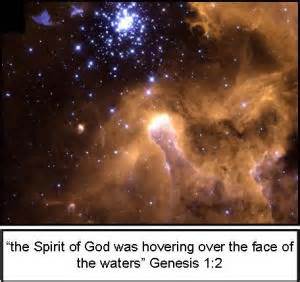
            This act of creation comes at the very beginning of things, in the very beginning of the Bible. Genesis chapter 1. “In the beginning God created the heavens and the earth. Now the earth was formless and empty, darkness was over the surface of the deep, and the Spirit of God was hovering over the waters.”

            We are starting our summer sermon series today, Re-imaging God. This series will highlight different ways of thinking about and naming attributes of our God. In this series, we will work on stretching ourselves! We will try to enlarge our image of our God.

            The words we use are important – not only the words we say, but the words we read on the printed page. The words of Scripture are all important, too. Let us take a closer look at how verses 1 and 2 describe our God. Verse 1 (the summary statement for this chapter) says that “God created.” God created the heavens up above and the earth beneath. Verse 2 describes the Spirit of God as “hovering over the waters.”

            This lean, spare description is marvelous! Can you see it? The dark heavens and the earth, formless, empty, just waiting for something to happen.

I don’t know whether you are aware, but different languages use different articles for nouns. In English, we all say “the cat” and “the dog,” and by the article “the,” they could be either male or female animals. However, many languages are structured differently.

In German or Italian, Spanish or Greek, different nouns are gendered. It’s a “male dog,” or a “female cat.” The article “the” in front of the noun changes with the word. Plus, the gender of the verbs must agree with the gender of the nouns! Any native English speaker who learns one of these languages in school struggles with the gender of the nouns and matching the proper articles and proper gender of verbs with the nouns!

It’s the same way with the Spirit of God. In the original language of the Hebrew Scriptures, “Spirit” is feminine. What’s more, the Spirit of God hovering or brooding over the waters is – according to the Hebrew language – a feminine Spirit. This verb “hovering” is also mentioned in Deuteronomy 32, where the mother eagle is protective towards her young in the nest. The “hovering” of the Spirit is a mothering activity! Here in Genesis, the Spirit of God, the Ruach ha Kodesh, is a protective, nurturing presence over the still formless waters. [1]

            Just so we do not get lost in the weeds of different languages, here’s the highlight I want us all to focus on. Whether Scripture is in Hebrew or Greek, “both masculine and feminine verbs are used for God, masculine for God, feminine for the Spirit. [And as we will see,] God’s human creation will reflect their creator as female and male.” [2]

               Seeing the nurturing, mothering nature of mammals, of dogs, cats, and humans – these mental images of puppies, kittens and babies can bring to mind gentle caring, loving encouragement, and supportive love. These are exactly the kinds of things that describe the activities of the Spirit of God! Plus, God the Father is caring, loving and supportive, too!

And what about the Good Shepherd? That’s Jesus, I want everyone to know. Remember how Jesus cares for His sheep, and how in several places in the Gospels Jesus is described as a loving, supportive Good Shepherd who guards, guides and protects His sheep.

            Isn’t it wonderful to see God as a mothering, nurturing God? Not only mighty and strong – a just, even stern, protector. Yes, God is all of those things. And, mothering and nurturing, caring and loving, too! Both/and – not either/or.

            Let us continue with verse 26: “Then God said, “Let us make humankind in our image, in our likeness, so that they may rule over the fish in the sea and the birds in the sky, over the livestock and all the wild animals, and over all the creatures that move along the ground.” God has created humans male and female. We, as humans, are created in the image of God! And, this whole chapter of Genesis 1 follows the same pattern, using pronouns of both genders.

            “We forget that Genesis 1 is a chapter brimming with goodness and blessing. In fact, God pronounces blessing on the created order three times. [God] calls creation “good” and “very good” seven times.” [3]

            We can see how the earth – the world – the universe was lovingly, joyfully created by God. And, whether we think of the feminine Spirit of God or the almighty Lord, or the Word that was in the beginning (from the Gospel of John), the preincarnate Son of God – however we consider the Triune God – all we can do is lift our hands in worship, thanksgiving and praise.

 What will you and I do with this fresh understanding of God? This understanding that transcends gender? “The creation story insists that God’s mark is imprinted on my very being. I might ignore or distort it, but the mark is always there. Whether I acknowledge it or not, I reflect something of God’s joy, God’s intentions, God’s love, and God’s beauty just by virtue of existing on the earth. I am His, and so He is mine.” [4]

            We can go out into the world, knowing that the Creator God made each of us, all of us, in the image of God. Male and female we are made, and each is in the image of God. Just as Psalm 139 tells us, “I praise you because I am fearfully and wonderfully made; your works are wonderful, I know that full well.”

            Our loving, caring, nurturing Creator God created the heavens and the earth; God created all humanity, and that includes you and me, too. Praise God! Alleluia, amen. 

@chaplaineliza

(Suggestion: visit me at my other blogs: matterofprayer: A Year of Everyday Prayers. #PursuePEACE – and  A Year of Being Kind . Thanks!


[1] van Wijk-Bos, Johanna, W.H., “Reimagining God” (Westminster John Knox Press: Louisville, KY, 1995), 72.73.

[2] Gafney, Wilda, “A Women’s Lectionary for the Whole Church” (Church Publishing, New York, NY, 2021), 142.

[3] https://www.journeywithjesus.net/Essays/20140609JJ.shtml

[4] Ibid.

Unknown's avatar

Trinity Benediction

“Trinity Benediction”

2 Corinthians 13:11-14 – June 4, 2023

            This is one of my favorite Sundays in the whole church year. Trinity Sunday! Today is a different kind of Sunday, one where we focus on a theological concept and place it in the center of our service today.

Yes, we can talk about the Trinity, and have Bible readings about the Trinity. But, the most important thing is to center our worship, praise and prayer around the indescribable reality of that most holy of holies, the God who created heaven and earth. No matter how many intellectual arguments or theological books we read, all else falls woefully short.

We have two short Bible readings today, one from the beginning of all things, from Genesis 1, and one from the end of one of Paul’s letters. We span from the beginning to a benediction. As we approach the reading from Genesis, it is the very opening of the Bible. The very beginning of the world. I will examine these verses more in depth next week, as I start our Summer Sermon Series, a Biblical view of God as Nurturer, God from a Feminine viewpoint.

 I wanted to highlight something important. When God created all things, God was there as Trinity just as much as God is here today as Trinity. But – you might ask, and I would not blame you if you did – what on earth is the Trinity? Great question! We see Trinity as One God in Three Persons, as from the marvelous hymn, “Holy, Holy, Holy.” Yet, even this soaring hymn cannot give us much information about the definition or composition of the Trinity.  

We know about our Lord Jesus, our Savior, the Good Shepherd who cares for His sheep. We have some idea about the Holy Spirit, the Holy Comforter, the one who energizes God’s people (as we heard last week at Pentecost). And, we fall down before God the Father, the Almighty, the Holy One who created heaven and earth. We can say with the host of heaven, “Holy, holy, holy! Merciful and mighty! God in three persons, blessed Trinity.” Just as I said a few minutes ago – as I do every week, after the Scripture Reading – “Glory be to the Father, and to the Son, and to the Holy Spirit. As it was in the beginning, is now and ever shall be. World without end, amen, amen.”  

            The Bible does not give a clear definition of the Trinity; it mentions it in general, several times in both the Hebrew Scriptures and the New Testament. A mystery: One God, three Persons. We can compare the Trinity to a green, growing clover with three leaves in one plant (as St. Patrick did, centuries ago). We can think of it as St. Athanasius described it, as the three stages of water, as liquid, solid (ice) and gas (steam). All water, and yet in different forms.

            Some people, younger people and small children, find it easier to grasp this challenging theological concept if we use the different names of a person. Talking about different names of a person can be more relatable. Although my children were small, they could certainly understand how my mother could be “Mom” to me, “Grandma” to them and “Sister” to my Aunt Bernice. Three different names, three different aspects, yet one person.

            Most of us, if not all of us, can relate to being called by different names. Daughter, Mom, Grandpa, Brother, Teacher, Nurse, Chaplain, Pastor. Sometimes these names are more functional, some less so. Yet, still, no matter which name is used, you are still you. It’s the same way with God. God can be called any one of dozens of names, describing different aspects and functions. [1] And, these are all various ways of understanding our huge God, just a little bit more!  

            As I have been going over several commentaries and articles about the Trinity and about our Bible reading from 2 Corinthians, this idea of God as Trinity being too immense for us limited humans to understand is one aspect that I am certainly aware of. Yes, we can get a bit closer to the idea of God in Three Persons, but never fully understand it. God is too huge.

As Rev. Janet Hunt said, “Over these last days, I have simply found myself with my eyes and heart open, hopeful to simply see the face of God, even the many faces of God, which is and are represented by the concept of the Trinity.” [2] Is it the marvelous gift of God’s very good creation we hear about in Genesis 1? Is it the holy connection which is ours through Father, Son and Holy Spirit, as described in 2 Corinthians 13?

            Perhaps, we are simply to be blessed by this theological truth, this mystery, and not worry about fully comprehending it? Just as the Father, Son and Holy Spirit are in conversation one with the other, blessed One in Three, just as the Trinity is caught up in the eternal I AM, the constant and eternal present tense. How can we understand it, much less explain it, to come anywhere close to God’s reality or satisfaction?

            The apostle Paul shared these words with his readers at the end of this letter. Perhaps he did not understand it either! Yet, he spoke of the Trinity in his benediction with warm, loving words. “12 Greet one another with a holy kiss. 13 All God’s people here send their greetings. 14 May the grace of the Lord Jesus Christ, and the love of God, and the fellowship of the Holy Spirit be with you all.”

            Perhaps this prayer by my friend Rev. Jo Anne Lesco Taylor can add another view to the different understandings I have put forth today, to close this meditation on the Trinity. I hope and I pray these words may bless us all.

Holy One in Three and Three in One, Let me dance with you.

I may not understand how you can be three distinct persons living in unity,
how you can sing in unison and harmony at the same time,
But I do not need to understand in order to trust your Presence.

I need not Know in order to Love as you love, as you open the circle to me
and invite me into your dance, into your grace,
into your wholeness and holiness, into your love.

Let it be so. Let me dance with you, God. Amen. [3]

@chaplaineliza

(Suggestion: visit me at my other blogs: matterofprayer: A Year of Everyday Prayers. #PursuePEACE – and  A Year of Being Kind . Thanks!


[1] http://worshipingwithchildren.blogspot.com/2014/05/year-trinity-sunday-first-sunday-after.html

[2] https://dancingwiththeword.com/the-face-of-god/

[3] https://pastorsings.com/2023/06/03/a-prayer-for-the-eve-of-trinity-sunday/?fbclid=IwAR2DW8vuOxwd8OzkZnSS1gD9-w9R4AxHMb66tpWUycbaf2_Ou3G9ZAL-1ZM