Unknown's avatar

God Knows Us Full Well

“God Knows Us Full Well”
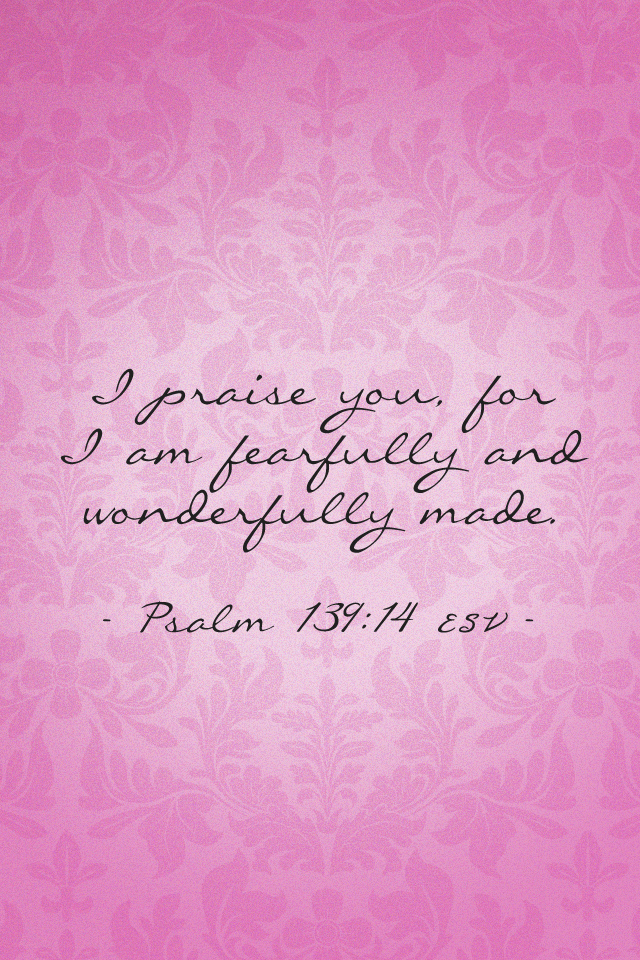
Psalm 139:1-6, 13-18 (139:14) – September 7, 2025

If you look at the news online, or on television, or listen to the radio or podcasts, many people often look for knowledgeable experts. Experts in their field or craft. People who know things. Think about it: cooking shows have culinary experts, home repair shows have building experts, news reports have experts in various fields, talk shows have behavioral experts to help solve the relationship problems of society, even newspapers have horoscopes written by psychics who are supposedly experts in astrology. Expert opinions!

            This craving for information, for people who know about things … I am afraid that I get sucked right into it. I go to people who are experts in their fields, and try to pick their brains and get what information I can, so I can masquerade as a sort of an expert, too. I like to think I know about things. And, I do. I know lots of things. I know lots about how to be a chaplain, and about music, and about the Bible, but that doesn’t hold a candle to the amount God knows! 

            God knows—now there is an expert opinion. Let’s look at the scripture reading for today. “O LORD, You have searched me and known me, You know when I sit down and when I rise up, You discern my thought from far away.” That truly is knowing. God knows every part of me. King David wrote this psalm many centuries ago, and its message still strikes home and hits my heart with penetrating directness.

            These verses from this psalm are among the most direct and poetic description of God’s omniscience in the whole Bible. Omniscience. Knowing absolutely everything. That’s a pretty scary thought, if we sit down and think about it.  It’s a good thing that God is loving, caring and merciful. We just have a shadow of understanding about how God knows us, yet it’s a loving, caring and intimate knowing. The omniscience of our knowing by our heavenly Father.

            When a word is repeated in a passage in the Bible, that is a way of underlining that word, indicating that word is particularly important. The Hebrew word “yada,” or “to know,” appears in today’s reading four times. The emphasis of this rich biblical word, this “concept of ‘knowledge’ is a critical element of meaningful relationship. We are to know God, just as God knows us.” [1]

            When you and I contemplate God, the totality, the tremendous experience of God’s knowledge is just “too wonderful” for us! That is us, as limited humans, trying to understand and contemplate the Lord. That is the eternal God who created the heavens and the earth! We read here in Psalm 139 that God’s capacity for knowing is utterly beyond comprehension, so far beyond us limited humans that we feel like we are reaching up to touch the moon, much less the stars in the sky. King David said, “so high that I cannot attain it,” in verse 6. And yet – God wants to be known! Known by us.

            This Sunday is when the church in Scotland celebrates the beginning of the season of Creation, when we celebrate God creating the world, the galaxy, the whole universe. As we contemplate God’s vast creative power, let us consider the creation of a single human life. Our psalmist considers it, too! Verse 13 says, “For you created my inmost being; you knit me together in my mother’s womb.” This is a glimpse of the psalmist’s understanding of the nature of God, of knowing God!

“This points to a God whose love for God’s own creation extends to concern, since this human creation is finite and therefore not perfect. Yet, it does not lessen but instead heightens the amazing and magnificent artistry of God’s creation. Indeed, this recognition becomes reason for praising God and affirming the self’s ultimate worth in the sight of God (v. 14).” [2]

God knows. God knows my circumstances, knows whether I’m sitting or getting up or lying down. God even knows what I’m thinking, before I can say a word. Talk about being an expert! The Lord knows my psychological makeup, my emotions and my heart, so much better than I do myself.

            It’s a good thing to get to know ourselves. It’s a worthy study, and one that would be useful in helping us to understand others. I like to tell myself that I know myself pretty well. I’ve seen a therapist for a number of years who has helped me come to understand my own thoughts and emotions better. He’s helped me to understand how I relate to others and why I act and react in certain ways. At times, after years of therapy, I may fancy myself somewhat of an expert on myself. But in reality, I am not. Sometimes I may think I am, but I’m just fooling myself.

            God knows everything about me, too. Everything. God knows all the flaws, all the rough spots, every praiseworthy feature as well as everything that isn’t. And–here’s the amazing part–God loves me anyway! Even with all that intimate knowledge about every single aspect of our character as well as our character flaws, God loves us anyway!

And, it isn’t just all about me. God knows each of us in the same way. He knows each one of you, intimately, too. The Lord has searched you and known you, and is acquainted with all your ways. And, God loves each of us, even more intensely than we can possibly imagine.

            Sometimes, certain authors have a way of capturing an idea in a special way. It’s that way with Max Lucado, a recent Christian author for both children and adults. I know I have referenced this before, and it’s just so good that I have to quote it again! This is a quote from Prayer: A Heavenly Invitation, which describes just the idea I’ve been trying to communicate.

            ”If God had a refrigerator, your picture would be on it. If He had a wallet, your photo would be in it. He sends you flowers every spring and a sunrise every morning. Whenever you want to talk, He’ll listen. He can live anywhere in the universe, and He chose your heart. And the Christmas gift He sent you in Bethlehem? Face it, friend. He’s crazy about you.” [3]

            Friends, God knows all about us, and He loves us anyway. What else can we do but fall on our knees before God in praise, thanksgiving and adoration? Thank God for His boundless love towards you and towards me.

            Alleluia, amen.

@chaplaineliza

(Suggestion: visit me at my other blogs: matterofprayer: A Year of Everyday Prayers. #PursuePEACE – and  A Year of Being Kind . Thanks!


[1] https://www.workingpreacher.org/commentaries/revised-common-lectionary/second-sunday-after-epiphany-2/commentary-on-psalm-1391-6-13-18-2

[2] http://www.theafricanamericanlectionary.org/PopupLectionaryReading.asp?LRID=27
[3] Prayer: A Heavenly Invitation – Max Lucado

Unknown's avatar

Repenting Hearts

“Repenting Hearts”

Jer 17-9 heart deceitful, script

Jeremiah 17:5-10 – July 31, 2016

I just came back from my study leave at the New Wilmington Mission Conference. Wonderful conference, again. (It always is!) I sat in bible class, and mission hour, and morning and evening meetings all week, learning about the marvelous ways believers are reaching out, locally and all over the world.

However, I also learned about many, many places in the world where believers are persecuted and in danger. Where the government has tight control, or where different groups are fighting. Where believers, especially church leaders, have been imprisoned, even killed. Countries like Syria, Egypt, South Sudan, Iraq; parts of Nepal, Pakistan, Indonesia, Thailand, and Vietnam. One of our bible passages for the morning is from Jeremiah 17. It tells us: “The heart is deceitful above all things and beyond cure. Who can understand it?”

Humans can be particularly inhuman, sometimes. Human hearts can be deceitful above all things, sometimes.

We are continuing with our summer sermon series from the United Church of Christ’s Statement of Mission. I am sad to say that the sentence of the week is: “Empowered by the Holy Spirit, we are called and commit ourselves: To repent our silence and complicity with the forces of chaos and death.”

Natural humans without God can be inhuman. They can treat each other abominably. Not only through evil deeds like fighting, destruction and war, but also through general chaos and death—just as our sentence of the week from the Statement of Mission says. Many people want power and control. Many people strive to maintain power and control at all costs. They trust in humans’ own strength, and Jeremiah says their hearts turn away from the Lord.

What an awful thing! To have people in control—police, mayor, other government officials—whose hearts are completely separated from God. These people are controlled by the forces of evil, of chaos and death, according to the prophet.

Yes, these verses contain poetic language about humanity. As one commentator says, “To ancient peoples, the heart was not only the center of emotions, feelings, moods and passions, but also of will and motive power for the limbs. The heart discerned good from evil; it was also the center of decision-making. Conversion to God’s ways took place in the heart. In verse 9, it is said to be where evil begins.” [1]

At the mission conference this week, we had a chance to put our words into action.  Interested people had the opportunity to sign a petition to request Secretary of State John Kerry to intercede on behalf of the people of South Sudan, and to allow humanitarian aid to come in to the regions of the country under conflict and war. That is a concrete way to come up against the forces of evil, of chaos and death, and to show the love of God in a tangible way.

Evil. Chaos. Death. Just what the sentence from the Statement of Mission for today says. Natural humans—humans without God—have deceitful hearts, hearts that turn from the Lord. Our scripture passage for today tells us: “That person will be like a bush in the wastelands; they will not see prosperity when it comes. They will dwell in the parched places of the desert, in a salt land where no one lives.”

Well, I am not a deceitful person, an evil person. I know God. In fact, God lives in my heart! Where can I go wrong?

One problem there: according to our Statement of Mission, we are to “repent our silence and complicity with the forces of chaos and death.”

You mean, being silent can be a problem? Maybe, even a sin? The statement tells all of us to repent. That certainly sounds like sin language. What is more, the statement mentions “all of us.” Not “some,” not “most,” but “all.”

            Albert Einstein said, ““If I were to remain silent, I’d be guilty of complicity.” Can anyone relate? Horrible things happen every day. People who live next door, or down the street, or other places nearby find themselves in a difficult situation. They can be seen as vulnerable. Observers can turn out to be ostriches, hiding their heads in the sand. Hoping against hope that the problems of domestic abuse and its connected trauma might just go away.  Or, when there is racial tension in your side of town, to do nothing. In fact, to say nothing, to look the other way, and to stand on the sidelines with your mouth shut.

            What is wrong with that picture? That kind of behavior telling us what the sentence from the Statement of Mission tells us. The deceitful people who actively do terrible things to others? Are they at all like the quiet people who shut their eyes to injustice, or pretend that violence, bitterness and inequity never happen…at least, not in my world. Not on my block. Not in my part of town. Something to think about.

            This past week, I had the joy of learning about mission aspects of the Lord’s Prayer from a coworker for the World Mission Initiative at Pittsburgh Theological Seminary, Rev. Jen Haddox. Yes, the Lord’s Prayer is prayed all over the world. In a multitude of languages, and numerous settings. This prayer can cross boundaries—just like believers. Believers can, with God’s help, cross the boundaries of unbelief and of chaos. Believers can bring the love of God into an evil and traumatic situation.

            Jen Haddox spoke about areas of Vietnam, where the government has tight control over everything—both everyday life in the villages and towns, and over the house churches and Christian leaders. And, some believers live in fear of government oppression and even prison. Yet, as Jen said, believers in Vietnam have a joy and a freedom that overcomes the forces of chaos and death.

            In both bible passages this morning, both passages give us the good news from God. Both passages have a compare and contrast section: natural humans, without God, and humans who strive to follow God. We can see what can happen when God intervenes.

Yes, we are empowered by the Holy Spirit, just as the Statement of Mission says. And, yes, we can pray for believers throughout the world, as well as in our backyard. We can pray for South Sudan, for Vietnam, for other areas of war and conflict. Remember, conflict and trauma can be anywhere. Not only physical conflict, but psychological and emotional, too. Here in the Morton Grove area, and in Chicago, as well as far away in large parts of Africa and Asia.

The prophet says: “But blessed is the one who trusts in the Lord, whose confidence is in Him.” We can bring that blessing to those under the forces of chaos and death. Yes, we need to repent our silence in the face of evil. We can tell God we are sorry for our silence, and strive to bring words of blessing and peace into situations of trauma and chaos.

What an opportunity to strive to become believers who transcend boundaries! Praise God for the chance to spread the love of God into lives of people near and far. Through prayer for faraway places, and through tangible means like food from the Maine Township food pantry for those who are nearby.

Won’t you join in the mission of God? Let’s all strive to pray, go, and do, in the name above all names, the name of Jesus. Alleluia, amen!

[1] Chris Haslam, Anglican Diocese of Montreal. http://montreal.anglican.org/comments/archive/cpr06m.shtml