Unknown's avatar

Hosanna to the Messiah!

“Hosanna to the Messiah!”

Luke 19:28-40 (19:37) – April 13, 2025

            Have you ever been at a really big celebration? I mean a public celebration—like a ticker-tape parade, a celebration of a world championship, or the visit of an A-list celebrity? Something really, really big?

            From all the descriptions of the Palm Sunday Triumphant Entry in all four Gospels, that’s kind of what we are looking at today in our scripture passage. The celebration is really big, the Rabbi Jesus was a big-name celebrity, and this entry into Jerusalem was a first-century type of a ticker-tape parade. Except with palms!

            Let’s take a closer look. Here’s the situation: It’s almost Passover, the most important religious observance of the year. A great number of faithful Jews from near and far come to Jerusalem, in pilgrimage, in commemoration of the Exodus event. 

Jesus comes, too. He publicly, intentionally enters Jerusalem, even though the religious leaders are not very pleased with Him or what He has been doing for the past few years. Even though Dr. Luke does not mention the prophecy in the book of Zechariah (which the other Gospels do), Jesus’s disciples must have known about the prophecy of an entry into Jerusalem riding on a donkey. This was clearly a scene with “Messiah” written all over it.   

And Jesus does not sneak into the city, all hush-hush. No! He comes in with a parade! With crowds of people waving palms and shouting “Hosanna!” and “Blessed is the one who comes in the name of the Lord!”

            What is the meaning of those cries of “Hosanna” and “Blessed is the King?” If we look at Psalm 118, we’ll find these words written by the psalmist. This was the usual Passover greeting one person would give another, except with the addition of the word “King.”  Just to let you all know, many of the crowd in Jerusalem on that Palm Sunday morning understood what they were quoting—they were intentionally welcoming someone they hoped would be their Messiah, their King! Someone who would save them from the awful situation they were in.

            There was a disconnect between the people and their limited understanding, and what Jesus actually was going to do. But I’m getting ahead of myself by rushing on to later in Holy Week. We are still here on Palm Sunday. And everyone is still excited to welcome the Rabbi Jesus—their hoped-for Messiah—into the city. They are hoping He will save them from the Romans and maybe, possibly, become their King. Except they had an earthly King in mind.

            But let’s read on in our scripture passage for today. Luke makes another striking statement. He starts to mention “peace.” “Peace in heaven, and glory in the highest!” What on earth is Luke mentioning “peace” for?

This sentence is an echo of the Gloria in excelsis Deo that the angels—the heavenly host—sang at the birth of the baby Jesus, several decades before. I know the heavenly host gave the shepherds good news of great joy, but wouldn’t that be good news for anybody? I know that was good news at the time Jesus was born, but isn’t that good news for today, as well? Peace? Glory in the highest? The difference is that at Jesus’s birth, it was peace on earth. Now, the crowd is saying “Peace in heaven.”

            So when Jesus enters Jerusalem, the crowd prays for peace in heaven. But the coming of Jesus causes a division. It causes anything but peace on earth.

            The theologian Tom Mullen makes this statement about his denomination (Society of Friends or Quakers): “They work for peace—and if you really want to cause conflict, you work for peace.” [1]  So it was for the Rabbi Jesus—the Messiah Jesus riding into Jerusalem. For all that Jesus wanted to bring peace, He and His message created division, tension, and crisis—as seen by the violent reaction of the religious leaders.

            I wonder about this tension, this violent reaction, this great desire for peace, yet a creation of division, tension and crisis. I know I have mentioned the Rev. Janet Hunt many time before in my sermons. She likewise ponders as we begin Holy Week, “If Jesus were to ride into my town today, what would be His means of transportation? What signs and symbols would speak today?” [2] The donkey was not the choice for a conquering King entering His capital city! The donkey was definitely a subversive choice for the Messiah, the Rabbi Jesus.

            I am not even going to explore what signs and symbols would display a Kingly entrance into a city today, except to say a royal entry usually entails a large police presence, a security detail, and lots of SUVs and a limousine for the royalty to ride in. Not so for the Rabbi Jesus!

Thank God, Jesus does not do that! He is more powerful than any division, any tension, any crisis. He entered the city not as an earthly King, not as a conqueror, not to set up a nationalistic empire, but as the True Redeemer of Israel. And not of just Israel, but also of the whole world. This Holy Week is where all of the prophecies focus to a fine point, and reveal the Rabbi Jesus as not only the Messiah and King, but also as the Suffering Servant. The Lamb of God, sent to take away the sins of the world.

            As we remember this Passover time, this Holy Week, we can thank God that our Lord Jesus did enter Jerusalem. As a King, as a Messiah, yes! But also as our Redeemer and Savior. Praise God, Jesus is our Redeemer and Savior, just as much as He was Redeemer and Savior for that crowd in Jerusalem on that Palm Sunday. In the first century, Jesus came to save His people from their sins. Praise God, He came to save us, too! Amen! And amen!

@chaplaineliza

(Suggestion: visit me at my other blogs: matterofprayer: A Year of Everyday Prayers. #PursuePEACE – and  A Year of Being Kind . Thanks!


[1] Mullen, Tom, Laughing Out Loud and Other Religious Experiences, (Friends United Press, Richmond IN: 1989) 50.

[2] http://words.dancingwiththeword.com/2016/03/the-donkey-subversive-choice.html

Unknown's avatar

Who Comes in the Name of the Lord?

“Who Comes in the Name of the Lord?”

Mark 11:1-11 (11:9) – March 24, 2024

            Think of a time when you were expecting – anticipating – something really big. And, this really big thing was by no means 100 percent certain of ending well. Maybe you (or I) were facing a major interview at work, a huge exam at school, or even a really important speech. I can just imagine us being anxious, worried, with a knot at the pit of your – my stomach, or how jumpy we felt. The waiting time and expectation of that really big event was palpable! [1]

            This feeling is not exclusive to you and to me. No, many, many people have felt this way before! I wonder whether the disciples felt at all like this during the time that they were helping their Rabbi Jesus get everything ready for the entry into Jerusalem? As a subversive Rabbi and leader, Jesus knew His presence in the city was a grand challenge to the Jewish leaders. And yet, Jesus was going to walk right into Jerusalem with His eyes wide open.      

            Mark tells us in a straight forward way what happened that day. Verses 7 through 9: “When they brought the colt to Jesus and threw their cloaks over it, he sat on it. Many people spread their cloaks on the road, while others spread branches they had cut in the fields. Those who went ahead and those who followed shouted, “Hosanna!” “Blessed is he who comes in the name of the Lord!” 10 “Blessed is the coming kingdom of our father David!” “Hosanna in the highest heaven!” An impromptu grand entrance for the Rabbi Jesus; a parade, even!      

            Look at this entrance through the lens of anxiety and wonder! For, that certainly was what many people in the crowd were feeling. I suspect some of the disciples were feeling that way, too! As commentator Scott Hoezee says, “What Palm/Passion Sunday celebrates and observes is not simple, it is not neat, tidy, or straightforward.  The air fairly crackles with electricity as the characters in this grand drama sense that something big is up.” [2]

          Let’s look at this from a different direction. Here’s the situation: It’s almost Passover, the most important religious observance of the religious year. A great number of faithful Jews from near and far come to Jerusalem, in pilgrimage, in commemoration of the Exodus event. 

Jesus comes, too. He publicly, intentionally enters Jerusalem, even though the religious leaders are not pleased with Him or what He has been doing for the past few years. Jesus’s disciples must have known about the prophecy of an entry into Jerusalem riding on a donkey. This was clearly a scene with “Messiah” written all over it.  

Traditionally, when a conquering king comes home from war, he is seated on a horse, and the finest horse in the king’s stables, at that! But here, where Jesus proclaims Himself a king of peace, “he rides a donkey and enhances that statement of peace by choosing an unridden colt. The words that were spoken come from one of the enthronement psalms, used when a new king was coming into power. Hard to miss, really.” [3]

Just imagine if you and I were witnesses to our Lord Jesus and His triumphal entry to Jerusalem. I am sure that there were many people present in that crowd who only had a faint idea what was going on. What would you and I do if we were there? Would we be observers only, merely watching the parade? Would we be cheering the Rabbi Jesus as He entered Jerusalem? And, what about the reference to the psalm that people shouted? A psalm that was quoted when a new king took the throne? How many of the crowd really believed Jesus was a new King, a coming Messiah? Lots of questions we have, indeed!

There was a disconnect between the people and their limited understanding, and what Jesus actually was going to do. But I’m getting ahead of myself by rushing on to later in Holy Week. We are still here on Palm Sunday. And, many in the crowd are still excited to welcome the Rabbi Jesus—their hoped-for Messiah—into the city. They are hoping He will save them from the Romans and maybe, possibly, become their King. Except they had an earthly King in mind.

On second thought, I will go forward into Holy Week. This Triumphal Entry is the culmination of Jesus and His time on Earth, of all His time as a human, as God-become-Man in the Incarnation. Think about it: the world, the very cosmos itself, was on the brink of the most momentous event since the Big Bang, with the very Son of God about to be handed over to the authorities. Betrayed, abused, murdered. The very hosts of heaven – and maybe of hell for all we know – were quite literally holding their breath to see this all play out. [4]

            You and I have the luxury of 20/20 hindsight, of course, looking at an event so clearly reported in the historical and Biblical record. But, if a grand procession welcoming the Messiah happened today, would people still be waving palm branches? Would you and I?

This Holy Week is where all of the prophecies focus to a fine point, and reveal the Rabbi Jesus as not only the Messiah and King, but also as the Suffering Servant. The Lamb of God, sent to take away the sins of the world.

            As we remember this Passover time, this Holy Week, we can thank God that our Lord Jesus did enter Jerusalem. As a King, as a Messiah, yes! But also as Redeemer and Savior. In the first century, Jesus came to save His people from their sins. Just as much as He was Redeemer and Savior for that crowd in Jerusalem on that Palm Sunday, Jesus is our Redeemer and Savior, too. Praise God, He came to save us, today, too! Amen! And amen!

@chaplaineliza

(Suggestion: visit me at my other blogs: matterofprayer: A Year of Everyday Prayers. and  A Year of Being Kind . Thanks!


[1] https://cepreaching.org/commentary/2018-03-19/mark-111-11-2/

[2] Ibid.

[3] https://www.umcdiscipleship.org/worship-planning/depths-of-love/palm-passion-sunday-year-b-lectionary-planning-notes/palm-passion-sunday-year-b-preaching-notes

[4] https://cepreaching.org/commentary/2018-03-19/mark-111-11-2/

Unknown's avatar

Your King Comes to You

Matthew 21:1-11 – April 9, 2017

Jesus Palm Sunday - Giotto di Bonde, Entry into Jerusalem 1304-06, Fresco, Cappella Scrovegni Arena Chapel, Padua

“Your King Comes to You”

Has anyone here ever been at a really big “welcome home” celebration? I am thinking really, really big! Like, after the Cubs won the World Series last fall, and they returned to Chicago in triumphant victory. Or, after the Black Hawks, the White Sox or the Bulls won their championships. Has anyone experienced the joyful, expectant feeling of the crowd? The wild cheering and celebration as the focal point of the parade came into view?

Imagine that level of celebration, and then add an additional layer. The country of Israel had been under the heel of various world powers for several centuries. The Roman government was the current dominating overlords, and an ever-present occupying force. By Jesus entering Jerusalem in the way He did, He fulfilled a well-known prophecy from the Hebrew Scriptures. In addition, by doing this He was claiming the mantle of Messiah, the Anointed One of God. As Zechariah said, “Tell the city of Zion, ‘Look, your king is coming to you! He is humble and rides on a donkey.”

What about the crowd gathered there in Jerusalem, for the Passover holiday? Emotions run high when you are in the midst of a crowd. Higher highs, lower lows, all kinds of extremes. As Rev. Adam Copeland said, “Whether they are for sport, political protest, or public worship, gathering with thousands inevitably changes our mood and actions. I have never felt as alone as in a rival team’s stadium filled with thousands of home-team fans. I rarely feel as important as when I’ve gathered with others to protest unjust laws or call for social action. I get Goose bumps when I’m able to recite the Lord’s Prayer with a few thousand other worshipers.” [1]

What was the crowd looking for from Rabbi Jesus? This Messiah, Anointed One?    

A companion question: what were the disciples looking for from Jesus? From their Rabbi and leader, whom they had been following for months, even years? I remind everyone that there were more than just twelve men following after Jesus. There were more. Maybe Peter’s wife, maybe others’ wives or sisters. Women, other men, maybe even some children and youths. Many of these had been faithful in following Jesus for some time, and they were true believers. Faithful followers.

St. Ignatius of Loyola was a man of deep prayer. He instructed many in the way of deep, significant prayer. He had a special way of praying, which can also be used for reading the Bible. Ignatian spirituality, prayer and bible reading have been adapted from his instructions.

St. Ignatius would have us put ourselves into the biblical scene. Imagine yourself right there, on that Palm Sunday morning. I invite you to choose a place to stand: either among the crowd, observing, cheering; or among the disciples, close in to Jesus and the donkey. Perhaps even take the donkey’s point of view! Let us all immerse ourselves into the narrative. Hear the raucous noises and roar of the crowd. Feel the jostling shoulders as we jockey for position, to get the best view of the parade. Because, that is what it is! A procession! A joyful entrance into Jerusalem, the historic capital city of King David!

Can you feel the energy of that immense crowd? Jerusalem was full to bursting! People of Jewish ancestry had come to Jerusalem from all over the known world, to commemorate the Passover holiday. And, here were people welcoming this Messiah, this Anointed One, into the city like a king.

Can you feel the emotions of your fellow crowd members? What expectations are rising to the fore? Some desperate to throw off the heavy yoke of the Roman occupation, and so are delighted to see someone, at last, taking up the mantle of the Messiah! To call together the men of Israel and lead the Jewish army to victory! Some, I am sure, leery of this upstart Rabbi, and wondering how far He is going to get before the Romans scare Him off. And others, simply caught up in all the excitement of the moment, welcoming this Holy Man, this Miracle Worker, into the city of Jerusalem.

What were the expectations of those there, on that Palm Sunday morning? Sure, as our Gospel reading tells us, there was a large crowd around the city gate, ready to cheer and wave and make noise. The noise and celebration put the whole city into an uproar, turning things inside out and upside down.  In fact, the Greek verb in that phrase, “uproar,” is the same word used for an earthquake. Jesus shook up the people of Jerusalem, and He certainly stirred up the religious leaders and priests.

Let us fast forward, to the present. What are our expectations, right here, right now? What are we to do with this Jesus, riding in on a donkey?

Sure, there are many people in churches across the world today who are excited to celebrate another Palm Sunday. A highlight of the liturgical year, the beginning of Holy Week. Some are caught up in the pageantry and celebration. Others are content to wave their palms and observe things from the sidelines. Many, even, feel the solemn beginning of that sorrowful Holiest Week of the liturgical year. But, is there more?

The Triumphal Entry into Jerusalem was so typical of Jesus. He did not blindly accept these short-sighted expectations that were foisted upon Him. Instead, Jesus knew who He was, and did not need to clutch any lofty or power-hungry or mean and angry persona to Himself. No, Jesus entered Jerusalem knowing exactly who He was. God’s much beloved Son, the Messiah, the Anointed One of God. He had all that kingly authority already.

Let us remind ourselves exactly why Jesus had come into the world, exactly why He began His preaching, teaching and healing ministry. He came preaching forgiveness and mercy. He came teaching love and reconciliation. He came healing people from physical, emotional, psychological and spiritual diseases. Jesus came to give us life, and life abundantly!

But, today, Jesus’s voice gets drowned out by countless distractions. “Choked as we are by all of our distractions and tranquilizers—our cars, our houses, our 60-inch televisions and 6-inch computers, our smartphones and gizmos and gadgets, all of our conveniences and drugs and entertainment—we are likely to lose sight of the gate into heaven.” [2]

So often today, many people’s attention gets pulled away from things of God. Some are too busy to see Jesus. Some are too worried to listen to His voice. Some today couldn’t even care if Jesus lived or died.

Let’s focus on people within the church, worldwide. Some celebrate and wave palms on Palm Sunday and are content to let the whole rest of Holy Week slide right by without it registering on their hearts, then slide right into the following week’s celebration on Easter Sunday without a second thought. [3]

Jesus rides into our midst today, humble and seated on a donkey. He asks us the pointed question: what is it we seek in Jesus? Have we lost sight of the forgiveness, mercy, love and reconciliation He offers? He offers it to us, freely.

We can ask our Lord Jesus to enter our hearts, and to help us to lay at His feet all that we have and are today.

God willing, may we say “blessed are You who comes in the name of the Lord.”

[1] http://www.huffingtonpost.com/rev-adam-j-copeland/palm-powered-protest_b_5106331.html

“Palm Powered Protest,” Adam Copeland, ON Scripture, Odyssey Networks, 2014

[2] https://www.umcdiscipleship.org/worship/lectionary-calendar/palm-passion-sunday1; The Preaching Notes are written by Dawn Chesser, Director of Preaching Ministries, Discipleship Ministries, dchesser@UMCdiscipleship.org

[3] http://www.workingpreacher.org/craft.aspx?post=1546 ; “To Be Continued…” David Lose, WorkingPreacher, 2011.

Unknown's avatar

Love, Humble and Obedient

“Love, Humble and Obedient”


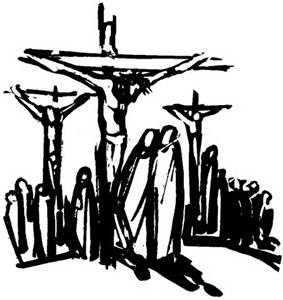
crucifixion sketch

Luke 19:37-40 – Phil 2:8 – March 16, 2016

Have you ever watched a television show or a movie where there are two different stories going on at the same time? A few scenes of the first story, and it gets to an exciting or a suspenseful part; then the show switches to the other story. The second story goes on for a bit and just gets interesting, and suddenly the show changes back to the first story.

This sermon is going to do just that.

Like many stories, the first story we look at today does not start at the beginning. Instead, it interrupts in the middle of the action. Rabbi, or Teacher Jesus, wanted to enter Jerusalem on a Sunday morning. This was a special week. Observing, believing Jews from not only all over Israel, but from all over the world had come to Jerusalem to celebrate the Passover feast.

People were really starting to talk about this Teacher Jesus! Some people said He was the prophet Elijah who had returned. Others said He was John the Baptist raised from the dead. Even some in Israel said this Jesus might be the Messiah, the Anointed One of God.

So, when Jesus planned His entrance into Jerusalem that day, He knew what people were saying. He wanted to show everyone—the friendly people in the crowds as well as those who doubted or actively disliked Him—that He was the Messiah. Jesus entered Jerusalem on the back of a donkey. He did NOT come in like a conquering king, on a white horse. No, He came in as the Anointed One of God. Humble, and riding on a donkey.

Let’s consider what the Teacher Jesus had been doing for a number of months. Jesus’ words and teaching had authority. He preached with power, which was different from the way the scribes and teachers of the day preached. He healed people, restored sight to the blind and made lame people walk—all of which showed God’s mighty power. And if this wasn’t enough, the Teacher Jesus even forgave sins! He certainly appeared to be from God.

We’re going to shift scenes now. Cut!! Now—instead of looking at a situation two thousand years ago, we are going back before the universe was created. Before God spoke and called anything at all into being. Before the beginning of all things, there was GOD. God the Father, God the Son, and God the Holy Spirit. There was community and fellowship within the Godhead even before anything else was created in the whole universe.

I’ll focus on God the Son. Fully God. He was always in existence. There never was a time when He was NOT. When God the Son took on humanity, when He became Jesus at Christmas two thousand years ago, the human Jesus had an actual, physical birthday. But God the Son always was, always is and always will be. It’s a mystery! I can’t understand it, much less explain it. This is a part of the God we worship and celebrate.

Let’s compare the two stories now. Take God the Son before the foundation of the world, all-powerful, all-knowing. Take Jesus the Teacher in Jerusalem, teaching, preaching, healing, even forgiving sins! Compare them side by side. These are all ways that we can describe God.

Jesus, as He comes into Jerusalem, is greeted by crowds of people waving palms and shouting ‘Hosanna!’ They quoted Psalm 118, ‘Blessed is He who comes in the name of the Lord!’ This is a clear sign of what the crowds who greeted Jesus on that day were thinking. This was the way the people of Jerusalem had greeted the conquering king Jehu several centuries before. They greeted Him as Messiah, the Anointed One, who comes in the name of the Lord.

Consider God the Son, before the foundation of the world. The Apostle Paul tells the believers in the city of Philippi that He set aside His God-ness. He laid it aside. Jesus emptied Himself, willingly, of all things related to being God, to become Man. After being in on the creation of the heavens and the earth, after speaking the world into existence, after being all-knowing and all-powerful, God the Son became a baby. Think of a baby you know, a cute, cuddly, helpless little baby. God the Son willingly became like that.

We all know the Christmas story. Jesus was born in Bethlehem in a barn to a young, homeless couple. Jesus was Jewish, from Israel, an oppressed people-group, in an occupied country. Jesus was marginalized and shunted aside from the very start.

Think about Israel in the first century—occupied territory! People oppressed, terrorized by not only the Roman soldiers, but also by Herod’s soldiers. Looking through history, we can read the fear of occupation and domination from first-person, historical accounts. It doesn’t matter whether it’s a letter written during the time of the Underground Railroad, a diary from Nazi-occupied Holland or a personal account from a victim of human rights abuse from Guatemala today. Horror. Violence. Oppression.

God the Son breaks into this mess of a world. God over all the universe, the Word made flesh, became a baby named Jesus. He became powerless, most vulnerable, least of all. In this fallen world, where power and influence are everything, Jesus came to be with us as a helpless baby.

But I’m not done with the story—yet. Or should I say, the stories? Plural.

Jesus the Teacher could have hidden Himself. He could have just laid low for years, taught quietly, stayed on the outskirts, far away from large towns. But, NO. Jesus did just the opposite. Jesus decided to come to Jerusalem, where there were large crowds, many Jewish leaders, and also many Roman soldiers. He walked into this situation with his eyes wide open.

Some people—I’m thinking of the Pharisees, the Sadducees, the scribes and other temple leaders—were awfully uneasy. For them, Jesus was their worst nightmare. Dr. Luke tells us in chapter 9 of his gospel that Jesus set his face to go to Jerusalem. Our Lord Jesus made up His mind to travel that path. Certain death awaited Him. But He determined to go, nevertheless.

Let’s see what the Apostle Paul says in Philippians 2. Jesus is described as humbling Himself. Humble? The people in Jerusalem that Palm Sunday morning certainly didn’t expect a humble, quiet guy. No! They expected someone who would take charge, rally the people, and mount a rebellion! They wanted someone who would turn things upside down!

Think about the world the Jews were living in. They were subjects of the Romans, the most powerful nation in the world. So the Jews did not like this oppression much at all. People would pop up, claiming to be the Messiah, the Anointed One, and attempt to rally an army to himself. These attempts never went anywhere. The Romans quickly put an end to any rebellion.

When the Apostle Paul wrote about the person and work of our Lord Jesus, he uses terms familiar to his audience. Paul communicates it in simple, matter-of-fact words. Listen to just a part: Jesus “made Himself nothing, taking the form of a servant, and coming in human likeness.” Even at that Passover dinner on Thursday night, Jesus did not lord it over the disciples. He washed their feet. He did not seek to dominate others, like the Romans did. So many people want power over others. Instead, Jesus wanted to serve. Just like the Apostle Paul describes here in Philippians, Jesus took the form of a servant. He humbly, willingly and lovingly decided to serve others.

Wow. I repeat, WOW.

Let’s get back to the story. Back to Jerusalem. While Jesus went through the turbulent events of Passion Week, with all of the confrontations and discussions, and especially Passover dinner on Thursday night, we see only a portion of the events of this week. Almost the highlights of the week, what you might see if you were watching a video or a television show in two parts, and at the beginning of the second part they showed you the story so far, up to this point.

Why did Jesus come to earth, empty and humble Himself? He did it for us. We can’t understand it. It is pure love from Jesus. And, we can praise God that Jesus did this, for us.

Remember the people on that Palm Sunday morning, the ones who said ‘Blessed is He who comes in the name of the Lord!’ They were looking for a savior, a conqueror. Jesus was a savior, He was a conqueror, all right. Just not in the way everyone else expected.

Paul tells us that Jesus became obedient, obedient to death, even the death of the cross. Jesus could have turned away. Jesus could have stepped aside. But He didn’t. We even hear it in what Jesus prayed in the Garden. He said to His Father, “Not My will, but Thine be done.” He became obedient unto death, even death on a cross.

Jesus knew that some of that crowd who cried “Hosanna!” on Palm Sunday morning would be screaming “Crucify Him!” on Good Friday morning. On Palm Sunday morning, He entered Jerusalem. Jesus was preparing Himself to be obedient to the point of death, even death on a cross, one of the most horrible kinds of execution ever thought of by anyone, anywhere.

We can ask . . . WHY? Why did the God over all the universe, the Creator of the heavens and the earth come down from heaven and die a criminal’s death on a cross? It was LOVE.

Jesus shows us a love we could not resist, that melts our hearts. This is what causes us to fall at His feet in worship and praise. As the final step, the culmination of His amazing love for us, Jesus has been raised from the dead and exalted to the right hand of God the Father! Jesus receives the name which is above every name. Jesus Christ is Lord. Did you hear? Do you know? At the name of Jesus every knee should bow! Every knee of those in heaven, and those on earth, and those under the earth. Every tongue shall confess that Jesus Christ is Lord, to the glory of God the Father.

Praise God. Amen, and amen!

@chaplaineliza

Suggestion: visit me at my daily blog: matterofprayer: A Year of Everyday Prayers– where I am doing a Lenten journey.  #PursuePEACE – And my other blog,  A Year of Being Kind -Thanks!