

“A Foreign Neighbor’s Faith”
Matthew 15:21-28 (15:28) – July 27, 2025
When I worked as a hospital chaplain at Swedish Covenant Hospital (now called Swedish Hospital), more than 10 years ago, one of the points of working there highlighted was the multi-cultural setting of that hospital and that neighborhood. The ZIP code that Swedish is in is one of the most diverse in the country, in all kinds of ways. In terms of languages spoken, various countries of origin, differing faith traditions, and wide economic differences in that ZIP code alone make Swedish Hospital a unique place to work, of great cultural diversity.
In our Scripture reading today, the Rabbi Jesus traveled up north of the Sea of Galilee, on the border of Palestine. It was in an area called the Decapolis, the Ten Cities, which also was a multi-cultural crossing point. Perhaps not as widely diverse as the ZIP code around Swedish Hospital, but with a number of diverse cultures, faith traditions, and languages spoken.
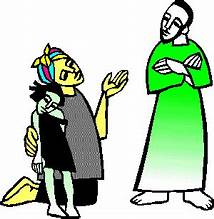
Our Gospel writer Matthew was quite particular about how he presented the information in his Gospel, which was written specifically for a Jewish audience. Let us look at how Matthew begins this vignette in the life of the Rabbi Jesus. “Jesus withdrew to the region of Tyre and Sidon. 22 A Canaanite woman from that vicinity came to him, crying out, ‘Lord, Son of David, have mercy on me! My daughter is demon-possessed and suffering terribly.’”
We learn a lot from these two sentences! Matthew wants his readers to know where the Rabbi Jesus had gone – into the area of the Decapolis, on the border of Israel – and that this woman who came to Jesus for help is not Jewish, but instead is a Canaanite woman – what the Gospel writer Mark in his parallel account calls a Syro-Phoenician woman.
The Canaanites were hated by the Jews, and were among those the Jews termed “Gentiles,” since they were polytheists and prayed to various gods like Baal and Asherah.
Up until this point, Jesus had ministered to very few people who were not Jewish. So, here we are, in a cross-cultural situation. Here the spotlight shines on a woman who is not Jewish, asking Jesus for help. And, help not for her, but for her daughter, who is suffering terribly! This request is familiar territory for the Rabbi Jesus, certainly!
I have mentioned the Rev. Janet Hunt before. She tells a heartfelt story, some of which I repeat here. “Mental illness carries all kinds of stigma today. I have known this since I was a child and we experienced it in our own family. Back then it was something whose name you whispered. I’m not sure it is so very different now. When I was young during that time during the prayers of the church where we stood in silence and remembered people in need, I would close my eyes shut tight and silently plead for Aunt Donna’s healing. It didn’t come.” [1]
In the case of our Gospel narrative, we are not sure what is the matter with this daughter of the Canaanite woman. Certainly, it could well be mental illness! This was often seen as demon-possession in past centuries. Mental illness carried a huge stigma in the first century, just as now, in the twenty-first.
It is Jesus’s response that is surprising. Or rather, His non-response. “The disciples, obviously aggravated by her persistence, ask Jesus to deal with her request so that they can be on their way. Jesus then explains that his mission (under the authority of God) is to call out the faithful remnant of Israel. This doesn’t deny a future mission to the Gentiles, only that for the present, ‘salvation is from the Jews.’” [2]
The all-important point of this narrative comes from this mother, this neighbor from a different neighborhood. Our summer sermon series this summer is all about Fred Rogers. He met with a lot of different people from many, many different neighborhoods. Diverse cultures, and from foreign shores, or neighborhoods, too. As this Biblical narrative continues, the woman speaks to Jesus again. “The woman came and knelt before him. “Lord, help me!” she said.26 Jesus replied, “It is not right to take the children’s bread and toss it to the dogs.” 27 “Yes it is, Lord,” she said. “Even the dogs eat the crumbs that fall from their master’s table.”
28 Then Jesus said to her, “Woman, you have great faith! Your request is granted.” And her daughter was healed at that moment.
Did you hear? This woman from a different culture, from a different neighborhood, had great faith! Jesus acknowledges that, and her daughter is miraculously healed at that moment! It is marvelous that this faithful foreign woman – who knew that Jesus was the Chosen One of God, and called Jesus by the Messianic title “Son of David” – did indeed have great faith!
Except, where does that leave us today? What are we supposed to do with this narrative from Matthew’s Gospel? As commentator Karoline Lewis tells us, “A lot of how we talk about faith indeed ends up being about measurement. Life’s consequences are attributed to whether or not someone had enough faith, whatever the circumstance may be. “Just have faith!” Well, how much? It doesn’t seem like a little will do. And how do you get more? Are you stuck with what you have? Are we genetically disposed to a certain level of faith?” [3]
I sometimes wonder whether I would have had even half, even a quarter of the amount of faith this Canaanite woman had! I suspect that these are the kinds of issues about faith with which all of us struggle — and which we may likely hear in the Canaanite woman’s deep, heartbreaking request. “We wonder at the faith that is already working within her. Even though she is a Gentile, somehow she sees Jesus as having come for her as well.” [4]
At the same time, I do not want us to assume that because we do not have great faith that the Lord Jesus turns His back on us, or refuses to do anything for us at all. Which is what false teachers of the Gospel often tell their followers: “Oh, you did not receive that healing – or that answer to prayer – because you just didn’t have enough faith!”
No, Christianity is not a cheap marketplace, or a mercenary vending machine in the sky where we deposit our money and miracles and healings magically come forth. No, this Canaanite woman had faith in the Lord Jesus, the Messiah, the Son of David. She developed a relationship with Jesus. And, it all started with a mother’s willingness not only to speak, but to shout. For the sake of love. For the sake of a much beloved daughter, desperately ill.
Our faith in God – your faith and mine – “lays claim on how you are in the world, how you choose to be, how [each of us] decide to live, in each specific moment of your life…. faith is not a fixed collection of beliefs but a state of being. Your faith is great, not because of what you do, but because of who you are.” [5]
Fred Rogers had a wide variety of diverse neighbors in Mister Rogers’ Neighborhood. These were both real neighbors in the real neighborhood, and the puppets and people of the Neighborhood of Make-Believe. They all interacted with one another with kindness and respect. Fred Rogers tells us, “As different as we are from one another, as unique as each one of us is, we are much more the same than we are different. That may be the most essential message of all, as we help our children grow toward being caring, compassionate, and charitable adults.” [6]
Yes, Jesus healed this daughter of a neighbor from a different neighborhood, a foreign neighborhood. As you and I travel through different neighborhoods in our lives, we can have the same openness, care and compassion that Jesus had. That Fred Rogers had.
Be like Jesus. Be like Fred Rogers. Go into multicultural places with openness and respect, care and compassion. Go, do that.
(A big thank you to the online resources for Mr. Rogers Day – the Sunday nearest March 20th, Fred Rogers’ birthday. These resources come from the Presbyterian Church (USA). https://www.pcusastore.com/Content/Site119/Basics/13792MrRogersIG_00000154465.pdf )
(Suggestion: visit me at my other blogs: matterofprayer: A Year of Everyday Prayers. #PursuePEACE – and A Year of Being Kind . Thanks!
[1] http://words.dancingwiththeword.com/2014/08/a-mothers-cry.html
[2] https://www.lectionarystudies.com/studyg/sunday20ag.html
[3] https://www.workingpreacher.org/dear-working-preacher/getting-great-faith
[4] http://words.dancingwiththeword.com/2014/08/a-mothers-cry.html
[5] https://www.workingpreacher.org/dear-working-preacher/getting-great-faith
[6] https://www.misterrogers.org/articles/he-helped-us-with-our-relationships-with-others/

 Pastor, Preacher, Pray-er