Unknown's avatar

We Are All Prodigals

“We Are All Prodigals”

Luke 15:11-32 (15:3) – March 30, 2025

We have the familiar parable of the Prodigal as our Gospel reading today. One of the best known of the parables, one that resonates with the heart and soul of many. It’s the story of two brothers and a father, the story of discontent and disgruntlement, the story of wandering in a far country, the story of return, and most of all, the story of forgiveness, reconciliation and redemption.

What is the setting for this parable? In verse 1 of chapter 15 we see Jesus sitting down to dinner with a bunch of social outcasts. As far as the scribes and Pharisees were concerned, that is—they were outright offended! How could Rabbi Jesus, a self-respecting, reputable rabbi, be associating with riff-raff, with undesirables, with people like that?

Tax collectors, outcasts and sinners. The upright, righteous Jewish leaders even had rules about associating with those people. They just didn’t. They were forbidden to have any dealings with them at all. But—Rabbi Jesus welcomed the tax collectors and sinners. Get this—He even ate dinner with them!

Except, Jesus wanted to stay in dialogue with these Jewish leaders, so He did was he often did – He told them parables. What a story! “And yet, the characters, the scenario, the family dynamics, are so familiar to us, it is real. And it is true in all the ways that matter, of course, for in one way or another we have lived this story. From one viewpoint or another, this experience is ours.” [1] It’s a story about brothers (or, siblings), about family, a loving father, repentance, and ultimately, about forgiveness.

This younger son was no prize, was he? He had been selfish and self-centered, for sure! Imagine, asking his father for his inheritance right then and there! (Which is kind of like saying that he wished his father had died already!) The nerve of that kid! However, his father went along with it, maybe cashed in some stocks or sold some property, and gave the younger son what he demanded. And, the ungrateful kid promptly goes out of the country to live it up.

One title this parable could have is “The Story of the Lost Son,” because the younger brother goes to a far country, spends all his money in riotous, profligate living, eventually doesn’t have a penny to his name, and is forced to herd pigs for a farmer just to scrape by and earn a pittance.

We heard the first half of this parable in our Scripture reading today. I continue now:

Remember, we left the younger son starving in the pigsty, with the pigs. ““When he came to his senses, he said, ‘How many of my father’s hired servants have food to spare, and here I am starving to death! 18 I will set out and go back to my father and say to him: Father, I have sinned against heaven and against you. 19 I am no longer worthy to be called your son; make me like one of your hired servants.’ 20 So he got up and went to his father.”

It’s so easy to point the finger at this younger son, isn’t it? He was selfish and self-centered, wasn’t he? He didn’t think of anyone else, except for himself. Especially when he lived it up in the far country with high living, wine, women and song. Yet – how often are you and I selfish? Thinking only of our own interests, not caring for anyone else? Sound familiar?

Let’s continue with the parable. “But while he was still a long way off, his father saw him and was filled with compassion for him; he ran to his son, threw his arms around him and kissed him. 21 “The son said to him, ‘Father, I have sinned against heaven and against you. I am no longer worthy to be called your son.’” 

My, goodness! What a turnaround this young guy has had! Sure enough, he has had a major change of heart and mind. We can see how much the father loved his younger son, can’t we? Imagine, a fine, upstanding middle-aged landowner comes running to meet his son, from far away down the road! The father must have had an eye out for his son for some time!

Yet, what about the older brother? What has he been doing all this time that the younger son has been partying it up in the far country? “Meanwhile, the older son was in the field. When he came near the house, he heard music and dancing. 26 So he called one of the servants and asked him what was going on. 27 ‘Your brother has come,’ he replied, ‘and your father has killed the fattened calf because he has him back safe and sound.’

28 “The older brother became angry and refused to go in. So his father went out and pleaded with him. 29 But he answered his father, ‘Look! All these years I’ve been slaving for you and never disobeyed your orders. Yet you never gave me even a young goat so I could celebrate with my friends. 30 But when this son of yours who has squandered your property with prostitutes comes home, you kill the fattened calf for him!’”

Think about it. You and I can easily see how “lost” this younger son was. But, what about the older son? On the surface, he’s the perfect son. Always obedient, always compliant.But underneath? Discontented, disgruntled, resentful, angry. Do we see anything selfish and self-centered about the older son? Even though he stayed at home, he was pretty “lost,” as well.  

We are in the middle of Lent, a season of reflection, contemplation, particularly on our human brokenness and our need for God’s redemption, God’s forgiveness.[2] If we are honest, Lent helps us see the “lostness” of all of us – just as much as both the younger and the older sons were “lost,” too.

Both sons need a change of heart, a repentant heart. And, both sons are equally loved and forgiven by their father. We are considering the part of the Lord’s Prayer this week where we say “Forgive us our sins as we forgive those who sin against us.” It doesn’t matter whether we say “sins” or “trespasses” or “debts.” What we are asking God to do is to forgive us! Except, we ask God to forgive us exactly in the same way we forgive others!

Just think about that. If you and I are unforgiving people, why on earth ought God forgive our sins? If I come to the Lord, praying the Lord’s Prayer and asking – petitioning – for God to forgive my sins, how can I – you – we – possibly think we are going to get away with regularly being mean, nasty, and especially unforgiving to others?

            Finally, we consider that Lent is the time when we are following Jesus on His journey towards the cross. “the cross is not a means of payment [for our sins] but rather shows us just how far our prodigal God will go to tell us of God’s immeasurable love. Period.” [3]

            Did you ever think of God being a prodigal? Our prodigal God, wandering in the wilderness, seeking each one of us as we sojourn in the far country. Just like the younger son. And, just like the older son – resentful and disgruntled, and especially unforgiving to others?

            In our parable, what is the father’s response? “‘My son,’ the father said, ‘you are always with me, and everything I have is yours. 32 But we had to celebrate and be glad, because this brother of yours was dead and is alive again; he was lost and is found.’”

If we had a title of this parable from the father’s point of view, it could very well be “The Story of the Forgiving Father.” Yes, he freely forgave the younger son for his extreme disrespect, for spending all his father’s hard-earned money, and for crawling back home in such a disreputable condition. Plus, the father was loving and welcoming to his older son, the one who seemed to be permanently disgruntled and resentful, with a huge chip on his shoulder.

Praise God, we know how far our Lord Jesus went to tell us about God’s immeasurable love. He went to the cross, for our redemption. For our forgiveness. And with this parable, Jesus wants us to see how much God loves each one of us, and how willing our loving, caring, nurturing God is to welcome us home. Even going so far as to run down the road to embrace us when we return in penitence and tears, or when we stay at home doing our duty in self-righteous disgruntlement and discontent.

Yes, God forgives! And yes, we are to do the same. As the petition of the Lord’s Prayer says, “forgive us our sins, as we forgive those who sin against us.”  God offers forgiveness to both prodigal sons, all wayward children, no matter what. Remember, what a loving, caring God we have. Always loving, caring and welcoming toward each one of us. Amen!

@chaplaineliza

(Suggestion: visit me at my other blogs: matterofprayer: A Year of Everyday Prayers. #PursuePEACE – and  A Year of Being Kind . Thanks!


[1] http://words.dancingwiththeword.com/2016/02/two-sons-how-will-story-end.html

[2] https://www.workingpreacher.org/dear-working-preacher/perspective-matters

[3] https://www.davidlose.net/2016/02/lent-4-c-the-prodigal-god/
Unknown's avatar

Wisdom from Above!

“Wisdom from Above!”

James 3:13-4:3 (3:17) – September 22, 2024

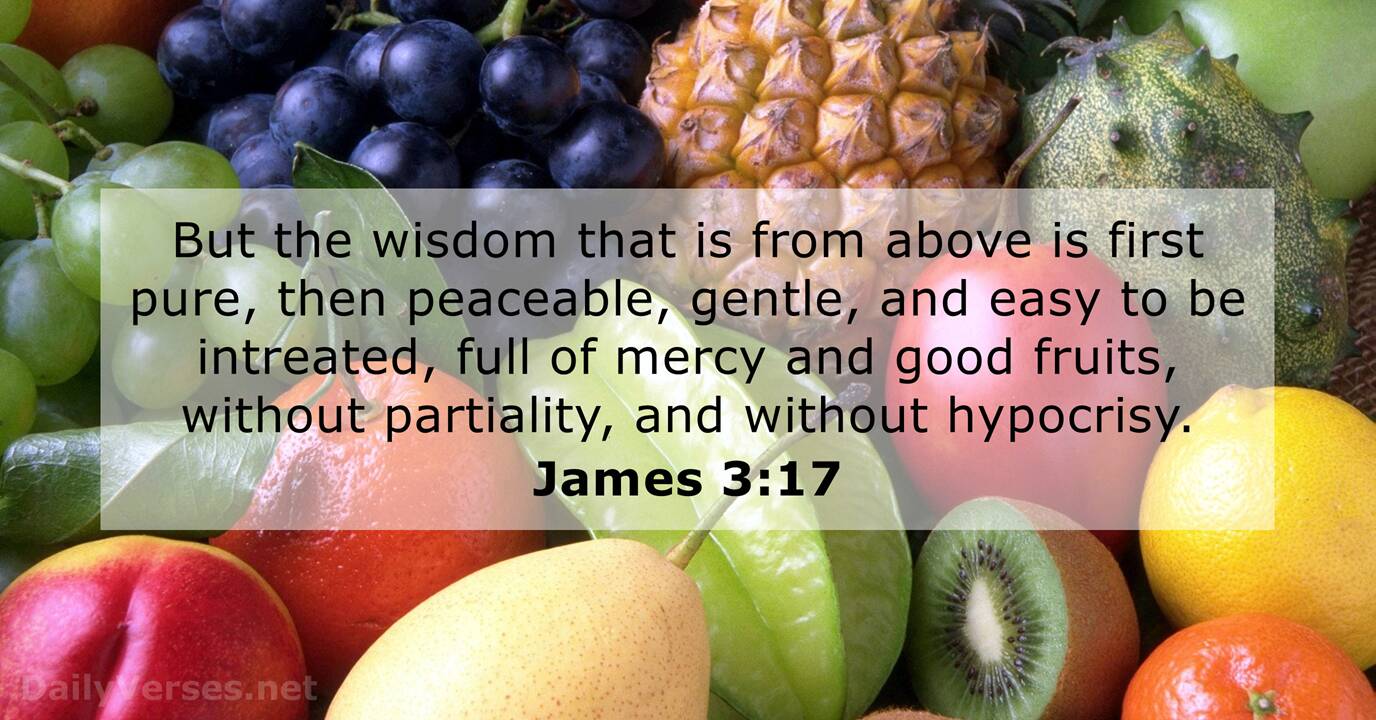
            I wonder if you can think of people who are called the best at something? The greatest athlete in a sport? The smartest student at your school? The best chef or best writer or best driver or best of anything? Just imagine how much bitter jealousy that comment can promote. Or, how much selfishness and blind ambition all this empty striving and competition leads to!

Worldly “wisdom” is anything but wise, according to our letter writer James. I am sure you recognize these jealous, covetous people. They regularly moan and kvetch and sometimes outright quarrel about what they have or about what they don’t have. James tells us about these dissatisfied, disgruntled people in our Scripture reading today.  

            Just listen to his description: “If in your heart you are jealous, bitter, and selfish, don’t sin against the truth by boasting of your wisdom. 15 Such wisdom does not come down from heaven; it belongs to the world, it is unspiritual and demonic. 16 Where there is jealousy and selfishness, there is also disorder and every kind of evil.”  

This kind of worldly striving, dog-eat-dog attitude is definitely not what James has in mind for us, as believers in Christ. He shines the spotlight on how believers ought to live. Listen! “13 Are there any of you who are wise and understanding? You are to prove it by your good life, by your good deeds performed with humility and wisdom.”

Can there be a sharper contrast between the dissatisfied, selfish, boastful worldly “wisdom” and the Godly, humble, beneficial wisdom and way of life that James talks about here? Not likely. Remember, in this practical letter, this how-to manual, James advises his friends on how to live in a way pleasing to God.

            It’s true that this fancy, flashy excitement can be attractive, even seductive, on the surface! But, all that is just for show, simply surface, an inch deep, and nothing more than worldly dissatisfaction, boastfulness and jealously. But, let’s be truthful – which of us is not tempted, sometimes, by the alluring or bright and shiny trappings of the way of worldly “wisdom?” Which of us doesn’t fall in step with others who might be jealous, or bitter, or selfish – sometimes? Most important, which of us leaves the simple, quiet, godly life of contentment for the flashy, glitzy (and shallow) excitement that so soon fades?

            Let’s consider the worldly, flawed way of thinking and being, for a moment. Carolyn Brown, retired Children’s Ministry Director, has written a prayer for this reading. Listen, if you would, and see whether these words from Ms. Brown do not resonate in our hearts.

Dear God, we want to look amazing.  

We want great clothes, cool shoes, a great haircut. We want our homes filled with our stuff.

We want all the best people to be our friends. We want to be the first, the best, the most, the greatest. So we grab and hold and demand. We even kick and punch to get what we want.

Forgive us.

Teach us to let go, to open our hands and hearts to others. Teach us to be content with what we have and to share it.

Teach us to think as much about what OTHERS want as what WE want. Teach us to be as loving as Jesus. Amen. [1]

            This prayer penetrates straight to the heart, let me tell you! I want to ask God for forgiveness, and to help me live in a loving way, like Jesus. I hope you do, too.

            This prayer makes me think of the Jewish High Holidays, which are quickly approaching. During the month before Rosh Hashanah and Yom Kippur, faithful Jews prepare for these holidays by examining their hearts. They meditate and pray, and ask forgiveness of God, of others, and of themselves for the sins and shortcomings of the past year.

            We also have a weekly time of confession and prayer at the beginning of each worship service. Thank God we receive the assurance of pardon each Sunday from our loving Lord! Yet, we keep on sinning. We still need to keep confessing our sins and shortcomings, and receive that assurance of pardon and forgiveness. Is it any wonder that we have this very practical how-to manual of how to live the Christian life by our letter-writer James, in the New Testament?  

            James assures his readers of Godly wisdom, because he describes its results. “Believers need to submit to the wise rule of God through the Spirit of God, a rule which purifies from within.” [2] The practical consequences of this wise rule of God are easy to observe. People who live God’s way are peaceable, considerate, gentle and non-combative! Does this sound very worldly to you? Certainly not selfish or jealous or bitter!

            What I wonder: how is the life of Jesus any mirror to our personal lives? Jesus is certainly recorded as merciful and loving. That is displayed over and over again in the Gospel record! When I think of our Lord Jesus during that three-year period of time in Palestine, I cannot think of anyone more sincere, honest or peaceable. More real and yet penetrating to the heart. I would love to have just a fraction of that Godly attitude and lifestyle as part of mine!

What – practically – can we take away from this reading today? Can we concentrate on living like Jesus? Living the Jesus way is peaceable, considerate, gentle and non-combative. Jesus is sincere, honest, and real. Can we make a commitment to live like Jesus?

This is the how-to of living a life pleasing to God, being filled with the presence of God. “[You and I] are works in process. This isn’t about completion and the satisfaction of a job well done; it is about a journey of discovery and transformation. But peace [gentleness, mercy, and lovingkindness] can be our companions in the journey to keep our feet on the path.” [3]

            Practical James would wholeheartedly agree! Keep on keeping on. Live in God’s way, in the wonderful, honest presence of Jesus. It’s a sure-fire way to have God draw near to each one of us. Alleluia, amen.

@chaplaineliza

(Suggestion: visit me at my other blogs: matterofprayer: A Year of Everyday Prayers. #PursuePEACE – and  A Year of Being Kind . Thanks!


[1] http://worshipingwithchildren.blogspot.com/2012/08/year-b-proper-20-25th-sunday-in_30.html

Worshiping with Children

[2] http://www.lectionarystudies.com/sunday25bee.html  

[3]  https://www.umcdiscipleship.org/worship-planning/doers-of-the-word/seventeenth-sunday-after-pentecost-year-b-lectionary-planning-notes

Unknown's avatar

Life on God’s Terms

“Life on God’s Terms” – July 12, 2020

Rom 8_11 Spirit of God

Romans 8:1-11 (8:10)

Does anyone know what this is? [motioning towards the garbage can] You’re right. This is a garbage can. Good for being a container for all the garbage – refuse – junk – from our homes, workplaces, and communities. All kinds of worthless garbage that is not needed or wanted goes right in here. The apostle Paul talks about all kinds of garbage in our lives, on our insides, here in the letter to the church in Rome.

Imagine, if you will, all the internal junk in a person’s life, and mind, and heart. All of that meanness, and selfishness, gossip and swearing, bullying and arguing. And, what about the times people cheat? Or, blow off assignments or obligations? Or, stretch the truth just a little – or, perhaps a lot? Oh, it’s not much. But, do you think God keeps track of each and every time?

Just think of a person’s life. Perhaps, your life, or mine. If all the years and decades of those junky, selfish, stubborn, or mean thoughts, words or deeds were piled in this garbage can, I’d imagine it would be pretty full. Even, perhaps, full to overflowing.

Life on the inside, our internal selves without God can be pretty hopeless. Worthless. Just like garbage – refuse – junk that goes into this garbage can. Another word that Paul uses for all the stuff in these garbage cans is sin. I suspect many of us here can quote Romans 3:23, where Paul says “For all have sinned and fall short of the glory of God.” Paul does not say, “For some have sinned,” or even “For many have sinned.” No, we all have our internal selves filled up with meanness, selfishness, gossip, swearing, bullying, arguing. And, then some.

God does have laws. Many of these laws are common sense, and others are in keeping with moral codes that many civilizations have held for millenia. We know the big 10, the Ten Commandments, and many of the other laws of Moses that are found in the Hebrew Scriptures. Right before Paul writes these marvelous words in Romans 8, he talks about the huge problem with law and sin. We know about that. Sin and the law of God do not get along.

What do I do now? I know a lot of these laws of God, sure. But I still fall into sin, even though I know the rules. Another way of looking at sin is separation from God. When you—I—when all of us sin, we are separated from God. What’s more than that, sometimes people don’t even think of the Lord. God does not even enter their minds. Can you imagine? Ignoring God? Yet, so many people do just that.

So many people today are running on that treadmill of self will run riot, of selfish, mean, resentful living. I have seen a number of these kinds of persons, and they keep running, running, running on that treadmill of separation from God.

I have one particular person in mind. An acquaintance, from some years ago. To all outward appearances, she was very successful. She had designer clothes, a successful job, a luxury car, a fancy house. But, on the inside? All kinds of resentment, anger, greed, envy, gossiping and backbiting. She cut corners on her integrity and honesty, and just did not have a moral compass. Do you know someone like that? I have a feeling we all might have more in common with this unhappy lady than any of us might like to admit.

I’d like all of you to think of a sin in your life. I suspect you have thought of a sin that is really obvious to you, right now. the one thing you feel worst about. The one regret or misdeed or misfortune that you wear like a snail does its shell. The one part of your life that forever threatens sin and condemnation. Could you write it down? Or, if you don’t have a pen and paper, could you think really hard of that particular sin right now?

Paul does not leave us in that horrible place. Yes, all of Romans chapter 7 is talking about sin, and separation from God, and how much difficulty all of us have with these sinful thoughts, words and deeds. We might think that we are stuck at the bottom of one of these smelly, stinky, filthy garbage cans, with no way out. Who will rescue me from this body of sin and death? How can I – can we – get in a place where we can possibly have access to God?

Paul has good news for us. In fact, it’s great news! We do not have to stay in this garbage dump for the rest of our lives. No, Jesus reaches down from heaven and rescues us from sin and death. Jesus takes each of us out of that separated, filthy garbage can and brings us into the glorious presence of God!

Here is the best part of all. God’s Holy Spirit helps us to stay free from the power of sin and death. We no longer need to reflect on what we have done – or said – or thought that was wrong. No! Jesus Christ delivers us from sin and the Law.

I want to invite all of us to—virtually—toss that sin we wrote down into the garbage can right here. Jesus can clean us up from the inside, and help us to sin less and less. Amen!

One last thing. I invite each of you to take another piece of paper, and write what you are free to do now that you do not have that condemnation in your life and inside your very self. What challenge will God bring into your life, now that you know you are beloved by God and filled with God’s Spirit? What kindness or generosity will you attempt? What will you do with all the love and grace God can give you? [1]

God promises to be with us, yes! And, even more, God promises to use each of us for the sake of the people and the world God loves so much. Go out into the world for God, today.

[1] http://www.workingpreacher.org/craft.aspx?post=1571

“What Willl You Do…?” David Lose, Dear Working Preacher, 2011.

@chaplaineliza

(Suggestion: visit me at my regular blog for 2020: matterofprayer: A Year of Everyday Prayers. #PursuePEACE – and my other blog,  A Year of Being Kind . Thanks!


Unknown's avatar

Hear Creation’s Cry

“Hear Creation’s Cry”

Psalm 24-1 creation picture

Psalm 24:1-2 – July 10, 2016

Have you ever had a family member, or a friend, go out of town? Or how about go on vacation? Your friend, your family member, asks you to take care of something of theirs. It may be a dog or cat, sometimes houseplants indoors or a garden outside. Asking you to be a good steward for them. Taking good care, being responsible for your friend’s property. That includes all the stuff in your friend’s house or apartment, all their valuables and beloved possessions.

Let’s go on a tour of Scripture today. Think about the earth God created. Creation is the handiwork of a loving God who saw all that was made and in Genesis pronounced it “very good.” Scripture tells us that God delights in creation and creation delights in praising the creator.  A great example is Psalm 150:6. “Let everything that breathes praise the Lord!”

One of the oldest forms of expression of Christianity today is Celtic Christianity. Coming from the British Isles, it carries within it the deeply Celtic understanding that nature itself is a testament to God. One of the Celtic holy men, Saint Columbanus once said, “If you want to know God, first get to know his creation.” [1]

That is exactly the case with the earth, the world, today. The earth belongs to the Lord. God created it—all of it. The dogs, the cats, the other animals, things that swim in the water and fly in the air. All the plants, and trees, and other growing things. All the valuable things on the earth and underground.

God wants us, expects us human beings to be good stewards of the earth, to take excellent care of it, nurturing it, loving it. Exactly how you’d expect someone to take care of your dog or cat while you were away on an extended vacation.

Let’s look at the UCC Statement of Mission. Which sentence are we on this week?

“Empowered by the Holy Spirit … To hear and give voice to creation’s cry for justice and peace.” We are to listen and respond to this wonderful gift God has given to all of us.

Our next stops on our tour of Scripture are the books of Genesis and Numbers.  We have seen that God has given humankind a special responsibility to care for creation. Genesis 2:15 says the Lord God took humanity and put them in the garden of Eden to till it and to keep it. A form of the Hebrew verb “shamar,” meaning “to keep,” is also used in Aaron’s blessing from Numbers 6:24. Lacey closes our services playing Lutkin’s arrangement of that blessing each week as Al extinguishes the candles. “The Lord bless you and keep you.”

We are not only to nurture, sustain and care for creation, but we are to follow God’s example. We can see how God nurtures, sustains and cares for us—each one of us. This interconnected aspect of creation helps all of us remain aware of the joys and concerns encountered in the world around us, and of their impact on all of our lives each day.

However, there is a problem. A huge problem.

Our relationship with God, with each other and with creation are all part of the same multi-colored fabric. Pull any one thread and the whole piece begins to unravel. Human selfishness, ignorance, fear and mistrust have ecological consequences. Add some territorial urges, and feelings of animosity and xenophobia. A basic name for all of this is sin.

The Bible is not hesitant to make connections between human sinfulness and the degradation of creation. Two telling examples come to us from the prophets Isaiah and Hosea.  “The Earth lies polluted under its inhabitants; for they have transgressed laws, violated the statutes, broken the everlasting covenant” (Isaiah 24: 5). “There is no faithfulness or loyalty, and no knowledge of God in the land. . . . Therefore the land mourns . . . even the fish of the sea are perishing” (Hosea 4: 1-3).

What is to be done? People will not stop being selfish, or territorial, or fearful, or displaying hatred. But it’s also much bigger than that. Going clear back to the fall, to Adam and Eve’s disobedience in the garden, we learn that broken relationships are costly.  Lord, who will deliver us from this horrible state of sin?

We could throw up our hands, and say that saving the world is a lost cause. The earth is too far gone. The scales have been tipped, and it’s all downhill from here. But—it is not true!

When all else seems totally dark, God steps in.

I have talked about this before. Remember? God the Son became incarnate in Jesus Christ. He was born as a baby in Bethlehem. Jesus became part of the “stuff” of creation to heal and restore the relationships broken by human sinfulness.

The apostle Paul tells us “God was in Christ reconciling the world” (2 Corinthians 5:19). An early hymn praises Jesus Christ, the firstborn of creation, the firstborn from the dead, through whom God was pleased to reconcile all things, whether on Earth or in heaven (Colossians 1:15-20). The resurrection of Jesus Christ, God’s great victory over sin and death, is a pledge and sign not only of our resurrection, but also of God’s promised redemption of all creation.

Can I hear an “Amen” for that? Jesus and His resurrection means that we will be redeemed, just like creation. Just like the world will be. We all have had experience with God and how incredibly stunning this creation is, right now.

However, let me remind you. Andy Wade tells us something so important: “God’s creation is not somehow separate from God’s plan of redemption. When we forget that God’s very good creation also gives testimony to God, we can begin to think that it’s ours to trample on, ours to exploit, and ours to use for our own selfish purposes.” [2]

This selfish, self-centered kind of attitude and way of dealing with the wonders of creation and the great gift God has blessed us with? Thank God that God has made a way for creation to be made new, just as much as God has made a way for us to be made new!

The next question is simple: what is the next step? Where do we go after realizing God has plans to make all of creation new?

We as followers of Christ are called to witness to the resurrection of Jesus Christ. In our words and actions we are called to reflect the love of the one whose victory over sin and death was a victory for the whole of creation.

It is all very well to simply talk about being a witness. But, how can we do that, right here and right now? I’m glad you asked.

Some years ago, Solana Beach Presbyterian Church, near San Diego, received one of six “2000 Energy Star for Congregations Awards” from the US EPA. Following an energy audit, the congregation invested in energy-saving measures, including new lighting fixtures and energy-efficient light bulbs. The Solana Beach Church witnesses to Christ’s redeeming power every time they turn on the lights!

Just like this church! We can praise God that Kids Academy got all of the light bulbs in St. Luke’s Church building changed to energy efficient light bulbs. This is a wonderful start! Every time anyone here turns on the lights, we, too, can witness to Christ’s redeeming power.

Let’s not stop here. Let’s continue to keep looking for ways to hear creation’s cry, and to respond in loving ways. Ways to witness to the world around us that we are striving to be good stewards. Ways to celebrate God’s goodness, too. Alleluia, amen!

@chaplaineliza

(Suggestion: visit me at my regular blog for 2016: matterofprayer: A Year of Everyday Prayers. and my other blog,  A Year of Being Kind . Thanks!)

My sincere thanks goes to the National Council of Churches’ great resources. I borrowed liberally from the Earth Day 2001 Sermon Notes and Worship Resources.

http://web.archive.org/web/20110706140053/http://www.nccecojustice.org/earthday/PastEarthDayResources.php


[1] http://godspace-msa.com/2016/07/07/creations-sacrifice-gives-testimony-to-god/

[2] http://godspace-msa.com/2016/07/07/creations-sacrifice-gives-testimony-to-god/

Unknown's avatar

Love and Testing, in the Wilderness

“Love and Testing, in the Wilderness”

heart - conversation, be mine

Luke 4:1-13 – February 14, 2016

Today is Valentine’s Day. Hearts, flowers, cards, chocolates, romantic meals, all the things! Almost anywhere you go this weekend, many stores, restaurants, and other public places are full of reminders that love is in the air. My husband and I went out for lunch yesterday at a small diner, and had a wonderful time. Good food, and excellent company. I also received a dozen pink roses from my sweetheart. Sound familiar? The giving and receiving of gifts, of hearts, and of love.

At first glance, we might consider today’s Gospel reading to be considerably off-topic. No mention of hearts and love at all. Luke 4 opens with our Lord Jesus, fresh from His baptism at the very beginning of His public ministry. We are told that the Holy Spirit leads Him into the wilderness, where Jesus fasts and prays for forty days.

We will come back to the topic of love, and how it ties into Jesus and the temptation. But first, Luke says Jesus went into the wilderness. Willingly! He was led there, and chose to go there. Not dragged unwillingly or half-heartedly.

The Gospels don’t tell us so, but other religious leaders went away to prepare themselves, to get ready for leadership. I suggest that that is exactly why Jesus withdrew to a private, far-away place. Just like several other situations, and other people in the Bible. I am thinking especially of Moses, on the mountain, when he received the tablets of the Ten Commandments. He, too, fasted. And, prepared himself for leadership of the people of Israel. I suggest that Jesus is doing the same.

This period of preparation involved fasting. Luke does not mention prayer here, but I cannot imagine Jesus going for days, much less weeks, without praying to His Heavenly Father. I’ve fasted a number of times, and fasting often sharpens the spiritual ears and sensitivities.

At the end of the fasting time, Jesus was hungry. The Gospel account says so! And, who shows up at that precise time? The Devil.

A pertinent illustration from a pastor? “In confirmation classes … at Grace Lutheran Church, [the pastor] teaches the students to take the letter, d, off the word, “devil,” and you get the word, “evil.” Evil is part of our lives and we face evil every day.” [1]

You might ask whether this really is a physical Devil, or whether it was a spiritual manifestation of evil. My answer? I do not know for sure.

However, I tend to stick with the actual physical Devil. The word used here, diabolos, implies the chief of the fallen angels. According to a well-respected commentary, “Luke consistently uses diabolos while Matthew mingles “Satan” and “devil” in his version of the story. Evil was conceived as a personal will actively hostile to God. (see Luke 13:16). The devil was in conflict with God’s purpose of salvation; he is the concern of Jesus’ saving activity.” [2]

I am going to go with the actual, physical Devil, the ruler of this fallen world. At the time that Jesus is physically very weak, the Devil shows up. And, he tempts Jesus, big time!

What on earth does this Gospel reading have to do with Valentine’s Day? What does it have to do with hearts, and with love? Stay tuned.

Here in my hands is a heart. A Valentine’s Day heart. I mentioned that my husband gave me a dozen lovely pink roses yesterday. I gave him a Valentine card that mentioned my heart. It said my heart belonged to my husband, my sweetheart.

Let’s go back to Jesus, and the Devil. The Devil was tempting Jesus in several important ways! First, he mentions Jesus’s hunger. How much more obvious could you get? “Come on, Son of God. You’re so hungry. You can do it. No one will ever see—You can turn these stones to bread. With just a snap of Your fingers or a wave of Your hand. You know You want to…”

What did the Devil want Jesus to do? To put His stomach first! Not God first, but Jesus’s own needs, wants and desires. The Devil was tempting Jesus with hunger.

What was Jesus’s response? He did not even waver: “It is written: ‘Man shall not live on bread alone.’” Jesus was in the wilderness to prepare for leadership, and to do the will of God—not to be selfish and self-centered.

I suspect the Devil did not leave Jesus alone for a minute. Immediately after tempting Him with bread (or the possibility of bread), the Devil turns to another seductive temptation. Reading, starting at verse 5: “The devil led Jesus up to a high place and showed Him in an instant all the kingdoms of the world. And he said to Jesus, “I will give you all their authority and splendor; it has been given to me, and I can give it to anyone I want to.”

Wow! Such a temptation! Jesus could take a big, huge short-cut. He could be king of the world immediately! He didn’t have to go through any unpleasant, uncomfortable pain and anguish. No unpleasantness, for years. No tramping through Israel, followed by a rag-tag bunch of disciples. Plus, Jesus knew He would make an absolutely wonderful King. How tempting!

But, no. No! Jesus knew that He would be forcing people to do things against their will. Jesus knew that many, many people would either be slaves or robots to Him. “I – love – you – because – I – am – programmed – to say – I – love – you.” No! Jesus didn’t want us to be slaves. He wanted our love – freely!

And, more, besides. How did Jesus answer the Devil? “It is written: ‘Worship the Lord your God and serve Him only.’”

The last temptation? “The devil led Jesus to Jerusalem and had him stand on the highest point of the temple. “If you are the Son of God,” he said, “throw yourself down from here.” (With the understanding that God’s angels would save Jesus at the last second.)

Whoa! What a spectacle! What a publicity stunt that would be! Can you imagine? Except with Jesus, it would be for real. His answer to the Devil? Jesus answered, “It is said: ‘Do not put the Lord your God to the test.’”

This Valentine I’m holding represents Jesus’s heart. What did the Devil want Him to do, in all three of these temptations? The Devil wanted Jesus to put His heart somewhere else. Wanted Jesus to give His heart not to God the Father, but instead to stuff. To the cheers of the crowd. To food and satisfying His stomach. But, Jesus knew where His heart belonged. Jesus knew that His heart was given to His Heavenly Father, just like His love. .

As for us today, the Devil and the power of evil still keeps trying to pull us away from God. Evil wants to destroy us! Destroy our faith in God, our love for each other, and the goodness of God living in our hearts. But, if evil can cause us to be miserable and unhappy, if evil can make us forget God, that is the next best thing.

The Devil wants us to take our hearts away from God, and instead just give them to him. Or his minions. Or, to power, or money, or things. Just as long as our hearts and love are not directed to God! That is the Devil’s worst nightmare.

While He was here on earth, Jesus made sure His heart was given to His Heavenly Father, And, He advised us on where our hearts ought to be, too. Loving God.

This giant Valentine heart I’m holding is a conversation heart. Can we think of it as a Valentine from Jesus? On one side, it says “Be mine.” On the other, it says “I’m yours.”

Who—or what—do we give our hearts to?


[1] http://www.sermonsfromseattle.com/series_b_the_tempation_GA.htm Rev. Edward F. Markquart, Grace Lutheran Church Des Moines, Washington 98198

[2] Brown, Raymond E., Joseph A. Fitzmyer and Roland E. Murphy, eds. The New Jerome Biblical Commentary. Study Hardback edition. London: Geoffrey Chapman 1995

I’d like to give a big thank you to Carolyn C. Brown for her wonderful worship ideas from Worshiping with Children, Lent 1, Including children in the congregation’s worship, using the Revised Common Lectionary, Carolyn C. Brown, 2016.

@chaplaineliza

Suggestion: visit me at my sometimes-blog: matterofprayer: A Year of Everyday Prayers– where I am doing a Lenten journey. Pursuing PEACE. And my other blog,  A Year of Being Kind -Thanks!