Unknown's avatar

God Knows Us Full Well

“God Knows Us Full Well”
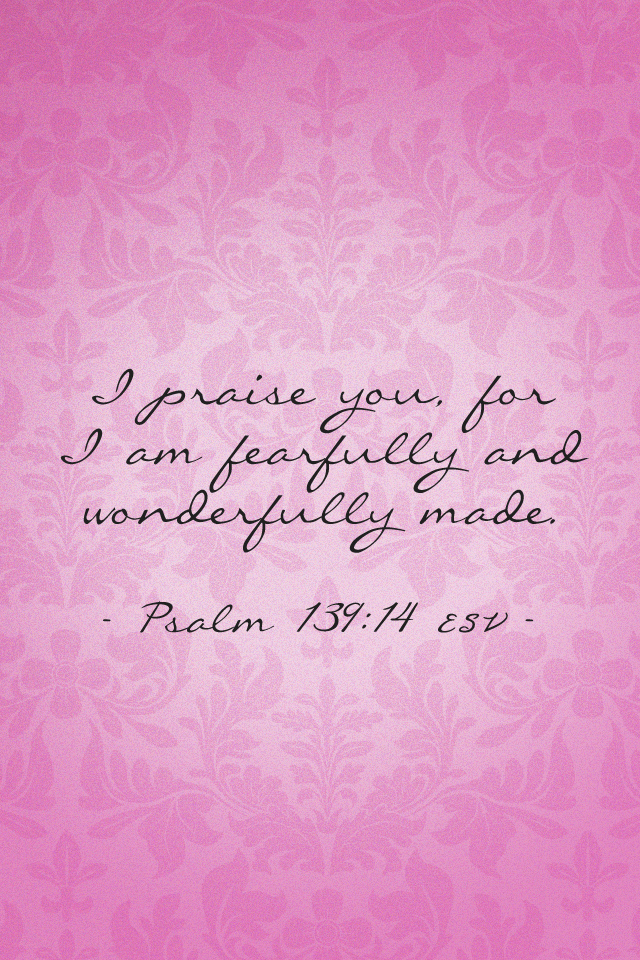
Psalm 139:1-6, 13-18 (139:14) – September 7, 2025

If you look at the news online, or on television, or listen to the radio or podcasts, many people often look for knowledgeable experts. Experts in their field or craft. People who know things. Think about it: cooking shows have culinary experts, home repair shows have building experts, news reports have experts in various fields, talk shows have behavioral experts to help solve the relationship problems of society, even newspapers have horoscopes written by psychics who are supposedly experts in astrology. Expert opinions!

            This craving for information, for people who know about things … I am afraid that I get sucked right into it. I go to people who are experts in their fields, and try to pick their brains and get what information I can, so I can masquerade as a sort of an expert, too. I like to think I know about things. And, I do. I know lots of things. I know lots about how to be a chaplain, and about music, and about the Bible, but that doesn’t hold a candle to the amount God knows! 

            God knows—now there is an expert opinion. Let’s look at the scripture reading for today. “O LORD, You have searched me and known me, You know when I sit down and when I rise up, You discern my thought from far away.” That truly is knowing. God knows every part of me. King David wrote this psalm many centuries ago, and its message still strikes home and hits my heart with penetrating directness.

            These verses from this psalm are among the most direct and poetic description of God’s omniscience in the whole Bible. Omniscience. Knowing absolutely everything. That’s a pretty scary thought, if we sit down and think about it.  It’s a good thing that God is loving, caring and merciful. We just have a shadow of understanding about how God knows us, yet it’s a loving, caring and intimate knowing. The omniscience of our knowing by our heavenly Father.

            When a word is repeated in a passage in the Bible, that is a way of underlining that word, indicating that word is particularly important. The Hebrew word “yada,” or “to know,” appears in today’s reading four times. The emphasis of this rich biblical word, this “concept of ‘knowledge’ is a critical element of meaningful relationship. We are to know God, just as God knows us.” [1]

            When you and I contemplate God, the totality, the tremendous experience of God’s knowledge is just “too wonderful” for us! That is us, as limited humans, trying to understand and contemplate the Lord. That is the eternal God who created the heavens and the earth! We read here in Psalm 139 that God’s capacity for knowing is utterly beyond comprehension, so far beyond us limited humans that we feel like we are reaching up to touch the moon, much less the stars in the sky. King David said, “so high that I cannot attain it,” in verse 6. And yet – God wants to be known! Known by us.

            This Sunday is when the church in Scotland celebrates the beginning of the season of Creation, when we celebrate God creating the world, the galaxy, the whole universe. As we contemplate God’s vast creative power, let us consider the creation of a single human life. Our psalmist considers it, too! Verse 13 says, “For you created my inmost being; you knit me together in my mother’s womb.” This is a glimpse of the psalmist’s understanding of the nature of God, of knowing God!

“This points to a God whose love for God’s own creation extends to concern, since this human creation is finite and therefore not perfect. Yet, it does not lessen but instead heightens the amazing and magnificent artistry of God’s creation. Indeed, this recognition becomes reason for praising God and affirming the self’s ultimate worth in the sight of God (v. 14).” [2]

God knows. God knows my circumstances, knows whether I’m sitting or getting up or lying down. God even knows what I’m thinking, before I can say a word. Talk about being an expert! The Lord knows my psychological makeup, my emotions and my heart, so much better than I do myself.

            It’s a good thing to get to know ourselves. It’s a worthy study, and one that would be useful in helping us to understand others. I like to tell myself that I know myself pretty well. I’ve seen a therapist for a number of years who has helped me come to understand my own thoughts and emotions better. He’s helped me to understand how I relate to others and why I act and react in certain ways. At times, after years of therapy, I may fancy myself somewhat of an expert on myself. But in reality, I am not. Sometimes I may think I am, but I’m just fooling myself.

            God knows everything about me, too. Everything. God knows all the flaws, all the rough spots, every praiseworthy feature as well as everything that isn’t. And–here’s the amazing part–God loves me anyway! Even with all that intimate knowledge about every single aspect of our character as well as our character flaws, God loves us anyway!

And, it isn’t just all about me. God knows each of us in the same way. He knows each one of you, intimately, too. The Lord has searched you and known you, and is acquainted with all your ways. And, God loves each of us, even more intensely than we can possibly imagine.

            Sometimes, certain authors have a way of capturing an idea in a special way. It’s that way with Max Lucado, a recent Christian author for both children and adults. I know I have referenced this before, and it’s just so good that I have to quote it again! This is a quote from Prayer: A Heavenly Invitation, which describes just the idea I’ve been trying to communicate.

            ”If God had a refrigerator, your picture would be on it. If He had a wallet, your photo would be in it. He sends you flowers every spring and a sunrise every morning. Whenever you want to talk, He’ll listen. He can live anywhere in the universe, and He chose your heart. And the Christmas gift He sent you in Bethlehem? Face it, friend. He’s crazy about you.” [3]

            Friends, God knows all about us, and He loves us anyway. What else can we do but fall on our knees before God in praise, thanksgiving and adoration? Thank God for His boundless love towards you and towards me.

            Alleluia, amen.

@chaplaineliza

(Suggestion: visit me at my other blogs: matterofprayer: A Year of Everyday Prayers. #PursuePEACE – and  A Year of Being Kind . Thanks!


[1] https://www.workingpreacher.org/commentaries/revised-common-lectionary/second-sunday-after-epiphany-2/commentary-on-psalm-1391-6-13-18-2

[2] http://www.theafricanamericanlectionary.org/PopupLectionaryReading.asp?LRID=27

[3] Prayer: A Heavenly Invitation – Max Lucado

Unknown's avatar

Fearfully and Wonderfully Made!

“Fearfully and Wonderfully Made!”

Psalm 139:13-18 (Psalm 139:14) – June 2, 2024

            As some of you know, I am a new grandma. My lovely twin grandchildren were born recently, much-awaited, and very welcome to their family and their parents. I was praying for the twins each day while my daughter was pregnant, and now that they are here, growing and maturing, and being their own wonderful selves, of course I continue to pray for them.

            I have always felt a real connection with Psalm 139, but never more so than when I – with their parents – was awaiting the birth of my lovely grandchildren. This psalm was written by King David, and shows his trust and confidence that God is indeed with him, all the time. And, indeed, with all of us.

            As Dr. Streaty-Wimberly says in her commentary on this psalm, the 139th Psalm reveals an account of what may be called “an encounter of the closest kind” with God. What a statement! And, what a word-picture David paints here.

“The psalm details an intimate conversation with God in which the psalmist is speaker and God is listener. The psalmist focuses quickly in verses1-2 on the word, “know(n).” This key reference points to the psalmist’s relating to God the experience of not simply being recognized and acknowledged by God, but of belonging inseparably to God.[1]

Along with the rest of my family, I eagerly awaited the arrival of my grandchildren! And, I find my wonder and amazement echoed by so many friends and acquaintances as they welcome newborns into their larger families, too.

One of the commentators I read has an extended example of her joy and wonder at welcoming her nephew. “My nephew was born on the day I started working on this commentary [about Psalm 139]. When the picture of Mason James arrived, my initial thoughts were, “There you are. What were you doing in there all of these months?” And then I read: For it was you who formed my inward parts;you knit me together in my mother’s womb (vs. 13).

“How did you go from a hoped-for dream of your parents to flesh and blood, bones, muscles and those long, skinny fingers and those cute ears?” I wondered. Then I read: My frame was not hidden from you, when I was being made in secret, intricately woven in the depths of the earth. Your eyes beheld my unformed substance (vs. 15).

“I wanted to shout, “Mason, you are perfect.” Yet this acclamation paled in comparison to his parents’ “You are perfect!” which pales in comparison to God’s “You are PERFECT!”

My hope for this little guy on his first day, his birth day, was that one day he would realize and pray with the psalmist, I praise you, for I am fearfully and wonderfully made (vs. 14). [2]

            What a marvelous addition to this commentary on such a rich, praise-worthy psalm! Dr. Hannan usually writes in a more academic style, but enriched and awed by the birth of her nephew, this particular commentary is unusually personal. And, her prayer is heartfelt.

            Sure, if we go to biology and look at the growth of a bunch of cells inside a female mammal, we can still be intellectually amazed by the intricacy of the growing being inside of the uterus. However, when we take into consideration the reference to “being ‘knit together’ in the mother’s womb, the psalmist seems to describe God as a weaver who engages on the highly intricate, and artistic, endeavor of creating a unique and wonderfully made living being.” [3]

            How marvelous that each of us – whether parents, grandparents, siblings, great-aunts and -uncles, or dear friends of the parents – can stand by and observe these miracles that come into the world each day. What a privilege to welcome one of these little ones, and nurture and help it grow!

            Now, we need to turn from beloved babies, entering life as very much wanted members of the family (and of God’s family), and consider another sad possibility. Sadly, there are many, many babies and children who have unhappy childhoods, are not valued members of a family, and even know that they are not welcome in their homes – from a young age. This is heart-breaking, and happens much more often in this world, for any number of sad reasons.

            Rabbi Sharon Brous talks about a commentary written in the ninth century that “declares that every person is accompanied, at all times, by a procession of angels crying out, “Make way, for an image of the Holy One is approaching!” Every person, like royalty… How do we keep missing all those angels, with their trumpets and proclamations, desperate to rouse us to the dignity of every human being?” [4]

            What an earth-shaking concept! This is true not only for cute, adorable newborn babies, but also for all children. For tweens and teenagers (even if we are irked or frustrated with them). This is true for each adult, whoever and wherever they may be on their journey through life. And, this is true as well for each sick person and each senior I may encounter as a chaplain in my day-to-day travels to skilled nursing facilities and extended care centers.

            Rabbi Brous continues to reflect that this attitude “heightens the amazing and magnificent artistry of God’s creation. Indeed, this recognition becomes reason for praising God and affirming the self’s ultimate worth in the sight of God (v. 14).” [5]

            Indeed, we are all – each of us, every person in the world – fearfully and wonderfully made! Each person is accompanied, at all times, by a procession of angels crying out, “Make way, for an image of the Holy One is approaching!” That means every single person, in beautiful diversity, regardless of color, creed, cultural difference, language or nation of origin.

            We are celebrating our graduates today! Let us celebrate each other, too. In the words of the lovely children’s hymn “All things bright and beautiful, all creatures great and small, All things wise and wonderful, the Lord God made them all.” [6] God made you, me, and every single person in the world – all fearfully and wonderfully made. Alleluia, amen!


[1] http://www.theafricanamericanlectionary.org/PopupLectionaryReading.asp?LRID=27

[2] https://www.workingpreacher.org/commentaries/revised-common-lectionary/second-sunday-after-epiphany-2/commentary-on-psalm-1391-6-13-18-3

[3] http://www.theafricanamericanlectionary.org/PopupLectionaryReading.asp?LRID=27

[4] Brous, Sharon, The Amen Effect: Ancient Wisdom to Mend Our Broken Hearts and World (New York: Avery, 2024), 53–54,

[5] Ibid.

[6] https://hymnary.org/text/each_little_flower_that_opens

@chaplaineliza

(Suggestion: visit me at my other blogs: matterofprayer: A Year of Everyday Prayers. and  A Year of Being Kind . Thanks!