Unknown's avatar

Dance Before the Lord!

“Dance Before the Lord!”
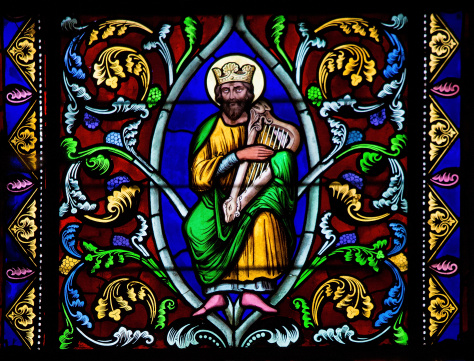
King David

2 Samuel 6:1-5, 13-19 (6:14) – July 14, 2024

            The wise theologian (and humorist) Erma Bombeck described an experience she had years ago in church. “A row or two in front of her sat a mother with a normal five-year-old boy, which means, he couldn’t sit still. As he squirmed and looked over the pew at those behind him, he was smiling. Then Erma heard the mother sternly whisper, “Stop smiling! Don’t you know that we’re in church?” [1]

            Our Bible reading this morning talks about how a large crowd behaved when they were at worship, including their leader, their King David. How different would this reading be if God’s people decided to be all stern, and stiff, and poker-faced when they came to worship? Can you imagine a stern, stiff, solemn service at this time? Or, is this joyful, musical, dance-filled procession from 2 Samuel pleasing to the Lord? Which service could you see yourself in?

            Let us listen again to a part of this reading: “David and all the Israelites were dancing and singing with all their might to honor the Lord. They were playing harps, lyres, drums, rattles, and cymbals. 15 And so [David] and all the Israelites took the Covenant Box up to Jerusalem with shouts of joy and the sound of trumpets.

            I cannot even begin to imagine the joy and exuberance of this procession! But, why so much excitement? For that, we will need to go back several chapters. Some while before, the enemy Philistines captured the Ark of the Covenant, God’s Covenant Box, and brought it back to their territory. Except, things did not go well for them. Their priests told the Philistine king that they needed to send the Covenant Box back to Israel! So, they did, and through some adventures King David and the people of Israel finally brought the Covenant Box back into Jerusalem.

            This was a rocky number of months, for the people of Israel! Losing the Covenant Box, the Ark of the Covenant, was devastating for Israel. “This was the most holy object God’s people had. The [people of Israel] had carried it as they walked through the wilderness and kept it in a special tent in the center of their town. Image how they felt when the Philistines captured it and carried it off to their country AND how they felt when they felt when they got it back.” [2]

This priceless Box was not only a beautiful, holy and precious artifact, this Covenant Box signified the very presence of God. Just imagine the rejoicing as King David and tens of thousands of Israelites danced, sang and played music as they brought the Ark into Jerusalem!

To the people of Israel, the Covenant Box was an important object, telling a story. The Ark of the Covenant “points to the larger narrative of God’s delivering the people from slavery and divine guidance into the promised land. It reminds the people of this salvation history and of the nearness of God’s Presence with them always. It provided continuity from the time of Moses to the present moment described in 2 Samuel 6.” [3]

In this chapter from 2 Samuel, God’s Covenant Box signaled God’s Presence among the people – all the people. What is more, this signified God’s promise to them! As you and I come together in our worship service today, what symbols, objects or stories help us to worship? Which of these help us to have “eyes to see and ears to hear” God’s Presence among us today? Which help us to praise and worship God, even to sing and dance before the Lord in thanksgiving?  

I know I preached on this reading three years ago, and I asked then, have you ever been to a worship service where people praised the Lord in all kinds of ways? More than singing hymns and worship songs. I mean, playing all kinds of instruments, dancing before God, and other kinds of artistic expressions.

Perhaps you have just been to worship services where there were piano and organ – and nothing else. Do you know that in a great many worship services across the world today drums are the chief instrument of praise? Drums and the human voice, the beat of human feet and clapping of hands make a joyful noise to the Lord across many cultures and in many countries today. Christians from those worship services might feel really strange if they came to a solemn service like ours where no one was actively praising God and dancing in the aisles!

We are left with a question: how do you and I respond to God’s holy Presence? We can see that King David and thousands of his people danced before the Lord “with all their might!” Pianos and organs are wonderful musical expressions, and so are praise bands and bluegrass bands and full orchestras and all kinds of percussion! Exuberant joy and dancing in the aisles is certainly a wonderful response to God! [4]

But, that is only one way. God may instead call us to quiet contemplation, or sometimes bold action. We are not required to only worship God in church buildings! No, God can be worshiped in the mountains, on the beach, or in a park. And, sometimes things can be new and different for each of us, to allow our hearts to worship in new and different ways.  

Today we can connect to God’s Presence in ways that are significant and touch the heart and soul, that are meaningful to each of us – and celebrate others for connecting in ways that are meaningful and soulful to each of them! Whether dancing and leaping, praising in loud voices, praying quietly, singing hymns and songs, drawing and painting, making banners or wall hangings. We humans have a multitude of ways to come before our God!

How does God respond to all these different types of worship, whether quiet and solemn, or joy-filled and exuberant? I go back to Carolyn Brown’s excellent commentary where she mentions the children’s tune “Hokey Pokey” “to explore the truth that we have to put more than just our left hand or our right foot in [to worship]. We must put our whole selves into worship, life, prayer, everything.[5]

 Sometimes these simple, straight-forward ways are the best ways. Put our whole selves into worship, life, prayer, everything. That’s how to honor, praise and enjoy God the best.

And, the Lord is so pleased when God’s people come together to worship! Praise the Lord!

@chaplaineliza

(Suggestion: visit me at my other blogs: matterofprayer: A Year of Everyday Prayers. and  A Year of Being Kind . Thanks!


[1] https://bible.org/seriespage/lesson-7-worship-joyful-celebration-2-samuel-6

[2] http://worshipingwithchildren.blogspot.com/2015/06/year-b-proper-10-15th-sunday-in.html

[3] https://www.workingpreacher.org/commentaries/revised-common-lectionary/ordinary-15-2/commentary-on-2-samuel-61-5-12b-19

[4] https://www.workingpreacher.org/commentaries/revised-common-lectionary/ordinary-15-2/commentary-on-2-samuel-61-5-12b-19

[5] http://worshipingwithchildren.blogspot.com/2015/06/year-b-proper-10-15th-sunday-in.html

Unknown's avatar

Tempted by the Evil One

“Tempted by the Evil One”

Luke 4-2 devil tempted

Luke 4:1-13 (4:1-2) – March 10, 2019

Have you ever heard of H.A.L.T.? Hungry, Angry, Lonely, and Tired. These four factors in life are abbreviated to the acronym H.A.L.T. and has been used to great effect by recovery programs like Alcoholics Anonymous and other, similar self-care and mindfulness methods.

Whenever you or I find ourselves hungry, angry, lonely or tired, we are that much more susceptible to negative thoughts, behaviors, or both. “It seems simple enough, but when these basic needs are not met, we are susceptible to self-destructive behaviors including relapse. Fortunately, hunger, anger, loneliness, and tiredness are easy to address and serve as a warning system before things reach a breaking point.” [1]

In our Gospel reading today, we find our Lord Jesus in the wilderness for quite a long time. The Gospel of Luke mentions He was there for forty days, and had little to eat. Yes, Jesus was fasting and observing an extended time of prayer and spiritual preparation before God. However, I want us to focus on one specific facet of this Gospel reading today: our Lord Jesus was tempted by the devil. Luke says so, right in verse 2.

What is temptation, anyhow? We know that our Gospel writer Luke said the devil came to Jesus and tempted Him. But—we were not there. We don’t know if the temptation was internal, in Jesus’s head, or external, where the figure of Satan in a red suit with horns and a pointy tail appeared to Jesus. It could be either, both, or something we cannot even imagine, in our limited, earthly minds. But—this we do know. Jesus was tempted—tried—tested exceedingly—by the power of absolute evil, personified. As the devil tried to get Jesus to go his way, away from God and God’s way, we need to pay close attention.

This is serious business indeed, and we ought to sit up and take notice of what Jesus said and did. But first, I would like for us to consider the Lord’s Prayer. Yes, we will be looking at a line from the Lord’s Prayer each week in Lent. What line is more appropriate to this Gospel reading today than “Lead us not into temptation?”

Let us return to Jesus, at the end of His forty-day period of prayer and spiritual preparation for His time of public ministry. He is definitely hungry and tired, and most probably lonely, as well. Definitely two of these strong physical, psychological and spiritual triggers that serve as a warning system for us humans, and probably all three of these triggers. We would expect Jesus to be very hungry, lonely and tired.

At such a physical, psychological and spiritual low point for Jesus, the devil suspected He might be susceptible to temptation. Wouldn’t you suspect it, if you were totally evil?

What were Jesus’s responses to these tests or trials? First, the devil tempted Jesus physically, with food. This bread was a perfectly reasonable thing for Jesus to desire! Except—not in the way the devil was presenting it. Hear, again, the first temptation: “The devil said to him, ‘If you are the Son of God, tell this stone to become bread.’”

Ah, the devil keeps using the old tried-and-true deception. “IF you are the Son of God…then…” Trying to plant doubt in people’s minds, and put them on the defensive! “IF this is so…then…” But, Jesus does not take the bait. He answers with the Word of God from Deuteronomy: “It is written: ‘Man shall not live on bread alone.’” No discussion, no wiggle-room, just the Word of God.

The devil tries another tack, and tempts Jesus psychologically. The devil tests Jesus with ultimate power and authority even before the very beginning of His ministry, instead of waiting three years until after Jesus’s death on the Cross and Resurrection from the dead. (Again, I have no idea whether the devil actually took Jesus to a high place, like a real mountain, or whether this was a projection in their heads, sort of like virtual reality.) The culmination for this second test was if Jesus considered all the kingdoms of the world, then He needed to bow down and worship the devil. Which, was not happening! Jesus responds again from Deuteronomy, and says ““It is written: ‘Worship the Lord your God and serve him only.’”

The third temptation was a spiritual one, where the devil dared—even, double-dog-dared—Jesus to throw Himself down from the roof of the Temple. (Which was the first-century equivalent of a high-rise.) For the third time, Jesus quotes from Deuteronomy, and says, “It is said: ‘Do not put the Lord your God to the test.’”

This is an excellent reason to memorize Scripture, by the way. Just so we can respond to the devil when we are confronted by a temptation that seems overpowering! God’s Word is truly “alive and active. Sharper than any double-edged sword,” as Hebrews 4:12 tells us. We can see that Jesus used this two-edged sword freely, to defend against temptation of the devil. We can always turn to the Lord’s Prayer, too, where we ask God to please keep us away from situations where we might be tempted by the devil.

The Lord’s Prayer is direct quoting of Scripture, too, from Matthew 6. Jesus in the Sermon on the Mount gives us the template of a great prayer we can always pray to God, in countless varieties of situations. Like, in this one, where we ask God to “lead us not into temptation.”

That quoting-Scripture-stuff is all very well, but how do Jesus and the devil being on top of the Temple connect with my life and experience? Well, we can go back to some temptations we are able to relate to. Temptations that are almost irresistible for many people, temptations the children and I talked about today. Remember? What about a plate of cookies left on the kitchen counter—with no one else around? What about an extra-cool smart phone left unattended in a very public place, like an empty table in the food court at the mall? Or, what about a set of test answers in such plain view that you can hardly help but see them on the desk of the student next to you? Or, next to your kid, or your grandchild?

All of those things are SO tempting! And, for most of us, we will see the situation, and automatically do the right thing. But, sometimes—maybe even with you or someone you know—the temptation is SO real to do the wrong thing, to steal a cookie or three, or to pocket the smart phone, or to take a quick photo of the test answers with your phone.

It is in those pesky situations where any of us can feel weak and susceptible that we can pray “lead us not into temptation” and really mean it, with all our hearts! Or, even better, we can put those Bible words into our own words, and internalize this concept into our hearts. “Something like ‘God, help me know what is right and wrong and be able to do what is right without even thinking about it.’” [2]

Let us pray to God so that we all may follow God more nearly, and love God more dearly, each day more and more, throughout Lent and beyond. Please God, may it be so.

[1] https://bradfordhealth.com/halt-hunger-anger-loneliness-tiredness/ Accessed March 9, 2019.

[2] http://worshipingwithchildren.blogspot.com/2016/01/year-c-first-sunday-in-lent-february-14.html

Worshiping with Children, Lent 1, Including children in the congregation’s worship, using the Revised Common Lectionary, Carolyn C. Brown, 2016.