Unknown's avatar

Jesus is Lord of All!

Jesus is Lord of All!
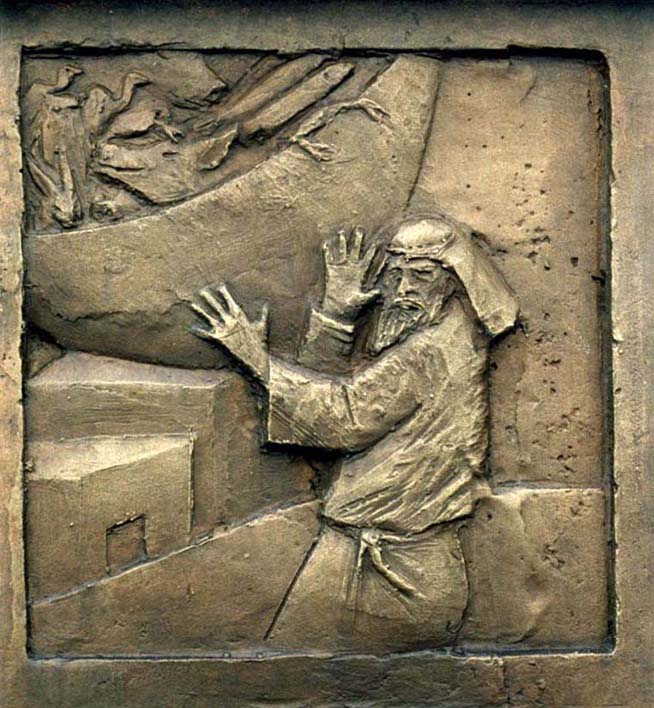
Acts 10 Peter's Vision bas relief

Acts 10:45 – August 9, 2015

Here in the church, we sometimes talk about missionaries going to far-flung places in distant parts of the earth. They navigate visible and invisible borders and boundaries. But not me! I’ve always lived here in the Chicago area. One big similarity? I served in three multi-cultural hospitals. For almost ten years, in several hospitals and extended care centers around Chicago, I worked as a chaplain. I dealt with patients, their loved ones, and health care staff—on a regular basis. Instead of going to the world, I had the world come to me, in the hospital.

What in the world does this have to do with our sermon today? I’ll tell you, in a story-telling kind of way. We start off in Caesarea, a Roman city on the coast of the Mediterranean Sea, the Roman capital of the Roman province of Judaea. Thoroughly Roman in every way, from its pagan temples, amphitheater and other architecture to the brand new deep harbor, thanks to superior Roman engineering skills.

Here we meet Cornelius, a Roman centurion, in charge of one hundred soldiers. (He’s a Gentile, by the way.) Let me tell you what Dr. Luke has to say in Acts chapter 10. I’m reading again from the excellent version translated by J.B. Phillips. “1-3 There was a man in Caesarea by the name of Cornelius, a centurion in what was called the Italian Regiment. He was a deeply religious man who reverenced God, as did all his household. He made many charitable gifts to the people and was a real man of prayer.”

Did you all catch that? Cornelius reverenced/revered God! The God who made heaven and earth. The God of the Jews. But, he was a . . . Gentile! Not a drop of Jewish blood in him.

What happens next? “About three o’clock one afternoon he saw perfectly clearly in a dream an angel of God coming into his room, saying, “Cornelius!” 4a He stared at the angel in terror, and said, “What is it, Lord?” 4b-6 The angel replied, “Your prayers and your deeds of charity have gone up to Heaven and are remembered before God. Now send men to Joppa for a man called Simon, who is also known as Peter.”

The town of Joppa was not just a mile or two down the road. No, the soldier Cornelius needed to send his servants between thirty and forty miles away in order to fetch this Simon Peter guy. Which, Cornelius did, right then and there.

Meanwhile, in Joppa—I imagine a split-screen sort of a deal here. On this side, here is the city of Caesarea. A large, Roman-style house. The camera zooms in on the centurion Cornelius, just having dispatched his men to go fetch Peter. And—on the other side of the screen, we have the camera: starting out in a long shot. We see the street scene on an afternoon in Joppa. The camera pans in, coming closer and closer to a particular building. A smaller house. Simon Peter is sitting up on the flat roof, catching some breeze off the ocean in that coastal town.

Dr. Luke continues: “9-13 Next day, while these men were still on their journey and approaching the city, Peter went up about mid-day on to the flat roof of the house to pray. He became very hungry and longed for something to eat. But while the meal was being prepared he fell into a trance and saw the heavens open and something like a great sheet descending upon the earth, let down by its four corners. In it were all kinds of animals, reptiles and birds. Then came a voice which said to him, “Get up, Peter, kill and eat!” “

In the Mosaic Law, recorded in the books of Exodus, Leviticus and Deuteronomy, the Law code has definite restrictions on what any good, kosher-keeping Jew is and is not allowed to eat. A few well-known forbidden foods are no pigs—no pork. No shrimp or other shellfish. Also, no rabbits or snakes, and no owls or birds of prey. These are just a few of the kinds of animals, fish and birds that are forbidden, for various reasons. So, let’s see what happens next!

14 Peter said, “Never, Lord! For not once in my life have I ever eaten anything common or unclean.” 15 Then the voice spoke to him a second time, “You must not call what God has cleansed common.” 16 This happened three times, and then the thing was gone, taken back into heaven.”

Wow! Amazing vision that Peter had! Talk about totally blowing Peter away. Peter had always—all of his life—kept kosher. Eaten only the things that the Mosaic Law code said he could eat. Now, out of a clear blue sky, this vision is telling him that God calls all things clean!

I want to take a little detour. Tell you a bit about my two chaplain internships, after graduating seminary. I dug right into learning about various faith traditions. I learned about widely different cultural traditions, too. This was a natural progression for me, learning more of how to accompany diverse people in crisis, critical care, trauma and end of life. It sounds rather odd, talking about my years of intensive learning and stressful internship in this way, but I very much appreciated every intense, multicultural experience I had: both in the classroom, as well as on the floors and units of the hospitals and care centers.

Let’s come back to Acts, chapter 10. “17-20 While Peter was still puzzling about the meaning of the vision which he had just seen, the men sent by Cornelius had arrived asking for the house of Simon. They were standing at the very doorway of the house calling out to enquire if Simon, surnamed Peter, were lodging there. Peter was still thinking deeply about the vision when the Spirit said to him, “Three men are here looking for you. Get up and go downstairs. Go with them without any misgivings, for I myself have sent them.”

“23b-26 On the next day Peter got up and set out with them, accompanied by some of the believers from Joppa, arriving at Caesarea on the day after that. Cornelius was expecting them and had invited together all his relations and intimate friends. As Peter entered the house Cornelius met him by falling on his knees before him and worshiping him. But Peter roused him with the words, “Stand up, I am a human being too!”

I need to interrupt, to let you know—Peter and his Jewish friends from Joppa, being good observant Jews, were forbidden by the Jewish Law code to enter the house of a Gentile. Yet—that is exactly what Peter intended to do! Let’s continue.

27-29 Then Peter went right into the house in deep conversation with Cornelius and found that a large number of people had assembled. Then he spoke to them, “You all know that it is forbidden for a man who is a Jew to associate with, or even visit, a man of another nation. But God has shown me plainly that no man must be called ‘common’ or ‘unclean’. That is why I came here when I was sent for without raising any objection.”

As for me? All three of the hospitals where I served were in the middle of multicultural areas, a crossroad of the multicultural communities of Chicago and the surrounding area. One of these hospitals has the distinction of sitting in one of the most diverse ZIP codes in the country. (The U.S. Census Bureau says so.) I never knew who was going to be in that next room I entered, or what situation I was going to encounter next.

34-43 Then Peter began to speak, “In solemn truth I can see now that God is no respecter of persons, but that in every nation the one who reverences Him and does what is right is acceptable to Him! God has sent His message to the children of Israel by giving us the good news of peace through Jesus Christ—He is the Lord of us all.” Ahh. We can see that slowly, very slowly, Peter is taking baby steps towards being open to more than just Jews.

When I served as a chaplain, I didn’t just serve Protestant Christians. I remember a Buddhist Asian family in critical care, as their loved one died just as I came in—complete silence and intense sadness greeted me as I joined them in the room. Another time, I entered the packed ICU cubicle—wall to wall with a Pentecostal Latino family, who wanted me to pray their brother (and uncle) across the River Jordan. (The crashing, palpable waves of grief struck me again and again…I vividly remember.) It wasn’t all end of life. I remember being asked to pray the Rosary with a Filipino family around their ill auntie, lying in the hospital bed. There was the situation with an older Muslim patient, and the 20-something relative wearing black hijab and very conservative dress, sitting next to the bed; she earnestly asked me to pray. Of course I did!

In fact, Peter goes on to say: “We are those witnesses, we who ate and drank with Him after he had risen from the dead! Moreover, we are the people whom He commanded to preach and bear fearless witness to the fact that He is the one appointed by God to be the judge of both the living and the dead.”

This sermon Peter preached—for it was a sermon!—had its effect. The Gentile audience heard Peter, and what happened? “44-46a While Peter was still speaking these words, the Holy Spirit fell upon all who were listening to his message. The Jewish believers who had come with Peter were absolutely amazed that the gift of the Holy Spirit was being poured out on Gentiles also; for they heard them speaking in foreign tongues and glorifying God.”

Did you hear what happened? Praise God! These Gentiles believed, and the same thing happened to them that had happened to the Jewish believers in Acts chapter 2! The gift of the Holy Spirit came upon the Gentiles, too.

Remember what Peter told his Jewish audience, at Pentecost? Acts chapter 2? Joel’s prophecy regarding the outpouring of the Holy Spirit had been fulfilled. All who call upon the name of the Lord will be saved (Joel 2:32a). At first, Peter and the rest of Jesus’ followers thought that all only meant Jews. And then, Samaritans were added.

I have Good News for you. I have Good News for us all. Jesus is the Lord of all (10:36b). All Jews and all Gentiles who believe in Him receive forgiveness of sins through His name (10:43). As the commentator Richard Carlson said, the Apostle Paul had it exactly right, “In Christ there is neither Jew nor Gentile, slave nor free, male nor female” (Galatians 3:28). In Christ, there is neither Republican nor Democrat, citizen nor undocumented visitor, gay nor straight, for all are one in Christ Jesus.

In God’s salvation plan, all now really means all.

Alleluia, amen!

@chaplaineliza

Suggestion: visit me at my daily blog for 2015: matterofprayer: A Year of Everyday Prayers. and my other blog,  A Year of Being Kind .  Thanks!

Unknown's avatar

We Cannot Keep from Speaking!

“We Cannot Keep from Speaking!”

Peter - cannot stop Acts-4-20_2

Acts 4:1-20 – June 21, 2015

Ever had this situation happen to you? Just when you thought you had taken care of some pesky problem, here it comes, all over again! Sort of like the carnival game Whack-a-Mole. Just when you whack at all the moles, and think that they are all gone—that your problems are all solved—here they come again! Popping up all over the place.

I suspect the ruling council in Jerusalem felt this way just about now. Here they had rid themselves of that troublesome Rabbi Yeshua, or Jesus, some weeks ago. They had even gone to their Roman governor, Pontius Pilate, to get his permission to put this upstart Rabbi to death. They got some people to accuse Jesus of insurrection and treason, so He would be killed by crucifixion. That was it! Done! One great, big, pesky problem taken care of!

True, there were some rumors about Jesus coming back to life a few days later, but that was just a rumor. Resurrection? Hah! Sounds pretty far-fetched to me. It was far-fetched to the ruling council, to the Sanhedrin, too.

They didn’t figure on Peter, John, and the rest of the disciples. They didn’t figure on the blowing of the Holy Spirit at Pentecost, or the energy of the new believers in the Risen Jesus.

Our summer sermon series, Postcards from the Early Church, reminds me a bit of a radio serial. You might remember those! “When last we left our intrepid heroes . . . “ Last week, we saw Peter and John about to enter the Temple in Jerusalem for daily afternoon prayers. A long-time beggar, lame from birth, asked Peter and John for alms—for money. Peter made that extraordinary statement to the lame beggar: “Silver and gold I have none, but what I have I give to you. In the name of Jesus of Nazareth, stand up and walk!”

As I mentioned in my sermon last week, Peter suits the words to his action. He leans forward, grasps the lame man’s right hand, and raises him to his feet.

What happens next? “Immediately his feet and ankles were made strong.” Whatever congenital defect there was in his feet and ankles was immediately, miraculously healed. The ex-lame-beggar could walk. And not only totter around, but leap in the air! He praised God right there inside the Temple, giving immediate public testimony to God’s mighty power!

This was a big problem for the Jewish leaders in Jerusalem, believe me! Just when they thought that pesky Rabbi Jesus was all gone, permanently taken care of, they have even more miracle-workers on their hands. The disciples, the friends who had been with Jesus.

The Sanhedrin—the Jewish leaders—quickly grabbed Peter and John, and threw them into prison. Right after this marvelous miracle! I am sure the bystanders were asking, “What gives? These men did a miracle! Why are you arresting them?”

But—are we surprised? Looking at the Hebrew Scriptures, many of the miracle-working prophets were misunderstood, mistreated, imprisoned. Exiled, and even put to death, sometimes.

The Jewish leaders needed to get on this miracle stuff right away. Try to hush it up. See whether they could sweep the whole business under the rug. But—there was a problem. This was a very public miracle, done in downtown Jerusalem, at the height of rush hour. Or, the equivalent. Afternoon prayer time at the Temple in the city center.

We see from this reading today that the leaders had Peter and John thrown into prison overnight. For working a miracle! For doing what God had called them to do!

This makes me think of the Civil Rights movement and marches of the 1950’s and 1960’s. A friend of mine, Ken, (a recently retired seminary professor) marched alongside of African-American activists. A good friend of this church, Pastor Gordon, attended several marches in the South during the 1960’s. It was a tense, even dangerous time. Both my friends were jailed in the aftermath of the marches. Both are proud to say that they were imprisoned for standing up for a Godly cause.

Back in Jerusalem, the day after the miracle occurred, Peter and John were hauled out of prison and brought in front of the Sanhedrin. The ex-lame-beggar was there, too! The Jewish leaders could not deny that this man—who everyone knew as lame from birth—now had full use of his fully-restored feet and ankles. The news of the miracle was traveling around Jerusalem like wildfire! The leaders knew they had to let Peter and John go free.

But Peter wasn’t done yet! Just like the carnival game Whack-a-Mole, where the Sanhedrin desperately wanted to make all those pesky miracle-working moles go away, Peter kept on popping up. And, he spoke to the learned Jewish leaders and teachers, too.

Peter quoted from Psalm 118 in his defense of the miracle he and John had done. He said to the Sanhedrin, “by the name of Jesus Christ the Nazarene, whom you crucified, whom God raised from the dead—by this name this man stands here before you in good health. 11 He is the stone which was rejected by you, the builders, but which became the chief corner stone. 12 And there is salvation in no one else; for there is no other name under heaven that has been given among men by which we must be saved.”

Talk about in your face! Peter had a lot of guts, speaking to the ruling leaders of his country like that!

As commentator Scott Hoezee brings out, “the Spirit led them to a lowly little textual nugget embedded deep inside one of the lesser known of all the psalms and prompted Peter to use that little verse as the perfect summary of what God’s ways are all about.” This idea is something that Peter repeats again and again. The stone which the builders rejected has become the cornerstone of the building. The most important part of the whole structure. “That’s my Rabbi, Jesus of Nazareth. Oh, and by the way? You Jewish leaders crucified Him!” (That’s guts.)

By Peter quoting this psalm, he reminded these leaders of an unpleasant confrontation between Jesus and the Jewish leaders, shortly before His death. I appreciate another commentator’s words: “It was to say, in effect, “Jesus told you so.” How this citation must have stung in the ears of the Sanhedrin. The One they thought they had rid themselves of was still speaking to them, through the apostles.” The Jewish leaders didn’t have just one pesky problem any longer. The problem had multiplied.

Oh, my goodness. The Sanhedrin tries to tell Peter and John and the rest to shut up. To keep quiet about this Jesus person!

But it does just as much good as attempting to hold back the wild waves of the ocean. In other words, it doesn’t work at all. There is far too much power, far too much momentum behind that crashing ocean wave of testimony.

Despite the stern orders to “pipe down! Sit down and shut up!” Peter and John refuse. Their response? “Whether it is right in the sight of God to give heed to you rather than to God, you be the judge; 20 for we cannot stop speaking about what we have seen and heard.”

What about us? Are we eager to tell people about what we have seen or heard? What about the mighty deeds we have experienced? Or, perhaps you haven’t had God do anything extraordinary in your life lately. Can you tell people about how God has been faithful? God has continued to walk with you, each and every day. I encourage you to tell someone! Amen!

Praise God, each of us can talk about something God has done—for each of us. God has given each of us a new day, each and every day. Praise God! That is truly something to praise and thank God about. Can we all say Amen? Amen! And again! Amen!

@chaplaineliza

(Suggestion: visit me at my daily blog for 2015: matterofprayer: A Year of Everyday Prayers. and my other blog,  A Year of Being Kind .  Thanks!)

Unknown's avatar

Friends, Not Servants.

John 15:9-15 – May 10, 2015

handshake drawing

“Friends, Not Servants”

How would you like to have no friends? None, at all? According to several recent surveys, a significant number of American adults say that they have no friends. Today, in this fast-paced world with so many people rushing to and fro, and so many things filling our lives, who has the time for real friendship? Who has the commitment? How do we meet friendly people? How do we make room in our lives for genuine, honest relationships?

Another name for having no friends is being disconnected, or cut off. This idea of being cut off, with no friendships or relationships, to my mind, is like living without love. It is exactly what condition I am in without God.

Without God in my life, without a vertical relationship with my loving Heavenly Parent, I am lost. I am hard-pressed to find any joy in my life. This makes it very difficult for me to connect with other people in a horizontal way, in any meaningful way.

Let’s turn to our gospel reading for today. One of the important points He makes when He is talking to His disciples, our Lord Jesus mentions servants. As the Greek word doulos is translated, slave. Jesus describes His disciples being called servants, or slaves.

That image struck me. I know something about slavery at the time of the 1st century of this common era, when our Lord Jesus was here on this earth. I know about the imagery that the Apostle John brings up here in chapter 15 of his gospel: the image of slavery. Bondage. This image was very familiar to the people of the first century; ancient society was built on slavery. This image is less familiar, even distasteful for us, here in 21st century America, but John uses it several times in his gospel, including here.

If I consider a similar passage about believers being servants—slaves in Romans 6, where the Apostle Paul also talks about being a servant, a slave, I find out some interesting things. Slaves became slaves through a number of different ways: through economic hardship, by becoming prisoners of war, or by being children of slaves. Slaves were utterly dependent on their masters, and were looked upon with scorn in the world of the first century. Slaves have no rights, no voice, nothing at all except to do the will of their master. The Apostle Paul says sin is our master. So sin claims our allegiance and service.

Except—Jesus through His death on the cross has transferred us from being slaves, or servants of sin to servants of God. To me, that is good news indeed!

But wait, there’s more. Much, much more.

Jesus talks with His disciples for the last time here in the room where they ate the Passover dinner, just a few hours before He is arrested and tried. He tells them all kinds of really important things, like how to be close to Him, how to treat each other, and even commands them to love each other. Here, in this reading today, our Lord Jesus makes a tremendous statement: “I do not call you servants any longer, because the servant does not know what the master is doing; but I have called you friends.” That’s friends! Of our Lord Jesus!

When I was doing some study last week and preparing this sermon, I happened upon a biblical reflection about this particular passage from John 15. A pastor named Melissa Bane Sevier made the following observation.

A few months ago this pastor was eating pizza with some of her church’s youth on a Sunday night at youth group. She asked them what it means to be a friend. She wrote down all the definitions, because they were better than any she could come up with. “A friend is someone who is herself.” “A friend cares about you, listens to your problems, and helps you.” “A friend thinks about you before he thinks about himself.” “A friend cares about other people’s opinions and beliefs, and respects them.” Astute descriptions coming from these teenagers. They are showing wisdom beyond their years.

Just imagine: that’s what these teens thought were the attributes of a good friend. Here, in this passage from John 15, Jesus is offering us friendship, a relationship, intimacy with God! I repeat Jesus’ words: “I do not call you servants any longer, because the servant does not know what the master is doing; but I have called you friends.”

The Greek verb in this verse is significant, too. The Greek word for “called” is the verb “ereo.” This verb means “to declare,” or “to promise.” So, our Lord Jesus is not only calling or mentioning we are friends, He is declaring, or promising that we are now friends. This change in our status did not happen because of anything that we did or said. No. This change in status was totally up to Jesus. It’s all Him. He decided, He declared that we are now the friends of God!

This was rare in the Hebrew Scriptures. “The Lord used to speak to Moses face to face, as a man speaks to a friend,” the book of Exodus says (33:11). Absolutely, the Lord extends His friendship and favor to Moses. In the book of Isaiah it is God and God only who says the same thing of Abraham. “Abraham, my friend,” God says of him (41:8). It is a staggering thought. Think about it! The friendship of God?

During the time of the first century, there was a special designation for certain, very special people. They were called Friends of the Emperor, or Friends of the King. They had the privilege to have access to him at any time, day or night. The Friends of the King had the closest and most intimate connection with him of anyone.

I have news for you—we are friends of the King. The King of Kings. We have the ability to talk to our Lord Jesus at any time, night or day. That is a tremendous opportunity, a wonderful privilege. You and I no longer have to stand afar off like servants, with our eyes lowered and faces to the ground, like servants who have no right to enter into the presence of the master. No! Jesus gave us this intimacy with God, so that God can be our best friend, our heavenly Friend!

We can see from our Lord’s words that God wishes to reveal Godself to us. Jesus tells us that He has revealed the things of God to us. That is what a friend does. How many people can you go to, can you reveal deep troubles to, or share wonderful joys?

Jesus wants to be friends with us! Good friends, the best there is!

And Jesus not only is friends with us, but He wants us to be friends with each other, to love one another. We know from experience what kind of friend Jesus is to us.  His command to us is to be that kind of friend to others. “Love one another,” He says.

And friendship is a two way street. Relationships go both ways, otherwise they are not much of a relationship. I urge you to think about yourself, about your friendship with Jesus. What kind of a friend are you to Jesus? And consider: what kind of friend is Jesus to you?

What an opportunity to have the relationship of our lives!

Praise God that God has sought us out, and offers us the opportunity to be friends with God. Good friends, the best friends there is. We can tell the Lord anything—absolutely anything at all, and we will receive understanding, help and encouragement from a loving, caring God.

What a tremendous gift! And what a tremendous God.

Alleluia, amen.

@chaplaineliza

(Suggestion: visit me at my daily blog for 2015: matterofprayer: A Year of Everyday Prayers. and my other blog,  A Year of Being Kind .  Thanks!)

Unknown's avatar

Listen for the Shepherd’s Voice

“Listen for the Shepherd’s Voice”

Jesus Mafa, from a Christian community in Cameroon, Africa. From Art in the Christian Tradition, a project of the Vanderbilt Divinity Library

Jesus Mafa, from a Christian community in Cameroon, Africa.
From Art in the Christian Tradition, a project of the Vanderbilt Divinity Library

John 10:14-16 – April 26, 2015

So many voices, sounds and cries, clamoring for our attention today! Noisy voices, going bash, bang! Clash, crash! Busy voices—hurry, scurry! Going round and round, almost spinning out of control! Angry voices, growling, scowling, mean and nasty. Making me want to run and hide myself away! All of these loud voices, and sounds, almost too much to handle.

Here in our Gospel reading today, Jesus talks about being the Good Shepherd. He is referring to us—that’s each one of us—as sheep. Rather unflattering, but in my opinion, pretty accurate.

Jesus portrays Himself as the Shepherd. The Good Shepherd, caring for His sheep.

Sheep can be fearful, not sure of what to do. Sheep can be stubborn and single-minded, going their own way. Sheep can even be gluttons, eating food that will make themselves sick unless they are steered away from certain kinds of plants in the pasture. But our Lord Jesus identifies Himself as our Shepherd. That’s a difficult job. Being Shepherd of so many, varied, and assorted kinds of sheep.

As someone who was born and bred in the city of Chicago, I do not know anything at all about sheep, or lambs, or ewes. However, I have learned a number of things since I’ve become an adult. I’ve gleaned information from books, and articles, and from people relating their experiences with sheep.

You might be aware that sheep are at the same time stubborn and timid.

Sheep aren’t good at many things. They are relatively dumb animals and can do little on their own. However—they are good at following—sometimes. As I have read on one of my favorite inductive bible study websites, sheep are also good at distinguishing sounds. They can recognize the familiar voice of their own shepherd. They often follow their own shepherd willingly enough, but won’t pay any attention to others who try to lead them—sometimes.

Even still, as our Good Shepherd, I suspect that Jesus has a difficult time in leading His widely varied multitude of sheep around the pasture. What with stubborn or confused ones wandering off into far-flung or seldom-traveled areas of the pasture, this huge flock must be hard to keep track of, and even harder to round up.

This particular morning, I want to focus on one particular verse: John 10:16. Our Lord Jesus mentions that He has lots of sheep. Other sheep, from outside of this little sheep pen. Lots of sheep, from all over the place. Even from all over the world! Jesus is not going to neglect those other sheep, either.

What are we, as sheep, going to do out on the hillside, when we are out in the great, big pasture with Jesus? This wide pasture can be a scary place. We might get lost from the Good Shepherd. Maybe there are dark places, rough spots on the hillside, where I as a sheep, or some of the other sheep, might wander off. Maybe, get in trouble, become sick, have an accident, or meet a predator.

Let’s consider the wider context. The wider world. Other voices can be just as loud as the welcoming, confident voice of our Good Shepherd. Instead, the craving, the desire for more, and never having enough. Just think how listening to that alluring, insidious, beckoning voice can destroy relationships within a family or a group of friends.

A second voice can be quite loud, drowning out the supportive voice of the Good Shepherd. Instead, the sneaking voice of suffering and despair, weakness and sorrow. The penetrating voice of bitter tears and clamor can distract and cause a great deal of dismay. That insistent voice doesn’t have to be loud, but is so often nagging, persistent, even heart-rending.

What can our Good Shepherd do, in those cases? I admit it. I am often a fearful, anxious sheep. I cry out, and say “help me!” or “save me!” And, “I’m scared!” or “I’m all alone!” Thank God that our Shepherd Jesus has a strong, familiar voice. He is insistent and persistent, too!

          I can hear Him when He calls out to me. Can you hear Him when He calls to you, too?

When my older two children were very small—I’m talking a toddler and a preschooler, now—I can vividly remember one time when we were at a department store in Chicago, in the women’s clothing section. There were a great number of round clothing racks, about four feet high, and I was pushing my younger daughter in a stroller. I took my eyes off my older daughter for just a few seconds, and by the time I looked back at the place where she had been standing, she was gone.

I tried not to panic, but began calling her name. Calling over and over, traveling in and out among the many racks, around the clothing section. Sure enough, she came out from the middle of one of the clothing racks where she was hiding, coming towards my voice. A familiar, comforting voice, one that she knew well. She knew she could respond to that voice in trust and assurance.

Do we know the familiar, nurturing voice of Jesus, our Shepherd? Or, is that voice the voice of a stranger—to us? Is Jesus just a nodding acquaintance, or is He one of our best friends?

Let me tell you about a Lutheran pastor who I sincerely respect, the Rev. Dr. Janet Hunt. I often read her sermons online. I was especially moved by the one she wrote on this passage.

She, too, is listening for the nurturing, encouraging, supportive voice of the Shepherd in her life. As she listened for the voice of the Shepherd, she found herself remembering other, life-giving voices which have shaped her.

Let Dr. Hunt tell you, in her own words:

“When I was in my last month of seminary, my adviser Paul was preparing to retire. Like me, he was a lover of books, but without his office shelves, he needed to get rid of a whole lot of them. So he let me have my pick. . . . A number of them still sit on my shelf. Paul died of cancer not long after that, so all I have left of him are those books with his handwritten name inside and a handful of letters he sent me while I was on internship. . . . I feel as though I still hear his voice of confidence in me whenever I run my fingers along their spines.”

We can see that our Good Shepherd’s encouraging voice can echo in the voices of other dear ones, too. Other helpers, who reflect that familiar Voice of our Shepherd, and also serve as confident supports. Challenge and teach us. Mentor us. Come alongside of us, and act as nurturing, helpful voices in each of our lives.

          What do you hear as you listen today?

Do you hear the confusing voices of the world? Or, do you hear the nurturing voice of Jesus, our Shepherd? Do you hear the discouraging internal voices of sadness, hurt, and depression? Or, does the comforting voice of Jesus come through, loud and clear?

          I encourage each one of us to listen for our Good Shepherd’s voice.

Listen to that familiar, comforting, nurturing, supportive voice. This is the Good Shepherd, who loves each of us so much He laid down His life for the sheep. Praise God, we can celebrate! We can rejoice that we do have a Good Shepherd who intimately knows each one of us, and loves us. No matter what. Praise God!

Alleluia, amen.

@chaplaineliza

(Suggestion: visit me at my daily blog for 2015: matterofprayer: A Year of Everyday Prayers. and my other blog,  A Year of Being Kind .  Thanks!)

Unknown's avatar

Seeing is Believing!

“Seeing is Believing”

Jesus and Thomas illustration John 20-24

John 20:24-29 – April 12, 2015

Seeing is believing! Or . . . is it?

I wonder what things come to mind when I mention the phrase, “Seeing is believing”? Or even, “I won’t believe it until I see it!” Sometimes, people can be really doubtful about things. I can just imagine several people I know folding their arms across their chests and saying, “Unless you show me . . . “

In the gospel account we read today, from John 20, the disciple Thomas had just that reaction. After the resurrection, the first time Jesus came to the disciples, Thomas was not there. We’re not told why, simply that he wasn’t there. Maybe he was scared, maybe he was away, or out of town. Maybe he was sick. We just aren’t told why he wasn’t there.

The ‘why’ is not the important part. The fact that Thomas wasn’t present is. Thomas had doubts. Sincere doubts. Truth to tell, the other disciples’ story was a little farfetched. I mean, how many people have you known who came back from the dead, and walked through walls into a locked room?

I wonder. I wonder if Thomas’ reaction strikes a chord with anyone here today. How many of us today are like Thomas? Doubting that Jesus has risen indeed from the dead? Or, completely missing Jesus, and doubting that Jesus is even here at all, today?

Let’s think some more about Thomas and his reaction. Thomas not only doubted, he also refused to believe! He not only doubted, he wanted concrete proof. Tangible proof, proof he could touch and feel and handle. Thomas wanted to put his hands in the nail marks on Jesus’ hands. That’s pretty concrete.

As I thought more about Thomas and his reaction and attitude toward Jesus and His first appearance to the disciples, I was reminded about my children. Generally, children have concrete thinking processes, especially smaller children. I have four children, and I’m accustomed to talking with them and communicating in more appropriate ways for their age groups. My children are just about grown up now. But when I used to explain something about God to my children, sometimes it was difficult for the younger ones to fully grasp the ideas I’m trying to explain. And they can ask some pretty hard questions. Gee, sometimes it’s difficult for me to know how to explain things about God to anyone who asks!

Maybe Thomas needed more concrete explanations, too. We just aren’t sure. The Gospel of John isn’t clear at this point. We as readers don’t know why Thomas had difficulty believing. But the gospel account says he did.

How many of us today are like Thomas? Not sure? Not believing? Closed up behind the locked doors of feeble faith? Not believing that Jesus can make a difference in our lives today? Could Jesus come and reveal Himself to Thomas? Can He come and reveal Himself to those today who are fearful, doubting, and unbelieving? . . . Can He reveal Himself to me?

Perhaps Thomas even had difficulty finding something to believe in, since he had so recently seen his Master and Teacher arrested and crucified. Grief, fear, anger, dashed hopes, shattered dreams. I strongly suspect several, if not all of these, were operating in Thomas’ life at this time.

These strong feelings and emotions inside are intense, and raw. From what is known today about the stages of grief, Thomas could very well have been feeling awful, angry, fearful and upset. Thomas could have felt like his life was falling apart. But Jesus can break through all of that. Jesus could enter Thomas’ life with new hope, standing right in front of him. In the same way, Jesus Christ can enter through the closed doors of our hearts, and meet us where we are, with open arms.

Just as Jesus did not leave Thomas high and dry, to figure things out on his own, so Jesus will not leave us. Our Lord came to Thomas in the upper room, despite his doubts and unbelief, and Jesus also comes to us in our doubts, and in our unbelief.

Now, Thomas didn’t actually see Jesus, at first. He had just heard from others who had seen Jesus. But then, a second time, the risen Lord appeared to the disciples. Again, in the locked room, and this time, Thomas was there.

What were Jesus’ words to Thomas? “Put your finger here and see my hands. Reach out your hand and put it in my side. Do not doubt, but believe.”

Thomas responded with that tremendous affirmation, “My Lord and my God!” Praise God for the sincere, heartfelt response of Thomas.

Jesus’ words to His doubting disciple serve as words of comfort and reassurance to me. I know I have doubts and fears, sometimes. And just as Jesus did not leave Thomas doubting, so too, Jesus will not leave me doubting, either. He will welcome me with open arms, coming through the locked doors of my fear, anger, doubt and unbelief.

Thomas saw Jesus. Seeing was believing, in Thomas’ case. Moreover, the risen Jesus continues with the statement, “Have you believed because you have seen me?” –here’s the best part of all. “Blessed are those who have not seen and yet have come to believe.”

What was that Jesus just said? Did I read that correctly? “Blessed are those who have not seen and yet have come to believe.” So–the Gospel of John says here that all who have not actually seen the risen Lord and yet have come to believe are indeed blessed.

That means Christians throughout the centuries are blessed, since they have come to believe in Jesus Christ and yet have not actually, physically seen Him as risen from the dead. That means you and I are blessed, since we have come to believe in Jesus Christ, too. How awesome is that? I am–you are–we all are blessed because the Lord Jesus says so!

Just as Jesus helped Thomas to believe, so the Gospel of John helps us to believe, too. This Gospel was not only written to bear witness so long ago, in the first century, some years after Jesus was raised from the dead. This Gospel was also written for the many generations which have come to believe throughout the centuries. And that includes us, too. Even though we may have doubts, and unbelief, and wonder whether, and why, or even why not, Jesus comes to us in our doubts and unbelief. Our Lord comes to us with reassurance and open arms and says “Do not doubt, but believe!”

Praise God that as we come to believe that Jesus is the Messiah, we can have life in His name. And Jesus can come to us, at any point in our walk with the Lord, no matter what the circumstance happens to be, no matter where we are in our lives. Thank God that Jesus will be there for us and with us, no matter what. May we all be able to affirm, with Thomas, that the risen Jesus is our Lord and our God.

Alleluia, amen.

@chaplaineliza

(Suggestion: visit me at my daily blog for 2015: matterofprayer: A Year of Everyday Prayers. and my other blog,  A Year of Being Kind .  Thanks!)

Unknown's avatar

Generous With Our Actions

“Generous With Our Actions”  (delivered at St. Luke’s Church, Morton Grove, Illinois)

John 5:8-9 – March 1, 2015

Ever know someone who is a pessimist? A sad sack? Always down in the mouth? Things constantly seem to go wrong for this poor guy! (Or, girl, depending.) Our Gospel reading has someone who seems to typify this type of person. I am talking about a starring character in this passage from John Chapter 5.

Let’s set the scene. Here we are, in Jerusalem. The Rabbi Jesus came to the city periodically. He was an itinerant rabbi, after all, traveling through Galilee, Judea, even Samaria. Jesus and His followers came to the capital city to worship at the Temple on a regular basis. While Jesus and His friends were walking by a famous healing pool called Bethesda, Jesus must have seen a great number of people who were sick, lame, and otherwise disabled.

According to one of my commentaries, the famous pool was placed right over a stream which still flowed underneath the city of Jerusalem. That reminds me of something we have in abundance here—water! Little streams and waterways flow right through this whole area of Morton Grove, a former wetlands area. Our trustee Bob tells me we have a small section of the church parking lot where there is a source of water underneath. Last summer, when the parking lot was stripped and repaved, the water started bubbling up.

So, I can relate, in part, to this reading. Apparently, the underground stream beneath the pool of Bethesda made the waters of the pool bubble up periodically. And, the folklore of that area had a tale to explain the bubbling. An angel came and stirred the water around. Made it bubble up. The first person in the water after the bubbling was healed! Or so the local tale of healing went. So, many blind, lame, or paralyzed people used to sit or lie on the sides of the pool, just waiting for the next time the waters were stirred up.

It’s not uncommon for people who have various illnesses to gather around mineral springs. Think of the springs around Tiberias on the Sea of Galilee. Or, in our own country, of the waters of Hot Springs, Arkansas. Long before the Spaniards arrived on our shores, the waters already had a name for healing and being curative.

Let’s go back to the pool of Bethesda. There was a complication here. A snag. I am not sure exactly how Jesus found out about this particular man—out of all the poor people lying and waiting around the pool. Perhaps He was told about a particularly sad tale about a paralyzed man who had been lying there next to the pool for thirty-eight years. Imagine! Thirty-eight years!

This is the man I was thinking about when I started my sermon. The sad sack. Nothing ever went right for this poor guy! I wouldn’t blame him for being depressed and disappointed with his life. Things certainly hadn’t been particularly rosy for this man. Not for a long time.

Let me ask again. Do you know anyone who often is pessimistic? Sad? Disappointed in life? Has life continued to give him—or youor me—only lemons? I know two people like this. One, in particular, always has problems with his house. He isn’t handy, so he regularly needs to call handymen. Or contractors. Or the plumber. If it isn’t one thing, it’s the other. And if it isn’t the house, it’s his car. Almost as if he was walking around underneath a portable raincloud. Raining on his head all the time. Or so it seems.

With a life full of sadness and disappointments, this paralyzed man who had been by the pool for thirty-eight years must have had huge barriers and blocks built up! Built up, at least, in his mind. In his expectations. In his whole demeanor. It’s how he lives. It’s his—sad—lot in life.

What does the Rabbi Jesus ask this man? John tells us Jesus knew the man had been lying there for a long time. But, listen closely to Jesus’ question: “Do you want to be made whole?”

Here’s one possible response, borrowed from a sermon by a fellow minister.

“No thanks, I think I’ll just stay here on my pallet and wait for the waters to ripple. I’ve been here 38 years and I know what to expect and I know all of the other people nearby. True, I’m probably not going to get better, but – you know – I’ve gotten used to being here. So, thanks all the same, Jesus, but I’ll just continue to lie here.” This kind of response from the man can be understandable.

Let’s go one step further and listen again to this middle-aged, perhaps even older paralyzed man grumbling to Jesus. “These young whippersnappers, lying next to the pool! Can you imagine, these young punks can get to the water before me! Then, they get healed! So, I’m always too late!” As we listen, we can hear this man’s chronic complaining, his excuses, his inability to get to the healing waters in time.

We come back to Jesus, again. Remember, He asked this man whether he wanted to be made whole. Essentially, whether he wanted to change. Change can be scary! Change can be different, even difficult—something this man has probably never experienced before! Lying by the pool? Waiting for the waters to bubble up? That’s what that paralyzed man knew, and knew well. Getting up, and being made whole?? That could be really scary for this man!

Jesus knew this man was scared. Tentative. Possibly, downright disbelieving. But—Jesus, being Jesus, knew exactly what this paralyzed man needed. He needed to get actively involved in his own healing! Not simply to be a passive recipient of Jesus’ gift of healing, His gift of generosity. So Jesus said, “Stand up. Take up your mat, and walk.” This man was to take an active part in his own healing process!

We don’t have a blow-by-blow report of exactly what happened as this man tottered to his feet, or how his muscles and ligaments were miraculously healed and renewed, so he could stand and walk again. All we do know is that what Jesus commanded, happened! Praise God!

Just as Jesus did not want this man to passively receive healing, in the same way, Jesus doesn’t want passive people today, people who just lie on the couch, or sit in the pew. He wants us—that’s all of us—to be active! Actively involved in responding in joy, meaning and purpose.

Just as the paralyzed man found his legs were strong, so we can start being active, and finding our legs are strong enough for us to walk—or even sit—beside others who are in pain and need help. Our arms are actively empowered to embrace our enemies and the outcasts. And remember the paralyzed man and his excuses? When we are actively involved in showing people the love and generosity of God, we no longer make excuses.

At this church, we have many ways for members and friends to be active! Actively involved in showing the generosity of Jesus. The Maine Township Food Pantry. By bringing a few cans or jars or boxes for the pantry and putting them in with the rest of the collection out in the narthex, that’s getting involved! What about the Diaper Pantry, our mission agency of the week? We can buy some diapers and drop them off in the collection barrel in the hallway. And, volunteering at the Kids Academy, the preschool here at the church during the week. Come ask me after the service, and I’ll be happy to give you further information. Those are just three of many excellent ways to actively get involved, and to show the love and generosity of God.

God encourages each of us to get up off our mats—off our pews, too. We can go out into the community, and serve others. Just as Jesus did for this paralyzed man, so we are encouraged to be actively generous to others. Like this formerly-paralyzed man, we, too, can walk forward to new life in Jesus Christ.

Praise God! Amen.

@chaplaineliza

Thanks to the kind friends at http://www.40acts.org.uk – I am using their sermon suggestions for Lent 2015. Do Lent generously!

(Suggestion: visit me at my daily blog for 2015: matterofprayer: A Year of Everyday Prayers. Thanks!)