Unknown's avatar

Have Mercy on Us!

“Have Mercy on Us!”

Luke 17:11-19 (17:13) – October 12, 2025

            Ever been to the dentist, or the doctor, with a health complaint? Of course, you have! You all—we all have, at one time or another. Thank goodness, we live here, in the suburbs of Chicago. It is fairly easy to get good—or even, excellent medical and dental care, as opposed to the rural spaces in the United States, where health care is not as accessible. And, can you imagine outside of this country?

            Imagine living in the first century of the Common Era. In Jesus’ day, doctors were rare even in mid- to large-sized towns. When people had health complaints, there were some homeopathic remedies, true. And local healers, people who were good with herbs, poultices, and ointments. But for continuing problems or chronic diseases? There weren’t many options for any other kind of health care.

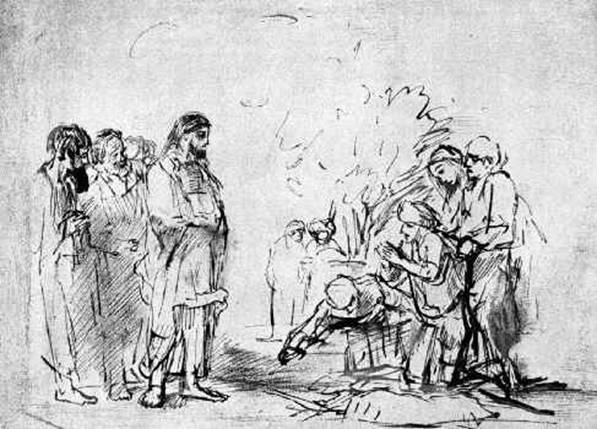
            Let us set the scene. Dr. Luke tells us, “Now on his way to Jerusalem, Jesus traveled along the border between Samaria and Galilee. 12 As he was going into a village, ten men who had leprosy met him.”  We have a situation with some chronically ill people. These people had skin diseases. Commonly referred to as leprosy, these skin afflictions could be anything from severe eczema to Hansen’s disease, what we now know today as leprosy. And any disfiguring skin problem, in between.chronic

            In Jesus’ day, there were priests and Levites stationed all throughout the land of Israel. These official people were not only on duty for the Sabbath day, for religious observance, but they had several other important duties under the law of Moses. Did you know that the priests and Levites could make rulings on whether a person was too disfigured, too blemished to live in close quarters with the rest of the townspeople?  True facts!

            This was an early example of a health code. The priests and Levites were among the first health inspectors! Because some of these skin diseases were contagious, and so the people who had them would contaminate others, the priests and Levites would have to exile them. Kick these former upstanding people out of town. Out of society, and isolated. Marginalized. Exiled. Called ‘unclean.’ Living far away from everyone and everything they once held dear. Ringing bells to warn others not to come near them. That was the situation for these ten lepers we read about in Luke’s Gospel today. What a lonely existence for these poor people.

            The Rabbi Jesus was on His way to Jerusalem with His disciples when he met these ten men, on the border between Galilee and Samaria. This is yet another time that our Gospel writers tell us that “Jesus is again in a border region, again crossing boundaries and wandering where he probably shouldn’t go, and again healing people with whom he has no business interacting.” [1] Commentator Dr. Davis Lose reminds us that Jesus is again doing something out of the ordinary. In fact, extraordinary!  

            Let us consider that this unconventional Rabbi Jesus is not only crossing geographical boundaries and wandering – traveling where “good, rule-keeping Jews” just don’t go. But, Jesus is also interacting with these ten lepers! These men obviously kept at a distance from all other “normal” or “regular” people, except I am certain they had heard of this miracle-working Rabbi! Can’t you just hear the anguish and the hoping-against-hope in their voices as they cry out, “Jesus, Master, have mercy upon us!”  

            Jesus’ response is simple. Straight-forward. “Go, show yourselves to the priests. I can just imagine these ten men, told by Jesus to go and show themselves to the priests in town. Except, Jesus told them to go before He had done the act of visibly healing them from their skin disease. They needed to act, they needed to start to go before they saw what had happened.

            Have you ever needed to go on faith, and start an action, go on a trip, take a step without knowing for sure that God is right there with you? And, the whole idea of a borderland, an in-between place that is neither one place or the other. Doesn’t God meet us right there, before healing is completely complete?  [2]

That’s all Jesus says to them. The verb in Greek means ‘show, or point out something to someone.’ Remember, I said the priests were the health inspectors of that day? Can you understand these ten guys, isolated, banished, marginalized. And Jesus says, “Go, show yourselves to the priests.”

            Lo and behold, “as they went”—that is, in the going—“they were cleansed.” Do you understand? These poor, lonely people believed Jesus, had faith, and were healed as a result. We are not told exactly how they discovered it, but it probably didn’t take too long.

            One ex-leper, out of the original ten—one ex-leper comes back to thank Jesus. Glorifies God! Comes to Jesus and prostrates himself at His feet. Once the Samaritan realized he’d been healed, he couldn’t help but turn back and share his joy and thanksgiving with Jesus.

            Thanksgiving is like that. When it’s genuine, it’s spontaneous—you recognize you’ve been blessed and can’t help but share your joy through thanksgiving.

“Have you ever noticed just how powerful it is not only to receive blessing but also to name it and give thanks for it? Maybe you’re at dinner with family or friends, then you lean over to another, or maybe raise your glass in a toast, and say, “This is great. This time, this meal, you all. Thank you.” And in seeing and giving thanks, the original blessing is somehow multiplied. You’ve been blessed a second time.” [3]

The Samaritan knows he’s been given a gift and can’t help turning around to say something. In doing so, he’s given a second gift: He leaves his encounter with Jesus not only healed but also blessed in his own recognition of healing, blessed at being drawn into deeper relationship with the one he thanks, blessed at hearing himself commended for having great faith.

Imagine the huge difference that must have made in his life. That’s the way thanksgiving works—in giving thanks for gifts given to us, we are blessed again. We can all say alleluia, Thanks be to God!

@chaplaineliza

(Suggestion: visit me at my other blogs: matterofprayer: A Year of Everyday Prayers. #PursuePEACE – and  A Year of Being Kind . Thanks!


[1] https://www.workingpreacher.org/dear-working-preacher/second-blessing

[2] https://www.umcdiscipleship.org/worship-planning/choosing-faith/eighteenth-sunday-after-pentecost-year-c-lectionary-planning-notes/eighteenth-sunday-after-pentecost-year-c-small-groups

[3] https://www.workingpreacher.org/dear-working-preacher/second-blessing
Unknown's avatar

A Foreign Neighbor’s Thankfulness

“A Foreign Neighbor’s Thankfulness”

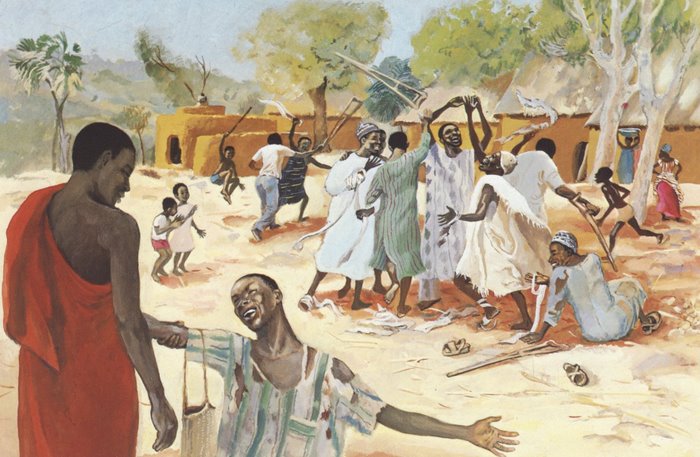
The Healing of the Ten Lepers – Luke 17:11-19

Luke 17:11-19 (17:19) – August 10, 2025

One thing I have noticed that is really sad is when someone is left all alone – on purpose! Not necessarily picked on and jeered at, although that can be horrible, too! But, sometimes a person can just be left alone, left out, isolated, even shunned.

In our Scripture reading today, we have exactly that happening. Except, the Jewish community was required to do this, to ignore or turn their backs on someone! This was a serious matter. Skin diseases were not anything anyone wanted to fool around with. Because medicine and treatment centuries ago was rudimentary and simple, there were not many things doctors and medical providers had that was in any way effective.

Plus, the Law of Moses specifically instructed the Jewish people to keep their distance from anyone with a skin disease, and not allow them to mingle with people who did not have skin diseases. All of these people with skin diseases were referred to as “lepers,” and they had to cry out, “Leper! Unclean!” so everyone else would get a warning not to get anywhere near. These people were outside of their society, forever out of reach. Forever away from their families, their friends, their community, and their synagogue.

Just so everyone here knows what the situation was, for these ten people, as we consider our Scripture reading today, this severe, shunning treatment was what happened wherever these poor people with skin diseases went.

Let us listen again to these words from Dr. Luke, chapter 17: “Now on his way to Jerusalem, Jesus traveled along the border between Samaria and Galilee. 12 As he was going into a village, ten men who had leprosy met him. They stood at a distance 13 and called out in a loud voice, ‘Jesus, Master, have pity on us!’”

Here is the situation, the set-up. We have ten men who have banded together, as a group of lepers. They obviously have heard of this Jesus of Nazareth, and are actively seeking healing! The Rabbi Jesus hears them cry out, and responds immediately. Jesus offered immediate and profound healing to all ten men!

This kind of immediate healing is sometimes difficult for us to wrap our heads around. From time to time, I have faithful believers who come to me as a hospice chaplain and tell me, trustingly, “I have faith to believe God, and believe that my loved one in hospice will get well.” Or, “I believe in miracles, and I know that God will hearken to our voice.”

Yes, I believe in God, I believe in miraculous healing, and I believe that God heals in many different ways. Perhaps God wants to have the patient receive ultimate healing, to leave this world and enter God’s presence? Perhaps God wants to see that person face to face? And yes, we all have an expiration date.  

Whatever the reason, nine of the ten men did not return to the Rabbi Jesus to thank Him for their immediate healing. Except – one man did. “The others are too busy getting back into their proper societal position. And who could blame them? After all, they were just following Jesus’ instructions, right? The one who returns is a real outsider – a Samaritan – who took a chance, who followed his heart and gave thanks to the one who really mattered.” [1]

This man, this Samaritan was in a precarious position. Not only was he rejected by the Jewish community because of his ethnicity, he was also ostracized because of his health condition. If you all remember, I have been preaching a summer sermon series on Fred Rogers. Many of these sermons have also been about outsiders, about people rejected by their communities, rejected from their neighborhoods.  

No one enjoys being shut out of their community, and ignored by their neighbors! Not in the first century, and not in the twenty-first, either.

This is the last week in our summer sermon series on Fred Rogers, of the television show Mister Rogers’ Neighborhood, which aired on PBS for more than 30 years. As I’ve said in weeks past, I have great respect for Fred Rogers. I have even said a number of times (only partly humorously) that when I grow up, I want to be Mister Rogers.

 Fred Rogers was revolutionary in his treatment of people, especially children. He considered children to be very significant individuals, worthy of respect and caring and love. “The most controversial thing Fred Rogers ever did is tell children that they are special. That their lives have value simply because they exist. That they don’t have to do anything sensational to be deserving of love.” [2] The same could be said of these people with skin diseases, and the same could be said of each and every person in the whole wide world.

These ten lepers were shunned, were passed over, were not even considered “people” by most of those at a distance from them. But, none of that mattered to Jesus. He considered each one a valued, special person, a creation of God. No matter what their health condition, no matter what their ethnicity.

Jesus offered a gift of profound healing to the ten who approached him that day. I wonder how you and I might be agents of such healing in our world today. Indeed, in a world too often marked by fear and division, might healing just be ours to offer (and in turn, receive) if we simply reached out with a word of kindness, curiosity, or affirmation even to someone we have never seen before who we may never see again? Or to one who we have passed by a thousand times (as those ten lepers must have been passed by a thousand, thousand times) without even noticing before?” [3]

I know I often ask in my sermons “what would Jesus do?” Who would Jesus heal? Who would Jesus love?”

This week, again, I am going to change up my question, and ask “what would Fred Rogers do?” Who would Fred love? Who would Fred call his neighbor? I think, everyone. Each and every person. Go. Go, and do that.

Alleluia, amen.

(A big thank you to the online resources for Mr. Rogers Day – the Sunday nearest March 20th, Fred Rogers’ birthday. These resources come from the Presbyterian Church (USA). https://www.pcusastore.com/Content/Site119/Basics/13792MrRogersIG_00000154465.pdf )

@chaplaineliza

(Suggestion: visit me at my other blogs: matterofprayer: A Year of Everyday Prayers. #PursuePEACE – and  A Year of Being Kind . Thanks!


[1] https://www.stewardshipoflife.org/2013/10/first-and-always-give-thanks/

[2] https://www.thedailybeast.com/we-need-mr-rogers-now-more-than-ever-but-do-we-deserve-him/

[3] http://words.dancingwiththeword.com/2016/10/the-tenth-leper-and-how-god-is-already.html