Unknown's avatar

Because of God’s Love!

“Because of God’s Love!”

1 John 4:7-11 – April 28, 2024 

Have you ever had a small child run up to you and say, “I love you so much!” Children are so spontaneous! It is wonderful to be on the receiving end of that kind of running hug. It just warms my heart, remembering my small children, running up to me and saying “I love you!”

Since almost everywhere in this highly commercialized culture I look recently I am deluged by the word “love,” I wondered . . where can I find a good description of love? One of the first places I thought of was the New Testament, in the first letter of the Apostle John. When I took Greek some years ago, I translated most of this book. The apostle certainly has love for one of his major themes. Chapter 4 specifically mentions love from several different angles.

But, wait! I’m getting ahead of myself. I have to—I need to remember who I am. I am a Reformed theologian. I firmly believe in the sinfulness of humanity. I believe that as a sinful, fallen human being, I have been plunked down in this world to fend for myself, look out for number one, to be selfish, self-centered, and basically, a not-very-nice person. That’s me, in my natural, sinful, fallen state. That is all of humanity, too.

It doesn’t sound very good, does it? Sentiments like these wouldn’t sell too many Valentine’s Day cards. The Apostle John has a pretty black-and-white view of humanity, when it comes to things like sin and love. Either you are, or you aren’t. Either you do, or you don’t. Either you love, or you hate.

Here in Chapter 4, verse 20, John makes one of these kinds of statements. “If anyone boasts, ‘I love God,’ while continuing to hate their brother, they are a liar. For the person who has no love for their brother whom they have seen cannot love the God they have never seen.”

Here am I, stuck in this sinful, fallen position in this sinful, fallen world. I even drag myself to church on a Sunday and I may even boast from time to time (like a good church-goer and pew-sitter), “I love God!” But according to the Apostle John, if I have hatred in my heart for my brother (or sister), I am a liar.

            It’s so easy, isn’t it, to have hatred in my heart, to have resentment, anger, frustration, bitterness towards others. And especially towards those closest to me—my family, friends and neighbors, work associates and school classmates.

Not just that driver of the late model Ford Explorer that cut in front of me on my way to the grocery store (which is a very important destination, I hope everyone understands). Not just that pushy lady with the heavy makeup who cut ahead of me in line at the post office. I’m talking about real resentments, bitterness that goes deep, harsh frustration that continues for months, even years. Whatever negative attitude is in your life, I’m sure you can fill in the blanks.

What was my original question?  Where did love come from, in the first place?  1 John 4:7 says, “Dear friends, let us love one another, because love comes from God. Whoever loves is a child of God and knows God.”

Do you remember how stubborn small children can be? Folding their arms across their chests, refusing to do what you ask, sometimes even running away across the playground when you tell them, “It’s time to go home!”

A number of times in Scripture, God’s people are referred to as small children. I can relate. I’ll be the first to say that I am very much like a small child, sometimes. Wayward and stubborn. Can you relate, too? Love is how God has chosen to communicate with us wayward, stubborn children.

If I understand the Apostle John correctly, then, the only way I can have love in my heart at all is because God loved me first. And moreover, God loved me so much that He sent His Son as an atonement, a covering, an offering, a sacrifice. God sent His Son Jesus, the blessed Lamb of God who takes away the sin of the world, as an atonement for my sins, in fact, this verse says for our sins.

It is not our own, faulty, limited kind of love that John is talking about here. It’s not about saccharine-sweet pop songs about love, about stars in the sky or about lovey-dovey billing and cooing. Instead, John tells us about “the radical death-defying love of Jesus, the savior of the world. It’s not about [us] earning or deserving love, either. It’s about a love so amazing and so limitless that it continues to pour forth in bread and wine, Word and water, and Spirit-wind. Love is, in fact, the very nature and essence of God, and we are only able to love because God first loved us.[1]

God gave each one of us a one-of-a-kind gift, God gave us Love, revealed in Jesus Christ on that Christmas morning in Bethlehem, even though we don’t deserve it!

God loved us first, even though we were (and are!!) sinful, fallen, mixed-up, broken human beings. The only reason we have the ability, the capacity to love is because God loved us first. God demonstrated that love through our Lord Jesus and His death on the cross as a sacrifice, an atonement for our sins.

What is more, God gives us a next step. We have a God-given responsibility. One commentary says, “God continues to do this by expecting each of us to be a part of loving relationships and communities. We both receive communications of God’s love through the love of others and are communicators of God’s love when we live in love.” [2] 

Something for all of us to remember. Something for all of us to practice, too.

Praise God for God’s love, revealed to us in Jesus Christ. God showers us with love, whether we deserve it or not. What amazing, immeasurable, wondrous love is this.

Thanks be to God. Alleluia, amen.

@chaplaineliza

(Suggestion: visit me at my other blogs: matterofprayer: A Year of Everyday Prayers. and  A Year of Being Kind . Thanks!


[1] https://www.stewardshipoflife.org/2015/04/abiding-in-love/

[2] https://revgalblogpals.org/2014/07/29/love-love-love-narrative-lectionary-for-august-3-2014/

Unknown's avatar

Who Comes in the Name of the Lord?

“Who Comes in the Name of the Lord?”

Mark 11:1-11 (11:9) – March 24, 2024

            Think of a time when you were expecting – anticipating – something really big. And, this really big thing was by no means 100 percent certain of ending well. Maybe you (or I) were facing a major interview at work, a huge exam at school, or even a really important speech. I can just imagine us being anxious, worried, with a knot at the pit of your – my stomach, or how jumpy we felt. The waiting time and expectation of that really big event was palpable! [1]

            This feeling is not exclusive to you and to me. No, many, many people have felt this way before! I wonder whether the disciples felt at all like this during the time that they were helping their Rabbi Jesus get everything ready for the entry into Jerusalem? As a subversive Rabbi and leader, Jesus knew His presence in the city was a grand challenge to the Jewish leaders. And yet, Jesus was going to walk right into Jerusalem with His eyes wide open.      

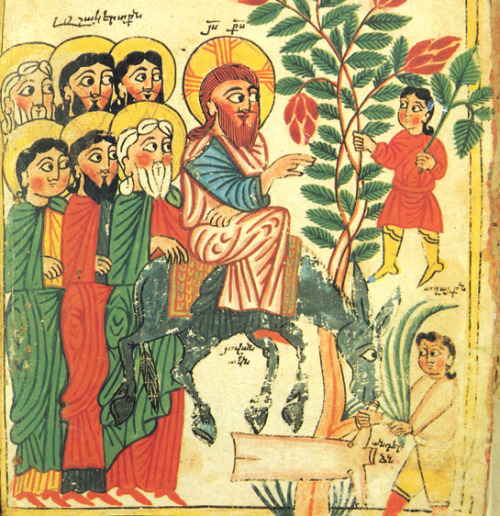
            Mark tells us in a straight forward way what happened that day. Verses 7 through 9: “When they brought the colt to Jesus and threw their cloaks over it, he sat on it. Many people spread their cloaks on the road, while others spread branches they had cut in the fields. Those who went ahead and those who followed shouted, “Hosanna!” “Blessed is he who comes in the name of the Lord!” 10 “Blessed is the coming kingdom of our father David!” “Hosanna in the highest heaven!” An impromptu grand entrance for the Rabbi Jesus; a parade, even!      

            Look at this entrance through the lens of anxiety and wonder! For, that certainly was what many people in the crowd were feeling. I suspect some of the disciples were feeling that way, too! As commentator Scott Hoezee says, “What Palm/Passion Sunday celebrates and observes is not simple, it is not neat, tidy, or straightforward.  The air fairly crackles with electricity as the characters in this grand drama sense that something big is up.” [2]

          Let’s look at this from a different direction. Here’s the situation: It’s almost Passover, the most important religious observance of the religious year. A great number of faithful Jews from near and far come to Jerusalem, in pilgrimage, in commemoration of the Exodus event. 

Jesus comes, too. He publicly, intentionally enters Jerusalem, even though the religious leaders are not pleased with Him or what He has been doing for the past few years. Jesus’s disciples must have known about the prophecy of an entry into Jerusalem riding on a donkey. This was clearly a scene with “Messiah” written all over it.  

Traditionally, when a conquering king comes home from war, he is seated on a horse, and the finest horse in the king’s stables, at that! But here, where Jesus proclaims Himself a king of peace, “he rides a donkey and enhances that statement of peace by choosing an unridden colt. The words that were spoken come from one of the enthronement psalms, used when a new king was coming into power. Hard to miss, really.” [3]

Just imagine if you and I were witnesses to our Lord Jesus and His triumphal entry to Jerusalem. I am sure that there were many people present in that crowd who only had a faint idea what was going on. What would you and I do if we were there? Would we be observers only, merely watching the parade? Would we be cheering the Rabbi Jesus as He entered Jerusalem? And, what about the reference to the psalm that people shouted? A psalm that was quoted when a new king took the throne? How many of the crowd really believed Jesus was a new King, a coming Messiah? Lots of questions we have, indeed!

There was a disconnect between the people and their limited understanding, and what Jesus actually was going to do. But I’m getting ahead of myself by rushing on to later in Holy Week. We are still here on Palm Sunday. And, many in the crowd are still excited to welcome the Rabbi Jesus—their hoped-for Messiah—into the city. They are hoping He will save them from the Romans and maybe, possibly, become their King. Except they had an earthly King in mind.

On second thought, I will go forward into Holy Week. This Triumphal Entry is the culmination of Jesus and His time on Earth, of all His time as a human, as God-become-Man in the Incarnation. Think about it: the world, the very cosmos itself, was on the brink of the most momentous event since the Big Bang, with the very Son of God about to be handed over to the authorities. Betrayed, abused, murdered. The very hosts of heaven – and maybe of hell for all we know – were quite literally holding their breath to see this all play out. [4]

            You and I have the luxury of 20/20 hindsight, of course, looking at an event so clearly reported in the historical and Biblical record. But, if a grand procession welcoming the Messiah happened today, would people still be waving palm branches? Would you and I?

This Holy Week is where all of the prophecies focus to a fine point, and reveal the Rabbi Jesus as not only the Messiah and King, but also as the Suffering Servant. The Lamb of God, sent to take away the sins of the world.

            As we remember this Passover time, this Holy Week, we can thank God that our Lord Jesus did enter Jerusalem. As a King, as a Messiah, yes! But also as Redeemer and Savior. In the first century, Jesus came to save His people from their sins. Just as much as He was Redeemer and Savior for that crowd in Jerusalem on that Palm Sunday, Jesus is our Redeemer and Savior, too. Praise God, He came to save us, today, too! Amen! And amen!

@chaplaineliza

(Suggestion: visit me at my other blogs: matterofprayer: A Year of Everyday Prayers. and  A Year of Being Kind . Thanks!


[1] https://cepreaching.org/commentary/2018-03-19/mark-111-11-2/

[2] Ibid.

[3] https://www.umcdiscipleship.org/worship-planning/depths-of-love/palm-passion-sunday-year-b-lectionary-planning-notes/palm-passion-sunday-year-b-preaching-notes

[4] https://cepreaching.org/commentary/2018-03-19/mark-111-11-2/

Unknown's avatar

Redeemed – Imperishable!

“Redeemed – Imperishable!”

1 Peter 1:17-23 – April 23, 2023

            Have you ever heard children or young people bicker? Argue back and forth? I can remember listening to my own children argue, getting mad at each other, and slamming the door or stomping out of the room. And, even sometimes being really mean to each other in front of their friends or other family members!

            In our Bible reading from 1 Peter today, the apostle tells us to “love each other from the heart.” This loving attitude from Peter is not what siblings or friends often show to each other. What a shocking or sad difference it makes when siblings, or friends – or when you or I – say mean things or act badly towards each other. I thought 1 Peter chapter 1 tells us to “love each other from the heart!” ALL the time! Except, it just doesn’t happen in the real world.

            I would like to remind us all about this epistle written to scattered believers throughout modern-day Turkey. This little letter at the end of the New Testament came several decades after the events of the Crucifixion and the Resurrection. Many of the people who were actual witnesses of the resurrected Lord Jesus had themselves died. These were actual eye-witnesses. They knew beyond a reasonable doubt, they understood with all of their hearts that they were indeed redeemed by the blood of the Lamb, as the apostle affirms here in our reading today.

As I said last week, the local governments and authorities were cracking down on anything that looked like rebellion or conflict against the accepted status quo. The situation throughout the whole region was, frankly, dangerous for these new believers! Yet, they kept on spreading the witness of the Resurrection, telling others that the Lord Jesus had redeemed them! And that you can be redeemed, too!

 But, what do you and I need to be redeemed from?

You, and I, and the rest of the world, all have a big problem – the sin problem.

We are not perfect, and we all make mistakes. We fall flat on our faces, sometimes, and we can say mean things to each other, act badly towards each other, and even hurt each other. Lots of people try really hard to make themselves pure, to strive as hard as they can to live right, to keep to the straight and narrow, to run as hard as they can or as fast as possible to get right with God. But, they trip up or fall behind, or miss the mark – again and again.

Can you relate? Do you know what I am talking about? Do you see people running on these endless, hopeless hamster wheels, spinning their wheels of striving? Trying to build a ladder to heaven to get to God? It just doesn’t work. We – on our own – cannot do it.        

What does 1 Peter 1 say about this huge problem? How can we solve it?  

Quick answer? We fallible, faulty humans never can make it to heaven on our own.

The apostle tells his readers they must be born again, just like the conversation with Jesus in John chapter 3. Like Nicodemus thought in John 3, we could talk about being born again, or think about being born from above. Except, I want to focus on verses 18 and 19 where the apostle says we “were redeemed from the empty way of life handed down to you from your ancestors” “with the precious blood of Christ, a lamb without blemish or defect.”

The apostle Peter was brought up in a Jewish home, and he – like the other disciples understood the system of sacrifice in the Temple. Everyone sinned, and everyone needed to make sacrifices in the Temple so that God would forgive their sins. Especially at Passover time, a lamb without blemish was slain as a sacrifice for the sins of each person or family. I don’t know if we all understand all this today, but the apostle tells us right here that our sins – yours and mine – are taken care of, once for all. Jesus, the perfect Lamb of God, the one without sin, died on the cross for our sins. All of our sins.

And, it is finished. Our debt of imperfection and sinfulness before God is cleared away.

 Some people understand redemption and salvation in different ways. Yes, Jesus Christ is the perfect Lamb of God who died on the cross for you and me. Yes, Jesus Christ rose from the dead, so that we believers in Him can rise, too! Yes, the blood of Jesus Christ redeems us, and “has redemptive power to liberate Christians from their pasts, making it possible for them to live a radically transformed existence. This transformation had already been inaugurated when they were born anew to a living hope through the resurrection of Jesus Christ from the dead.” [1]

We do not need to sacrifice endless animals over and over simply to be good enough, clean enough, able to approach God. No! Easter is so much more than just a single day at the end of Passion Week. Because of what Jesus Christ has done, “weeks [and months] after Easter Sunday, we are still talking about Jesus. We should still be talking about those events. It’s that important to our faith. This passage tells us that our faith and hope are in God.” [2]

             Which brings us back full circle to the command we started with: the apostle tells us to “love each other from the heart.”When we come to believe in Jesus, believe in salvation and redemption, we don’t believe with just our heads, or with just our intellect. We also believe in our hearts. 1 Peter chapter 1 says to “love each other from the heart.” Can you see how our minds, feelings and actions are all rolled into one? That’s all of what Jesus redeemed!

            So – we are to love one another with our hearts, minds and actions. That is what we are commanded to do here, by the apostle. This is truly a way to make the Resurrection part of your life and mine, today.

We can ask God to bring us opportunities this week to show God’s love – in all ways – to others we encounter. This is how we can have a true, Godly love for one another, loving each other with all our hearts, minds and actions. Are we ready?

Alleluia, amen.

@chaplaineliza

(Suggestion: visit me at my other blogs: matterofprayer: A Year of Everyday Prayers. #PursuePEACE – and  A Year of Being Kind . Thanks!


[1] https://www.workingpreacher.org/commentaries/revised-common-lectionary/third-sunday-of-easter/commentary-on-1-peter-117-23-5

[2] https://www.umcdiscipleship.org/worship-planning/a-living-hope/third-sunday-of-easter-year-a-lectionary-planning-notes/third-sunday-of-easter-year-a-childrens-message

Unknown's avatar

The Humility of the King

“The Humility of a King”

Matthew 21:1-10 – April 2, 2023 (March 20, 2005)

            Do you all have experiences of someone who is well-known? Someone whose name is on everybody’s lips? Someone who everybody is talking about? Whenever you hear the buzz, chances are it’s about that person. And when that well-known person, that person of greatness makes a big entrance, we know what to expect, don’t we? Well-known people are supposed to enter a city with pomp and ceremony: black limos, bands, waving, cheering crowds lining the streets, live coverage on television.

            That is just what we have here in the Gospel reading for today (minus the limousines and the television coverage). The name of Jesus was on just about everyone’s lips. Some people were glad He had come to Jerusalem, and some people were mad He had come, and some people weren’t sure what to think. But, I suspect almost everyone in Jerusalem that day had some sort of idea or opinion, one way or another.

            I bet a common question on people’s lips on that Sunday centuries ago was, “Who is this guy, anyway?” Let’s consider. The Rabbi Jesus had options. He could have quietly snuck into Jerusalem in the middle of the night, avoiding notice and controversy, and not making a fuss or bother. But that wouldn’t have been very kingly, would it?

            Jesus could have entered Jerusalem boldly and proudly, seated on a big white horse, like other triumphant generals or kings. A conquering king on a horse is the very image of war and forcing submission. But—that wouldn’t have struck quite the right note, not with everything we know about Jesus.

            What were people expecting? In other words, “Who is this guy, anyway?”

            At that time, the country of Israel in general, and the area surrounding Jerusalem in particular, was under enemy occupation. They were under the oppressive thumb of the Roman government, subdued by the Roman army, and had been in that position for many, many years. I know for a fact that around the time of Jesus, several people had proclaimed themselves “Messiahs”—meaning political leaders—for the purpose of overthrowing the Roman government and authority. So, this was not the first time this had been done. We can even see among Jesus’ disciples there was movement in this direction, and several of His disciples tried to persuade Jesus to be that powerful political leader.

            So, on that Palm Sunday, some people fully expected Jesus to make good on His claim to be Messiah—a claim to be a strong political leader, come to free the Israelite people from the tyranny of the Romans. True, Jesus had repeatedly proclaimed Himself the Messiah, the Anointed One of God. He used the title “Son of David” for Himself, which was a plain statement of His kingly claim, His claim to be Messiah. But with the Roman occupation and the messianic expectations of the day, a peaceful Messiah was not what anyone was expecting.

            Some people–I’m thinking of the Pharisees, the Sadducees, the scribes and other temple leaders—were  awfully uneasy about Jesus. For them, Jesus was their worst nightmare. This rogue rabbi from Nazareth was saying things that penetrated right to the heart. Usually it was right to the hearts of the religious leaders—in a negative way. And, those things Rabbi Jesus was saying did not make the religious leaders feel good about themselves at all. Which made them want to get rid of Jesus even more.

            But, wait a minute! Jesus had also consistently healed the sick, given sight to the blind made the lame walk, and preached God’s good news to the poor. What about that part of His ministry? He certainly appeared to many to be a mighty prophet of God, and lots and lots of people were following Him as a result. Jesus’ words and teaching had authority. Jesus’ person had great credibility. Jesus’ healing showed God’s mighty power, and people even called the works He did miracles! Many people expected great things out of Jesus as a result of this aspect of His ministry.

            Who is this guy, anyway?

            Jesus entered Jerusalem the way He did as a fulfillment of prophecy. He didn’t just do this because He felt like it. No. I believe He fully understood what was prophesied in Zechariah 9 and Isaiah 62. So, the Lord Jesus entered Jerusalem just as the prophets said He would, on a donkey, as a visible sign of His coming in peace. The donkey was the image of peace. And that was what Jesus was bringing. He came to bring peace to people’s hearts, not a popular uprising, and not war to the streets of Jerusalem.

            Yes, Jesus entered Jerusalem as a king, and what I’d like to emphasize, as a humble and peaceful king. Humility is brought out as an attribute of this Messiah, this Anointed One of God, in three places. First, in the prophecy from Zechariah; second, in our gospel text this morning in Matthew 21 (which is a quote from Zechariah); and third, in our epistle passage today from Philippians.

            Jesus not only entered Jerusalem as a king, but as a humble king. Jesus could have been mighty and powerful. Jesus could have entered Jerusalem at the head of a mighty army of angels, ready for war. But, NO. Jesus entered Jerusalem in humility. He humbled Himself.

            Humility gets a bum rap today. I can’t imagine big, burly sports stars regularly being humble. Or, look at Hollywood actors and actresses—the very opposite of humility! Or, think of our political leaders—can any of them be described as humble? Our Lord Jesus presents us with a very, very different picture of humility.

            Just by coming to this earth, being born as a baby in Bethlehem, putting Himself under the authority of His earthly parents, Mary and Joseph, Jesus showed us how much He humbled Himself. Jesus showed how much He cared for us. Jesus’ willingness to become human, to humble Himself, to become obedient, to the point of death–even death on a cross–this is love. This is obedience. This is humility.

            As our Lord Jesus—Messiah—Son of David—Lamb of God—Savior of the world—was seated on that donkey, He knew what was going to happen later that week. He knew about the arrest and the crucifixion. He knew that some of that crowd who cried “Hosanna!” on Palm Sunday morning would be screaming “Crucify Him!” on Good Friday morning. He had set His face and steeled His heart to go to Jerusalem, and on Palm Sunday morning, He was there. Jesus was preparing Himself to be obedient to the point of death, even death on a cross, one of the most horrible kinds of execution ever thought of by anyone, anywhere.

            So—the question of the morning—who is this guy?—is a question that needs to be answered in each and every person’s heart. The hearts of the people in Jerusalem were in turmoil. Are our hearts any different today?

            Who is Jesus, anyway? Is He a great Teacher? Is He a troublemaker? Is He a prophet of God? Is He the fulfillment of prophecy? Or . . . is He something much more?

            The one who embodied the peace of heaven died just outside a city that was AND is blind to peace. Yet that one who died—Jesus—Son of David—Savior of the world—came to be King of our hearts, not King of a small territory on the coast of the Mediterranean Sea. That one who died—Jesus—Messiah—Lamb of God—brings peace to all who trust in Him.

            Through all the pain and suffering of Holy Week, Jesus brings peace. Despite the horror of crucifixion, Jesus brings peace. Through the glorious resurrection of Easter Sunday, Jesus brings peace. I trusted Jesus to bring peace to my heart over thirty years ago, and I praise God for that peace and security, and for His presence always at my side.

            What about you? Have you trusted Jesus to bring peace to your heart? Trust Him today. And praise God that Jesus is King of our hearts, King of Kings, and Lord of Lords.

            Amen, and amen.

@chaplaineliza

(Suggestion: visit me at my other blogs: matterofprayer: A Year of Everyday Prayers. #PursuePEACE – and  A Year of Being Kind . Thanks!

Unknown's avatar

Introductions!

“Introductions!”

John 1:29-42 (1:36) – January 15, 2023

            Have you ever looked in a Where’s Waldo? book? The character we know as Waldo was first drawn in England in 1986 by illustrator Martin Handford, and the first book with the character published in September 1987. “Wally” was his name originally in the UK, although the worldwide popularity of this character often gave him different name changes. Although, he always looked the same, no matter where the books were published, regardless of his name.

            In our Scripture reading today, we have several distinctive names for the brand new teacher and preacher, Jesus of Nazareth. We can see several different people with different ideas about this preacher, too!

            We cannot go to a book and look up an exact photograph or definitive portrait of Jesus of Nazareth, though. Sure, different artists throughout the years have drawn what they think Jesus might have looked like. Or, their impressions of what Jesus might have resembled. But, no one can be exactly sure how Jesus looked.

            This Scripture reading today helps us to understand quite a number of things about Jesus, though. Not exactly how he looked, like a digital photograph, but more importantly, about His character. We have three instances where people introduce others to Jesus. Each one talks about Jesus in a slightly different way.  

            When you introduce someone, do you lead off with an important aspect of their character? Or, telling people what you find most endearing about them?

            Let’s see what John the Baptist said about Jesus: “Look, the Lamb of God, who takes away the sin of the world!” and “I myself did not know him, but the one who sent me to baptize with water told me, ‘The man on whom you see the Spirit come down and remain is the one who will baptize with the Holy Spirit.’ 34 I have seen and I testify that this is God’s Chosen One.” John says some very significant things.

            John the Baptist not only had this calling to baptize people, but he also understood that he was the Messiah’s forerunner. Every day in the Temple in Jerusalem, a lamb was sacrificed for the sins of the people of Israel. John was fully acknowledging that Jesus was the Messiah, born to take away the sins of the world.

            John knew Jesus well. (They were cousins!) What is more than that, John also stated that he saw the Holy Spirit come down and remain on Jesus at His baptism. The Person who had that happen was a special Person, indeed! John names Jesus “God’s Chosen One.” John was the one who pointed people to Jesus the Messiah.

            Do you need an introduction to Jesus? Perhaps, a re-introduction? Maybe you haven’t been following Him much any more. Maybe you have left Jesus behind, and are going your own way. Don’t you think – don’t I think – that we can walk more closely with Jesus from now on?

            The next day, John again goes walking with two of his disciples and identifies Jesus as “the Lamb of God.” We can see that John fully expects God’s chosen Messiah. John’s disciples do, too, because they immediately leave John and start following Jesus.

            Have you – have I – recently thought about ways we learn about Jesus? I know this church and especially this sanctuary is very familiar to many here. But, is there anything here in the sanctuary that tells us more about Jesus? Let’s look around. First and foremost, there is the large cross up above. This reminds us all of Jesus and the whole purpose of Him coming into the world. Jesus willingly became the Lamb of God who takes away the sins of the world.

            But, that is not all! Look at the altar. We see the chalice or cup, and the plate for communion. I know our Scripture reading today comes from the first chapter of John, and this example of communion is the end of the story. This is one of the concrete, tangible ways that Jesus has given us to remember Him. And, it is definitely a way to introduce people to Jesus.

            We also have visual reminders in our church banners, and audible reminders in the church hymns and other music. Everywhere we look and listen we have introductions to Jesus.

            Our Scripture today gives us just a glimpse about Andrew, one of John’s disciples who turns to follow Jesus. It was Andrew who was so excited about meeting God’s chosen Messiah, Jesus, that he immediately got his brother Simon Peter and introduced the two of them. Plus, Andrew was so enthusiastic that he was eager to introduce everyone he could to Jesus.           

Today’s Scripture reading from John’s Gospel “is a story about people who told others what they knew and introduced their friends to important people. They teach about Jesus in everyday situations to people they knew.” [1] I give you a challenge, to be like John the Baptist and Jesus’ disciples! Speak up to our friends, and siblings at home, or neighbors or coworkers, or wherever you are during the week. Even if people have some understanding about God, there is always more to learn, to know and understand! 

            Do we need an introduction to Jesus? Perhaps, a re-introduction? Do we hear the call to follow this Chosen One of God who restores not just a nation but all of creation to right relationship with God?  Do we hear a call to join with Andrew to introduce Jesus to our neighbors and families? I’ve found the one we’ve been looking for, the one in whom our restless hearts will find their rest!   

            Let us take these words to heart, and go and do them. Alleluia, amen.

@chaplaineliza

(Suggestion: visit me at my other blogs: matterofprayer: A Year of Everyday Prayers. #PursuePEACE – and  A Year of Being Kind . Thanks!


[1] http://worshipingwithchildren.blogspot.com/2013/12/year-second-sunday-after-epiphany.html

Unknown's avatar

Blessed Is the One Who Comes!

“Blessed Is the One Who Comes!”

Luke 19:28-40 (19:38) – April 10, 2022

            The Palm Sunday procession is a much-loved tradition in many churches. Some churches get the whole congregation involved! Have you ever been in a Palm Sunday procession? I have, when my older children were small. Families were encouraged to march together that year. The whole congregation was invited to participate!

            Have you ever thought of what Jesus might do if He were making a Palm Sunday procession today? If Jesus were to ride into our town today, what would be His means of transportation? How would Jesus enter the city? Perhaps a big, shiny black SUV, surrounded by His security personnel? (I mean, His disciples?) I leave that to you to think about.

            From all the descriptions of the Palm Sunday Triumphant Entry in all four Gospels, this big procession is what we are looking at today in our scripture passage. Except, Jesus did not ride a big white horse when He rode into town. That is exactly what a powerful king would have done, in Jesus’s day! What, a donkey-riding king? How ridiculous!

Let’s take a closer look. Here’s the situation: It’s almost Passover, the most important religious observance of the year. A great number of faithful Jews from near and far come to Jerusalem, in pilgrimage, in commemoration of the exodus event.  

Jesus comes, too. He publicly, intentionally enters Jerusalem, even though the religious leaders are not very pleased with Him or what He has been doing for the past few years. Even though Luke does not mention the prophecy in the book of Zechariah (which the other Gospels do), Jesus’s disciples must have known about the prophecy of an entry into Jerusalem riding on a donkey. This was clearly a scene with “Messiah” written all over it.  

This Sunday is the last Sunday in Lent, and the last petition in the Lord’s Prayer we examine. This Sunday, we highlight “for Thine is the kingdom, and the power and the glory, forever!” What more appropriate day to highlight this petition? Today is the day that many people in Jerusalem welcome their King, their Messiah. And Jesus does not sneak into the city, all hush-hush. No! He comes in with a procession. With crowds of people waving palms and shouting “Hosanna!” and “Blessed is the King who comes in the name of the Lord!”

What is the meaning of those cries of “Hosanna” and “Blessed is the King?” If we look at Psalm 118, we’ll find these words written by the psalmist. This was the usual Passover greeting one person would give another, except with the addition of the word “King.” And just to let you all know, the majority of the crowd in Jerusalem on that Palm Sunday morning understood what they were quoting—they were intentionally welcoming someone they hoped would be their Messiah, their King! Someone who would save them from the awful situation they were in.

            There was a disconnect between the people and their limited understanding, and what Jesus actually was going to do. But I’m getting ahead of myself by rushing on to later in Holy Week. We are still here on Palm Sunday. And many people are still excited to welcome the Rabbi Jesus—their hoped-for Messiah—into the city. They are hoping He will save them from the Romans and maybe, possibly, become their King. Except they had an earthly King in mind, an earthly, powerful Messiah!

Let’s read on in our scripture passage for today. Dr. Luke makes another striking statement. He starts to mention “peace.” “Peace in heaven, and glory in the highest!” What on earth is Luke mentioning “peace” for?

This sentence is an echo of the Gloria in excelsis Deo that the angels—the heavenly host—sang at the birth of the baby Jesus, several decades before. I know the heavenly host gave the shepherds good news of great joy, but wouldn’t that be good news for anybody? I know that was good news at the time Jesus was born, but isn’t that good news for today, as well? Peace? Glory in the highest? The difference is that at Jesus’s birth, it was peace on earth. Now, the crowd is saying “Peace in heaven.”

            When Jesus enters Jerusalem, the crowd prays for peace in heaven. But, the coming of Jesus causes a division. It causes anything but peace on earth. The theologian Tom Mullen in his book Laughing Out Loud and Other Religious Experiences makes this statement about his denomination the Society of Friends: “They work for peace — and if you really want to cause conflict, you work for peace” So it was for the Rabbi Jesus—the Messiah Jesus riding into Jerusalem. For all that Jesus wanted to bring peace, His message created division, tension, and crisis—as seen by the violent reaction of the religious leaders.

            Thank God, Jesus is more powerful than any division, any tension, any crisis. He entered the city not as an earthly King, not as a conqueror, not to set up a nationalistic empire, but as the True Redeemer of Israel. And not of just Israel, but also of the whole world. This Holy Week is where all of the prophecies focus to a fine point, and reveal the Rabbi Jesus as not only the Messiah and King, but also as the Suffering Servant. The Lamb of God, sent to take away the sins of the world.

            As we remember this Passover time, this Holy Week, we can thank God that our Lord Jesus did enter Jerusalem. As a King, as a Messiah, yes! But, also as our Redeemer and Savior. Praise God, Jesus is our Redeemer and Savior, just as much as He was Redeemer and Savior for that crowd at the procession in Jerusalem on that Palm Sunday. In the first century, Jesus came to save His people from their sins. Even today, Jesus wants us to know He came to save people from their sins. Praise God, He came to save you and me, too! Amen! And amen!

@chaplaineliza

(Suggestion: visit me at my other blogs: matterofprayer: A Year of Everyday Prayers. #PursuePEACE – and  A Year of Being Kind . Thanks!

Unknown's avatar

Shepherds Watched Their Flocks

“Shepherds Watched Their Flocks”

Shepherds, Annunciation, Oxford Bodlean Library

Luke 2:8-20 (2:8) – December 23, 2018

Birth announcements are often greeted with great excitement and joy. In the United States, they can be detailed and specific, with details like the time of delivery, the sex and the weight of the baby, and of course, the name of the new child. The new parents are so proud of their new bundle of joy, and the new grandparents often show everyone the latest photos of their new grandchild, sometimes before the baby is one hour old.

Nothing is new about babies being born. As long as humans have been on earth, babies have been born. As the old saying goes, “A baby is God’s opinion that the world should continue.” One particular, super-special birth announcement happened one night, two thousand years ago. Not with fancy paper, balloons, or glitter, but with something a lot more special.

We need to back up a bit. We all are familiar with the basic details of the Christmas story. Since the Roman Empire wanted to discover exactly how many people they had living in all the provinces and regions of their vast empire, a law was passed that said every adult male needed to go to their ancestral town to register, or report. So, Joseph, descendent of King David, needed to go to David’s home town, Bethlehem, to report in.

Except, Joseph and Mary find themselves on the road at an awkward time. Not only were there lots of other people traveling to their ancestral towns, but added to that, Mary was greatly pregnant. So pregnant, in fact, that soon after she arrived in Bethlehem she went into labor. Mary delivered a newborn boy, as Dr. Luke tells us in the verses previous to our reading.

There was something quite different about this birth. Several somethings, in fact.

In most birth announcements, one of the main things people want to know is the baby’s name. This newborn baby had a great name: Jesus, Yeshua, or Joshua, meaning “he saves.” We know—because one of the prophecies from the book of Isaiah told us so—that this Baby, this Child is also known as the Prince of Peace. Plus, the newborn baby is also of the house and lineage of King David. Added to which, the birth of this particular Baby was prophesied in the Hebrew Scriptures. Impressive bloodline and backstory, indeed.

After all this build-up, many people would expect a grand birth announcement, sent to the very best people. People like nobility, royalty, other V.I.P.s. But who is it who receives this birth announcement? Shepherds. Common, ordinary, lowly shepherds. As Dr. Luke records in his Gospel, “shepherds living out in the fields nearby, keeping watch over their flocks at night.” For the shepherds, it was an ordinary night. Nothing special, they were just minding their own business. And, if you have worked on a farm or with farm animals, you might know what herding animals smells like. Not very appealing, to modern minds—or noses.

Shepherds were not considered well-to-do, upright citizens. Quite the opposite! Dr. David Lose tells us “And the shepherds? These were the undesirables of the first century, the folks on the lowest of the low rungs of the socio-economic ladder.” [1] Today, we might look on people like these shepherds as street sweepers, or rag-pickers, people who emptied latrines, menial workers of the lowest variety. One step above indigent, homeless people.

Yet, these demeaned shepherds were the super-special chosen ones, the ones God favored with a super-special, divine birth announcement. Complete with a light display that lit up the whole sky, an angelic spokesperson, and angel chorus, God wanted the shepherds to know first of all. Not the rich people in town, or the president of the synagogue, or the elders on the ruling board. Not the King of Judah in his palace in Jerusalem, or the nobility who lived in fine houses with fancy clothes, or the Pharisees or members of the Sanhedrin. No, God wanted the lowest of the low to find out, first.

Isn’t it strange—or odd—or funny that God wanted these shepherds to be the first to know? Actually, no. Since God could choose absolutely anyone on earth to hear about the divine birth first, God must have had a really good reason for choosing these despised shepherds. And, God wants all people to know of the birth of the newborn King, the Prince of Peace.

“In spite of their poor reputation as a class of people, these shepherds seem to have been godly men, men who were looking for the coming of Israel’s Messiah. All the others of those who were directly informed of the birth of Messiah in Matthew and Luke were described as godly people, and so it would seem to be true of the shepherds as well.” [2]

Believe it or not, these despised shepherds were sometimes compared to God, in the Bible. God being the shepherd, and the people of Israel the sheep. As uncomplimentary as it may be, people are often compared to sheep in both the Hebrew and Christian scriptures.

As I have noticed before, the behavior of sheep and the behavior of human beings do have some similarities. Yet despite all of these negative attributes, the Jewish and Christian holy writings repeatedly talk about people being compared to sheep.

I found this lovely poem by William Blake (1757-1827). A poet and visionary, he was a committed Christian. He also was a creative writer and some called him even mystical.

As long as we are considering the shepherds coming to see the baby Jesus, I also wanted us to reflect upon the sheep—the flocks, shepherded by the workers on those cold, windswept hills around Bethlehem.


Meditation on the Lamb


Little Lamb, who made thee?

Dost thou know who made thee,

gave thee life, and bid thee feed

by the stream and o’er the mead;

gave thee clothing of delight,

softest clothing, woolly, bright;

gave thee such a tender voice,

making all the vales rejoice?


Little Lamb, who made thee?

Dost thou know who made thee?

Little Lamb, I’ll tell thee,

Little Lamb, I’ll tell thee:

He is called by thy name,

for he calls himself a Lamb.

He is meek, and he is mild;

He became a little child.

I a child, and thou a lamb,

we are called by his name.

Little Lamb, God bless thee!

Little Lamb, God bless thee!


Jesus is called a Lamb. We are called sheep. Not very flattering, is it?  The lowest of the low, the shepherds, heard of the birth of the Prince of Peace, the Lamb of God. However, it matters nothing to God about our position, or honor, or wealth, or influence.

God does care about our hearts, and how we receive God’s Son.

“In Christ we have the promise that God will not stop until each and all of us have been embraced and caught up in God’s tremendous love and have heard the good news [as proclaimed to the shepherds] that “unto you this day is born a savior, Christ the Lord.” [3]

Let us joyfully follow the shepherds’ example, “glorifying and praising God for all the things they had heard and seen.” Amen, alleluia.

[1] http://www.workingpreacher.org/craft.aspx?post=1612

“Something More,” David Lose, Dear Working Preacher, 2011.

[2] https://bible.org/seriespage/4-birth-messiah-luke-21-20

Robert L. (Bob)Deffinbaugh graduated from Dallas Theological Seminary with his Th.M. in 1971. Bob is a pastor/teacher and elder at Community Bible Chapel in Richardson, Texas.

[3] http://www.workingpreacher.org/craft.aspx?post=1612

“Something More,” David Lose, Dear Working Preacher, 2011.

@chaplaineliza

(Suggestion: visit me at my regular blog for 2018: matterofprayer: A Year of Everyday Prayers. #PursuePEACE – and my other blog,  A Year of Being Kind . Thanks!