

“What about the Tongue?”
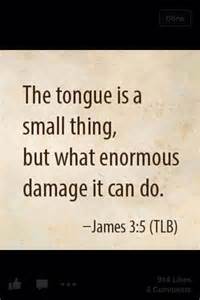
James 3:1-12 (3:1-12) – September 15, 2024
How many of us can remember that old playground saying, “Sticks and stones may break my bones, but names can never hurt me!” children and young people may put on a brave face when they are teased, hurt and picked on. Children and young people can be particularly mean, teasing each other, with left-handed compliments, and even downright insults. But, what insight does this Bible reading from James give us about this very problem?
Let’s hear again these serious words from James. “Just think how large a forest can be set on fire by a tiny flame! 6 And the tongue is like a fire. It is a world of wrong, occupying its place in our bodies and spreading evil through our whole being. It sets on fire the entire course of our existence with the fire that comes to it from hell itself. 7 We humans are able to tame and have tamed all other creatures—wild animals and birds, reptiles and fish. 8 But no one has ever been able to tame the tongue. It is evil and uncontrollable, full of deadly poison.”
Such a little part of the body – the tongue! And yet, despite the playground saying, the tongue can really hurt. “When people are called nasty, dirty names they know what the name caller thinks of them – and that hurts. Those people can be strong, not believe the name caller, and work to prove they are better than the name caller claims. But, it still hurts.” [1]
Names can cause pain, internally. The hurt feelings can smart and fester for a long time. And sometimes, people remember mean words, nasty words or harsh words years after they heard them. Sometimes even decades later. Words can come back to haunt us – either words we have said, or words we have heard. Internalized. Taken to heart.
Who hasn’t been on the receiving end of a nasty argument, or mean, angry words? Sometimes, words can even change the way we think about ourselves.
Our letter-writer James would whole-heartedly agree. Remember, in this letter the apostle James writes a manual of Christian living. A how-to book on how to live a life pleasing to God.
The big problem with mean, hasty or thoughtless words is that they cannot be unsaid. Once the words have been said out loud – or, sometimes worse, printed electronically in social media – the mean or hasty or thoughtless words are out there in public, whether texts, or tweets or TikTok. These various kinds of words cannot be taken back. And, James cautions all of us on the danger of a tongue that just flaps in the wind! Or, as James says, burns like a forest fire or is fast acting as deadly poison!
Commentator Rev. Dr. Derek Weber thinks further about mean, nasty name-calling and the destructive nature of words. “In our normal catalog of sins, gossip is somewhere far down the list. We are much more concerned about other kinds of misbehavior. James would have us reconsider our hierarchy [of sins] and raise our awareness of the power of words to bring harm to the body of Christ.” [2]
In Yiddish folklore, there is a story about a woman who would gossip and make false accusations about her neighbors. She never understood the implications of her words until the wise rabbi of her village decided to demonstrate it to her. He told her to get a feather pillow, cut the top off, and run around town with it. As she did that, the feathers flew away and fluttered all around the town. The wise rabbi then told her to collect all of the feathers that flew away and put them back in the pillow. She just couldn’t. It was an impossible task, she told him. “Maybe now you will understand,” he explained, “for you see, your words are like those feathers. Once they get out, it’s impossible to put them all back in.”
Our letter-writer James would so much agree! “As God’s children we are to be careful how we use the power of words. We are called to bless rather than harm, to seek justice and peace for all rather than revenge or harm.” [3] And, I do not want any of us to think that God is just a frowning or disapproving Supreme Being in the sky, ready to hurl thunder bolts at anyone who sins and lets their tongue run on and is a name caller and a gossip.
No, God is serious about sin, that is true! However, we can think of God our Heavenly Parent sort of like a well-loved elder who you and I love and cherish so much, who we do not want to disappoint, who we very much want to do our very best for!
Let’s flip this around, and look at our words from a positive light. Recall how you felt when someone said good, positive things to you or about you. How did you feel, deep down inside? Just think hard about the positive, beneficial impact of these words! James tells us we can certainly bless one another, just as much as we let slip mean or hateful words!
How can we build up each other with our words? What kind of effect would positive affirmations, sincere compliments and just plain being kind have on our daily interactions? I mean all of our interactions, it doesn’t matter with who. Family, friends, acquaintances, even people you meet on the street. Even people who don’t look like us, or speak our language, or wear familiar clothes. Maybe, especially different folks!
I offer the following challenge: find ways of blessing others through kind words, affirmations, and positive reinforcement. Look for everyday opportunities! Try it for the next week, and then the week after that. This is as much a challenge for me as it is for you! Please, find ways of blessing others. [4] Remember, in this letter the apostle James writes a manual of Christian living. A how-to book on how to live a life pleasing to God. James encourages us to bless each other.
Please, consider turning to your neighbor, to the person in the next pew, and saying, “God bless you!” “God be with you!” Do it, right now. Please. That’s the way to live pleasing to God.
Finally, how would Jesus speak? Would Jesus say kind, helpful, encouraging, positive words? Would Jesus bless people? Do that. And, God will be so pleased!
(Suggestion: visit me at my other blogs: matterofprayer: A Year of Everyday Prayers. #PursuePEACE – and A Year of Being Kind . Thanks!
[1] http://worshipingwithchildren.blogspot.com/2012/08/year-b-proper-19-24th-sunday-in.html
[2] https://www.umcdiscipleship.org/worship-planning/doers-of-the-word/sixteenth-sunday-after-pentecost-year-b-lectionary-planning-notes/sixteenth-sunday-after-pentecost-year-b-preaching-notes
[3] https://www.stewardshipoflife.org/2012/09/the-gratitude-attitude/
[4] Ibid.
 Pastor, Preacher, Pray-er