Unknown's avatar

A Foreign Neighbor’s Thankfulness

“A Foreign Neighbor’s Thankfulness”

The Healing of the Ten Lepers – Luke 17:11-19

Luke 17:11-19 (17:19) – August 10, 2025

One thing I have noticed that is really sad is when someone is left all alone – on purpose! Not necessarily picked on and jeered at, although that can be horrible, too! But, sometimes a person can just be left alone, left out, isolated, even shunned.

In our Scripture reading today, we have exactly that happening. Except, the Jewish community was required to do this, to ignore or turn their backs on someone! This was a serious matter. Skin diseases were not anything anyone wanted to fool around with. Because medicine and treatment centuries ago was rudimentary and simple, there were not many things doctors and medical providers had that was in any way effective.

Plus, the Law of Moses specifically instructed the Jewish people to keep their distance from anyone with a skin disease, and not allow them to mingle with people who did not have skin diseases. All of these people with skin diseases were referred to as “lepers,” and they had to cry out, “Leper! Unclean!” so everyone else would get a warning not to get anywhere near. These people were outside of their society, forever out of reach. Forever away from their families, their friends, their community, and their synagogue.

Just so everyone here knows what the situation was, for these ten people, as we consider our Scripture reading today, this severe, shunning treatment was what happened wherever these poor people with skin diseases went.

Let us listen again to these words from Dr. Luke, chapter 17: “Now on his way to Jerusalem, Jesus traveled along the border between Samaria and Galilee. 12 As he was going into a village, ten men who had leprosy met him. They stood at a distance 13 and called out in a loud voice, ‘Jesus, Master, have pity on us!’”

Here is the situation, the set-up. We have ten men who have banded together, as a group of lepers. They obviously have heard of this Jesus of Nazareth, and are actively seeking healing! The Rabbi Jesus hears them cry out, and responds immediately. Jesus offered immediate and profound healing to all ten men!

This kind of immediate healing is sometimes difficult for us to wrap our heads around. From time to time, I have faithful believers who come to me as a hospice chaplain and tell me, trustingly, “I have faith to believe God, and believe that my loved one in hospice will get well.” Or, “I believe in miracles, and I know that God will hearken to our voice.”

Yes, I believe in God, I believe in miraculous healing, and I believe that God heals in many different ways. Perhaps God wants to have the patient receive ultimate healing, to leave this world and enter God’s presence? Perhaps God wants to see that person face to face? And yes, we all have an expiration date.  

Whatever the reason, nine of the ten men did not return to the Rabbi Jesus to thank Him for their immediate healing. Except – one man did. “The others are too busy getting back into their proper societal position. And who could blame them? After all, they were just following Jesus’ instructions, right? The one who returns is a real outsider – a Samaritan – who took a chance, who followed his heart and gave thanks to the one who really mattered.” [1]

This man, this Samaritan was in a precarious position. Not only was he rejected by the Jewish community because of his ethnicity, he was also ostracized because of his health condition. If you all remember, I have been preaching a summer sermon series on Fred Rogers. Many of these sermons have also been about outsiders, about people rejected by their communities, rejected from their neighborhoods.  

No one enjoys being shut out of their community, and ignored by their neighbors! Not in the first century, and not in the twenty-first, either.

This is the last week in our summer sermon series on Fred Rogers, of the television show Mister Rogers’ Neighborhood, which aired on PBS for more than 30 years. As I’ve said in weeks past, I have great respect for Fred Rogers. I have even said a number of times (only partly humorously) that when I grow up, I want to be Mister Rogers.

 Fred Rogers was revolutionary in his treatment of people, especially children. He considered children to be very significant individuals, worthy of respect and caring and love. “The most controversial thing Fred Rogers ever did is tell children that they are special. That their lives have value simply because they exist. That they don’t have to do anything sensational to be deserving of love.” [2] The same could be said of these people with skin diseases, and the same could be said of each and every person in the whole wide world.

These ten lepers were shunned, were passed over, were not even considered “people” by most of those at a distance from them. But, none of that mattered to Jesus. He considered each one a valued, special person, a creation of God. No matter what their health condition, no matter what their ethnicity.

Jesus offered a gift of profound healing to the ten who approached him that day. I wonder how you and I might be agents of such healing in our world today. Indeed, in a world too often marked by fear and division, might healing just be ours to offer (and in turn, receive) if we simply reached out with a word of kindness, curiosity, or affirmation even to someone we have never seen before who we may never see again? Or to one who we have passed by a thousand times (as those ten lepers must have been passed by a thousand, thousand times) without even noticing before?” [3]

I know I often ask in my sermons “what would Jesus do?” Who would Jesus heal? Who would Jesus love?”

This week, again, I am going to change up my question, and ask “what would Fred Rogers do?” Who would Fred love? Who would Fred call his neighbor? I think, everyone. Each and every person. Go. Go, and do that.

Alleluia, amen.

(A big thank you to the online resources for Mr. Rogers Day – the Sunday nearest March 20th, Fred Rogers’ birthday. These resources come from the Presbyterian Church (USA). https://www.pcusastore.com/Content/Site119/Basics/13792MrRogersIG_00000154465.pdf )

@chaplaineliza

(Suggestion: visit me at my other blogs: matterofprayer: A Year of Everyday Prayers. #PursuePEACE – and  A Year of Being Kind . Thanks!


[1] https://www.stewardshipoflife.org/2013/10/first-and-always-give-thanks/

[2] https://www.thedailybeast.com/we-need-mr-rogers-now-more-than-ever-but-do-we-deserve-him/

[3] http://words.dancingwiththeword.com/2016/10/the-tenth-leper-and-how-god-is-already.html
Unknown's avatar

Ganging Up on a Neighbor

“Ganging Up on a Neighbor”

John 8:1-11 (8:7) – August 3, 2025

Have you ever watched a bunch of people gang up on one poor person? I’m thinking in elementary school, in the playground. Or, what about at the lunch table in high school? Even in the break room at work? A few mean words can turn nasty, fast! Sometimes if it goes too far, a group of people really start to pick on one poor person, or shun them, even ostracize them! And worst of all, the people doing the shunning can be such hypocrites!

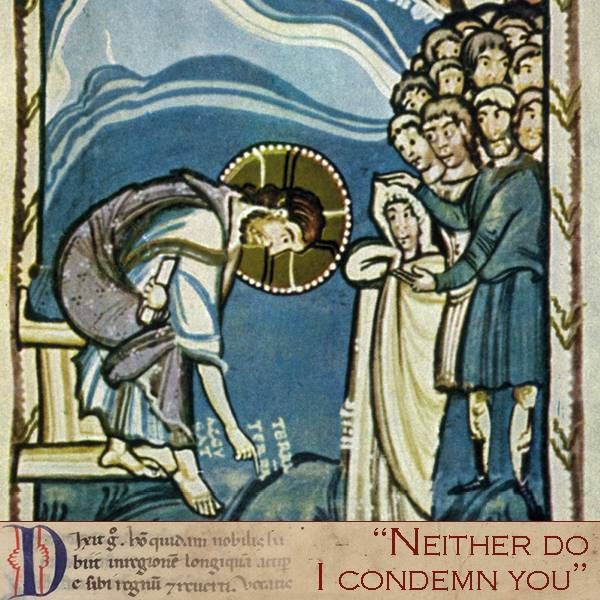
Now we are entering the sketchy neighborhood of our Scripture reading for this morning. We have a group of Jewish leaders, big shots in their synagogues. You know what happened. These Jewish leaders have grabbed a woman in the very act of adultery. She may have been a married woman, and she was having sex with a man who was not her husband.  

The Rabbi Jesus has been talking with and discussing with groups of these leaders for some time. And, Jesus has been very successful at dialoging with these leaders, too! But, wait – they finally think they have got a situation that the Rabbi Jesus cannot squirm out of!

“Imagine the sense of urgency and the heightened emotions of the crowd swarming in on Jesus as he taught in the temple. They put this woman in front of the crowd. The Pharisees used her as an item, an object, a thing to entrap Jesus. I can imagine the contempt in the Pharisee’s voice as he asked, ‘Teacher, this woman was caught in the act of adultery. . . . Moses commanded us to stone such women. Now what do you say?’” [1]

Now, wait just a moment! The Jewish leaders have dragged this woman in front of Jesus, in front of the crowd in the Temple, and are accusing her, with baited breath! I can just see the crowd getting all agitated and upset! “Of course the Law of Moses tells us that adultery is bad! Of course this woman is guilty – our Jewish leaders say so! Of course she should be punished!” I can just hear the voices and noises of the crowd becoming more and more frantic and angry!

And, what does Jesus do? Nothing. He does not respond. He does not fly off the handle, as some people would. He does not react abruptly to the leaders or the crowd, either. Instead, Jesus stooped down and began writing on the ground with His finger. Finally, after the Jewish leaders kept badgering Him with questions, the Rabbi Jesus does respond.

Except, that makes me wonder. I know in our culture, in the United States, we do not stone people. Except, we still will ignore, and even jeer at people sometimes. We still practice shunning individuals in this country, sometimes.

These Jewish leaders and big shots at their synagogues seemed to have it all together. Except, these men were hypocrites, all the way! Saying one thing and doing another is the height of hypocrisy! I suspect these men – because the Jewish leaders were all men – these men felt fully justified in themselves. Fully self-righteous, and they couldn’t be bothered with pesky little things like their own repeated sin, or their conscience pricking them on the inside.

 I want each of us to understand how damaging it is to say one thing but do something totally different. “Do as I say, not as I do!” This is definitely the work of a hypocrite.

 “Hypocrisy creates barriers, harms relationships, and leads people away from God. In Matthew 23:27, Jesus calls out the Pharisees, saying, ‘Woe to you, scribes and Pharisees, hypocrites! You are like whitewashed tombs, which appear beautiful on the outside, but inside are full of dead men’s bones.’ The Pharisees focused on appearing holy, while ignoring God’s call to live with integrity and compassion.” [2]

The angry leaders who brought the woman to Jesus clearly were accusing and vicious towards the unnamed woman, and considered her simply a thing, an object of sin. I wonder whether they even considered the fact that this woman was a person of worth, or that she was created by God, just as much as each of them were? These were ways in which these leaders of the community could certainly live out God’s call to live each day with integrity and compassion – which the Rabbi Jesus did each day.

Jesus did not suddenly react or defend either Himself or the woman. Instead, He slowed down the frenetic emotion and action. Jesus reflected, and listened. Finally, Jesus made a comment. I imagine Him making that comment in a quiet but firm voice: “Let any one of you who is without sin be the first to throw a stone at her.” Then, “those who heard began to go away one at a time, the older ones first, until only Jesus was left, with the woman still standing there.”

Our summer sermon series features Fred Rogers, of Mister Rogers’ Neighborhood. We have considered several serious narratives from the Gospels during this series, and this week is no exception. Fred Rogers was no stranger to serious matters. A number of his television shows discussed very serious things – to children, yes, but also to adults. Divorce, death, war, and even the terrorist activity in 2001, on 9/11.

Fred Rogers excelled at listening to people. “Reflective listening, which does not imply agreement, pauses your agenda and aims to understand first. Fred listened intently and often agreed with the children since he was tuned into their fears and frustrations. [One of Fred’s signature messages,] ‘I like you just the way you are’ can’t get any more validating – pure emotional gold.” [3]

When Jesus practiced reflective listening in this extremely emotional situation in the Temple, we can see how tuned in Jesus was to the crowd’s fears and frustrations. And then, He turned the situation around, even turned it on its head by stating to the accusers in a quiet but firm voice: “Let any one of you who is without sin be the first to throw a stone at her.”

Jesus saw this woman as someone worthy of respect, a creation of God, unlike the men who accused her. Jesus’ words and actions offers this woman self-reflection and changed behavior at the realization of sin, just as He offered to the Jewish leaders and the crowds, multiple times throughout His ministry.  “Jesus’s actions were scandalous because they broadened acceptance, extended mercy and forgiveness to the undeserving, and brought justice to the overpowered and abused. Will the church ever do the same?[4]

Yes, today’s Scripture reading is extremely serious. And yes, Jesus makes His offer of grace and mercy, forgiveness and compassion to this woman, to the Jewish leaders who accused her, to the crowd, and to each one of us today. We can live honest, compassionate lives, with kindness and humility, today.

Here’s a challenge: “try to pay close attention to any moments when you might feel yourself slipping into judgment or hypocrisy. Maybe it’s a small thought about someone’s behavior, or a reaction to something they said. When you notice this, take a step back and remind yourself that we aren’t perfect either. Instead of letting judgment grow, try saying a silent prayer—for that person and for yourself. Ask God to help you see them through His eyes, with compassion and understanding.” [5]

I know I often ask in my sermons “what would Jesus do?” Who would Jesus forgive?

This week, I am going to change up my question, and ask “what would Fred Rogers do?” Who would Fred listen to? Who would Fred call his neighbor? I think, everyone. Each and every person, no matter who. Go. Go, and do that.

Alleluia, amen.

(A big thank you to the online resources for Mr. Rogers Day – the Sunday nearest March 20th, Fred Rogers’ birthday. These resources come from the Presbyterian Church (USA). https://www.pcusastore.com/Content/Site119/Basics/13792MrRogersIG_00000154465.pdf )

@chaplaineliza

(Suggestion: visit me at my other blogs: matterofprayer: A Year of Everyday Prayers. #PursuePEACE – and  A Year of Being Kind . Thanks!


[1] https://www.cbeinternational.org/resource/four-important-lessons-we-can-learn-from-jesus-and-the-woman-in-john-8/

[2] https://young-catholics.com/14808/exploring-hypocrisy-free-lesson-plan/

[3] https://www.psychologytoday.com/us/blog/the-full-picture/202302/mister-rogers-remembered-since-we-need-him-now

[4] https://www.cbeinternational.org/resource/four-important-lessons-we-can-learn-from-jesus-and-the-woman-in-john-8/

[5] https://young-catholics.com/14808/exploring-hypocrisy-free-lesson-plan/

Unknown's avatar

A Foreign Neighbor’s Faith

“A Foreign Neighbor’s Faith”

Matthew 15:21-28 (15:28) – July 27, 2025

When I worked as a hospital chaplain at Swedish Covenant Hospital (now called Swedish Hospital), more than 10 years ago, one of the points of working there highlighted was the multi-cultural setting of that hospital and that neighborhood. The ZIP code that Swedish is in is one of the most diverse in the country, in all kinds of ways. In terms of languages spoken, various countries of origin, differing faith traditions, and wide economic differences in that ZIP code alone make Swedish Hospital a unique place to work, of great cultural diversity.

In our Scripture reading today, the Rabbi Jesus traveled up north of the Sea of Galilee, on the border of Palestine. It was in an area called the Decapolis, the Ten Cities, which also was a multi-cultural crossing point. Perhaps not as widely diverse as the ZIP code around Swedish Hospital, but with a number of diverse cultures, faith traditions, and languages spoken.

Our Gospel writer Matthew was quite particular about how he presented the information in his Gospel, which was written specifically for a Jewish audience. Let us look at how Matthew begins this vignette in the life of the Rabbi Jesus. “Jesus withdrew to the region of Tyre and Sidon. 22 A Canaanite woman from that vicinity came to him, crying out, ‘Lord, Son of David, have mercy on me! My daughter is demon-possessed and suffering terribly.’”

We learn a lot from these two sentences! Matthew wants his readers to know where the Rabbi Jesus had gone – into the area of the Decapolis, on the border of Israel – and that this woman who came to Jesus for help is not Jewish, but instead is a Canaanite woman – what the Gospel writer Mark in his parallel account calls a Syro-Phoenician woman.

The Canaanites were hated by the Jews, and were among those the Jews termed “Gentiles,” since they were polytheists and prayed to various gods like Baal and Asherah.

Up until this point, Jesus had ministered to very few people who were not Jewish. So, here we are, in a cross-cultural situation. Here the spotlight shines on a woman who is not Jewish, asking Jesus for help. And, help not for her, but for her daughter, who is suffering terribly! This request is familiar territory for the Rabbi Jesus, certainly!  

I have mentioned the Rev. Janet Hunt before. She tells a heartfelt story, some of which I repeat here. “Mental illness carries all kinds of stigma today. I have known this since I was a child and we experienced it in our own family. Back then it was something whose name you whispered.  I’m not sure it is so very different now.  When I was young during that time during the prayers of the church where we stood in silence and remembered people in need, I would close my eyes shut tight and silently plead for Aunt Donna’s healing. It didn’t come.” [1]
            In the case of our Gospel narrative, we are not sure what is the matter with this daughter of the Canaanite woman. Certainly, it could well be mental illness! This was often seen as demon-possession in past centuries. Mental illness carried a huge stigma in the first century, just as now, in the twenty-first.

It is Jesus’s response that is surprising. Or rather, His non-response. “The disciples, obviously aggravated by her persistence, ask Jesus to deal with her request so that they can be on their way. Jesus then explains that his mission (under the authority of God) is to call out the faithful remnant of Israel. This doesn’t deny a future mission to the Gentiles, only that for the present, ‘salvation is from the Jews.’” [2]

The all-important point of this narrative comes from this mother, this neighbor from a different neighborhood. Our summer sermon series this summer is all about Fred Rogers. He met with a lot of different people from many, many different neighborhoods. Diverse cultures, and from foreign shores, or neighborhoods, too. As this Biblical narrative continues, the woman speaks to Jesus again. “The woman came and knelt before him. “Lord, help me!” she said.26 Jesus replied, “It is not right to take the children’s bread and toss it to the dogs.” 27 “Yes it is, Lord,” she said. “Even the dogs eat the crumbs that fall from their master’s table.”

28 Then Jesus said to her, “Woman, you have great faith! Your request is granted.” And her daughter was healed at that moment.

Did you hear? This woman from a different culture, from a different neighborhood, had great faith! Jesus acknowledges that, and her daughter is miraculously healed at that moment! It is marvelous that this faithful foreign woman – who knew that Jesus was the Chosen One of God, and called Jesus by the Messianic title “Son of David” – did indeed have great faith!

Except, where does that leave us today? What are we supposed to do with this narrative from Matthew’s Gospel? As commentator Karoline Lewis tells us, “A lot of how we talk about faith indeed ends up being about measurement. Life’s consequences are attributed to whether or not someone had enough faith, whatever the circumstance may be. “Just have faith!” Well, how much? It doesn’t seem like a little will do. And how do you get more? Are you stuck with what you have? Are we genetically disposed to a certain level of faith?” [3]

I sometimes wonder whether I would have had even half, even a quarter of the amount of faith this Canaanite woman had! I suspect that these are the kinds of issues about faith with which all of us struggle — and which we may likely hear in the Canaanite woman’s deep, heartbreaking request. “We wonder at the faith that is already working within her.  Even though she is a Gentile, somehow she sees Jesus as having come for her as well.[4]

At the same time, I do not want us to assume that because we do not have great faith that the Lord Jesus turns His back on us, or refuses to do anything for us at all. Which is what false teachers of the Gospel often tell their followers: “Oh, you did not receive that healing – or that answer to prayer – because you just didn’t have enough faith!”

No, Christianity is not a cheap marketplace, or a mercenary vending machine in the sky where we deposit our money and miracles and healings magically come forth. No, this Canaanite woman had faith in the Lord Jesus, the Messiah, the Son of David. She developed a relationship with Jesus. And, it all started with a mother’s willingness not only to speak, but to shout.  For the sake of love. For the sake of a much beloved daughter, desperately ill.

Our faith in God – your faith and mine – “lays claim on how you are in the world, how you choose to be, how [each of us] decide to live, in each specific moment of your life…. faith is not a fixed collection of beliefs but a state of being. Your faith is great, not because of what you do, but because of who you are.” [5]

Fred Rogers had a wide variety of diverse neighbors in Mister Rogers’ Neighborhood. These were both real neighbors in the real neighborhood, and the puppets and people of the Neighborhood of Make-Believe. They all interacted with one another with kindness and respect. Fred Rogers tells us, “As different as we are from one another, as unique as each one of us is, we are much more the same than we are different. That may be the most essential message of all, as we help our children grow toward being caring, compassionate, and charitable adults.” [6]

Yes, Jesus healed this daughter of a neighbor from a different neighborhood, a foreign neighborhood. As you and I travel through different neighborhoods in our lives, we can have the same openness, care and compassion that Jesus had. That Fred Rogers had.  

Be like Jesus. Be like Fred Rogers. Go into multicultural places with openness and respect, care and compassion. Go, do that.

(A big thank you to the online resources for Mr. Rogers Day – the Sunday nearest March 20th, Fred Rogers’ birthday. These resources come from the Presbyterian Church (USA). https://www.pcusastore.com/Content/Site119/Basics/13792MrRogersIG_00000154465.pdf )

@chaplaineliza

(Suggestion: visit me at my other blogs: matterofprayer: A Year of Everyday Prayers. #PursuePEACE – and  A Year of Being Kind . Thanks!


[1] http://words.dancingwiththeword.com/2014/08/a-mothers-cry.html

[2] https://www.lectionarystudies.com/studyg/sunday20ag.html

[3] https://www.workingpreacher.org/dear-working-preacher/getting-great-faith

[4] http://words.dancingwiththeword.com/2014/08/a-mothers-cry.html

[5] https://www.workingpreacher.org/dear-working-preacher/getting-great-faith

[6] https://www.misterrogers.org/articles/he-helped-us-with-our-relationships-with-others/ 

Unknown's avatar

A Neighbor and His Daughter

“A Neighbor and His Daughter”

Matthew 9:18-26 (9:25) – July 20, 2025

Welcome to the neighborhood! St. Luke’s Church neighborhood, that is.

I am continuing with our summer sermon series on Mister Rogers. You know, Fred Rogers, of Mister Rogers’ Neighborhood. I watched the television show with my small children – all four of them, at various times. I so appreciated Fred’s gentle, caring, loving way of speaking to everyone. Not only the children. He was the real deal. Fred was a genuine, caring, compassionate person, interested in everyone and everything. And, especially in children.

We are looking at a Scripture reading today that highlights a child, this week. Actually, it highlights both a girl child and a sick, unmarried woman, two people who were second-class citizens in the society of Jesus’s day. Women, especially unmarried women, were second-class, as were children. The only people who were of any worth in first-century society were males, and especially free males who owned property.  

But, let us leave this social class commentary for another day. I want us to concentrate on, first of all, the man who approaches the Rabbi Jesus, to ask if He could come and heal his daughter who is very sick. Actually, this narrative appears in three of the four Gospels: Matthew, Mark and Luke. There are slight differences in the telling of the narrative. In two accounts, the sick girl is still living, but at the point of death. In Matthew’s account, she has already died. In any of these narratives, it is a terrible tragedy for this father.

We understand that if two individuals are eye-witnesses to a car accident, but see it from the opposite sides of the street, we will have two different perspectives of the same accident. Just so here. Just so with the three writers of the Gospels. We see slightly different accounts of the same incident. With Matthew’s account, the father comes to Jesus, begging Him to come and heal his daughter – his dead daughter.

The father Jairus is the leader of the local synagogue. Not just a common attender or member, but the leader. He comes to the rabbi Jesus for help in a time of severe need. He must have been at the end of his rope, the end of all of his resources. Except – as the leader of his synagogue, leaders are trained to be competent and in control, and not supposed to be in desperate agony or heartbreaking fear of losing a much beloved family member. In fact, Jairus threw himself at Jesus’s feet, begging Him to come and raise his daughter from the dead. “He is desperate; his love for his daughter has left him utterly vulnerable.[1]

As the rabbi Jesus agrees and starts to go with the distraught father, we meet the second of these three people we are concerned with today. This unmarried woman has been sick for a long, long time. Twelve years. She has no standing in her community, and “apparently has no advocate to beseech this teacher on her behalf….Mark’s [account] doesn’t make a point of her impurity or isolation from the community, but because this was most likely vaginal bleeding it would have rendered her impure and, just as important, likely unable to bear children.” [2]

So, we have two desperate people. Two people at the end of their rope, vulnerable for different reasons. This unnamed woman was brave enough, desperate enough, to try to touch the cloak of this Rabbi. As she said to herself, “If I only touch his cloak, I will be healed.” Both of these people were seriously grieving, and were reaching out for help.

Both of these dear people – dear to our Lord Jesus – displayed tremendous vulnerability. Vulnerability was and is not a trait that is held up to be something that leaders of groups or CEOs of companies or corporations strive to emulate. Actually, Fred Rogers was vulnerable to lots of people, places and things. Willingly so. He considered vulnerability a strength, considering other people and their feelings and emotions. Just like Jesus did, too.  Fred Rogers saw the neighbor in people, just like Jesus, too.  

Mister Rogers said, “It takes strength to face our sadness and to grieve and to let our grief and our anger flow in tears when they need to. It takes strength to talk about our feelings and to reach out for help and comfort when we need it.” [3]

We are forgetting the third person in this narrative, though. The girl, terribly sick, at the point of death. It is easy to forget about her. She’s twelve years old, utterly helpless and passive, dependent on others, helpless to do anything about anything.

Here are three characters, three people that Jesus touches, heals in different ways. Life-changing ways. Which one do you identify with? “The leader who finds that all the usual advantages and experience that go with his office suddenly avail him nothing? The one who has endured much and isn’t sure she can bear any more? Or the one who is helpless, utterly dependent on others? Which one do you identify with?” [4]

It is only in our admitting our vulnerability that we are able to receive help, and only by admitting our desperation are we willing to try something, anything, that may give us hope. These admissions are not the end of the world! These admissions – these cries for help show that we are not rugged individualists, going it all alone, after all. We can show that we are part of a community, part of a neighborhood. This is a true way of showing courage, leaving behind the false culture of perfection, individualism and stiff upper lip.

This is what being a neighbor is all about, and what both Jesus and Fred Rogers advocate. Can we show mutual respect to others – all others? These three individuals are certainly from three widely different parts of society, and Jesus met them all where they needed Him most. Can we display inter-dependence freely, even call it what it is – the inter-dependence of the Kingdom of God that Jesus keeps preaching about?

Each of us has our own vulnerable, secret (or, not so secret) places inside that call for attention, call for healing and nurture and comfort. All of us have those places and spaces where we grieve and where we wish we could reach out. We all need a nurturing, healing neighborhood of trust, respect and caring.

 Can we – can you and I commit to being that caring community for others? That safe space where others who are hurting and need healing feel the trust and openness? Jesus definitely had that safe space and healing presence all around Him. Fred Rogers did, too. I strive to be that safe space and healing presence for others. See if you can be that for others, too. For all others, just like Jesus. Just like Fred Rogers, too.

And, the best part about this is that you and I do not need to have it all “together” and perfect to do this, to be that safe space. We just need to be open, willing and available to welcome all others into the neighborhood. What would Jesus do? What would Fred Rogers do? Go, do that.

(Thank you so much to David Lose and workingpreacher.org for the wonderful article on Jesus’ very busy day, https://www.workingpreacher.org/dear-working-preacher/come-as-you-are. Much appreciated!)

@chaplaineliza

(Suggestion: visit me at my other blogs: matterofprayer: A Year of Everyday Prayers. #PursuePEACE – and  A Year of Being Kind . Thanks!


[1] https://www.workingpreacher.org/dear-working-preacher/come-as-you-are

[2] Ibid.

[3] https://www.fredrogersinstitute.org/resources/reflections-on-fred-rogers-healing-power-of-presence

[4] https://www.workingpreacher.org/dear-working-preacher/come-as-you-are

Unknown's avatar

Loving Neighbors in the Strangest Places

“Loving Neighbors in the Strangest Places”

Luke 19:1-10 (19:5) – July 13, 2025

I have rubbed elbows with all kinds of people! I grew up in Chicago in a half-and-half, working-class and middle-class neighborhood. I lived in (and worshiped in) two racially mixed areas of Chicago for some years. I’ve had a number of jobs before I went to seminary at 40 years old, in diverse industries, including the ramp, a huge warehouse, and an order fulfillment center. So, when I hear the Rabbi Jesus getting some guff from the crowd for hanging out with the riff-raff and “sinners,” that surely gets my attention!   

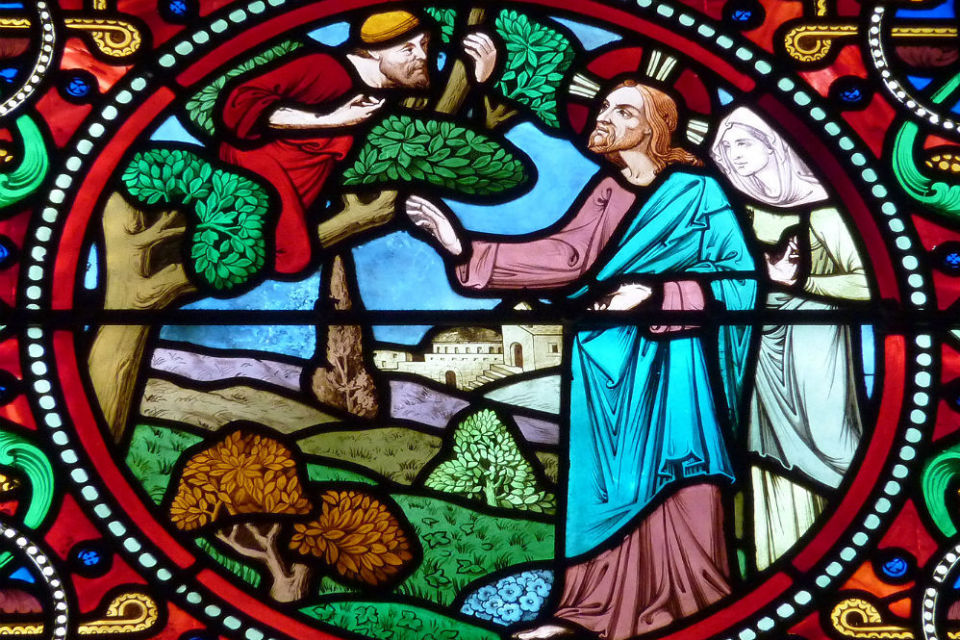
I think today’s Scripture reading is particularly fascinating since it shows someone who was definitely not well liked in his neighborhood. In fact, no one wanted to call him “friend” or neighbor. Zaccheus was a chief tax-collector for the Roman occupation. Yes, he was Jewish, and yes, he was working for the hated occupying foreign forces. And as if that were not enough to get him disliked by his Jewish neighbors, Zaccheus was officially delegated by the Roman government to collect their taxes for them.

The Roman government was not very particular about how they got their tax money – as long as they got it. So, the local tax collectors could be as demanding or dishonest as they wanted to be, all for the purpose of getting money for the Romans. And, if these tax collectors squeezed a little extra money out of their fellow Jews, the Romans did not care. As long as enough money came into the Roman treasury. That was all the occupying force cared about.

I would imagine that Zaccheus was a pretty lonely man. Until – the Rabbi Jesus came to town. This was several years after Jesus had started to preach, teach and do miracles, so I suspect by this time Jesus had quite a following, and quite the reputation! Let’s pick up right in the middle of the narrative: “3Zaccheus wanted to see who Jesus was, but because he was short he could not see over the crowd. So he ran ahead and climbed a sycamore-fig tree to see him, since Jesus was coming that way. When Jesus reached the spot, he looked up and said to him, “Zacchaeus, come down immediately. I must stay at your house today.” So he came down at once and welcomed him gladly.”

We read next that the crowd started to grumble, because the Rabbi Jesus saw and spoke with Zaccheus, truly engaged with him, and even said “I must stay at your house today.”  

Can you imagine, being the shortest guy in your high school! Plus, being one of the least popular persons in the town of Jericho! Both of those things must have been painful subjects for Zaccheus. I just imagine that he lived an isolated existence, wanting, hoping that someone would see him, notice him and validate him. This emotional response is only human!

We are currently observing a summer sermon series highlighting the person of Fred Rogers, of Mister Rogers’ Neighborhood. Have you ever thought of someone who is meek and gentle as being a strong individual? Someone who is so strong and confident themselves that they do not care what other people think? I think that is exactly the kind of person Fred Rogers was. Plus, Fred Rogers thought everyone was deserving of attention and respect, no matter what! And, that deep emotions were important things.

Of the many lessons Rogers gently gifted his audience, a chief one was that all emotions are valid, even the sad and angry ones. They need acceptance from friends and family and, often, expression – so long as it’s not violent. Sigmund Freud called this ‘sublimation,’ the channeling of destructive impulses into socially acceptable actions. It was a pillar of Rogers-ism, and [Rogers] often referred to dialogue about emotions and feelings as ‘important talk.’” [1]  

The Rabbi Jesus obviously thought that emotions were important – even the emotions of someone hated like Zaccheus. Sure, Zaccheus was seen as a hated tax collector by his Jewish neighbors! But, Zaccheus’s feelings were valid, too! Our Lord Jesus went out of His way to single Zaccheus out, see him, notice him, validate him. And, Jesus invited Himself over for dinner!

Salvation came to Zaccheus’s house that day. Jesus followed him home, and broke bread with him at a lonely table. Salvation comes to all of us when Jesus joins us, has fellowship with us. Even when people do not feel worthy, for whatever reason, to have Jesus join them – it doesn’t matter. Salvation is solidarity, hospitality, and yes, ministry.

Our commentator Karoline Lewis relates a modern (and true) narrative, taken from the column of David Brooks, long time New York Times columnist. Brooks tells the story of Kathy Fletcher and David Simpson. “They have a son named Santi, who went to Washington, D.C. public schools. Santi had a friend who sometimes went to school hungry. So, Santi invited him to occasionally eat and sleep at his house.”

“That friend had a friend and that friend had a friend, and now when you go to dinner at Kathy and David’s house on Thursday night there might be 15 to 20 teenagers crammed around the table, and later there will be groups of them crashing in the basement or in the few small bedrooms upstairs.”

The kids who show up at Kathy and David’s have endured the ordeals of modern poverty: homelessness, hunger, abuse, sexual assault. Almost all have seen death firsthand — to a sibling, friend or parent.”

“It’s anomalous for them to have a bed at home. One 21-year-old woman came to dinner last week and said this was the first time she’d been around a family table since she was 11… Poverty up close is so much more intricate and unpredictable than the picture of poverty you get from the grand national debates.”

“I started going to dinner there about two years ago,” writes Brooks, “hungry for something beyond food. Each meal we go around the table, and everybody has to say something nobody else knows about them. Each meal we demonstrate our commitment to care for one another. I took my daughter once and on the way out she said, ‘That’s the warmest place I can ever imagine.’”

The problems facing this country,” says Brooks, “are deeper than the labor participation rate and ISIS. It’s a crisis of solidarity, a crisis of segmentation, spiritual degradation, and [lack of] intimacy.”

“The kids call Kathy and David ‘Momma’ and ‘Dad,’ are unfailingly polite, clear the dishes, turn toward one another’s love like plants toward the sun and burst with big glowing personalities. The gift of Kathy and David is the gift of a complete intolerance of social distance,” insists Brooks. [2]

At church, we speak ‘salvation speech.’ This is speech that sees the other, that regards the overlooked. We speak speech that brings together, and unites across barriers and boundaries, classes and cultures. Speech that creates community and family for everyone. Speech that gives life and says that salvation is here and now, in this world as well as the next. [3]

Jesus said, “Today, salvation has come to this house.” It is salvation to a house, any house. It’s to a neighborhood, each and every neighborhood. This place where Zaccheus lives is where Fred Rogers would welcome, and be welcomed, too.

What would Jesus do? What would Fred Rogers do? Go. Do that.

(A big thank you to the online resources for Mr. Rogers Day – the Sunday nearest March 20th, Fred Rogers’ birthday. These resources come from the Presbyterian Church (USA). https://www.pcusastore.com/Content/Site119/Basics/13792MrRogersIG_00000154465.pdf )

@chaplaineliza

(Suggestion: visit me at my other blogs: matterofprayer: A Year of Everyday Prayers. #PursuePEACE – and  A Year of Being Kind . Thanks!


[1] https://www.cnn.com/2018/06/08/health/mister-rogers-go-ask-your-dad/index.html

[2] David Brooks, “The Power of a Dinner Table,” The New York Times, October, 18 2016, http://www.nytimes.com/2016/10/18/opinion/the-power-of-a-dinner-table.html

[3] https://www.workingpreacher.org/dear-working-preacher/salvation-today

Unknown's avatar

Welcome to the Neighborhood!

“Welcome to the Neighborhood!”

Mark 12:28-34 (12:33) – June 29, 2025

Welcome to the second in our summer sermon series on Fred Rogers, of the television show Mister Rogers’ Neighborhood, which aired on PBS for more than 30 years. As I said last week, I have great respect for Fred Rogers. I have even said a number of times (only partly humorously) that when I grow up, I want to be Mister Rogers.

When we consider our Scripture reading today, we might not at first be able to see clearly how the Rabbi Jesus instructing on the Greatest Commandment connects with Fred Rogers. We will explore that, but first, let’s take a closer look at today’s reading from Mark 12.  

            Starting with verse 28: 28 One of the teachers of the law came and heard them debating. Noticing that Jesus had given them a good answer, he asked him, “Of all the commandments, which is the most important?” 29 “The most important one,” answered Jesus, “is this: ‘Hear, O Israel: The Lord our God, the Lord is one. 30 Love the Lord your God with all your heart and with all your soul and with all your mind and with all your strength.’ 31 The second is this: ‘Love your neighbor as yourself.’ There is no commandment greater than these.”

            We need a little backstory here. The teachers of the Jewish Law (or the Law of Moses, from the Hebrew Scriptures) were quintessential rule-followers, often to the extreme! We can see that from the situation Jesus is dealing with, right here.  As one of our commentators said, “Throughout Mark’s Gospel, the scribes [and teachers] were always evaluating Jesus’ activities. They judged Jesus theologically.” [1] The Rabbi Jesus and some high-ranking teachers of the Law are having another in their series of continuing discussions. These teachers really enjoyed discussing the Law, and both the major as well as the minor points of Judaism. Some teachers would get all excited and rub their hands at the prospect of a good argument! I mean, discussion.

That’s where we pick up our thread of the narrative. Different rabbis or teachers had different opinions on what was the greatest of all commands. I am certain some of these teachers wanted to know what Jesus considered the “most important” of the 613 laws in the Mosaic Law code, which was (and still is) the official, orthodox Jewish rule book.

Our Lord Jesus said right here (and also in a parallel account in Matthew 22) that the Greatest Commandment has two parts. First part: Love the Lord your God with all your heart and with all your soul and with all your mind and with all your strength. Second part: Love your neighbor as yourself. The short way for us to think of this two-part command? Love God – vertically – and love neighbor – horizontally.

One common way of understanding this is that loving God first and foremost (which is a command, NOT a suggestion!) naturally leads us to loving neighbor. Our sermon today is called “Welcome to the Neighborhood,” because loving and caring about our neighbors is one of the foundational beliefs that was all-important to Fred Rogers.

For some additional understanding on what the Bible has to say about our neighbors, we can look at an unexpected place. Unexpected for Christians on a typical Sunday morning in the 21st century, that is. Let’s turn to Deuteronomy 10:17–19, where we see the Hebrew people after they have left slavery in Egypt and before they have entered the Promised Land.

Starting at verse 17: “For the Lord your God is God of gods and Lord of lords, the great God, mighty and awesome, who shows no partiality and accepts no bribes. 18 He defends the cause of the fatherless and the widow, and loves the foreigner residing among you, giving them food and clothing. 19 And you are to love those who are foreigners, for you yourselves were foreigners in Egypt.” Did we catch that last part? This is the Lord speaking. God shows no partiality and accepts no bribes. God tells us – and it is NOT just a suggestion – God commands all of the people of Israel and all of us (by extension) as the people of God, to love the foreigner residing among us, “for you yourselves were foreigners in Egypt.”

So, who IS our neighbor? Not just our relatives. Not just the people who go to our church, or our acquaintance from the garden club, or our friend from down the street. Instead, God commands us to defend the fatherless and the widow, and love the foreigner living in our neighborhood. Those foreigners – or our new neighbors, as Fred Rogers would say – are the ones who speak in a different language, or who come from a different country, or who dress in different clothes, or who worship at a different place than we do. Fred Rogers would be open, be curious, and most important, be caring and loving to everyone.  

Think about a time when you were new in a place. It could be a new home in a new location or a new school or workplace. It may be being new in an activity or class or team. How did it feel to be the “new one?” What would have made you feel welcome? Could you do that for someone else? Even a friendly smile or a greeting, like “good morning?”

            Fred Rogers would often ask people to do a short exercise. He would ask journalists to participate, or groups he’d speak to, and even the audience when he won the Emmy for Lifetime Achievement in 1997. Mr. Rogers would ask people to be silent for thirty seconds and think about people who have loved them into being. At the Emmy’s ceremony, Mr. Rogers marks the time. The camera pans the whole audience, with people deep in thought, and everything on the recording is absolutely silent during this time as well. [2]

Just like Fred Rogers, I would like to ask us to take 30 seconds to think about people who welcomed us and made us feel like neighbors. Who loved us, and welcomed us? Can you think of people who still warm your heart when you think of them? Take 30 seconds. ( … )  

I know I often ask in my sermons “what would Jesus do?” Who would Jesus love? We are supposed to, we are commanded to love God – vertically – and to love our neighbor – horizontally.

This week, I am going to change up my question, and ask “what would Fred Rogers do?” Who would Fred love? Who would Fred call his neighbor? I think, everyone. Each and every person. Go. Go, and do that.

Alleluia, amen.

(A big thank you to the online resources for Mr. Rogers Day – the Sunday nearest March 20th, Fred Rogers’ birthday. These resources come from the Presbyterian Church (USA). https://www.pcusastore.com/Content/Site119/Basics/13792MrRogersIG_00000154465.pdf )

@chaplaineliza

(Suggestion: visit me at my other blogs: matterofprayer: A Year of Everyday Prayers. #PursuePEACE – and  A Year of Being Kind . Thanks!


[1] https://www.workingpreacher.org/commentaries/revised-common-lectionary/ordinary-31-2/commentary-on-mark-1228-34-4

[2] https://www.pcusastore.com/Content/Site119/Basics/13792MrRogersIG_00000154465.pdf

Unknown's avatar

Came to Serve in the Neighborhood

“Came to Serve in the Neighborhood”

Mark 10:42-45 (10:43) – June 22, 2025

I’ve had a great respect and fondness for Fred Rogers, for many years. You know, Fred Rogers, of Mister Rogers’ Neighborhood. I watched the television show with my small children – all four of them, at various times. I so appreciated Fred’s gentle, caring, loving way of speaking to everyone. Not only the children. He was the real deal. Fred was a genuine, caring, compassionate person, interested in everyone and everything. And, especially in children.

Right now, with bombings and raids and rumors of war on the minds of many people worldwide, right now seems like a strategic time for us to be starting a summer sermon series on Fred Rogers. Today’s uncertain time in history is somewhat similar to the uncertain times in the area where the Rabbi Jesus grew up and was teaching and preaching. Occupied territory. I fear that your typical person on that first-century street in Israel did not have guarantees of security or comfort in their lives, either.  

Our reading is from Mark 10, just a few verses before the beginning of chapter 11, where Jesus enters Jerusalem on Palm Sunday for the final Passion week of His life. This is the very end of Rabbi Jesus’s three-year ministry. His disciples had been with Him, and learned from Him for three whole years. At this time just before the Passion week, Jesus calls all the disciples together to give them a short recap on the Gentiles—the Romans—the worldly way of dealing with pre-eminence, greatness, and authority.

I would like us to focus especially on a few verses from our Gospel reading today.  “whoever wants to become great among you must be your servant, 44 and whoever wants to be first must be servant of all. 45 For even the Son of Man did not come to be served, but to serve, and to give his life as a ransom for many.”

If we notice, Jesus did not want to be a big shot, strong-man, autocratic leader. Instead, we see the life of Jesus as offering unique insights and inspiration to all of us. Our Lord Jesus shows us how to live as a servant leader. In His life and teachings, Jesus consistently demonstrated the core principles of servant leadership. Our Lord Jesus embodied servant leadership in its purest form. [1]

People in the first century just did not understand. Not even when the Rabbi Jesus explained to the disciples that they needed to become completely of no account, like children, they still did not have any idea of what Jesus was talking about.

What is the overarching disconnect and problem here? “Power has been the perennial problem in human history. The reality of power is complex; its use and misuse in all human, social and political relations and interactions has been a question of utmost importance for all peoples.” [2]  

I strongly suspect that Fred Rogers would have objected to have his life compared to the earthly life of our Lord Jesus. However, I see some definite parallels. It is here that Fred Rogers shines. Yes, he totally understood and appreciated becoming like a child. He became vulnerable, totally open, on a daily basis. Fred Rogers turned the power dynamics of the popular world and of politicians and of world leaders on their head. Just exactly like Jesus did.

I’m going to tell you about a church I attended, years back, while I was still at seminary. Smaller church, here in the north suburbs of Chicago. The church was going to have a clean-up day in the nursery and small children’s area, after the morning worship service. The Sunday school and children’s ministry people had been planning it for a number of weeks. A number of people had dressed for church with their cleaning clothes on, blue jeans and t-shirts. The group even sent out for sandwiches for a quick lunch before they began to clean up.

            My husband Kevin approved of the clean-up; our children weren’t that far beyond that younger age group. We couldn’t stay after service that day, but said our good-byes to the cleaners. On our way out, we ran into the associate pastor. She had delivered the sermon that morning and worn her clerical robes in church. However, she had transformed; she had changed into blue jeans and a sweatshirt. She had a bucket and a spray bottle of cleanser in her hands, and cheerfully wished us well as my husband and I went off to the next event.

            My husband’s opinion of that associate pastor rose by leaps and bounds that day. He told me how impressed and pleased he was to see that she was willing to go to work without blowing her own horn. She was willing to get her hands dirty for the church, not just look pastoral and holy up front in the sanctuary. She was willing to be a servant, as well as a leader!

            I know I have mentioned this before, in my past sermons. I’ll mention it again. Fred Rogers was not only the star, puppet performer, writer and producer of Mister Rogers’ Neighborhood, he was also a Presbyterian minister in the PC(USA) denomination. He was ordained into the ministry of communication to families via the medium of television. “Fred Rogers committed his life to making television programs for the very young because he saw its potential as an instrument for good as a gift. He cared deeply about those on the other side of the screen – their needs, concerns, struggles and joys.” [3]

            Years ago, I sensed that deep caring through the television, as my small children watched Mister Rogers. I rejoice that my children – and countless others – had the opportunity and blessing to meet with this television neighbor, who strove to give his absolute best in a way that young children could readily understand.

That is exactly who and what Fred Rogers was, too. Each and every day. He said, “I’d like to be remembered for being a compassionate human being who happened to be fortunate enough to be born at a time when there was a fabulous thing called television that could allow me to use all the talents that I had been given.” [4]

I do not imagine that I have one quarter, even one tenth of the compassionate skills, talents and spiritual gifts that Fred Rogers was blessed with. But, I have the ability to be my honest, caring self in my ministry with others. God has given us all the opportunity and the blessing to be a blessing to others, each and every day.

How can you be a blessing to others, today? Tomorrow? Next month? We don’t need to be television personalities or leaders on the state or national level to follow in the way of Fred Rogers, and of other servant leaders. We can also be faithful in the little things, like clean-up day at the church. How can you and I serve God and serve others, today? We are all called to serve by Jesus. Let us serve in all honesty, caring, and love for others, in our neighborhood today.  

@chaplaineliza

(Suggestion: visit me at my other blogs: matterofprayer: A Year of Everyday Prayers. #PursuePEACE – and  A Year of Being Kind . Thanks!


[1] https://chieflings.com/examples-of-servant-leaders-in-the-bible/

[2] “Minjung and Power: A Biblical and Theological Perspective on Doularchy (Servanthood),” Kim Yong-Bock, at Religion OnLine.

[3] https://www.misterrogers.org/about-fred-rogers/

[4] https://www.misterrogers.org/about-fred-rogers/

Unknown's avatar

Go, Be Reconciled!

“Go, Be Reconciled!”

Matthew 5:21-26 (5:24) – February 12, 2023

            Fred Rogers is one of my heroes. Truly! Mister Rogers and his television neighborhood was on my television regularly for each of my small (and not-so-small) children. I believe I watched the majority of his television shows, over the years of my children’s toddlerhood, preschool and primary school years.

            What makes Fred Rogers truly special to me is not only his acceptance of people – each individual – exactly the way that they are, but also his knowledge and understanding of the full range of emotions felt by those people. All of the emotions, even the difficult and hurtful ones.

            One of the songs he wrote for his television show was “What Do You Do with the Mad that You Feel?” What a fitting question, especially considering the Scripture reading we have in front of us this morning! Jesus brings up that very question, and goes into more detail concerning how people felt, spoke and acted when they were angry.

This way of feeling, speaking and acting was just as true two thousand years ago as it is today. And, Mister Rogers’ sincere words to that song are just as striking and heartfelt for all humans, whenever and wherever they might be living on this earth.

            Jesus’s words are striking, too: “You have heard that it was said to the people long ago, ‘You shall not murder, and anyone who murders will be subject to judgment.’ 22 But I tell you that anyone who is angry with a brother or sister will be subject to judgment. Again, anyone who says to a brother or sister, ‘Raca[or, stupid idiot!], is answerable to the court. And anyone who says, ‘You fool!’ will be in danger of the fire of hell.”

            We all get angry, from time to time. And, some of us get angry more often. But, just like Mister Rogers asks in his song, what DO we do with the mad that we feel? Yes, if people commit murder, that action is really reprehensible! Jesus quotes or refers to one of the big laws from the Ten Commandments, from the Law of Moses. Do you hear that Jesus goes even further than that? Jesus says bad language and name-calling are just as bad as actual murder.

            Commentator Carolyn Brown, retired director of Children’s Ministry, has the following thoughts for the emotions and repercussions that can happen in these verses. “Everyone gets angry. It just happens. Good people get angry as often as bad people do. Adults, teenagers, and children all get angry. So, the question is, “what do you do when you get angry?” [1] This is so similar to Fred Rogers and his song “What Do You Do with the Mad that You Feel?”

            Let’s take a biblical example of bottled-up or unaddressed anger. Remember Joseph, from the Hebrew Scripture book of Genesis? Joseph’s big brothers were angry: Joseph was their father’s favorite, he got a special coat of many colors, plus he told his whole family his dreams in which they all bowed down to him. “When they got the chance they threw Joseph in a pit and were going to leave him there (murder), except they sold him to traders (definitely a sin).” [2]

            I suspect this biblical example, plus many more, were what was in Jesus’s thoughts as He delivered this important early sermon at the beginning of His ministry. How much of the Sermon on the Mount is Jesus giving the crowd hard and strict rules? Hard rules for relationships, and strict rules for living life? Or…do you think that Jesus is more concerned about personal spiritual growth? How each individual – how you and I and our friend or relative or stranger, for that matter – how each one goes about doing the job of personal spiritual growth?

Don’t you think that Jesus would be far more concerned about each person’s spiritual growth with God than about mindlessly following strict rules for the sake of rule-following? But, wait – there’s more! Much more.

Jesus goes on to say, “Therefore, if you are offering your gift at the altar and there remember that your brother or sister has something against you, 24 leave your gift there in front of the altar. First go and be reconciled to them; then come and offer your gift.”

It’s not only me, personally.  Or rather, yes, I do need to be aware of what is going on inside of me! I can’t sweep these personal mad, angry feelings under the rug, and forget about them. What’s more, I need to be emotionally aware of what is going on with those around me! We all do! If we see that our relative, our friend, our acquaintance has something against us, we are not supposed to just turn our backs and forget about it. No! We need to name the problem that makes us – or makes them – angry, and figure out something to do about it!

You and I – we need to stop our worship, stop in the middle of the worship service, or communion, even! And, go. “The Bible says, “be reconciled” with the person who made you angry.  That means work it out with them. Figure out how to solve the problem between you. That is not easy. Frequently it helps to get advice or help from other people.” [3] Do what it takes to be reconciled, to make sure that relationship is repaired, renewed, and close once again.  

When it comes to anger and relationships, Fred Rogers had a lot of wisdom in this particular area. He said, “Finding constructive ways to express our anger, whether we’re parents or children, is one of life’s important jobs.” What would help us grow closer to God, especially when we think of our problem relationships? What would Jesus suggest to us?

Some suggestions? Don’t stay angry: fix things as best you can. Mean what you say and do it! And, relationships are well worth working on!

Jesus will be delighted that we are taking Him at His word. And, that’s the Gospel truth.

@chaplaineliza

(Suggestion: visit me at my other blogs: matterofprayer: A Year of Everyday Prayers. #PursuePEACE – and  A Year of Being Kind . Thanks!

(Thanks to Carolyn Brown and her blog post on Year A – Sixth Sunday after Epiphany, Sixth Sunday in Ordinary Time (February 16, 2014) – commentary on Matthew 5:20-37,

http://worshipingwithchildren.blogspot.com/2014/01/year-sixth-sunday-after-epiphany-sixth.html


[1] http://worshipingwithchildren.blogspot.com/2014/01/year-sixth-sunday-after-epiphany-sixth.html

[2] Ibid.

[3] Ibid.