Unknown's avatar

A Foreign Neighbor’s Faith

“A Foreign Neighbor’s Faith”
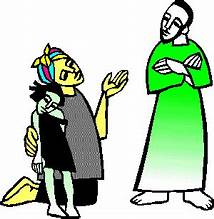
Matthew 15:21-28 (15:28) – July 27, 2025

When I worked as a hospital chaplain at Swedish Covenant Hospital (now called Swedish Hospital), more than 10 years ago, one of the points of working there highlighted was the multi-cultural setting of that hospital and that neighborhood. The ZIP code that Swedish is in is one of the most diverse in the country, in all kinds of ways. In terms of languages spoken, various countries of origin, differing faith traditions, and wide economic differences in that ZIP code alone make Swedish Hospital a unique place to work, of great cultural diversity.

In our Scripture reading today, the Rabbi Jesus traveled up north of the Sea of Galilee, on the border of Palestine. It was in an area called the Decapolis, the Ten Cities, which also was a multi-cultural crossing point. Perhaps not as widely diverse as the ZIP code around Swedish Hospital, but with a number of diverse cultures, faith traditions, and languages spoken.

Our Gospel writer Matthew was quite particular about how he presented the information in his Gospel, which was written specifically for a Jewish audience. Let us look at how Matthew begins this vignette in the life of the Rabbi Jesus. “Jesus withdrew to the region of Tyre and Sidon. 22 A Canaanite woman from that vicinity came to him, crying out, ‘Lord, Son of David, have mercy on me! My daughter is demon-possessed and suffering terribly.’”

We learn a lot from these two sentences! Matthew wants his readers to know where the Rabbi Jesus had gone – into the area of the Decapolis, on the border of Israel – and that this woman who came to Jesus for help is not Jewish, but instead is a Canaanite woman – what the Gospel writer Mark in his parallel account calls a Syro-Phoenician woman.

The Canaanites were hated by the Jews, and were among those the Jews termed “Gentiles,” since they were polytheists and prayed to various gods like Baal and Asherah.

Up until this point, Jesus had ministered to very few people who were not Jewish. So, here we are, in a cross-cultural situation. Here the spotlight shines on a woman who is not Jewish, asking Jesus for help. And, help not for her, but for her daughter, who is suffering terribly! This request is familiar territory for the Rabbi Jesus, certainly!  

I have mentioned the Rev. Janet Hunt before. She tells a heartfelt story, some of which I repeat here. “Mental illness carries all kinds of stigma today. I have known this since I was a child and we experienced it in our own family. Back then it was something whose name you whispered.  I’m not sure it is so very different now.  When I was young during that time during the prayers of the church where we stood in silence and remembered people in need, I would close my eyes shut tight and silently plead for Aunt Donna’s healing. It didn’t come.” [1]
            In the case of our Gospel narrative, we are not sure what is the matter with this daughter of the Canaanite woman. Certainly, it could well be mental illness! This was often seen as demon-possession in past centuries. Mental illness carried a huge stigma in the first century, just as now, in the twenty-first.

It is Jesus’s response that is surprising. Or rather, His non-response. “The disciples, obviously aggravated by her persistence, ask Jesus to deal with her request so that they can be on their way. Jesus then explains that his mission (under the authority of God) is to call out the faithful remnant of Israel. This doesn’t deny a future mission to the Gentiles, only that for the present, ‘salvation is from the Jews.’” [2]

The all-important point of this narrative comes from this mother, this neighbor from a different neighborhood. Our summer sermon series this summer is all about Fred Rogers. He met with a lot of different people from many, many different neighborhoods. Diverse cultures, and from foreign shores, or neighborhoods, too. As this Biblical narrative continues, the woman speaks to Jesus again. “The woman came and knelt before him. “Lord, help me!” she said.26 Jesus replied, “It is not right to take the children’s bread and toss it to the dogs.” 27 “Yes it is, Lord,” she said. “Even the dogs eat the crumbs that fall from their master’s table.”

28 Then Jesus said to her, “Woman, you have great faith! Your request is granted.” And her daughter was healed at that moment.

Did you hear? This woman from a different culture, from a different neighborhood, had great faith! Jesus acknowledges that, and her daughter is miraculously healed at that moment! It is marvelous that this faithful foreign woman – who knew that Jesus was the Chosen One of God, and called Jesus by the Messianic title “Son of David” – did indeed have great faith!

Except, where does that leave us today? What are we supposed to do with this narrative from Matthew’s Gospel? As commentator Karoline Lewis tells us, “A lot of how we talk about faith indeed ends up being about measurement. Life’s consequences are attributed to whether or not someone had enough faith, whatever the circumstance may be. “Just have faith!” Well, how much? It doesn’t seem like a little will do. And how do you get more? Are you stuck with what you have? Are we genetically disposed to a certain level of faith?” [3]

I sometimes wonder whether I would have had even half, even a quarter of the amount of faith this Canaanite woman had! I suspect that these are the kinds of issues about faith with which all of us struggle — and which we may likely hear in the Canaanite woman’s deep, heartbreaking request. “We wonder at the faith that is already working within her.  Even though she is a Gentile, somehow she sees Jesus as having come for her as well.[4]

At the same time, I do not want us to assume that because we do not have great faith that the Lord Jesus turns His back on us, or refuses to do anything for us at all. Which is what false teachers of the Gospel often tell their followers: “Oh, you did not receive that healing – or that answer to prayer – because you just didn’t have enough faith!”

No, Christianity is not a cheap marketplace, or a mercenary vending machine in the sky where we deposit our money and miracles and healings magically come forth. No, this Canaanite woman had faith in the Lord Jesus, the Messiah, the Son of David. She developed a relationship with Jesus. And, it all started with a mother’s willingness not only to speak, but to shout.  For the sake of love. For the sake of a much beloved daughter, desperately ill.

Our faith in God – your faith and mine – “lays claim on how you are in the world, how you choose to be, how [each of us] decide to live, in each specific moment of your life…. faith is not a fixed collection of beliefs but a state of being. Your faith is great, not because of what you do, but because of who you are.” [5]

Fred Rogers had a wide variety of diverse neighbors in Mister Rogers’ Neighborhood. These were both real neighbors in the real neighborhood, and the puppets and people of the Neighborhood of Make-Believe. They all interacted with one another with kindness and respect. Fred Rogers tells us, “As different as we are from one another, as unique as each one of us is, we are much more the same than we are different. That may be the most essential message of all, as we help our children grow toward being caring, compassionate, and charitable adults.” [6]

Yes, Jesus healed this daughter of a neighbor from a different neighborhood, a foreign neighborhood. As you and I travel through different neighborhoods in our lives, we can have the same openness, care and compassion that Jesus had. That Fred Rogers had.  

Be like Jesus. Be like Fred Rogers. Go into multicultural places with openness and respect, care and compassion. Go, do that.

(A big thank you to the online resources for Mr. Rogers Day – the Sunday nearest March 20th, Fred Rogers’ birthday. These resources come from the Presbyterian Church (USA). https://www.pcusastore.com/Content/Site119/Basics/13792MrRogersIG_00000154465.pdf )

@chaplaineliza

(Suggestion: visit me at my other blogs: matterofprayer: A Year of Everyday Prayers. #PursuePEACE – and  A Year of Being Kind . Thanks!


[1] http://words.dancingwiththeword.com/2014/08/a-mothers-cry.html

[2] https://www.lectionarystudies.com/studyg/sunday20ag.html

[3] https://www.workingpreacher.org/dear-working-preacher/getting-great-faith

[4] http://words.dancingwiththeword.com/2014/08/a-mothers-cry.html

[5] https://www.workingpreacher.org/dear-working-preacher/getting-great-faith

[6] https://www.misterrogers.org/articles/he-helped-us-with-our-relationships-with-others/ 

Unknown's avatar

Give Thanks? For What?

“Give Thanks? For What?”

Psalm 100:1-5 (100:4) – November 24, 2021 (preached at the Morton Grove Interfaith Thanksgiving Eve service, held at St. Martha of Bethany Catholic Church campus)

            What are you thankful for? I don’t know whether you or your family come up with a “gratitude” before you eat your Thanksgiving feast tomorrow. Except, it is becoming more and more common that as families and friends gather around the festive table that they go around the table and say what each one is grateful for. Sometimes, even before they begin to eat. The religious writer Diana Butler Bass calls this “the Turkey Hostage Situation.” No food until everyone comes up with a gratitude!   

            Some years we are more grateful and thankful than others. The psalm we read tonight features thankfulness as a highlight of worship. When we come into our houses of worship, we are supposed to be thankful. Grateful. Especially now, at this Thanksgiving time of the year.

I want to dig more deeply into Psalm 100, and see what else we can discover.

I love language. I loved English classes when I was in middle school and high school. Of course, I loved literature! I was – and still am – fascinated with the way language functions and is put together. This great interest in languages helped me when I went to seminary and studied biblical Hebrew and Greek, the original languages our Bible was written in.   

One helpful tip I remember when looking at the nuts and bolts of a Bible verse or paragraph is to break it down. Look at the different parts of speech: nouns, adjectives, and especially verbs. The verbs in Psalm 100 give us a great deal of insight into this psalm, or song.

Speaking of songs, this reading IS a song. This song gives us instruction of how to come into God’s presence – the how-to’s of worship. The African-American Lectionary commentary says, “The psalmist uses seven different verbs to call to the community to worship: make, serve, come, know, enter, give thanks, and bless. Although there are moments when we need to be still and quiet in the presence of the LORD, this is not one of them.” [1]

I really appreciate and enjoy those times when I worshiped in African-American congregations. Since I lead a congregation now myself, I miss those other opportunities to go, and see other congregations, and enjoy different praise structures and faith traditions in worship.

Yet, I wonder – what is it about this psalm that makes it so marvelous as a template for worship? If we go back to the verbs used in this song, this hymn of praise and worship takes on a more wonderful meaning. And institutional meaning.

True, I have attended worship in a number of different settings, over the years. In many of these, the basic outline of worship remains the same. The worshipers come together, and they know, they understand (as best as they are able) that God is the reason they gather. Then – and this is important to any worship service – they give thanks.

I remember a small, intimate worship service some years ago while I was on a retreat. About 15 people were gathered together. We did not have any of the outside trappings of a building, no special glass, no carved woodwork or stone, no music or musicians. Yet, that was a meaningful worship experience for me, and for many others in that group.

That retreat was not at Thanksgiving-time, yet we were all thankful and grateful the group of us had gathered together. Can you relate? Have you had a feeling like that, a similar experience where you and the other members of your group felt thankful about this holy experience? This worship opportunity where you felt thankful and grateful you and the other people in your group (any group – family, friends, congregation, retreat group) felt the same way? Indescribable, worshipful, beyond words, even divine.  

This psalm talks about experiences like that in worship, and says that giving thanks is an integral part of worshiping God. We can give thanks that God is our God. And, we can give thanks for all that God has given to us.

            I agree with commentator Larry Broding that thanksgiving is one of our primary attitudes of worship. “We are to be happy when we present ourselves to God. We are to be thankful when we are in [God’s] presence. Other attitudes are possible (sorrow, need, intercession, surrender, peace, etc.) but joy and thanksgiving should be our primary focus.” [2] And, this isn’t just at Thanksgiving. It’s at any time of the year.

For those among us who do not feel like gathering with family or friends at a dinner table tomorrow, I relate. Thanksgiving can be a difficult occasion, a complicated time. Know that there are friends who stand with you, or sit beside you, in your discomfort, grief or longing.

            Specifically, what about the upcoming feast tomorrow? Similar to writer Diana Butler Bass, are you and I familiar with the Turkey Hostage Situation? Are we going to hold our turkey – or whatever other kind of main course – hostage while each one around the table scrambles to come up with something they are grateful for? We are grateful for the stuff, the things of our lives! That is turning our annual day of thanks into a commodity-based occasion. [3] It is not helpful for us to twist or force “thankful” feelings and behavior in this way

            Going back to my great interest in language, I found Butler Bass’s alternative for this round-robin of “gratitude” to be a fascinating option. Instead, an alternative suggestion: Perhaps this Thanksgiving is a good time to ask some different questions regarding gratitude:

To whom or what are you grateful?
What challenges have you been grateful through?
Have you been grateful with others?
Where have you discovered gratitude within?
Has something in your life been changed by being grateful?
In
what circumstances have you experienced thankfulness?

            Any or all of these are marvelous ideas to ponder. Situations to consider. Again, this may or may not work for the group gathered around your Thanksgiving table. But, it certainly takes our minds off of the tangible, material things, the clutter of forced gratitude at Thanksgiving, and the myriad of stuff we might have randomly filling up our lives, like the stuffing inside of a turkey.

            Tonight, I hope and pray we all can “Enter God’s gates with thanksgiving and his courts with praise;” may we all “give thanks to God and praise his name.”

             I pray a blessed and thankful holiday upon us all. Amen.

@chaplaineliza

(Suggestion: visit me at my other blogs: matterofprayer: A Year of Everyday Prayers. #PursuePEACE – and  A Year of Being Kind . Thanks!


[1] http://www.theafricanamericanlectionary.org/PopupLectionaryReading.asp?LRID=98

Commentary, Psalm 100, Alfie Wines, The African American Lectionary, 2009

[2] http://www.word-sunday.com/Files/Psalms/100.html

·  “How To Prepare for Worship,”Larry Broding’s Word-Sunday.Com: A Lectionary Resource for Catholics.

[3] https://dianabutlerbass.substack.com/about

Unknown's avatar

Hospitality + Service = Discipleship!

“Hospitality + Service = Discipleship!“

Deacons Greek Jews Acts 6

Acts 6:1-7 – July 5, 2015

I attended an Interfaith Panel discussion last Tuesday evening at the Muslim Community Center here in Morton Grove. The panel had representatives from five major faith traditions here in the Chicago area: Baha’i, Christian, Jewish, Muslim and Sikh. Each gave their religion’s basic approach to serving those in need. Charity. Service to those less fortunate than ourselves. I appreciated listening to diverse views on charity and assisting the needy.

I want us to focus on the New Testament reading from Acts on—surprise! Charity and assisting the needy! My recent evening with the Interfaith panel has an unexpected tie-in to the bible passage from Acts this morning. I planned and set out these passages and these sermon topics almost two months ago, before I was ever contacted by the Interfaith Outreach Committee at the Community Center. Was I surprised to find out that the topic of last Tuesday’s evening fit right in with today’s reading from Acts—and today’s sermon.

What is the situation for the group of believers in the Risen Jesus? The early church?

Let’s turn back to the beginning of Acts 6, and take a look at this particular Postcard from the Early Church. The first sentence of the chapter tells us a lot: “In those days, the number of disciples was increasing.”

That’s the situation. Everything seems to be going well for this growing group of believers! Attendance in services is up. Plate income is increasing. The apostles—the pastors of this growing flock—are busier than ever. Everything is on the upswing. When—a complication comes up.

I need to give you all some backstory, so you can get the full picture. (I appreciate the Rev. Bryan Findlayson’s concise explanation.) At this point, just a couple of months after that first Pentecost, the birthday of the Church, all the believers were Jewish. Jerusalem was a large city in that area. It was the time of the Pax Romana, the Roman peace, and Jews from all over the known world returned to the city of Jerusalem and settled there.

As Rev. Findlayson mentions, “The Jewish world was divided between Aramaic-speaking Jews from Palestine [Hebrews—home grown], and Greek-speaking Jews from the dispersion [or Hellenists—who had grown up outside Palestine]. Racial tension, often focused on religious purity, existed in the wider Jewish community and found its way into the New Testament church. [The tension] revealed itself in a dispute over the care of widows. The [Greek-speaking Jews] claimed that their widows were not getting a fair share of the church’s welfare budget.”

Do you hear the problem? Two separate groups of people in the early Church, and one group—a minority group, no less—claimed they were being overlooked. Discriminated against. Or, rather, that their poverty-stricken widows, who were part of the group of believers, were being left out in the charity distribution. Welfare budget. Or almsgiving to the poor. Whatever you call it, a group of people was getting left out.

I don’t think that anyone was left out on purpose. What I do know—by Dr. Luke’s report—is that the Church in Jerusalem was growing by leaps and bounds! This is a good problem to have! In a large group of people going through such rapid growth, unfortunate things happen. And, it’s inevitable that someone ends up getting overlooked. Some people’s needs just aren’t met.

What happens next? This is the perfect situation for a church-splitting conflict. Hospitality was huge in the Middle East, as well as in other areas throughout the world. Of course people opened their homes to friends and acquaintances, even strangers, invited them in, offered things to them of what they had. Listen to Chapter 6: “So the Twelve apostles gathered all the believers together and said, “It would not be right for us to neglect the ministry of the word of God in order to wait on tables. Brothers and sisters, choose seven men from among you who are known to be full of the Spirit and wisdom. We will turn this responsibility over to them and will give our attention to prayer and the ministry of the word.’”

These verses in Acts show us the first rumblings of church conflict. The Apostles could have gotten anxious and started to fret. Or, possibly started micro-managing and overseeing each little thing in the distribution of food. Or, called a board meeting, and appointed a task force to study and look further into the treatment of the Greek-speaking widows. But did they? No. The Apostles faced the conflict directly, and responded in a proactive way.

What about today? People have definitely not stopped being hungry. What about communication problems? What about the local food preferences? How should those be handled? What if several different faith traditions in our area have conflicting methods in the distribution of food? Are there any hungry or needy people—unintentionally—getting left out?

Let me tell you more about the panel discussion and dinner at the Muslim Community Center last week. I heard diverse views on charity and assisting the needy. Yet—they were not so diverse, after all. I saw in all five faith traditions a deep concern for those with less, and a desire to come alongside and help where possible. I also appreciated breaking bread with such a diverse group of friends, after the evening service.

Yes, Baha’i, Christians, Jews, Muslims and Sikhs do come from different faith traditions. Yes, the Muslims are observing the holy month of Ramadan. Yes, Muslims commonly fast every day during the daylight hours during this month. The Community Center invited a large group of people to join together with them for this discussion and for the Iftar dinner after sunset, to break the fast at the end of the day.

Back to Acts. True, these Aramaic-speaking Jews and Greek-speaking Jews from the book of Acts were both of the same faith tradition. However, there were big cultural and language differences between them. So, what happened? How did they solve this problem? The Apostles had the whole group of believers choose seven upright, worthy individuals to be responsible for the distribution of food and goods to this minority group.

What I find the most interesting? The seven men all had Greek names. I suspect they all were Greek-speaking Jews, themselves! How awesome is that. The other believers showed great sensitivity in selecting seven servers, seven people who could oversee distributing of food. Seven men with Greek names. What’s more, one Greek man was even a proselyte, a convert to Judaism. Imagine that!

Paul Waddell, writing for the Center for Christian Ethics, tells us more about this calling, this service to the church: “Christian hospitality is a matter of welcoming, caring for, and befriending the stranger, the poor and needy, the homeless and destitute, the unloved and the unlikable, the weird and the strange, in gratitude to God and in imitation of Christ. For Christians, hospitality is not an occasional gesture but a whole way of being. It is not an interruption to our normal way of life but a habit, practice, or virtue that ought consistently to characterize our lives.”

Dr. Waddell asks: how do we become this kind of person/or these kinds of congregations in the Church and for the world today? Great question! We can start small, with a small act of kindness each day. A small act of hospitality, of welcome and greeting each day. Each one of us is called to be welcoming members of this church today. Each of us is an individual, true. However, Lone Ranger Christians are not a good idea. We need to support each other, be kind to each other, and support the wider community.

What about you? Are you going to be a welcoming person, both here at church, and at home, as well? No matter what the cultural differences, no matter where people come from, we are all called to be welcoming. Just as Jesus was kind and welcoming to all people, throughout the Gospels, we can all follow His excellent example. That’s what His disciples do, to the best of their ability, in the book of Acts. And, that’s what all of us can do, here in the church, and everywhere else, too!

Alleluia, amen!

@chaplaineliza

(Suggestion: visit me at my daily blog for 2015: matterofprayer: A Year of Everyday Prayers. and my other blog,  A Year of Being Kind .  Thanks!)