Unknown's avatar

God’s Radical Promises!

“God’s Radical Promises!”

Luke 1:46-55 (1:49) – December 10, 2023

            Who remembers going Christmas caroling? Going from house to house, singing the carols and hymns of the season, bringing hope, joy and peace to many at this season of the year. Such a wonderful memory! And, such wonderful carols and hymns and songs, too!

            Just think of where these songs of hope, joy and peace come from. All over the world, there have been songs of Advent and Christmas written throughout the centuries. These are by turns loud, joyous and bright music, or they could be soft, gentle, quiet lullabies. What holds all of these songs in common is their focus on God’s promises fulfilled.

            That sounds so much like our Gospel reading from Luke today. The pregnant teenager Mary sings a song where she remembers the promises of God. And, these promises are not just theoretical. These promises are actually happening to her, at the time she is singing.

            Her cousin Elizabeth is much older, and had given up any hope of having a baby until God miraculously intervened. Mary – well, we all know Mary’s story, how the angel Gabriel came to her and said God had highly favored her. And – Mary said yes to God, and became pregnant by the Holy Spirit. After several months, Mary and her cousin Elizabeth are together, at Elizabeth’s home. Mary, a thoughtful, contemplative teenager, began singing this marvelous song of God’s promises fulfilled in her life and in the time to come.

            At the beginning of this song – this Magnificat – Mary starts with giving praise to the Lord. Magnifiying God’s name! As the Jewish people had done long before Mary, she sings of the great things God has done. Except, for Mary, God is now doing these things for her, personally! Just imagine, Mary was from a small town in an obscure region of Palestine. A nobody from nowhere. Except, she is so similar to many young women throughout the centuries.

Just think, “living in a rural village in an occupied country. Everyone around her discounted her. But God did not. This gives everyone else who feels like a nobody the assurance that God values them too. God has work and a plan for them, too.” [1] What a bright hope this holds out for so many who otherwise would feel left out, downtrodden, and left behind!

Both Mary and Elizabeth felt joy, too. Both knew the joy of having a baby grow within their bodies, and they knew the joy of having God’s promises personally fulfilled in their own lives. Plus, Mary was joyful because she looked forward to seeing her son as the fulfillment of the world’s hope, the fulfillment of God’s promises foretold throughout the ages.

Mary is not a meek, mild and lowly person, no matter what certain carols may say. As we read Mary’s song of praise to God, we can clearly hear this song is a radical departure from the broken, the fallen, the least and the last. From the words of this song, I suspect that Mary is not only thoughtful, she is intelligent, even mature and freethinking.   

            Can you listen with open ears to Mary sing of God who “has brought down rulers from their thrones but has lifted up the humble,” and “has filled the hungry with good things but has sent the rich away empty.” This is a classic story (or song) about the “haves” and the “have-nots,” and we can guess who Mary associates herself with! The Jewish people are definitely downtrodden; the Roman empire certainly has them under their collective boot heel. Nevertheless, Mary’s notes of joy ring out for all to hear in the Magnificat!

            Remember, Mary’s song, giving glory, magnifying God, is also clearly a radical protest song. As she sings about the injustice not only in her hometown, but within the whole occupied Jewish nation, any peace but a forced “peace” was the furthest thing from the minds of the Roman occupiers. Yet, “the new world Mary sings about here isn’t elusive or unquantifiable at all. The hope she holds onto is one passed on to her from her ancestors: from Hannah, who sang this hymn of reversal and revolution in the Hebrew scriptures, to the Psalmist, who echoed praise to God for raising the poor from the dust and lifting the needy out of their desperation.” [2]      

            One commentator, Rolf Jacobson, tells about one of his colleagues at Luther Seminary. Dr. Lois Malcolm grew up as a missionary kid in the Philippines. “Growing up among that nation’s poor, Malcolm reported that when they heard Mary’s Psalm, it was the first time that anyone had told them the good news that God cares about them—the poor, the oppressed. Mary’s Psalm announces, “Christ has come to challenge the structures of sin, death, the devil, and oppression. Christ has come in the strength of the Lord to do what the Lord has always done: lift up the lowly, free the enslaved, feed the hungry, give justice to the widow, the orphan, and the sojourner. [3]

            In the words of a modern retelling of Mary’s song: “Though the nations rage from age to age, we remember who holds us fast: God’s mercy must deliver us from the conqueror’s crushing grasp. This saving word that our forebears heard is the promise which holds us bound, ‘til the spear and rod can be crushed by God, who is turning the world around.” [4]

Can you believe how radical, how revolutionary an idea this was (and is)? Especially to a large group of people who have been poor, downtrodden, and left on the outskirts for generations, perhaps for centuries? What good news – even marvelous news – this would be to such a group of people, to know that God not only loves them, but God cares about each of them, and is actively coming to their defense, to fill their stomachs and right their wrongs!

            This is, indeed, a counter-cultural Gospel reading, counter to the culture of the United States, surely. What better reason for us to lift up this message of resistance, to open our ears to Mary and her radical song. Here in this country, the commercial picture of the baby Jesus is “a cattle-lowing, no-crying-he-makes Jesus” with Silent Night and Away in a Manger. “But at least one Christmas carol would remind us of the ends to which the son of Mary was willing to go in order to cast the mighty down from their thrones and uplift the lowly:” [5]

Nails, spear shall pierce him through, / The cross he borne for me, for you;
Hail, hail the word made flesh, / The babe, the son of Mary!

May our hushed, reverent souls magnify our Lord, indeed. Amen, alleluia.

@chaplaineliza

(Suggestion: visit me at my other blogs: matterofprayer: A Year of Everyday Prayers. #PursuePEACE – and  A Year of Being Kind . Thanks!)

(I would like to express my great appreciation for the observations and commentary from the Do Not Be Afraid Advent Devotional – © 2022 Illustrated Ministry, LLC.. I used several quotes and ideas from their useful resources. Thanks so much!)


[1]Worshiping With Children: Year C – Fourth Sunday of Advent (December 20, 2015)

[2] The Do Not Be Afraid Advent Devotional – © 2022 Illustrated Ministry, LLC

[3]  Commentary on Luke 1:46b-55 – Working Preacher from Luther Seminary

[4] Cooney, Rory, “Canticle of the Turning,” (GIA Pulications, Inc. Chicago, IL: 1990)

[5] Commentary on Luke 1:46b-55 – Working Preacher from Luther Seminary
Unknown's avatar

The Christmas Story

“The Christmas Story”

zp_ethiopian-nativity-scene-painted-in-a-traditional-style

John 1:1-18 (1:14) – Christmas Eve night, December 24, 2017

The holiday season is coming to a grand crescendo. Tonight is Christmas Eve. Tonight is a wonderful service at our church, and lots of warm and fuzzy feelings. Christmas carols sung, special music at the service, candles lit, closing with “Silent Night.” Remembering the Light that has come into the world at Christmas. Glory, hallelujah!

Yes, all of those things, and more, are wonderful. Special. One of a kind, even.

But, Father Henri Nouwen’s words bring me up short. “Somehow I realized that songs, music, good feelings, beautiful liturgies, nice presents, big dinners, and many sweet words do not make Christmas.” [1]

So, what does make Christmas?

I feel like Charlie Brown at the Christmas pageant rehearsal. “Isn’t there anyone who knows what Christmas is all about?” I know Linus responds, “Sure, Charlie Brown. I can tell you what Christmas is all about.” He then recounts the Nativity narrative from Luke 2. Except—it doesn’t penetrate into Charlie Brown’s head. Yet.

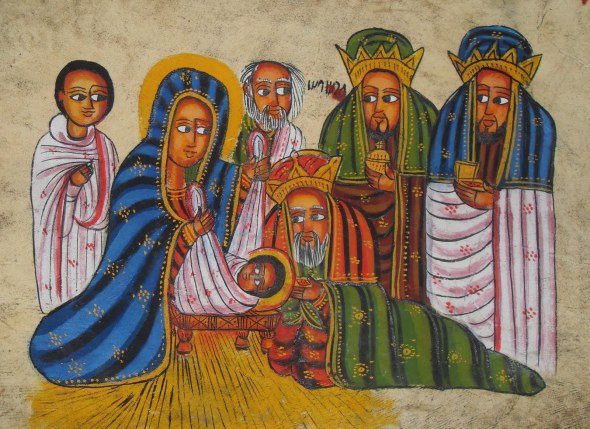
The Light of all the world—of all the universe—born as a Baby in Bethlehem? The cosmic Word, the divine Logos, made human flesh as a Baby? That just doesn’t make sense to me, either, sometimes. Sometimes, it can’t penetrate into my head, either.

There is a disconnect here. I know I have difficulty believing in the miracle of the Incarnation—sometimes! But, God wanted to bridge that cosmic chasm between divinity and humanity. That is one huge reason why God became human, why God divested Godself of all divinity and became a tiny baby named Jesus.

Can we possibly listen to Linus reading the Nativity narrative from Luke chapter 2, and not feel the specialness of this heavenly visitation? As the lights come down on the stage and the spotlight shines on the narrator, is there anyone here who cannot be moved by the marvelous cry of the shepherds, telling everyone around Bethlehem about this super special Baby they found that night?

How unimaginable—that the God who created heaven and earth, who holds the universe between the span of the fingers on one hand, could empty Godself of all God-ness. How amazing. How miraculous. Jesus came to earth to journey with us, to walk and talk and sit by our sides. So we wouldn’t ever be separated from God. Never be alone again.

I realize that “Christmas is believing that the salvation of the world is God’s work and not mine….it is into this broken world that a child is born who is called Son of the Most High, Prince of Peace, Savior.” [2] Human feelings and sentiment only partly come into the equation. It is, in fact, something far beyond all feeling and emotion, as Fr. Nouwen says.

Yet, God wants all of me. God wants all of us. God wants to save all parts of us. Not just emotions and feelings. Not just our intellect and brain. Intellect, physicality, emotions, and feelings, and all. The salvation of the world is, indeed, God’s doing.

As Christmas comes again, we can say “Thank God.” Or is it, “Thank You, God.” Thank God for the birth of Jesus. Thank God for loving us so much that You sent Your Son.

Thank You, God, for sending Jesus, the Word made flesh. Sometimes, a quiet “Thank You” speaks volumes.


[1] Advent and Christmas: Wisdom from Henri J. M. Nouwen (Linguori, Missouri: Redemptorist Pastoral Publications, 2004), 50.

[2] Ibid.

@chaplaineliza

(Suggestion: visit me at my regular blog for 2017: matterofprayer: A Year of Everyday Prayers. #PursuePEACE – and my other blog,  A Year of Being Kind . Thanks!)

Unknown's avatar

Prepare!

“Prepare!”

Mark 1-3 prepare, road

Mark 1:1-8 (1:3) – December 10, 2017

This is the second weekend in December, a time of year that many people consider festive, merry and bright. The holidays here in America—with Christmas quickly approaching—are associated with tinsel, holly, and bright lights. Chestnuts roasting on an open fire, silver bells, and jingle all the way.

But, that’s the secular way of welcoming the holidays. When we think of religious Christmas carols, we can remember O Little Town of Bethlehem, Angels We Have Heard on High, The First Nowell, and O Come, All Ye Faithful.

Except…it isn’t Christmas yet. We are still on the second Sunday of Advent. We are still preparing our hearts and minds for the coming of the Baby in Bethlehem. Sort of like in George Frederick Handel’s “Joy to the World,” Isaac Watts’s verse “Let every heart prepare Him room.”

The first two Sundays in Advent are more prophetic in tone. The bible readings for these two weeks look at prophecy referring to the coming of the Lord. In the case of the Apostle Peter, he is talking about the second coming of our Lord Jesus. The Gospel reading from the first chapter of Mark is about the forerunner of the Lord, John the Baptist. Mark starts off this gospel with “The beginning of the good news about Jesus the Messiah, the Son of God, as it is written in Isaiah the prophet.”  John the Baptist cries, “Prepare! Prepare the way of the Lord!”

What are we supposed to prepare, anyhow? That was always a question I asked myself.

Let’s back up. We learn more about John the Baptist from the Gospel of Luke. He was Jesus’s cousin. We know about John because his older mother Elizabeth was pregnant at the same time as the young Mary, the mother of Jesus. I suspect John and Jesus grew up fairly close to one another, perhaps even seeing each other on a regular basis.

What about the people at the time of the John the Baptist and his ministry, in the first century? What did they think of him? John comes across as—what some today might call—a lunatic or crazy person. Some homeless guy, spouting weird religious stuff about the coming of the Lord, or something. Really wacko, and not very appealing. Look at what he wears! Look at his weird diet, too!

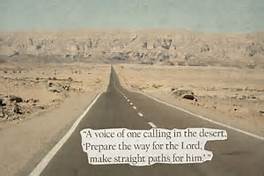
John had quite a prophecy to live up to, as well. Listen to what Isaiah the prophet has to say! “I will send my messenger ahead of you, who will prepare your way”— “a voice of one calling in the wilderness, ‘Prepare the way for the Lord, make straight paths for him.’”

Yes, we can compare John to one of those doom-and-gloom prophets with a long, bushy beard. We might see them in cartoons, walking around a downtown area with a large sign that says “Repent! Prepare! The end of the world is near!”

I know I’ve heard street preachers downtown who preach fire-and-brimstone messages, warning everyone of the judgement to come, telling people to clean up their acts. Isn’t this similar to what John was preaching? Telling people to repent and to prepare for God’s coming?

Although, God did not just send a preacher like John the Baptist one time only, two thousand years ago. No, God regularly sends those preachers into our lives today to remind us that God’s arrival is indeed just around the corner.

What’s more, we hear from one of those preachers in the New Testament lesson for the Second Sunday of Advent. In Eugene Peterson’s great modern translation “The Message,” the apostle Peter asks, “Since everything here today might well be gone tomorrow, do you see how essential it is to live a holy life?” [1]

Living a holy life? That is exactly what John the Baptist wanted people to do, too. That is why he told people to clean up their hearts, and clean up their lives. Prepare! Get ready! John told people they had forgotten how to live like God’s people and needed to make changes. So, he baptized people who heard him, changed their minds and hearts, and wanted to make those changes permanent in their lives. [2]

We know that many people did change their hearts and minds, and did start living the way God wanted them to live, back in the time of John the Baptist. We know that many people repented and got baptized as an outward sign that they were repenting, and that God forgave their sins.

There are certain people who do not want to change. Certain people are stuck in their imperfect but familiar ruts, stuck doing the same thoughtless things, saying the same hurtful words, thinking the same inconsiderate thoughts. Everyone remembers Ebenezer Scrooge, from Charles Dickens’s story A Christmas Carol? Remember how mean and sour and nasty Scrooge was? He had absolutely no intention of changing his ways and becoming a kinder, more compassionate person—becoming more Christlike.

The people who John baptized certainly wanted to change, and they told John the Baptist so. They had a change of heart, and turned around to go a different way. They were preparing for the coming of the Lord. They were preparing the way for the Lord to work in their hearts, minds and lives. Can we do the same thing in our hearts, minds and lives, today? Or, will we cry, “Bah, humbug!” with Ebenezer Scrooge and continue on our stubborn way, away from God?

Another aspect of Scrooge’s life bears looking at. Another of Ebenezer Scrooge’s problems was that “he thought everything he had – his money, his possessions, his business – were the things that brought meaning to his life.” [3] The Ghosts of Christmas Past, Present and Future could be viewed as preachers. They came to him that evening and reminded him that all of those earthly things could be gone tomorrow. Sure, Scrooge had prepared all his earthly assets, but he had not prepared the inner sanctuary of his heart.

In the first century, in our Gospel lesson today, John the Baptist encouraged the crowds to prepare for the coming of the Messiah. We have preachers today to encourage us to do the same thing. We have the witness of conscience and the Holy Spirit to do the same thing—encourage us to change. By repenting; literally making a 180 degree turn. By stopping dead in our tracks, like old Ebenezer, and re-evaluating the course of our life.

What is more, John promised that someone was coming from God who was going to be very important. John told people that they could change and that Jesus would give them even more power to make even bigger changes.

What about us, here and now? We can hear the call of John the Baptist. We can prepare for the coming of the Messiah. We can prepare Him room, just as the Christmas Carol “Joy to the World” tells us. We can prepare the sanctuary of each of our hearts to welcome the Baby in Bethlehem who is our Lord and Savior Jesus Christ.

Won’t you prepare the way?

[1] From An Advent Journey: Devotional Guide, Week Two. This curriculum comes from Illustrated Children’s Ministry.

[2] http://worshipingwithchildren.blogspot.com/2014/11/year-b-second-sunday-of-advent-december.html

Year B – The Second Sunday of Advent (December 7, 2014)

[3] From An Advent Journey: Devotional Guide, Week Two. This curriculum comes from Illustrated Children’s Ministry.

(A heartfelt thank you to An Advent Journey: Devotional Guide. Some of these sermon ideas and thoughts came directly from this guide.  I appreciate this intergenerational curriculum, which is the basis for my Advent sermon series. This curriculum comes from Illustrated Children’s Ministry. Thanks so much for such great ideas!)

@chaplaineliza

(Suggestion: visit me at my regular blog for 2017: matterofprayer: A Year of Everyday Prayers. #PursuePEACE – and my other blog,  A Year of Being Kind . Thanks!)