Unknown's avatar

Sacrifice of Praise

“Sacrifice of Praise”
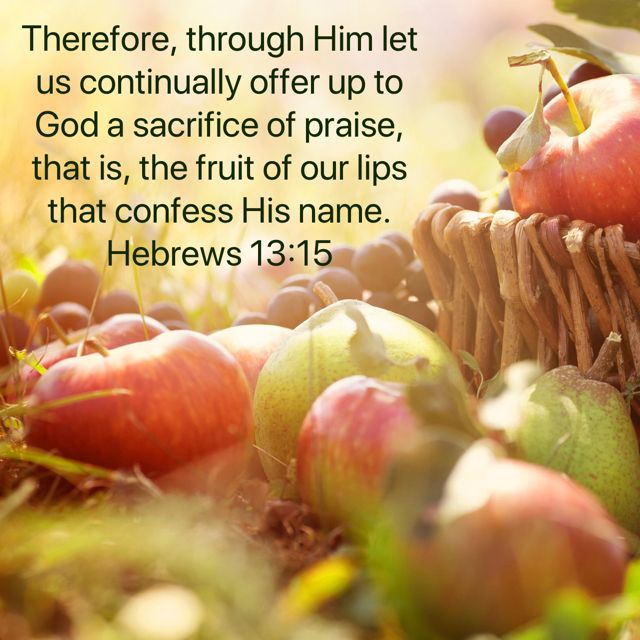
Hebrews 13:5-8, 15-16 (13:15) – August 31, 2025

            Have you ever known anyone who was really proper? Always every hair in place, always did the socially acceptable thing, and never put a toe out of line? Imagine a stern teacher, keeping order in the classroom by a mere look and a slow stare. Someone with high standards. Thinking about satisfying this kind of person makes me anxious, and nervous. I always need to be on my best behavior, minding my p’s and q’s. Just being around someone like this puts me on edge.

            But, what about putting God into the conversation? I know we are probably stretching our imaginations, but it is hard to imagine God wearing a wrinkled shirt, or with a sloppy haircut, or having a dirty face. For that matter, isn’t God perfect? Isn’t God prim and proper, always doing the right thing, never stepping out of line? Doesn’t God have incredibly high standards? Don’t we need to be on our best behavior with God, minding our p’s and q’s? Doesn’t that sum up many people’s conception of God?

Our Scripture reading today can sound like a list of rules. Do this! And, do that! And, don’t do this other thing! I can just imagine several stern Heavenly angels frowning, shaking their fingers at me if I step out of line!

However, the letter to the Hebrews was written to a bunch of scattered Jews who believed in Jesus as their Messiah, scattered in small groups throughout Asia Minor. What we know as Turkey, today. They had been chased out of Palestine by the Jewish and Roman authorities. Many of these scattered Hebrews were refugees. Migrants. People chased out of the land of their birth by an oppressive government that was out to imprison them, if not kill them, because they claimed Jesus as Lord and Messiah. So similar to migrants throughout history who come to other countries seeking asylum, because the place where they were born is very dangerous.

That is the background of the small congregations receiving this letter. This letter was copied and sent from place to place, a breath of fresh air, sound biblical teaching coming to these small groups of believers in Jesus.

Let us turn to our reading today, from Hebrews 13. At the beginning of the reading, the writer of this letter talked about sacrifice—the sacrifice for sin, which was one major way the Jews came before God in worship. In the time of the Jewish temple, it was common for Jews to bring animal offerings to God to make up for sins, to cover their sins and the sins of their loved ones, under the old covenant. One first-century Jewish idea of God was distant, angry, and even vengeful. God had incredibly high standards. God was someone to be placated. Even today, many people have that kind of view of God—a scary view. Not the view of God as loving, caring, and kind, at all.

However, we are going to flip that idea of a distant, angry, scary God. Many, many people are in fear for their religious beliefs. Governments throughout history have been cruel, indeed. Is the fear, anger and disturbance of the powerful governments today much different from the fear, anger and disturbance of the powerful people of Jesus’ day? I think not.

If we consider the wider picture today, around the world, countless followers of Christ are being actively and bitterly persecuted. It’s happening right now, in dozens of countries, officially sanctioned by their governments. Just as it was in the first century, for the small scattered congregations of Jesus followers.  

True, these scattered Hebrews in small groups have good reason to be afraid! On edge! Ready to run again. However, at the heart of this letter is a Kingdom ethic that turns worldly values upside down. Much like my summer sermon series of three years ago, when I preached on the Beatitudes, the first section of our Lord Jesus’s Sermon on the Mount from Matthew 5. That summer we looked at the Topsy Turvy Teachings of Jesus, talking about our service to others, loving mercy and kindness, and even being glad when we are persecuted, for Christ’s sake

Here, today, we can see the practical teachings in Hebrews chapter 13 as teachings of God’s Kingdom, a topsy turvy teaching which tells us that “greatness is revealed through serving others, worship is expressed in doing good, and righteousness is rooted in trusting God and acting with love. This radical re-ordering of values calls believers to live in a way that reflects the grace, justice and compassion of Christ.” [1] Truly, a topsy turvy way of living, then and now.

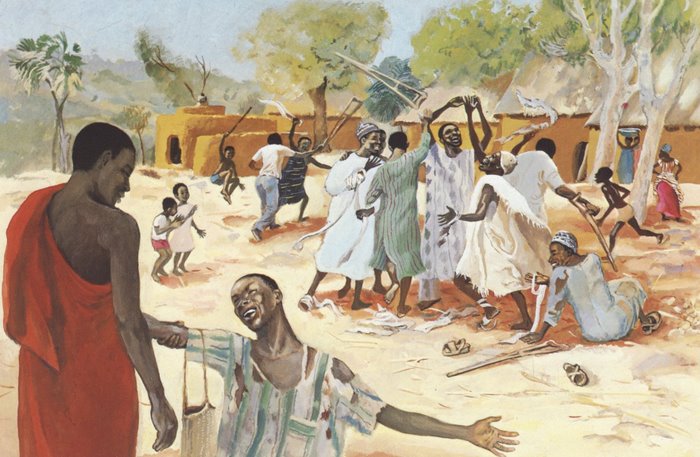
Instead of “pie in the sky” theological platitudes, this reading today talks about practical ways of living – and acting. These are practical ways to love others, just as Jesus told us to do. When Meier’s Bakery was donating many baked goods to our church, up until just a few years ago, we would donate those baked goods in turn to a local YMCA, for their men’s residence, which had many low-income residents. And then when we needed to stop that during the COVID shutdown, I quickly found another mission that was very grateful to receive those baked goods.

I’ve spoken about this worthy mission outreach before. A Just Harvest, which is located a block from the Howard Street El station, serves a hot meal to 200 to 250 low-income people every day, 365 days a year. This Christian group with their radical hospitality has boots on the ground. They truly welcome the stranger and reach out. They truly experience Christ’s constancy and amazing grace on a regular basis. In their daily ministry and outreach, they also rely on the Lord, as do the people in poverty they serve.[2]

            As we imitate these friends in welcoming the stranger, can there be a better way for any of us to be freed from fear, and become free to serve and praise and really live for God?

            And finally, as our instructions from Hebrews tell us, we can expand our vision of worship. Not just worship at 10:00 on Sunday morning! No, “True worship, the writer says, includes not just praise on our lips, but generosity and good works. I remind everyone: we are not doing these good works to get on God’s good side! No, the point of our good works is in response to what Jesus has done for us. Just as the whole book of Hebrews tells us!

Our freely given good works, generosity and radical welcome to all are “sacrifices pleasing to God.” It’s a complete picture of faith—one that blends word and deed, praise and practice, belief and behaviour.” [3]

            Yes, we truly bring God our sacrifice of praise! And, with boots on the ground, we can truly welcome the stranger and reach out in radical hospitality. And, we truly experience Christ’s constancy and amazing grace on a regular basis. What a way to live, the Jesus way.

Alleluia, amen.

@chaplaineliza

(Suggestion: visit me at my other blogs: matterofprayer: A Year of Everyday Prayers. #PursuePEACE – and  A Year of Being Kind . Thanks!


[1] https://www.churchofscotland.org.uk/worship/weekly-worship/weekly-worship-2025-august/31-august-twelfth-sunday-after-pentecost-year-c

[2] https://www.stewardshipoflife.org/2016/08/to-be-continued/

[3] https://www.churchofscotland.org.uk/worship/weekly-worship/weekly-worship-2025-august/31-august-twelfth-sunday-after-pentecost-year-c
Unknown's avatar

God Says, “Don’t Be Afraid!”

God Says, “Don’t Be Afraid!”

Jeremiah 1:4-10 (1:5) – August 24, 2025

Babies can be wonderful. The coming of a baby into the world is certainly a big event, with all the attendant hustle and bustle, all of the excitement and exhaustion. With all the babies that have been born into this world over the millenia, we’re going to look at one baby in particular … the prophet Jeremiah.

Here in the first chapter of Jeremiah, we can take a peek at God’s perspective on the birth of a baby. When we look at verse 1:4, the LORD is saying to Jeremiah, “Before I formed you in the womb, I knew you.” Wow. God knew Jeremiah before Jeremiah was just a tiny group of cells, growing inside of his mother’s uterus. Double wow. The same thing could be said about countless other people, too. God knew me before I was born. The Lord knew everyone in this room, too. It is truly awesome to think about how intimately God knows each one of us.

King David talks about this in Psalm 139. We get another glimpse at how intimately God is acquainted with each one of us. Starting at verse 13, “For it was You who formed my inward parts, You knit me together in my mother’s womb. My frame was not hidden from You, when I was being made in secret, intricately woven in the depths of the earth. Your eyes beheld my unformed substance.” We can see that God surely knows us, far better than we know ourselves.

We are celebrating going back to school this Sunday. God knows each and every student who is returning to school, and I believe the Lord is watching over every school, every training program, and all internships, all over the world. When I prayed the Blessing of the Backpacks, I was thinking of not only the students associated with this church, but all students, across this country and in the whole wide world. Bless each one!

Which brings me back to the young Jeremiah. This is the beginning, the first chapter of his very challenging prophetic book. Our Scripture reading today is Jeremiah’s call story, when he was just a young teenager. He was not even a grown-up! And, God called out Jeremiah for a special purpose, as we can see: “But the Lord said to me, “Do not say, ‘I am too young.’ You must go to everyone I send you to and say whatever I command you. Do not be afraid of them, for I am with you and will rescue you,” declares the Lord.”

 We can all remember times at school when certain kids were picked on. Perhaps even you or a friend or brother or sister of yours was called names! Usually, to establish some sort of pecking order in the classroom. “Still, most name calling makes people look ‘less’ in the eyes of people around them.” [1]  What were – what are – some of those names? Sadly, I can identify some of the names, like wimp, bully, jock, geek, baby, sissy, cry-baby, bird brain, smarty pants, etc. that are hurled at others.

Just think of how differently people look and feel when we say instead “child of God.” Because, that is exactly what each of us is! Each one of us is a unique creation of God, and each one of us is fearfully and wonderfully made! And, God knows each of us, intimately!

God mentions all this to Jeremiah, because God was watching Jeremiah from the very beginning. And, God saw Jeremiah even before he was born, and God appointed him a prophet, “This, of course, came as startling news to Jeremiah who, apparently, had not had any previous inkling that this could be his life’s work. Maybe it did not even sound that good to him, either. In any event, he starts to do what any number of divinely appointed figures in the Bible have done: he resists the call. He makes up an excuse.” [2]

We can see that Jeremiah did not feel ready to do what God wanted.  “I’m too young. I’m not a public speaker. What could a child like me have to say anyway, and who’d listen even if I tried? No, no, Sovereign God, you’ve got the wrong guy. I’m no one special!”

Be sure that God sometimes calls each of us to do things we feel we are not ready to do or that we are not brave enough to try. That happens in offices, on the factory or hospital floor, in all kinds of classes and just hanging out at school. “When it does, our challenge is to remember what God told Jeremiah: God had given him everything he needed and God would be with him helping him know what to do and say.” [3]

We can see from this Scripture reading that God touched Jeremiah. God put His hand on the teenager. Wow. What an awesome thing, having the God of the universe call on Jeremiah … and to think that God can put His hand on you and on me, too. But—funny thing—God doesn’t always call us in the way that we expect, or in the way that we want God to, but God is always there for us. God is always available to each of us. God calls each one of us, in God’s timing.

Here is an example of an everyday person who was called by God, saw a need, and stepped up to the plate. One of my commentators tells the story:

“Most people I have ever heard speaking of their start in vocations similar to those of Moses and Jeremiah begin not with a burning bush or an audible voice, but with a deep conviction that whatever else they may do, and no matter how they might or might not establish their bona fides, it is the task itself that draws them in. Eula Hall, who describes herself as a ‘hillbilly activist,’ an Appalachian woman with an eighth-grade education and a burning sense of purpose, told me many years ago how she came to found the Mud Creek Health Clinic in southeastern Kentucky to provide health care for the poor: “I looked, and I said to myself, ‘taint right like this, no medical service here, taint right. Somebody needs to act.’ I guess that somebody was me.” [4]

Often now in such a time as this which is like no other many of us have known, we would do well to hear Jeremiah’s call as our own. For God extends not only the call, but also promises to accompany us as we seek to follow. [5] It doesn’t matter our age, young, elderly, or in the middle. It doesn’t matter where we are, at home, school, work, or on the street.

Yes, God called Jeremiah. Yes, God touched Jeremiah. And God calls to each of us today. God was with Jeremiah through the difficult times of his life and ministry, and the Lord promises to be with us, too, through thick and thin, through the difficult times as well as the wonderful times. We can forever be thankful that God is always there with us.  Alleluia, amen!

@chaplaineliza

(Suggestion: visit me at my other blogs: matterofprayer: A Year of Everyday Prayers. #PursuePEACE – and  A Year of Being Kind . Thanks!


[1] https://worshipingwithchildren.blogspot.com/2016/07/year-c-proper-16-21st-sunday-in.html

[2] https://cepreaching.org/commentary/2016-01-25/jeremiah-14-10/

[3] https://worshipingwithchildren.blogspot.com/2016/07/year-c-proper-16-21st-sunday-in.html

[4] https://www.workingpreacher.org/commentaries/revised-common-lectionary/fourth-sunday-after-epiphany-3/commentary-on-jeremiah-14-10

[5] https://dancingwiththeword.com/the-call-of-jeremiah-still-speaks/

Unknown's avatar

A Foreign Neighbor’s Thankfulness

“A Foreign Neighbor’s Thankfulness”

The Healing of the Ten Lepers – Luke 17:11-19

Luke 17:11-19 (17:19) – August 10, 2025

One thing I have noticed that is really sad is when someone is left all alone – on purpose! Not necessarily picked on and jeered at, although that can be horrible, too! But, sometimes a person can just be left alone, left out, isolated, even shunned.

In our Scripture reading today, we have exactly that happening. Except, the Jewish community was required to do this, to ignore or turn their backs on someone! This was a serious matter. Skin diseases were not anything anyone wanted to fool around with. Because medicine and treatment centuries ago was rudimentary and simple, there were not many things doctors and medical providers had that was in any way effective.

Plus, the Law of Moses specifically instructed the Jewish people to keep their distance from anyone with a skin disease, and not allow them to mingle with people who did not have skin diseases. All of these people with skin diseases were referred to as “lepers,” and they had to cry out, “Leper! Unclean!” so everyone else would get a warning not to get anywhere near. These people were outside of their society, forever out of reach. Forever away from their families, their friends, their community, and their synagogue.

Just so everyone here knows what the situation was, for these ten people, as we consider our Scripture reading today, this severe, shunning treatment was what happened wherever these poor people with skin diseases went.

Let us listen again to these words from Dr. Luke, chapter 17: “Now on his way to Jerusalem, Jesus traveled along the border between Samaria and Galilee. 12 As he was going into a village, ten men who had leprosy met him. They stood at a distance 13 and called out in a loud voice, ‘Jesus, Master, have pity on us!’”

Here is the situation, the set-up. We have ten men who have banded together, as a group of lepers. They obviously have heard of this Jesus of Nazareth, and are actively seeking healing! The Rabbi Jesus hears them cry out, and responds immediately. Jesus offered immediate and profound healing to all ten men!

This kind of immediate healing is sometimes difficult for us to wrap our heads around. From time to time, I have faithful believers who come to me as a hospice chaplain and tell me, trustingly, “I have faith to believe God, and believe that my loved one in hospice will get well.” Or, “I believe in miracles, and I know that God will hearken to our voice.”

Yes, I believe in God, I believe in miraculous healing, and I believe that God heals in many different ways. Perhaps God wants to have the patient receive ultimate healing, to leave this world and enter God’s presence? Perhaps God wants to see that person face to face? And yes, we all have an expiration date.  

Whatever the reason, nine of the ten men did not return to the Rabbi Jesus to thank Him for their immediate healing. Except – one man did. “The others are too busy getting back into their proper societal position. And who could blame them? After all, they were just following Jesus’ instructions, right? The one who returns is a real outsider – a Samaritan – who took a chance, who followed his heart and gave thanks to the one who really mattered.” [1]

This man, this Samaritan was in a precarious position. Not only was he rejected by the Jewish community because of his ethnicity, he was also ostracized because of his health condition. If you all remember, I have been preaching a summer sermon series on Fred Rogers. Many of these sermons have also been about outsiders, about people rejected by their communities, rejected from their neighborhoods.  

No one enjoys being shut out of their community, and ignored by their neighbors! Not in the first century, and not in the twenty-first, either.

This is the last week in our summer sermon series on Fred Rogers, of the television show Mister Rogers’ Neighborhood, which aired on PBS for more than 30 years. As I’ve said in weeks past, I have great respect for Fred Rogers. I have even said a number of times (only partly humorously) that when I grow up, I want to be Mister Rogers.

 Fred Rogers was revolutionary in his treatment of people, especially children. He considered children to be very significant individuals, worthy of respect and caring and love. “The most controversial thing Fred Rogers ever did is tell children that they are special. That their lives have value simply because they exist. That they don’t have to do anything sensational to be deserving of love.” [2] The same could be said of these people with skin diseases, and the same could be said of each and every person in the whole wide world.

These ten lepers were shunned, were passed over, were not even considered “people” by most of those at a distance from them. But, none of that mattered to Jesus. He considered each one a valued, special person, a creation of God. No matter what their health condition, no matter what their ethnicity.

Jesus offered a gift of profound healing to the ten who approached him that day. I wonder how you and I might be agents of such healing in our world today. Indeed, in a world too often marked by fear and division, might healing just be ours to offer (and in turn, receive) if we simply reached out with a word of kindness, curiosity, or affirmation even to someone we have never seen before who we may never see again? Or to one who we have passed by a thousand times (as those ten lepers must have been passed by a thousand, thousand times) without even noticing before?” [3]

I know I often ask in my sermons “what would Jesus do?” Who would Jesus heal? Who would Jesus love?”

This week, again, I am going to change up my question, and ask “what would Fred Rogers do?” Who would Fred love? Who would Fred call his neighbor? I think, everyone. Each and every person. Go. Go, and do that.

Alleluia, amen.

(A big thank you to the online resources for Mr. Rogers Day – the Sunday nearest March 20th, Fred Rogers’ birthday. These resources come from the Presbyterian Church (USA). https://www.pcusastore.com/Content/Site119/Basics/13792MrRogersIG_00000154465.pdf )

@chaplaineliza

(Suggestion: visit me at my other blogs: matterofprayer: A Year of Everyday Prayers. #PursuePEACE – and  A Year of Being Kind . Thanks!


[1] https://www.stewardshipoflife.org/2013/10/first-and-always-give-thanks/

[2] https://www.thedailybeast.com/we-need-mr-rogers-now-more-than-ever-but-do-we-deserve-him/

[3] http://words.dancingwiththeword.com/2016/10/the-tenth-leper-and-how-god-is-already.html

Unknown's avatar

Ganging Up on a Neighbor

“Ganging Up on a Neighbor”

John 8:1-11 (8:7) – August 3, 2025

Have you ever watched a bunch of people gang up on one poor person? I’m thinking in elementary school, in the playground. Or, what about at the lunch table in high school? Even in the break room at work? A few mean words can turn nasty, fast! Sometimes if it goes too far, a group of people really start to pick on one poor person, or shun them, even ostracize them! And worst of all, the people doing the shunning can be such hypocrites!

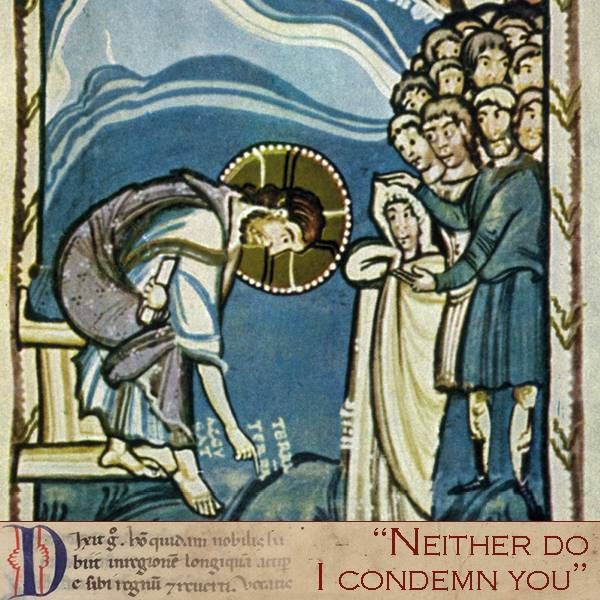
Now we are entering the sketchy neighborhood of our Scripture reading for this morning. We have a group of Jewish leaders, big shots in their synagogues. You know what happened. These Jewish leaders have grabbed a woman in the very act of adultery. She may have been a married woman, and she was having sex with a man who was not her husband.  

The Rabbi Jesus has been talking with and discussing with groups of these leaders for some time. And, Jesus has been very successful at dialoging with these leaders, too! But, wait – they finally think they have got a situation that the Rabbi Jesus cannot squirm out of!

“Imagine the sense of urgency and the heightened emotions of the crowd swarming in on Jesus as he taught in the temple. They put this woman in front of the crowd. The Pharisees used her as an item, an object, a thing to entrap Jesus. I can imagine the contempt in the Pharisee’s voice as he asked, ‘Teacher, this woman was caught in the act of adultery. . . . Moses commanded us to stone such women. Now what do you say?’” [1]

Now, wait just a moment! The Jewish leaders have dragged this woman in front of Jesus, in front of the crowd in the Temple, and are accusing her, with baited breath! I can just see the crowd getting all agitated and upset! “Of course the Law of Moses tells us that adultery is bad! Of course this woman is guilty – our Jewish leaders say so! Of course she should be punished!” I can just hear the voices and noises of the crowd becoming more and more frantic and angry!

And, what does Jesus do? Nothing. He does not respond. He does not fly off the handle, as some people would. He does not react abruptly to the leaders or the crowd, either. Instead, Jesus stooped down and began writing on the ground with His finger. Finally, after the Jewish leaders kept badgering Him with questions, the Rabbi Jesus does respond.

Except, that makes me wonder. I know in our culture, in the United States, we do not stone people. Except, we still will ignore, and even jeer at people sometimes. We still practice shunning individuals in this country, sometimes.

These Jewish leaders and big shots at their synagogues seemed to have it all together. Except, these men were hypocrites, all the way! Saying one thing and doing another is the height of hypocrisy! I suspect these men – because the Jewish leaders were all men – these men felt fully justified in themselves. Fully self-righteous, and they couldn’t be bothered with pesky little things like their own repeated sin, or their conscience pricking them on the inside.

 I want each of us to understand how damaging it is to say one thing but do something totally different. “Do as I say, not as I do!” This is definitely the work of a hypocrite.

 “Hypocrisy creates barriers, harms relationships, and leads people away from God. In Matthew 23:27, Jesus calls out the Pharisees, saying, ‘Woe to you, scribes and Pharisees, hypocrites! You are like whitewashed tombs, which appear beautiful on the outside, but inside are full of dead men’s bones.’ The Pharisees focused on appearing holy, while ignoring God’s call to live with integrity and compassion.” [2]

The angry leaders who brought the woman to Jesus clearly were accusing and vicious towards the unnamed woman, and considered her simply a thing, an object of sin. I wonder whether they even considered the fact that this woman was a person of worth, or that she was created by God, just as much as each of them were? These were ways in which these leaders of the community could certainly live out God’s call to live each day with integrity and compassion – which the Rabbi Jesus did each day.

Jesus did not suddenly react or defend either Himself or the woman. Instead, He slowed down the frenetic emotion and action. Jesus reflected, and listened. Finally, Jesus made a comment. I imagine Him making that comment in a quiet but firm voice: “Let any one of you who is without sin be the first to throw a stone at her.” Then, “those who heard began to go away one at a time, the older ones first, until only Jesus was left, with the woman still standing there.”

Our summer sermon series features Fred Rogers, of Mister Rogers’ Neighborhood. We have considered several serious narratives from the Gospels during this series, and this week is no exception. Fred Rogers was no stranger to serious matters. A number of his television shows discussed very serious things – to children, yes, but also to adults. Divorce, death, war, and even the terrorist activity in 2001, on 9/11.

Fred Rogers excelled at listening to people. “Reflective listening, which does not imply agreement, pauses your agenda and aims to understand first. Fred listened intently and often agreed with the children since he was tuned into their fears and frustrations. [One of Fred’s signature messages,] ‘I like you just the way you are’ can’t get any more validating – pure emotional gold.” [3]

When Jesus practiced reflective listening in this extremely emotional situation in the Temple, we can see how tuned in Jesus was to the crowd’s fears and frustrations. And then, He turned the situation around, even turned it on its head by stating to the accusers in a quiet but firm voice: “Let any one of you who is without sin be the first to throw a stone at her.”

Jesus saw this woman as someone worthy of respect, a creation of God, unlike the men who accused her. Jesus’ words and actions offers this woman self-reflection and changed behavior at the realization of sin, just as He offered to the Jewish leaders and the crowds, multiple times throughout His ministry.  “Jesus’s actions were scandalous because they broadened acceptance, extended mercy and forgiveness to the undeserving, and brought justice to the overpowered and abused. Will the church ever do the same?[4]

Yes, today’s Scripture reading is extremely serious. And yes, Jesus makes His offer of grace and mercy, forgiveness and compassion to this woman, to the Jewish leaders who accused her, to the crowd, and to each one of us today. We can live honest, compassionate lives, with kindness and humility, today.

Here’s a challenge: “try to pay close attention to any moments when you might feel yourself slipping into judgment or hypocrisy. Maybe it’s a small thought about someone’s behavior, or a reaction to something they said. When you notice this, take a step back and remind yourself that we aren’t perfect either. Instead of letting judgment grow, try saying a silent prayer—for that person and for yourself. Ask God to help you see them through His eyes, with compassion and understanding.” [5]

I know I often ask in my sermons “what would Jesus do?” Who would Jesus forgive?

This week, I am going to change up my question, and ask “what would Fred Rogers do?” Who would Fred listen to? Who would Fred call his neighbor? I think, everyone. Each and every person, no matter who. Go. Go, and do that.

Alleluia, amen.

(A big thank you to the online resources for Mr. Rogers Day – the Sunday nearest March 20th, Fred Rogers’ birthday. These resources come from the Presbyterian Church (USA). https://www.pcusastore.com/Content/Site119/Basics/13792MrRogersIG_00000154465.pdf )

@chaplaineliza

(Suggestion: visit me at my other blogs: matterofprayer: A Year of Everyday Prayers. #PursuePEACE – and  A Year of Being Kind . Thanks!


[1] https://www.cbeinternational.org/resource/four-important-lessons-we-can-learn-from-jesus-and-the-woman-in-john-8/

[2] https://young-catholics.com/14808/exploring-hypocrisy-free-lesson-plan/

[3] https://www.psychologytoday.com/us/blog/the-full-picture/202302/mister-rogers-remembered-since-we-need-him-now

[4] https://www.cbeinternational.org/resource/four-important-lessons-we-can-learn-from-jesus-and-the-woman-in-john-8/

[5] https://young-catholics.com/14808/exploring-hypocrisy-free-lesson-plan/